So This is Permanence: Joy Division and Me, Pt. 2

I never realized the lengths I’d have to go

All the darkest corners of a sense I didn’t know.

Just for one moment, I heard somebody call,

Looked beyond the day in hand, there’s nothing at all

Now that I’ve realized how it’s all gone wrong,

Gotta find some therapy, this treatment takes too long

—-“Twenty Four Hours”, Closer, Joy Division (1980)

I know that it is largely frowned upon in academic and professional communities to get “too personal” within the realm of online writing, but sometimes I feel it is important to drop our guard, let people in, and give readers access. Sometimes, the more personal the better.

I was asked by someone today, “Have you come out as an epileptic?”

It was a strange question. I have never considered myself  particularly “closeted” nor have I ever felt that it was something that I have had to necessarily hide. On that same token, hearing that question, I have also never placed it on the same level as the struggles that people have had with their sexuality and coming “Out of The Closet” in that context. However, after giving it some thought, I came to a striking conclusion: the process of dealing with life as an epileptic can bear remarkable similarities to the process of dealing with living life as a person of alternative sexuality in a heteronormative culture such as ours.

Please do not mistake what I am trying to say- I am in no way trying to say that what epileptics go through is on par with Matthew Shepard, per se. But I live this life every day. It’s no party. It’s the first thing I think of when I wake up, the last thing I consider when I go to bed. It affects everything I do and everything I am. It makes me entirely different from the average person walking down the street. I cannot imagine that this experience is that far from the queer experience. You may be surprised to hear it, but my entire world and life has had to be reorganized due to epilepsy and not everyone is open to it. I never really sat down and thought about it at all. Until today. Then it really blew me away.

Would you be surprised to find out that the reaction that I get from many people when I tell them that I’m epileptic mirrors homophobic reactions? Let’s face it- aside from politics, religious nonsense, and plain old-fashioned stubbornness, homophobia is really just a bad case of not being educated about the LGBT community. Well, when people squirm around me, and refuse to meet my eyes, begin to treat me with kid gloves, or, in some cases, take me off the “date-able” list immediately after finding out about my seizures (it has happened), it’s simply due to not being educated about the disease. In 2012, that makes me really depressed. It certainly doesn’t make it any easier.

OK, I don’t get to live everyone else’s life. And at the end of the day- am I unhappy about this? Not really. I enjoy my life every single day. I have an full and astonishingly brilliant life! I’m training to become a film archivist (my dream!), my film calendar is always full, and my social world is rarely lacking. I’m an exceptionally lucky individual. But being epileptic is difficult and exhausting, both mentally and exhausting. And as my life continues to get more exciting and wonderful, my mind returns again and again to Ian Curtis and my heart aches for him. I wrote about my relationship with Joy Division once before, and said I would return to the subject, so due to the earlier prompt, it looks like I now am.

People like you find it easy,

Naked to see,

Walking on air,

Hunting by the rivers,

Through the streets,

Every corner abandoned too soon

Every time I hear “Atmosphere”, I hear Ian’s pain, so loud, so biting. And to be perfectly honest? I recognize it. I feel it. It reflects my experience. To an extent, it irritates me that I use this song to synthesize my own poorly functioning neurology, but the kinship I feel with Ian Curtis goes a long way. In general, I try not to personalize things but with Curtis…it’s remarkably difficult. Additionally, not knowing about any other public figures with seizure disorders until I began doing research (as it turns out, Prince had epilepsy as a child), he was the one person that I could identify with. Joy Division’s songs, while clearly appealing to a mass audience, really had very specific meaning to me. I believe that Ian Curtis put a good amount of his experience with epilepsy into his music. It’s too present and I can read it too plainly. Indeed, the fact that Curtis was Joy Division’s only lyricist supports that thesis.

At times, even song titles read like the feelings that I have felt since my first diagnosis at 13 and since my condition has worsened after age 30. Tunes like “Atrocity Exhibition,” “I Remember Nothing,” “She’s Lost Control,” and, especially, “Isolation” have all played large parts in the make-up of my epilepsy-marriage to Ian and his own possible lyrical catharsis.

“Isolation” is a really tough song for me. Released a few months after Ian’s death on the album Closer, this song really cuts into what some of the bigger chunks of epilepsy can be, psychologically. When he sings

Mother I tried please believe me

I’m doing the best that I can

I’m ashamed of the things I’ve been put through

I’m ashamed of the person I am 

it always hits me in my gut; knocks the wind right out of me. Whether it makes sense to anyone else or not, the most embarrassing thing I have ever dealt with in my life has been my seizure disorder. It has taken me years to overcome the shame and embarrassment that I used to feel in regards to my disease. Not only did that shame create even more problems for me, but it also blanketed me in the very thing that Curtis sang about: isolation.

Ian Curtis was only 23 years old when he hung himself. People have been arguing for years about what the “real” catalyst for his suicide was. If you listen to his lyrics, it’s all right there, plain as day. But that’s just from my perspective.

I realize that Ian many other problems: depression, familial discord, the lot. However, it would be dense and ignorant not to recognize that brain function is linked to both depression and seizure disorders. Ian’s former band members have come forward in the last few years talking about his epilepsy and painful struggles. Stephen Morris told NME magazine, “Looking back, I wish I’d helped him more. I think that all the time… But we were having such a good time, and you’re very selfish when you’re young. Epilepsy wasn’t understood then. People would just say, ‘He’s a bit of a loony – he has fits.””  According to an article in The Guardian, Bernard Sumner says that, amidst the plethora of problems raging in Ian’s world, it really was the epilepsy that did him in.

“Ian’s problems were insurmountable.Not only did he have this hideous relationship problem, he also had this illness that he contracted at 22. And it wasn’t a mild form. It was really, really bad and it occurred frequently…The epilepsy must have cast a shadow over his future, particularly his future with the band, and his relationships cast another giant shadow. Plus, he felt extremely guilty about his daughter Natalie… I remember him telling me he couldn’t pick Natalie up in case he had a fit and dropped her..Sometimes a drumbeat would set him off. He’d go off in a trance for a bit, then he’d lose it and have a fit. We’d have to stop the show and carry him off to the dressing-room where he’d cry his eyes out because this appalling thing had just happened to him. The heavy barbiturates he was on seemed to compound the situation; they made him very, very sad. I just don’t think there was a solution to Ian’s problems.”

Every bit of that makes perfect sense to me. I can’t begin to tell you how many tears I have shed due to being epileptic. Out of frustration, embarrassment, anger and resentment at my “lot.”

I have had seizures at the movie theater in front of my friends and perfect strangers. I have had seizures at the gym and fallen off exercise equipment. I have had them alone on the street and then tried to get a taxi but found that I was literally unable to speak because my brain was not in working order yet. I attempted to tell the cab driver where I wanted to go and all I could get out were the words for the mall that was near my house. I cried a good amount that evening. Can you imagine not being able to speak? The words were in my head, I could imagine a picture of my house, my street, but I could not tell him where I lived nor could I get words, simple WORDS, out of my MOUTH. I have seized getting ready to go somewhere and had to call someone to ask them if they knew what I was supposed to be doing that night because I couldn’t remember.

Mind you, I have a graduate degree. I am working on a second one. I can have an incredibly detailed conversation about the glories of pre-Code cinema or Sam Fuller with you. I can do a great many things. My epilepsy in no way affects my intelligence level on the whole. But the minute my brain short-circuits, I don’t remember my own name and I become a semi-functional vegetable.

I remember watching Anton Corbijn’s Control (2007) for the first time, and I was overwhelmed.

I had read Deborah Curtis’ book Touching From a Distance a long time previous and had been so hungry for some sort of media engagement that featured an epileptic that I don’t think I ever looked at the book critically. I still haven’t. To tell you the truth, I am uncertain if I could separate myself from Ian Curtis long enough to look at the book critically due to my connections with him. And Corbijn’s movie only tightened the grip.

Ian was on Tegretol. I’ve been on Tegretol (or the generic form, Carbemazepine) for a little under 20 years. They put Ian on Phenobarbitol. They put me on Phenobarbitol as a teenager. It was probably one of the worst levels of hell-drugs I have ever experienced. Phenobarbitol turned me into LINDA BLAIR in The Exorcist. If I wasn’t crying, I was yelling at my baby brother. If I wasn’t crying or yelling, I was sleeping. If I wasn’t crying, yelling or sleeping I was completely and totally irrational and unpredictable. So, being a teenager and irrational and unpredictable anyway, phenobarbitol took me up to 11+. Ian Curtis was in his early 20’s. That’s not far from where I was. When his bandmates talk about his mood swings and his depressions and his unreliability, I cannot help but wonder: was this actual depression or was this the hardcore barbiturate that they had this young kid pumping through his slender frame, multiple times a day? Phenobarbitol ain’t nothin’ to fuck with.

Thirty years ago, they really didn’t know much about epilepsy, let alone the medications for it. They learn all the time. I remember that they had me on a medication at one point when I was 15 years old that I thought was great! It was a hunger suppressant, so I lost an incredible amount of weight really quickly, which I thought was fantastic! Unfortunately, the side effect of this medication for other people was a red blood cell count so low that they died. Nice, right? Needless to say, they’re still working out the kinks in MANY of the medications that deal with these issues. But I think it’s essential when thinking about Ian Curtis to recall the surrounding medical conditions of epilepsy and seizure disorders, because no one knows about them and no one talks about them.

For example- did you know that many of the very same medications that they prescribe  as antidepressants are also used as anticonvulsants or can be used for people with seizure disorders? Most people I talk to don’t know that. But it makes sense, right? It’s all brain chemistry; mixed up in that crazy web of electricity and wackiness between the ears.

I guess the question still remains for me today: how much of Ian’s depression came from a depression disorder and how much of it stemmed from the anti-seizure drugs and simply being epileptic? It’s a reasonable inquiry since I have on the receiving end of both. Who’s to say that if Ian hadn’t suffered from epilepsy he wouldn’t have been completely normal? From what we know, he had been having seizures for far longer than he had been letting on, and from personal experience, that is usually the case. I had little petit mal seizures for an entire year in junior high and never said ONE word to anyone about them. Nothing at all.

Peter Hook says of Ian’s suicide, “The police described it as a textbook case: suicide brought on by depression, well-documented by his cries for help…Unfortunately, we were all too young to understand.” While most of this is true, I would have to disagree about his death being a textbook case. Ian Curtis suffered from a variety of outside stressors, but he was a very young man who had absolutely no one to turn to about being stigmatized by an illness that he never asked for and yet was put upon him. He was involved in a music scene that catalyzed and worsened the condition and yet it was his life. How do you manage this? The pills are supposed to make you better, but they are, quite literally, making you see double, causing mental confusion, possible nausea, and mood swings like you never even knew were possible.

My memory of the drugs they gave Ian were that they made me feel like the girl that I once was had shrunk up inside me and was in the fetal position, looking out, and the world was really really fuzzy. Yet, in that condition, I was still physically functioning. It was a living nightmare. I was lucky: my parents saw my misery and got me off that medication straight away. Our boy was not in that position. Maybe that’s also why I feel for him.

Joy Division speaks to me because I know it, I live it, I am those songs. The themes that he would write about- ideas of atmosphere, memory, time, control– these are all things that an epileptic has in limited doses. I never know whether or not I’m going to be on my way to school and will have to pull my bike over to avoid having a seizure while I’m riding. My memory? Well, seizures control that. And one of the medications I’m on makes my memory not as sharp as it used to be. And time- I have no idea how long my seizures last. No idea at all. I have to ask people. As Ian’s epilepsy worsened, his songs got progressively darker and more tied into all of these themes. They became his only outlet.

Additionally, I don’t believe that Deborah or Annik Honore (the woman with whom he was carrying on an affair just before his death) were able to understand his feelings about having a seizure disorder anymore than he was able to express them. I have only been able to come to grips with and express my own feelings about my seizures in the last few years and I am 10 years older than Ian was when he died. To this day, this is the first time I have written out anything having to do with my seizures or what I go through. Why is epilepsy private, personal, intimate? I don’t know. It’s a stigma. Ian didn’t feel that it was socially acceptable to have it 30+ years ago. I don’t feel like it’s socially acceptable to have it now. It’s certainly not the topic to discuss at parties. Wanna clear a room or stop a conversation? Talk about the seizures.

Some people call epilepsy a disability. I haven’t let it rule or ruin my life. As I said above, I love my life and I’m living my dream. And I consider Ian Curtis to be a strong, talented and gifted icon that was dealt a really rough hand. I believe in my heart that if he had not had seizures, things would have gone differently. I cannot guarantee that he would not have OD’d or something of that ilk, but I am fairly confident that the kind of pain that he suffered in his life would have been much less.

Ian Curtis’ suicide was tragic, unnecessary, and entirely preventable. I wish I could travel back to England circa 1980 and say, “Ian, it does get better.” As cheesy as that current anti-bullying campaign and its ads are, I believe that they’re the truth. Especially in this case. Since 1980, the medications for depression, seizures and all kinds of neurologic therapies have improved by leaps and bounds.

I can only hope that within the next 30 years it gets even better. Not unlike the gay community, people with seizures hurt, feel pain, feel isolated, embarrassed by the fact that out of nowhere our neurology will suddenly control us instead of the other way around. Our lifestyles are different and we have different ways of doing things, but, at the end of the day we’re not different people. Ian Curtis was more talented than a large percentage of the non-seizure-having folks I know, and has been inspirational on the music that has been made since his passing. He was creative, unusual, and gifted. The brain misfirings never changed that.

My biggest fear is that one day I will not be able to write anymore. There. You have it. I have admitted to the larger reading public and strangers everywhere my biggest fear. I am deathly afraid that one day I will have a seizure that is so big that it affects my brain to the point that I am no longer able to function on a writerly or intellectual/academic level. These are the things I think about every day when I take my pills in the morning, afternoon and night. “Please let me be ok today, and let the pills continue to work.”

I used to think that the seizures were gone, then I got older and they came back, and my relationship with Joy Division took on a new meaning. So this is permanence means something totally different to me now. I will be an epileptic for the rest of my life, but it is not a death sentence and it does not in any way shape or form mean that I am a lesser person. If Ian Curtis could be so incredible and fire up that stage, I can do whatever I want to do. He did not have the resources that I have. That shatters me. But I am not Ian. So for now, what it means is that I should move forward with my dreams, keep doing all the amazing film work I’m doing and just dance, dance, dance, dance, dance to the radio…

Nothing To Lose: Foreign Cinema and the Position of the Child

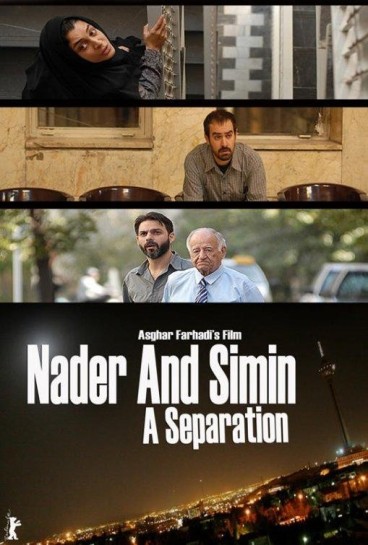
So I went to see A Separation (Asghar Farhadi, 2011) tonight, and, like everyone I know who has seen it, I was completely enraptured.  Indeed, even the over-cosmeticized quasi-senior citizens sitting a few rows over discussing ceramic tile patterns seemed to be  enchanted by this beyond-outstanding piece of Iranian filmmaking.

A tense and provocative film, this story seems to increase in density the further you travel inward, without leaving you feeling too overwhelmed. While the main thrust of the film deals with a fairly standard familial drama (divorce), it gives birth to a web of heartache and agony that is so well-crafted that each blow hits you like an angel’s kiss- that is, if the angel was giving you really sad, complex, hand-wringing-style pecks! And if that wasn’t enough, Farhadi is also working with strong themes of religion, femininity, the legal system and, most importantly, childhood.

What fascinated me most within the film was his sensitivity towards characters who had little to no power of their own, yet were fully formed and explored people. Even if a character’s dialogue consisted of simply one or two words,  the combined narrative and visual structure engendered a consistent and advanced sense of empathy.  In particular, his highly attenuated  depictions of children, young developing women, and the infirm seriously gave this film a higher sense of power and core stability. His use of lingering camera shots enhanced the relationship between the audience and the characters, pushing us into a deeper and more intimate relationship of our own with the film and each aspect of it.

The character of Termeh is in a constant state of turmoil for most of the film, having to handle adolescence, her parents' relationship struggles, and her own decisions about where she fits in within all of it. While her father, Nader would argue against it (like many parents who engage in this type of behavior), he uses his daughter within power-play constructs, thus negating altruistic family motivations much of the time.

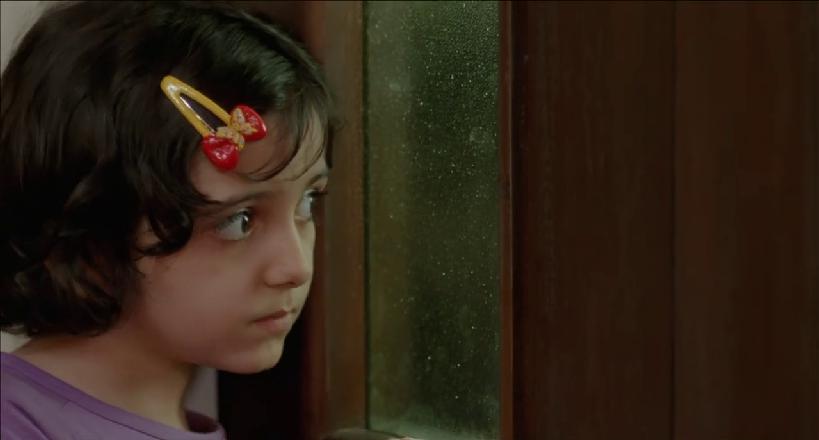
Because of her age, Somayeh is at an even clearer disadvantage. Beyond the fact that she is the "working woman's child," thus relegating her to an altogether different class, she must handle all the things that come with that identity: her unemployed and possibly abusive father, her very religiously-observant mother having to work and having to go with her to work, and being caught directly in the center of a terribly amount of adult issues that she is far too young to deal with. The continual shots of her face, her trusting demeanor and her inquisitive-but-shy glances only reify her position as The Innocent, in the film.

It is, however, the systematic visual returning to the “powerless” characters that make us feel that the film has established a kind of unspoken unity and communion.  Indeed, within the narrative, they seem to be the only characters that are not constantly at war with one another, and they are pointedly shown communicating positively together, as in the scene where Termeh, Somayeh and Nader’s father are all participating in a foosball game and enjoying it together. Even though the other characters are around, they seem different somehow, like they are part of a different tribe. Cinematographer Mahmoud Kalari takes great care so as to depict these individuals that way and to make them stand out, even when surrounded. Within the larger diegesis, not only are these characters that have little to no say in what happens in their lives, but they are also the ones that we (the audience, the secret voyeurs) can look in upon and watch as they bond, getting closer and sticking together. They share that secret only with the audience. The rest of the characters are too busy with the drama. While everything else within this film is being pulled apart and “separated,” it is these things that are coming together: these budding relationships of the powerless.

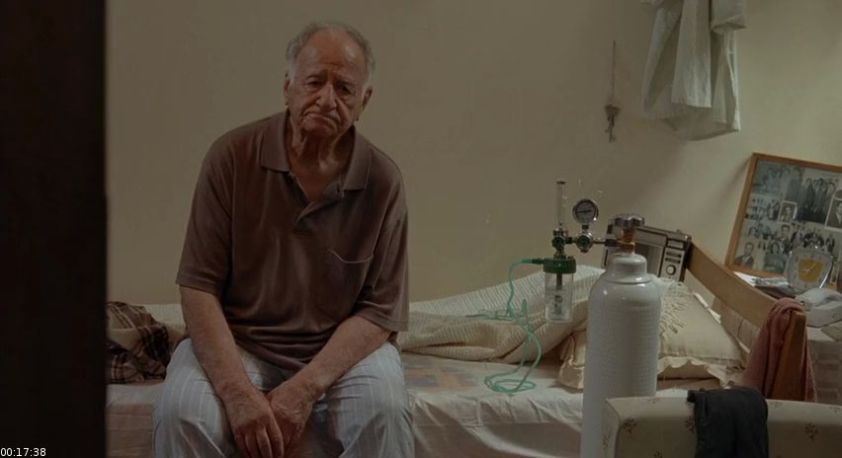
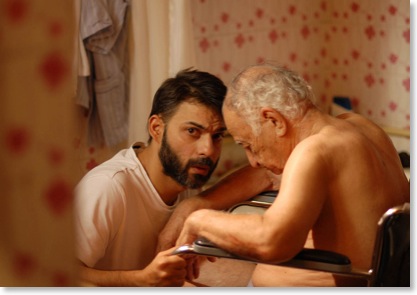
Nader's father has Alzheimer's and actually has less independent ability than either of the two children in the film. While he is an old man, he has shifted to the final stage of being an old man, which means that he mirrors the beginning stage of human development: he is incontinent, cannot bathe himself, and must be cared for...as though he were a child. The connections between him, Somayeh and Termeh are first and foremost about survival: all three need adult supervision and need to be cared for. However, they also feel kinship based upon a sense of loneliness seeing as all the "adults" in their immediate vicinity have decided to act like children. While Nader's father can only operate on certain levels, his presence is important, especially for Termeh. He is more than a grandfather to her, at this juncture. He is someone that, like her, needs care and needs to be able to trust that it is going to be given properly.

Farhadi also enjoys the use of the two-shot in order to drive key points home, although it never feels heavy handed. In A Separation, he uses it mostly to link certain family members together and emphasize relationships. Since this film is about the breaking-down and, in some cases, building up of relationships, these are some of the most important shots of the film.  Kalari generally shoots these sequences with a great deal of expression and skill, making sure that Farhadi’s direction is centered and the apparatus does not overshadow the content. That said, there are times when it is shot in such a manner that the camera is actually first-person, thus it does edge on the accusatory. This, however, is used quite sparingly and…Leila Hatami is so easy on the eyes that you feel she could easily have given half of the starlets in 1940’s Hollywood a run for their money.

Farhadi always has Razieh and her daughter Somayeh depicted against a wealth of machinery or industry, underscoring the fact that they are part of a class that is not as well-to-do as the people she works for. They are seen as small and insignificant at times in comparison to the larger Iranian area which is bustling with activity. But Razieh is always very watchful of Somayeh and, in turn, Somayeh seems to be equally as watchful of Razieh. In certain shots, such as this one, it almost seems that the role of mother/daughter is reversed and Somayeh has been charged with the care of her mother and not vice/versa.

A Separation focuses on many different relationships being revealed for what they are and still others coming undone. Within the limits of this film, Nader shows how deep his relationship with his father is, again emphasizing the film's high level of concentration on the parent-child connection. While the primary parent-child examples are with children who have yet to reach maturity, this relationship is with a parent who has reached maturity and is on his way out. Farhadi underscores the intensity of feeling that Nader has for his father by frequently shooting the two of them together in tight, closed spaces, similar to this bathroom. Others include a doctor's office, the car and his father's bedroom. What this ends up doing is increasing the intimacy and attachment that Nader clearly has with his father, even if, as Nader's wife Simin says, "He doesn't even know who you are."

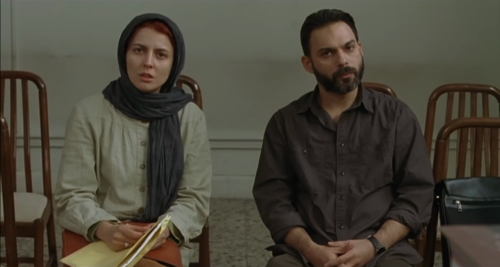
The film opens with this scene of direct address and invites the viewer to "participate." By the end of the scene, the relationship between Nader and Simin has become clear, but so has the political and legal climate under which the remainder of the film will operate. While many of their other scenes together involves some kind of variation on this discussion of their relationship, none of the rest of them are shot straight to the audience. While this shot may seem to have been intended to establish Nader and Simin's relationship, it was actually constructed so that the audience could have a working understanding of the legal world at play within the film. In a sense, it is almost its own character. This two-shot is actually a two-shot of the viewing audience and the Iranian justice system that Farhadi is exploring within A Separation.

Thinking about A Separation got me thinking about other foreign films, due to the way that children and the relationships with children were of such high consequence in this film. Within the confines of this film, children were the one thing that were held above almost anything else, aside from religious traditions and the Qur’an. As discussed, this was exhibited in the way they were shot and the way their characters were constructed as well. But this is not a purely Iranian filmic function. In fact, a high respect for children seems to be very traditional to films that were not made in the United States.

From Bicycle Thieves (Vittorio di Sica, 1948) to Fanny and Alexander (Ingmar Bergman, 1982) and beyond, children have been celebrated in foreign cinema. That celebration may take on different forms (I wouldn’t call Edmund’s experience in Rossellini’s Germany Year Zero much of a “celebration” but he is still a remarkable protagonist, nonetheless), but the idea that children can function as fully-fleshed out characters in a diegetic context is something that is not new to the foreign film circuit.

With some exceptions, the American film world has insisted on portraying the under-12 set as a bunch of fun-loving idiots who just “wanna have fun.” These kids will eventually grow up to be the Tall, Dark and Handsomes that we jettison onto the silver screen, is the thought process. That’s all fine and good, but please note that we also are the film industry that began the Killer Kid genre. So, while I love the hell out of The Bad Seed (Mervyn LeRoy, 1956), The Omen (Richard Donner, 1976) and Orphan (Jaume Collet-Serra, 2009), we should be thinking more critically about this. I would argue just as hard as the next gal for the rights of Killer Kid films to exist, but depictions of children are quite real and quite dangerous. More importantly, as part of our media, they are also quite provocative.

If Forbidden Games  (Rene Clement, 1952) doesn’t break your heart, I’m pretty sure that you don’t have one to break.  Like Rossellini’s Germany Year Zero, this was a direct reaction to World War II. Clement, who had just had quite reasonable success with his French Resistance film in 1945, La Bataille du rail, was not quite finished with the subject matter. Then again, in 1952, Europe hadn’t quite recovered fully from the war, financially or psychologically.

Using children to investigate the horrors of war was something that many European artists did, either through literature (The Tin Drum  by Gunter Grass, published in 1959, then filmed by Volker Schlondorff) or filmic means. The anti-war slogan “War is not good for children and other living things” was practically created by post-WWII cinema in Europe.  Forbidden Games is still highly effective on every level it was intended for, and probably several more. Clement used the idea of the war orphan, something that, by that time, had become as commonplace as breathing, and used it as the method through which to tell his story and voice his message.

The idea that “children won’t understand” is a myth. When Paulette and Michel have a conversation about her parents’ death, she may not be able to comprehend the idea that it was a Nazi-air-raid that killed her parents, but in their conversation she is the one who puts two-and-two together. Michel does not have to inform her of her parents’ demise, Paulette just renegotiates them on her own terms, making it all the more heart-breaking. “So they are in a hole to keep dry from the rain?” she inquires. Michel nods. No fuss, no big harrowing sit-down. She gets it.

Foreign films seem to place more faith in children than we do. It’s rather unfortunate. One of the best films I’ve ever watched or ever will watch is about an adult having faith in a child. (sidenote: this is also where the graphics for my blog come from and I totally cried when I rewatched this clip before adding it in here!)

Cinema Paradiso (Giuseppe Tornatore, 1988) is another film that goes by Forbidden Games standards: if this doesn’t hit you right where it should, you’re running on empty, buddy. The relationship that this film explores is one that very few films in the world ever have. It portrays an adult who trusts a child to be smart and talented and never treats him as anything less than that. One other thing of note- although this film was released in 1988, the story being told starts within a flashback that begins just after WWII. Once again, the trope of post-war Europe and its various parts plays an awfully big role in Cinema Paradiso.

There are many, many more to be looked at and discovered. Plenty more that I have not encountered, I am sure. But I still find it puzzling that we have only recently begun to utilize children within our cinema, and I’m still not certain that it is to their advantage. While I enjoyed Little Miss Sunshine  (Jonathan Dayton, Valerie Faris, 2006) quite a bit, that was still not the central protagonist role that I believe that children are capable of playing.

Perhaps it is too late for us. Perhaps we are too corporate of a country to develop anything more than Toddlers and Tiaras, a show certain to produce more antisocial personality disorder than you can shake a stick at. Perhaps we do have to leave it to incredible films like A Separation to show us that children are still able to function as powerful positive figures within the cinematic spectrum. I’m not sure. Either way, I think it’s important that we remember that the world hasn’t always been about Firestarter (Mark L. Lester, 1984) and Audrey Rose (Robert Wise, 1977). Sometimes it’s just been about Pather Panchali  (Satyajit Ray, 1955) and The 400 Blows (Francois Truffaut, 1959).

My Superbowl: The Academy Awards & Me, 2012

I’m not going to lie to you. I didn’t see everything this year. I didn’t even come close. In fact, I saw more things that were made in years before this year than in this current one. I went to the Film Noir Festival and the TCM Film Festival (which you can read all about here and here). I did the Reel Grit Six Shooter up at AFI, various stuff at the Cinefamily and a grip of stuff at the New Beverly, not to mention the Egyptian.

IT’S BEEN A GREAT YEAR FOR CINEMA. Just not necessarily new stuff.

Truthfully, if you wanna read that list, hop on over to the illustrious and welcoming Rupert Pupkin Speaks, where he has been gracious enough to provide a space for me to babble on about my favorite films that I watched this year that did not come out this year.

However, since I stayed up WAY TOO LATE last night to be utterly disappointed by the Academy of Motion Picture Arts and Sciences and their idiotic and exasperatingly schizophrenic choices of what are apparently the “best films made in 2012” and their acting milieu, I think I need to post my list too.

My friend Ricky says that his choices are always right and the best. My friend Ricky is an egotist.

I will only go so far as to say that these are the films, actors and theatrical engineers that I enjoyed full-throttle. The individuals that gave me ear-gasms, eye-gasms and brain-gasms. ME, not anyone else. While I would argue vehemently for the inherent quality of any (and indeed all of these films) I believe quite deeply that everyone is entitled to have a differing opinion when it comes to the cinema. If we did not, damn, life would be boring. While I heavily believe that the Academy made gigantic errors in their picks this year for “bests,” I am always more than happy to have healthy debates and discussions on any films as long as they stay respectful of other people’s opinions.

It may seem hypocritical for me to state that I think that the Academy is just flat-out WRONG in one sentence and then happily move forward to chat about being able to agree to disagree on filmic opinion in another, but I believe them to be different arenas. Being that I am in training to become a film archivist, the Academy bears a certain responsibility and it has dropped the ball in the last few years…big time.  While we sit here, fully aware of the changes taking place in our cinematic landscape (35mm to digital, 3D and VFX technologies, etc) there is a large responsibility to history that the Academy bears and I don’t think that they know quite  how to handle it at this juncture in time.

See, this historic responsibility is bisected, with one arm towards the Industry Professionals and the other towards the outside public. What I see here and now is an inability to balance the two, and it’s difficult for them and for us. It is difficult for them because the Business  is their “meat and potatoes” but the PUBLIC is their “bread and butter.” So how do we set this table properly? Everyone needs to stay pleased, everyone needs their money. So how do we maintain a decent set of nominations? It’s not like there weren’t good movies this year. Lord knows, there were great ones. But I really feel like a good chunk of the things that were stuck up on the screen for the year were there to pacify people, to make people happy, and not for representative means.

The Academy Awards are actually important. No one seems to think so. They laugh them off, get screeners, free films, whatever. Sure. At least they do around here. I know how that is. I live in Hollywood. For heaven’s sake, I spent an entire summer archiving all the screener VHS tapes we had gotten from the Academy as a “summer project.” My mom needed to give me something to do. I ended up watching Mike Leigh’s Naked (1993) that way. I might’ve been a bit too young to watch it at that point, but y’know…

In any case, I think it’s odd that people don’t think voting on cultural history is important. Yes, Virginia, that Footloose LP that I got as a kid from the Academy IS cultural history, dammit. So what do we have this year? We have some good stuff and some not so good stuff. Some things that people like and some stuff that I think people think they should like. Some things that I find remarkably offensive and in poor taste and some things that are probably pretty decent but speak to how starved most people are for the kinds of films that used to fulfill people’s entertainment “hole” on a regular basis and make them happy in an unspeakably pure and lovely way.

The Academy was created to house things as the best films of the year. The ultimate examples of filmmaking. Even the nominations should be that way. And these nominations are not that. It is disappointing to say the least. I like my moving image history satisfying. So, on that note, I’m going to give you my favorite films and performances of the year.

Here they are:

Favorite Animation:

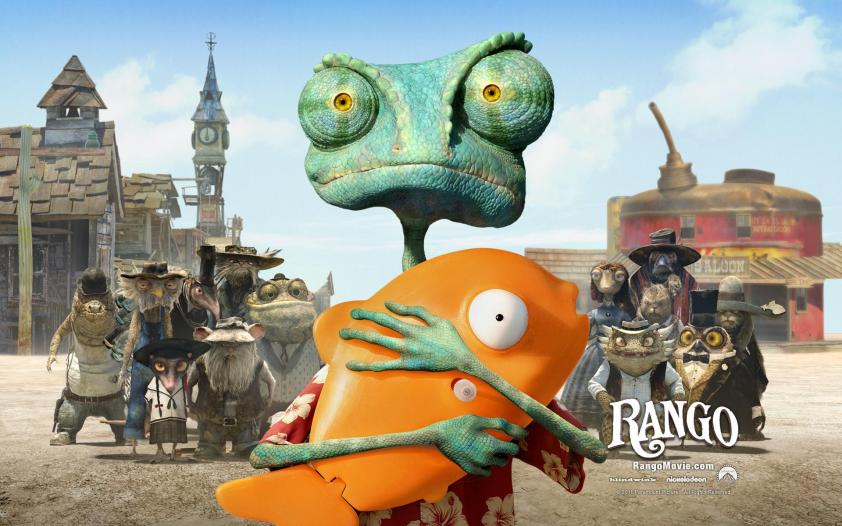
OK, so on this one, I totally agree with the Academy’s nomination and I hope this baby wins. I don’t think I could’ve enjoyed this more if I’d tried. Unless I’d gone to see it…5 or 6 more times. I wish I had. I really really loved this movie and I really really want to own it. If you love Sergio Leone and you have even a smidgen of a sense of humor, I believe you will love this. If not, you might have no soul. I would check.

Favorite Supporting Male Performances:

Patton Oswalt in YOUNG ADULT. While the film had a few problems, I liked it over-all, and HIS performance put me over the moon. It's not just because I like him either. He's a DAMN fine actor and this is the BEST he has EVER EVER been and I simply adored BIG FAN (2009)

Since I saw the announcements this morning, a record has been on repeat in my head: ALBERTBROOKSWASROBBED.ALBERTBROOKSWASROBBED. *This* snub makes me more unhappy than any of the others. His performance here created the term "Oscar-worthy."

"Nick Nolte. Warrior. Um, I love this film to bits If you wanna know how I really feel, check out the piece I wrote all about it, which was right before this. I REALLY loved this film. Even more than that, Nolte's performance was the best he has given in years. Multi-faceted and just gutting, it was an amazing feat of acting. I bawled and would do so again.

Favorite Lead Male Performances:

John Boyega, ATTACK THE BLOCK

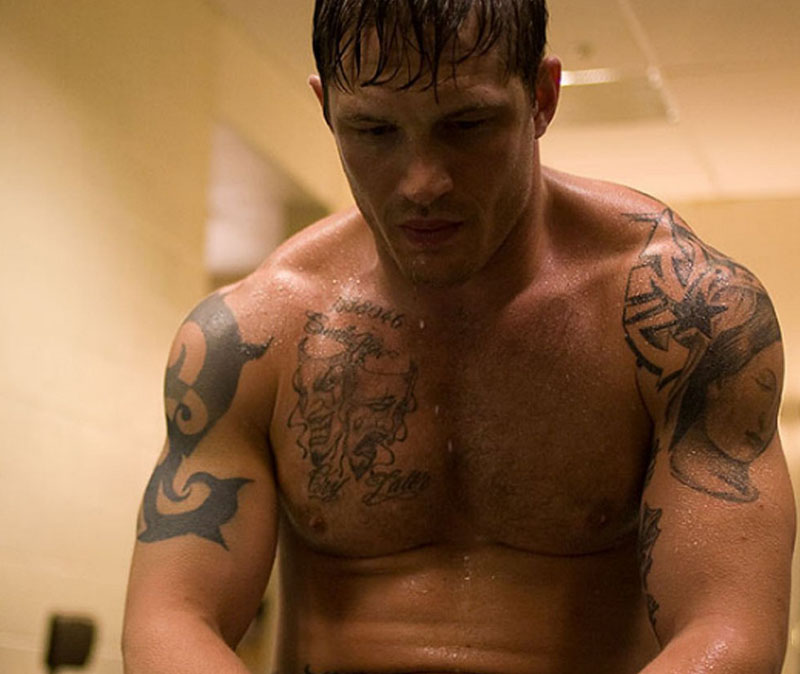
Tom Hardy, WARRIOR

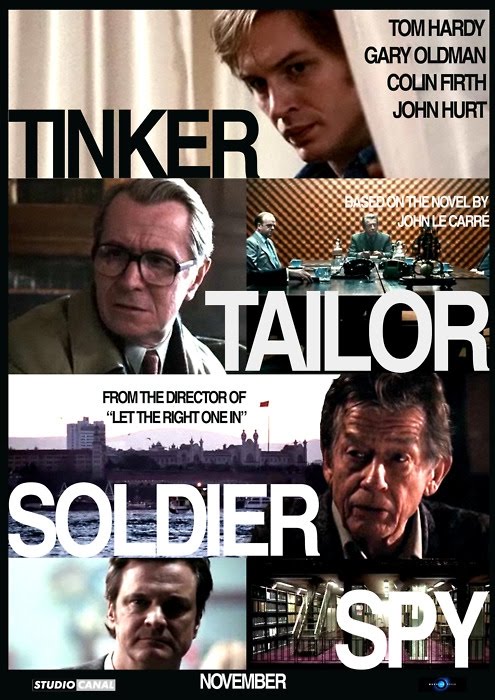
Gary Oldman, TINKER TAILOR SOLDIER SPY

Favorite Female Performances:  It’s been a rough year for the ladies. All the female performances I liked were…second fiddle and not there for very long. Not that this is a new trend (it’s not) but where are the juicy roles for women? I know there were films out there that people argued were very good for women, but those same films, while they were “good for women” also set them back quite a bit. My mom said that Meryl Streep was good in The Iron Lady. I didn’t see it. At this point, I’m going to give my favorite performances to one film I have seen (and adored), one film I haven’t seen but love the actress and trust other people’s judgement, and one that I am seeing next week and will probably absolutely LOVE TO BITS. I wouldn’t usually think it was ethical to pre-favorite a film performance, but with the paucity of chunky, decent female performances this year, I’m going to do it anyway.

I loved this film and I loved Ellen Page in it. SUPER was an uncomfortable and realistic film with gritty, gutsy goodness that I just ate up hungrily. She gave a fantastic show and I REALLY loved her.

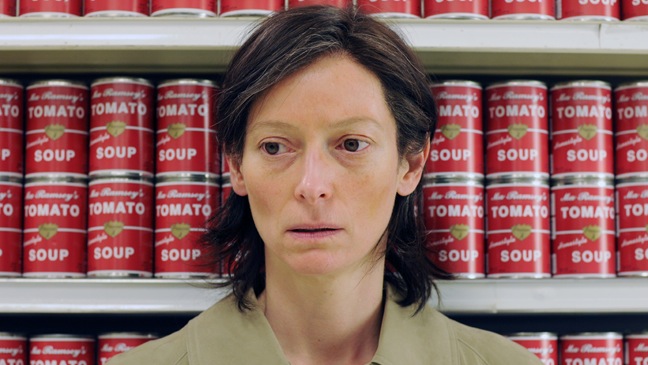
I love Tilda. I need Tilda. My life would not be the SAME without Tilda. I have not seen this film but somehow I KNOW she was exquisite. I have neverevernever seen her do wrong. I believe in her. We Need to Talk About Kevin is is a film I desperately Need To See.

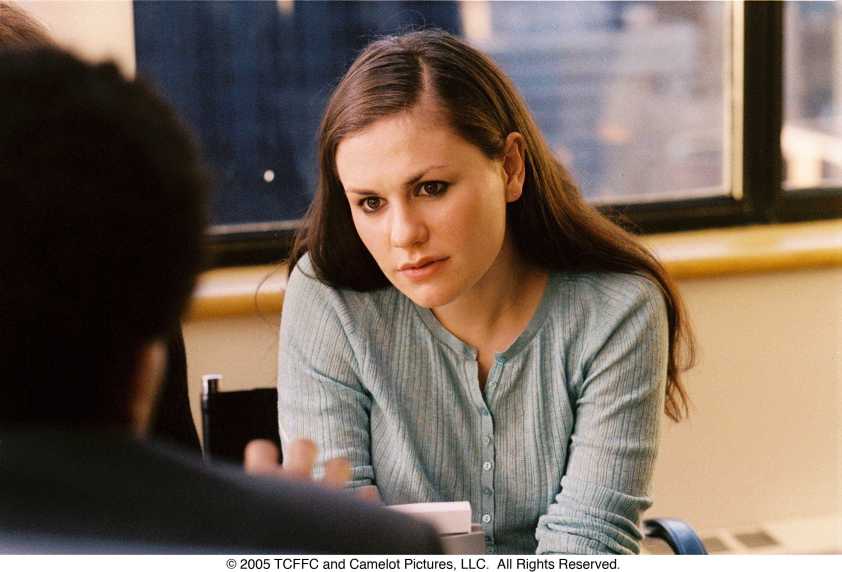
I finally get to see MARGARET this upcoming weekend. I bite my thumb at the powers that be who refused to let this film be released and sat on it for so long. It totlally looks like my kind of film. And Anna Paquin looks like she gives a hellova performance. If she doesn't, well, I'm wrong. But I've seen the trailer, chatted with people about it, and I know my taste. I think her placement here will be justified.

Favorite Music/Score: 

Tinker Tailor Soldier Spy— Alberto Iglesias

Attack The Block–Basement Jaxx

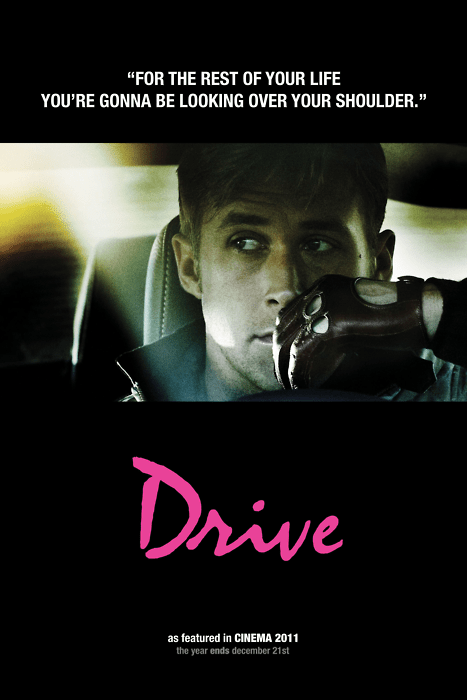
Drive–Cliff Martinez

FAVORITE FILMS:

I saw this 5 times theatrically and then more times than I can count via a screener. I also spend most of my time listening to the soundtrack obsessively. This film has most assuredly taken over a good chunk of my existence, as most Winding-Refn films do. No shocker there!

Saw this in the theater 4 times, I think. Would love to have seen it 4 more times. More movies like ATTACK THE BLOCK, I say!

I love you Takashi Miike. This movie blew my brain so far outta my head I had to pick the bits of my skull off of the wall of the theater. I simply love this movie more than words can describe. It is intellectual, visceral, VISUAL. So great! What a cinematic triumph. MORE!!

It seems like I'm really obsessed with this film, but I actually just really liked it. It is one of the better films, but I'm not as obsessed with it as I am, say, with DRIVE or ATTACK THE BLOCK. However, it fascinates me as it delves into intellectual areas that I *am* obsessed with AND it's an incredibly well-shot and well-acted film.

The minute I read the book, I loved it. The instant I heard it was being turned into a film by Scorsese, I went insane because I knew it was going to be FABULOUS and it was. Simply FABULOUS. I cried the ENTIRE way through it because I loved it so very very much and it was such a gift to my eyes

Saw this twice. First time in ages a film has made me excited to read the book it came from because the story was *that* great and I knew that the book would contain just as much depth! Saw it twice in the theater, thought it would lose something the second time but I was desperately mistaken. The sign of a great film is that it retains its greatness as well as gaining more with each separate viewing. This has those qualities.

The Devil You Know: History, Technology and Family in Warrior

Within the last few years, we have had a preponderance of sports-related dramas released. Notably, many of these films have centered not on football or baseball but on more violent sports, such as boxing or wrestling, and they seemed to serve the dual purpose of revealing certain truths about the sport and about those who engage in it.

But sports films (even violent sports films) are nothing new. Even the revelatory “insignia” of most of these films which seems to be the troubled or remarkably dysfunctional family situation was present back in the days of Body and Soul (Robert Rossen, 1947)

John Garfield in Body and Soul

with John Garfield’s boxer Charley Davis, whose parental situation is compromised or Champion (Mark Robson, 1949), with Kirk Douglas’ Midge Kelly, a boxer with a crippled brother and a unique ability to step on whomever he needs to.

These days, to use this insignia as ample explanation for characters’ motivations towards sports engagement is dreadful oversimplification. Realistically, if anyone were to argue it for the older set of films, I would say that not only were they rejecting the dynamics of genre conventions that these films employ (noir, melodrama) but they are also highly representative of social conditions. These films, whether they are The Wrestler (Darren Aronofsky, 2008), The Fighter (David O. Russell, 2010) or Requiem for a Heavyweight (Ralph Nelson, 1962) are based on more than individual protagonists’ surrounding environments. While not discounting those elements, the characters these movies focus on participate in sports such as this for a multitude of reasons, and the larger “picture” of the picture should not be shrugged off. It’s far too important.

The filmic texts of sports films become even more multi-layered as the years go on, underscoring not only individual reasoning and impetus but a variety of other sociological factors that come together to provide much richer pieces. Even a film as seemingly innocuous or “cheesy” as Over the Top (Menahem Golan, 1987) counts in that it adds an extra patch to this “quilt” in the way that it handles issues of social upheaval within the family unit as well as masculinity (even if arm-wrestling isn’t widely considered a national past-time).

In the world of Over the Top, arm-wrestling can be as professional a sport as wrestling or boxing, and being so…it is accompanied with the same issues: damaged family, economic problems, and many larger over-arching things like, well, concepts of the masculine. Aside from the Kenny Loggins power ballad.

It has come to my attention that the simple “he came from the wrong side of the track/bad family life” summation is trite and kindergarten analysis for the depth of these examples of cinema. There are much more fascinating treasures within these films to be unearthed, and it is our job as viewers to look a little deeper. These films work on contradiction and criticism: their narratives pivot upon the carnivalesque celebration of primal, base acts. If we take these simply at face value, then we are doing something wrong.

This year’s example of what I am speaking of is a film directed by Gavin O’ Connor called Warrior. Although at first glance, the film may seem to play off the same tired clichés of alcoholism, bad family life, economic tension and the “east coast,” Warrior is a multidimensional film that methodically examines the themes of conflict and technology all underneath the waving banners of family and sports. O’Connor manages to communicate his story within terms of familial struggle as well as within terms of media complicity. In doing so, Warrior becomes a tale that makes the audience at once aware that they, themselves, are complicated figures in the schema of the film as they are at once made active participants and passive empaths, no matter what age they might be. O’Connor’s multigenerational technological “mash-up” creates a space in which any viewer can find an avenue through which to join the narrative. It is all intentional.

Reality v. Fiction

Posters for the released film, when put together, were intended to create the one face

This lay-out of the film poster exemplifies the way in which the film was intended to run: a match-up game that didn’t quite match-up. Instead, it was more of a mash-up game. From a distance, one might mistake the two posters as one singular image, one person. Up close, there was no question that it was the actors playing the two different roles, Joel Edgerton and Tom Hardy. This visual division of the one “pseudo-image” into two, is the reiteration of the narrative split of the characters. However, this is the first example of how conceptions of reality and fiction are played upon from the very beginning. Had you chanced upon the two posters previous to seeing the film, you might have mistaken them for one whole person (together), or, seeing them separately, each poster might’ve appeared to be half of the same person (unless you were quite familiar with the actors in the film). Either way, the message behind the poster was the enmeshing of the two different beings into one; incongruous realities coming together, not fitting, creating a fiction, a trick for the eye.

The next time this reality/fiction mash-up plays itself out is within the actual film itself. Like other recent films, Warrior placed actual sports figures into the quilted layout of its story. Darren Aronofsky’s may have hired real-live wrestler Nekro-Butcher and assorted other wrestling announcers to give The Wrestler that true-to-life flavor, but O’Connor hired the flavor, turned up the heat, and added one more element: he mixed it up.

Kurt Angle as the MMA badass from Russia, Koba

Kurt Angle was the pride and joy of the WWE for many years. He was the one person that they could say had gotten a “real Olympic gold medal” and they played that for all that it was worth. Angle, in playing the character of Russian-MMA champion Koba, also played that part for all that it was worth. It is true that Kurt’s career has included a modicum of MMA bouts in the last few years, but his primary celebrity has always been within the world of televised wrestling. It’s what he is known for. Additionally, it is important to note that Mixed Martial Arts, as we know it, would not be what it is without the showmanship and the carnival-like atmosphere that Vince McMahon brought to the extreme sports-world. Kurt Angle’s appearance within the MMA spectrum is both shocking and also a historical “post-it-note” to the past, reminding those “in the know” where MMA came from.

While there are a variety of announcers and other real-life MMA-figures in the film, it is Kurt Angle’s appearance within the Warrior text that is one of the bigger reality/fiction matches. Like any non-fictional performer put in a fictional storyline, it hinges upon the audience’s familiarity with the real-life extreme sports world. In wrestling terminology, can O’Connor truly “put him over” as a MMA-champion and not the all-American wrestling hero that he’s been known as for years?

The use of non-fiction characters, whether they are big champs like Angle or just well-known announcers, represent the attempt to invite audience members into the front row; make them feel like they are part of the V.I.P section. Realistically, in a certain sense, they are. It’s like knowing a secret or being part of a tribe; you’re the one who gets those jokes, you get those “in” moments, you are the film’s reality. This makes a huge difference on how familiar you are with Kurt Angle. If you are familiar with who Kurt Angle is, his placement in the film relays a sense of history and gives the MMA-world a context to exist in. For people who are aware of Kurt Angle, he is history. Seeing as the Mixed Martial Art world is still a relatively new sport, and Angle himself has been wrestling with the WWE and then TNA for an inordinate amount of time (ok, maybe not Ric Flair amount, but a goodly bit of time!), recognizing him as a major wrestler and not a MMA fighter is pretty much a no-brainer in this arena, literally. The other bit of traction here is that, aside from the history, as a walking part of fan culture who has just been sewn into the filmic text, you are also well aware that everything is a little upside down, a little bit in conflict. The reality is in the fiction, the old history (wrestling) is at odds with the new (MMA), and there is nothing you can do about it but be fully aware. Because you know what only other fans know.

But I’m not an extreme sports fan, you say. I don’t know who any of those big muscle-y guys are! That makes no difference to me. It’s simply a film. I can watch it without being troubled by outside issues. Koba/Angle doesn’t matter to me! Well, my dear friend, you may be right. Unfortunately, there is the distinct possibility that you are not. If you have borne witness to film and pop culture in the ’80’s, you (very likely) have access to Koba in a different manner. If you cannot engage in the fan’s position of Angle-intimacy, you can also access him through the cinematic analogy. Within the narrative he is being used as The Russian aka the Ultimate baddie, the “anti-American” antagonist. Hrmm. Sound familiar? Well, Rocky IV (Sylvester Stallone, 1985) fans, it really should. Kurt Angle had a predecessor: Dolph Lundgren, the most Soviet Swede (if ever there was one) played the incredibly intimidating Ivan Drago, threatening America and Rocky Balboa, should he not beat him in that boxing match!

Rocky (USA) vs. Drago (USSR)…politics, sports or hair?

So even if you are unaware of Koba from his reality as Kurt Angle, there is bound to be the analogy between fictions, causing a similar rift between sports types as that which came up within the Angle-intimate situation. Boxing, like wrestling, played its own part in the creation of the sport of MMA, thus helping to give it a certain groundwork. Here once again we are shown another example of the clash between that which came before (boxing/Rocky IV) and that which is here now (Mixed Martial Arts/Warrior), a battle between kinds of histories and physical techniques, or, one could almost say, technologies.

Mixed Martial Arts itself is a mash-up. As has been shown through the discussions of the influencing filmic and non-fiction works, it is not a pure discipline. The very name of it states that it is Mixed Martial Arts. Warrior uses this sport as its playground for precisely this reason. Instead of using a stripped down, unadulterated athletic field through which to conduct a narrative, as David O. Russell did with boxing in The Fighter (2010), Warrior is playing in an arena that is so jam-packed with elements that it’s ready to explode. The sport is a combination of various different combat sports, all of which are brutal in and of themselves. MMA takes boxing, wrestling, jiu-jitsu, muay-thai, kickboxing, karate and other martial arts and lumps them all together into one vicious mass. That blend is indicative of the film itself, as it seeks to reflect its characters and their own issues with personal history, familial structuring and emotional maturity. The quickness and complexity of the various styles of martial arts play against the very basic nature of the more simple (but no less valid) boxing or wrestling. MMA as a battlefield for the inner fights of these men only underscore how much more complicated any singular fight can be, let alone the variety that are going on within the narrative of the actual film.

Instruments of Terror v. Instruments of Truth

Warrior confronts many different things, but none so interesting as the idea of technology. History is a major theme within the film and technology helps to highlight that in a variety of different ways.

One of the first technological introductions comes in the form of Paddy Conlon, the father character, played by Nick Nolte. When we first meet him, he is leaving a church and upon getting into his old, out-of-date car, he flips on a cassette tape recording of Moby Dick being read aloud. The idea that this man is still attached to various old kinds of machinery is a clear cut sign that he has been stunted on his path somehow. Throughout the film we find this to be the case. His relationship to his tape player (which includes a walkman) and book-on-tape signify his character more succinctly than almost anyone else in the film.

Paddy Conlon meets up with his past in its current state: his youngest son, Tommy Riordan (Tom Hardy)

Paddy is an alcoholic, and he spent the majority of his life letting down his family. His wife and children left him due to his patterns of drinking and violence but that didn’t stop him from repeating them. His behavior in respect to technological instruments in the film reflect his personal history which means he will continue to do the same things over and over again. He broke himself of his pattern of drinking through AA, but he is so stuck on the great machinations of the past that he continues to use out-of-date technology to tell him the same fictional story over and over again about a man whose pride was too great and the endless pursuit of what he believed was right cost him everything he had. In a sense, Paddy is punishing himself daily for the loss of his family by showering himself in ancient history. While there are flickers of change that we see occur due to other characters appearances and catalyzing factors, they do not last for very long, and when they are there, they cause such pain and conflict that Paddy is forced out of the present-day-era. In Paddy Conlon, what we see is a broken ghost of a man who lives in the past; the ever-present cassette-player, the semi-old-fashioned clothing and the tired and resigned countenance all part and parcel of his daily equipment.

Sometimes the pain of the clash of then and now coming together can be too much, as Paddy finds out when he attempts to update himself to the “now”

Digital technology plays a large part in this film as well. If it wasn’t for the digital technologies that are shown within the narrative of Warrior, Tommy wouldn’t have much of a story, which says quite a bit about Tommy. When we first see Tommy, he has come to meet up with Paddy, his dad, and he confronts him about a variety of issues and tries to get him to drink with him. Paddy declines, but Tommy continues to drink. As the film moves forward, it turns out that Tommy wants to be back in touch with his dad, but only to get Paddy to help him train for a big MMA match, to which the elder man happily agrees, thinking that it will be a way to “update” his history; move him out of his “dark ages” and help him bond with his son. But Tommy will have none of that. He is as cold as steel and as non-emotive as a piece of computer equipment. Even when his father reaches out to him with old “training items,” Tommy shuts him down quickly.

While at the gym one day, Tommy volunteers himself to fight one of the main fighters.

What he doesn’t know is that it’s being recorded on a cellphone. Shortly after the match, it makes its way from cellphone to YouTube, and goes viral. Due to this, Tommy gets recognized from another incredibly significant chapter in his life. The audience watches the lightning-fast progression as yet more digital machinery is utilized (a handheld HDcam) to show footage of Tommy from somewhere deep in his past. The face from the HDcam tape is compared to the one on the YouTube clip. Clearly, it’s the same guy. Tommy’s relationship to the digital world is a fascinating one. While his entire personal story within the film would have been skeletal without the meat put on it by the above incidents, technology is where he maintains a certain level of similarity with his father. Tommy would rather reject modern media than revel in it. While his reasoning is different from his father’s, it is still a maintained relationship with technology that is strongly significant within the view of being a major participant in a large sporting event. To not only decline but rebuff media and the technological bathing that comes with huge sporting events could be likened to listening to a cassette-player in the age of the iPod. It just doesn’t make sense to the majority of the world- why on earth would you want to do such a thing?

When Tommy gets accepted and goes to Sparta (the huge MMA event he has been training for) he refuses all the standard “bells and whistles” that come with being a main competitor. When all the rest of the MMA fighters have theme songs, Tommy had nothing. Where all the rest of the MMA fighters had outfits shellacked with sponsorships and loud colors, Tommy walked out onto the floor in a simple hooded sweatshirt. Even his style was “unsexy”- one hit, and the competition was out like a light. Was Tommy doing this in order to try to garner less attention (in which case he failed, as the choices he made only made the spotlight on him grow) or did he do this as part of a self-destructive plan, meaning he had more in common with his father than he thought? By negating his history, stubbornly denying the past and not participating in standard athlete’s ritual and behavior, his past caught up with his present much in the same way that Paddy’s did, and the conflict became unbearable.

Technology was the catalyst of Tommy’s evolution in the film and, more importantly, the technology associated with his character’s storyline was totally out of his hands. As a young man who had always felt like his life was beyond his control, it seems only fitting that we watch as he works out his raging pain and anguish against the technological forces and historical situations that ripped apart his plans and ruined his life in a physical manner. In a sense, the grande finale of the film has echoes of Ahab/Tommy battling the white whale/his past, only this time, he finds a way to achieve success without ultimate destruction.

A variety of other technologies are littered throughout the film, adding strength to ideas of history and the connective presence that machinations have between our past and our future. The high school kids that Paddy’s other son Brendan teaches organize a Pay-Per-View event at the local drive-in so they could watch their teacher “large and in-charge” at Sparta, Brendan’s wife refuses to turn the television on or deal with her cellphone until she finds out he’s succeeded in his first match and then she’s “in.”  In a picture that is highly corporeally-bound, there sure is a lot of reference matter to old and new machinery. Perhaps what Warrior tells us then, finally, is that by shutting away our histories, our emotional responses, our familial ties, we become fragmented. We may, like the poster, look whole from far away, but we are not. We are divided and will remain so until we can physically beat ourselves into some kind of submission and finally connect to what is really good for us.

Turn the Beat Around: It’s a Choice Between Fear & Love

Which will you choose?

No, seriously.

It’s a very serious question, though. Look at all the things that we have had happen this last year. The Occupy *fill in city/whatever* here.  The continued war issues. Unemployment hasn’t gotten much better. Ok, so we lost a few major nasty leaders like Kim Jong-il and Muammar Gaddafi, but still- on the whole- for folks like you and me? Where does that leave us?

Well, I’m pretty clear on where I am on a personal level. I had some big shake-ups during the holidays. Death, social restructuring, publishing rejections. It was a rough season! But each of those things has led me to discovering a more positive way to look at each one of the items for the new year (except for the death-that just plain sucked). To be honest, it has me very excited. It also taught me a new way to handle myself and my life.

For those of you who read this and know me personally, you know that I think Rod Serling is the man. Therefore, it should come as no big surprise to you that I spent the majority of yesterday watching Twilight Zone. Yep, 5-8 blissful hours in front of my television. Yeah, just me and my cat and my pajamas. I spoiled myself & had ginger ale & some pizza (semi-good pizza, of course- the kind with fresh stuff on it, like artichoke hearts, feta, garlic, that crap. Mmm!) and just wrapped myself in the glory that is that show. It was wonderful.

As many marathons as I’ve watched, there were a few episodes that I came across that I had never seen (SCORE!). One amazing one was called “The Prime Mover” and it was written by Charles Beaumont, one of my favorite TZ writers. The episode centers on two diner workers who don’t have much of a life until a car accident occurs outside their place of employ, and one discovers that the other has telekinetic powers. The remainder of the episode follows the two and what they do with those powers and the (eventual) ethical message that comes through as a result of that usage.

Dane Clark and Buddy Ebsen in "The Prime Mover" (orig. air date: March 24, 1961)

While I would rather not spoil the episode, one of the conclusions of the piece (and there are multiple, it is Twilight Zone, after all, a show that has more layers than a cat has lives!) and what I walked away with, is that perspective is crucial. Not only is perspective an important thing to possess, being able to appreciate one’s own skill set and own it is beyond measure. This episode reminded me of many things (as TZ episodes are wont to do). It reminded me that sometimes it is the simplest things that are the most important. Sometimes we forget even that.

I’m not a fan of resolutions. They are there to be broken. I also think that the very idea of 2011 having been a “bad” year and putting all sorts of pressure on 2012 to be a “good” year is about 8 steps beyond ridiculous. They are years, nothing more, nothing less. Merely aspects of a Gregorian system, decided upon a long time ago. We’re involved in this thing called life, and every day is going to be different. Some days are going to be good, some bad, and that’s just the way things are. Don’t think that just because it’s a new year things are going to change. You wake up every day and it’s a new day. C’mon! I think 365 is too many days and too much pressure. I think it’s just much damn easier to do it daily (maybe weekly, since I’m in school and have to deal with that fussy scheduling dilemma).

Be honest, be nice, be forgiving and try to make yourself a better person with the things you engage in and the people you interact with. If people make you feel poorly, kick ’em out. No matter how long they’ve been in your life or what kind of say that they think that they have. If you think you’ve gotten to a strong place without their help, chances are…you have. Basic rule: trust your gut. Your gut won’t lie. And rule 1b: stop ignoring your gut. We ignore our gut too much. It gets us in trouble and makes us filthy, stinking miserable.

I’ve made the choice to turn my bad things into good things. If I began to tell you all the things that I wanted right now that I knew that I was not going to get, we’d be sitting here until Kingdom Come. Instead, I’m going to take all of the things that occurred during the holiday season and use them towards my advantage. See, if you look at anything in the right way, it is to your advantage. You just may have to be hanging upside down by your ankles or underwater 50ft. If you don’t turn those things around, work them towards you, you will rot. That is something I can absolutely promise you. It’s your choice.

I guess I listen to the movies too much. I believe in a goddamn happy-ending, even if I live for film noir. So, yeah. That’s my take on 2012, and new year’s and all that mishegoss. Ain’t nothin’ to it but to do it, y’all.

And now, for a little Vicki Sue…

No Such Thing as a Guilty Pleasure–#8

Yeah, totally completely late. But my last film *will* get up before it’s 2012, even if it is after Xmas and a bit after Chanukah.

8) White Christmas (Michael Curtiz, 1954)

Before anyone bitches about how cheesy this film is, I usually watch it as a double feature with my first choice of this series, Black Christmas. It’s a lovely way to put the yin in the yang and give a kick to the sauce, so to speak.

Before you try, there is no talking me out of WHITE CHRISTMAS. First of all, there is Danny Kaye. I have a tiny little altar dedicated in my soul to that man that was erected as a small child when my parents gave me the Hans Christian Andersen (Charles Vidor, 1952) record and I memorized that. Additionally, I watched the film with a regularity matched only by with how much I watched The Court Jester (Melvin Frank, Norman Panama, 1956). In short, I watched the films and played those records a lot. Yes, I’m a Kaye-o-holic.The next thing about this film is that it’s a musical. I’m a musical junkie. Rogers & Hammerstein. Tommy by The Who. They all work for me. I love the singing, the dancing, all of it. But there is nowhere better to be fully entertained than in the old movie musicals where people could REALLY sing and dance. Could you imagine if today’s stars had to have the same kind of training in order to become famous that Kathryn Greyson or Judy Garland did? Exactly. We wouldn’t have so many complete failures and the output would be better. Not that I have an opinion about the subject or anything. But to act, sing, and dance…I love it. People now seem to think it’s “cheesy.” I think that they don’t know what they’re missing. Please pass me the Singin’ in the Rain (Stanley Donen, Gene Kelly, 1952).Finally, there’s the Michael Curtiz thing. I never knew this until I was much older and an educated cinephile, but the director was Michael Curtiz. Hello! UH, Mildred Pierce (1945)! The Adventures of Robin Hood with Errol Flynn (1938), Angels with Dirty Faces (1938), and, of course, everyone’s favorite Casablanca (1942)! So…ya know, it’s not like they just had some hack doing the film.

In any case, one last point I want to make about this film and why I love it. I have to say this at least once a day when I’m out with friends and someone looks up, grimaces a bit, and *oh no* admits to liking something that may not be so popular. They say, “Oh, this is my guilty pleasure.” And everyone nods, laughs, and it gets them off the “hook.”

What hook?

I will state, as my last statement of 2011, that I adamantly do not believe in guilty pleasures. If you find pleasure in it, you should not feel guilty about it and you should never let anyone ever make you feel guilty about liking it. I like this movie. I like it proudly. And I always will. It’s probably my favorite Christmas movie, it probably always will be, and I don’t care who knows it. See, guilt takes away from some of your pride and pleasure; makes you feel bad about what you like. I don’t believe that you should feel bad about art or media. It’s the antithesis of what it is there for.

And with that, I bid you adieu for the New Year, stay safe, stay well, and see more films!

Librarians and Ringing Bells-#7

While I wasn’t initially going to include this film, I was watching TCM the other night, and learned some new information about it that made it a whole new film to me. It’s not that I don’t enjoy the film, but there are other films that I think deserve a little more attention. See, this film is  everyone’s favorite film and, to a certain extent, this little piece of information that I learned on TCM is the reason why!

7) It’s A Wonderful Life (Frank Capra, 1946)

Inspired by an unsuccessful short story called “The Greatest Gift” by Philip Van Doren in 1939, Frank Capra’s film was released with a great less of a successful response than originally anticipated. While some attribute that to its dark themes or non-linear narrative, it also was going against super patriotic films like Best Years of Our Lives (William Wyler, 1946) , which definitely gave it a run for its money.

So how did this film make the jump to becoming one of the most loved films in all Christmas-film-history?

Simply put, the answer to that question is copyright issues and television.

The film, released in 1946, was guaranteed protection under standard U.S. Copyright Protection laws for 28 years. So when 1974 came around, the film came up for copyright renewal. Within that time period, the film was only allowed to be played with proper permission and through proper dispensations, lest the individuals who wanted to show the film get in trouble for copyright infringement.

However, when 1974 rolled around, Republic Pictures, the original copyright holder, dropped the ball and didn’t renew the copyright. This started a media chain reaction that caused the film to become as fundamental to the Christmas world as Apple Pie is to the US image.

Long story short, It’s a Wonderful Life became public domain and shown on just about every channel on television during Christmas time for many years. You couldn’t switch a channel without seeing Donna Reed’s face. If it wasn’t for this little “accident” of Republic’s (which was “fixed” a few years later, thus why it doesn’t get played as such a multi-channel orgy as it had previously), this film would not be anywhere near as popular.

A little bit of history and copyrights go a long way…

So This is Christmas…–#6

I figured that for Christmas Day I would do a potpourri of sorts. See, alongside all the seasonal-related films that I adore, there are a whole bunch of TV shows, specials and songs with music videos. So this one is a little different from the others.

6) Holiday Audio-visual Mixtape

The first in all of this madness is a song I cannot go without hearing at Christmas time. It’s by one of my favorite bands, The Pogues, and features vocalist Kirsty MacColl. I have a special memory around this song, actually, related to the holidays. Sad, but Christmas-and-song-specific. I was in Ireland in December of 2000, spending my holiday break there. I was at University in England at the time, but I figured, “Hey- Christmas in Ireland, New Year’s in Scotland, sounds good to me!”

As I was walking around (I believe I was in Kilkenny at this point although I may have been in Galway– when I relocate those journals, I will correct this part of the blog), I was hearing a goodly amount of Christmas music and every place I went to seemed to be playing this particular song. While I didn’t think much of it, when I went into Supermac’s (the Irish McDonald’s, essentially), it seemed a little odd that these places were all playing the same exact song at the same time. At first I shrugged it off, and then, upon passing a newsstand, I saw the front of the newspapers: Kirsty MacColl had been killed in a very tragic swimming/boat accident in Mexico. I was devastated. Thanks to a friend I’d had since an early teen, I’d been a fan of her solo work as well, so this was just awful news. But at least I understood why every place was playing this song at the same exact time.

On the other hand, it was December, it is a Christmas song, and it has always been pretty popular so…who knows? It may have been playing anyway. In any case, I love Fairytale of New York, and you should too.

Another piece of music that I am highly tied to is one that came out in 1984, at the very height of when I was buying most of these individuals’ albums. It was a collaborative effort put together to combat famine in Africa and it was released around Christmas time. I remember that they blasted the living hell out of it when it came out and, hilariously enough, they still do. I remember being insanely excited about the video primarily (burgeoning archivist that I was, even then) because I wanted to make sure that I could name every single person singing in the video, and if I couldn’t (ie I didn’t know who it was), I wanted to find out more about them. Aurally I could identify almost everyone when I first heard it on the radio. Then matching it up visually was so. Much. Fun! At that age, I’m not sure if I was overly concerned about the kids in Africa as much as the fact that I owned an album from almost everyone on the Band Aid team (except, strangely enough, U2).

So, if you haven’t seen it before, welcome to the video that started them all…

On the Band Aid tip, there was a video that one of my favorite bands did that, while not Christmas-themed, was meant to parody this, and I would be remiss in my efforts here if I did not include it. I listen to this song every year around the holidays due to the video and its relation to the Band Aid video and also because it’s just a damn good song. Warning: if you hear the recorded version, it will not sound at all like the version you are about to witness, due to the fact that the recorded version is done by the band, and this version?? Well, you’ll see. It’s pretty fabulous.

So aside from the music video stuff, there’s a whole televisual side of Christmas that I dig on, and no, it’s not the Star Wars Christmas Special. While I’ve seen that and it’s…got its points, there are much better things you could be watching. If you want a little bit of the kitsch, I personally think that Peewee’s Playhouse Christmas Special (Wayne Orr, Paul Reubens, 1988) is probably one of my favorites. Anything that involves the Del Rubio triplets, Annette Funicello, Peewee Herman, and Grace Jones singing “Little Drummer Boy” automatically has me, no questions asked.

I’ve always been a Peewee fan, so a Christmas special from the Playhouse will always get my vote, but this one is especially fun. When it came out on DVD, I was thrilled to my eyeteeth. If you haven’t seen it, and that taste of Grace Jones whet your appetite, I would highly recommend it. It really is all that and a bag of chips.

On a more serious note, my favorite television episode having to do with Christmas comes from the mind of Rod Serling. If that didn’t clue you in, it is a wonderful episode of The Twilight Zone starring Art Carney entitled, “Night of the Meek.” Carney plays a man named Henry Corwin who is, for all intents and purposes, a seemingly “bad Santa.” As we meet him, he has just gotten fired for his drunken lateness to his job (playing Santa), and he is at the end of the line.

But, surprisingly for The Twilight Zone, this is an episode that has more of a redemptive stroke than normal and much more optimism (although for Serling, his kind of optimism is not everyone’s optimism). This episode is about what the season is truly about: holiday spirit. And no matter how grim I may seem at times about the holidays, and no matter how Grinch-y I might get, The Night of the Meek renews my soul.

But Rod Serling is the man who truly makes me think. About many things. So, while I love many of the other Christmas specials and films, it is truly Night of the Meek, Season 2, episode 11 of The Twilight Zone that truly makes the holidays a holy and sacred occasion. If you haven’t seen it, I beg of you to give it a chance. It will air this holiday season. Watch out for it. It’s what it’s all about, at the heart and soul of it.

Bright Light! Bright Light! or How I Learned to Love Microwaves–#5

Joe Dante is one of the nicest and most knowledgeable guys you’ll ever meet in your life. From the first time he ever programmed a festival at the New Beverly in 2008 (discussed here by the inimitable Dennis at Sergio Leone & the Infield Fly Rule), I knew he was one of the “good ‘uns.”  Realistically, I had known this since I was a kid, but I reserve judgement on someone’s person until I get a chance to meet them (if I get that good fortune- which is rare- but in LA…it happens). However, Joe is absolutely golden. But I really should’ve known that since this was the man who gave us Matinee (Joe Dante, 1993), a film that has a lightly-disguised William Castle-like character (and I’m a huge Castle fan) and is dedicated to the undying love of cinema. I also should’ve known this since I remember seeing Innerspace (Joe Dante, 1987) with my mom in the theater as a kid and thinking it was one of the coolest movies ever, adoring the Sam Cooke song, and thinking that is this was what movies were about, I wanted to see ALL OF THEM all of the time. And yes, I’m a huge fan of The ‘burbs (Joe Dante, 1989) as well. I was so very pleased to get to see that at the New Beverly a little while ago as well.

But, as we are all aware, the erudite Dante made a Christmas film. And it is not just any Christmas film, it is the Christmas film.

5) Gremlins (Joe Dante, 1984)

One of my friends is probably the ultimate anti-Christmas-film person. He’s down with the food, but the “happy happy joy joy” stuff and any kind of religiousness? Keep that the hell away from him. It’s just not his style. But he loves Gremlins. He really, truly adores this film like it was going out of style. And considering some of his other favorite directors are Tod Solendz, John Woo and Werner Herzog and he believes that Salo by Pasolini is a staple…this is saying quite a bit.

He’s not alone, however. Gremlins  is widely considered a classic. And I think it’s generally because not everyone likes Christmas in its Joyful Portrayal. See, every bright room has some dark time, and to many people (myself included) the dark time is, in many ways, a great deal more interesting. In fact, if you were to take a look at the other “classic” Christmas films, they are all a bit dark, which leads me to question why we have so much trouble recognizing that. I mean, to be completely honest, It’s a Wonderful Life (Frank Capra, 1946) is a film about a guy who wants to commit suicide. How cheerful a theme is that around holiday time?

Polish Gremlins poster. I love Polish posters.

A man I wrote about a few entries earlier, Bob Clark, has dipped into the “dark time” of the Christmas room twice, with Black Christmas and with A Christmas Story (Bob Clark, 1983). While the latter film is more comedic, it has more edge than a straight-up, feel-good comedy. Most of the film centers on the gun that the child-protagonist wants, and how his parents think that it will “shoot his eye out,” not to mention the rest of the dark things that happen to the young members of the cast. Are we supposed to injure children in Christmas films? Heh. Well, maybe in my kinds of Christmas movies. As long as they’re accompanied by the right balance that Clark gives us (which he definitely does, in Christmas Story– if you haven’t seen that one, see it).

Gremlins has monsters in it. And lord help me, I’m a sucker for a monster movie. I don’t care what season it is. And, more importantly, it has the significant interplay between human, monster, and sympathy. The things that will always get me. You put those things in a film, and more often than not, I’m YOURS. Then you add humor and a dark view of the holidays??? SOLD!! Gremlins has been on my list for these reasons and always will be. People can try to knock it, but they will always fail. In my mind, it is an essential. It wouldn’t be the holidays without it!

Santa with a Machine Gun–#4

I realized after revisiting my last Christmas favorite, I really dig Christmas-themed films that are shot in/around Los Angeles and where Los Angeles plays a key role. Ok, so clearly a good chunk of the films made are filmed in Los Angeles. Of this I am clearly aware. However, what I am speaking of is the group of films that make it a point to mention the city, continually referring to it and positioning it, visually and narratively, as a character within the film.

One of my very favorites amongst these that also uses the Christmas theme is also one of the most beloved to many other folks I know.

4) Die Hard  (John McTiernan, 1988)

While I have seen this film many times, I finally got the opportunity to see it on a big screen a few weeks ago and I was blown away. It was the perfect example of how a film changes completely in the transition from small-to-large screen. I argue with people all the time about theaters and supporting them and how necessary it is, but seeing Die Hard on a big screen, in 35mm, just drove that point home even moreso.

I could give you the standard spiel about how you notice more within the film on a big screen or how Die Hard is an action movie so it has better resonance and power bigger, but those are things you probably are aware of. The basic truth is that films were not created for small screens. They were made for the cinema. Therefore, whether you are watching them projected via 35mm or some digital manner, they should be seen the way the artist intended their work to be seen.

You wouldn’t hang an authentic Van Gogh painting in the local McDonald’s, would you? It would be inappropriate. Television is a different thing. That was created specifically for the little box. In that, it works perfectly, and it is platformed absolutely to its advantage. But as we start losing theaters, we start losing the possibility of seeing films like Die Hard on a big screen and that is a real tragedy.Seeing this film in all of its glory, large and in charge, was like seeing it for the very first time. I sat there and I thought: well, I may not celebrate Christmas, but the fact that I’m getting to see this, on a big screen, and it’s so exciting, and shot so well…this is my Christmas. John McClane is my barefoot Santa! Hurrah!

In general action films get me pretty happy, but this time I was practically exploding with cheer and good will towards the whole theater. It’s a celebratory film and the Christmas aspect of it adds that extra layer that makes it just that much more suspenseful. It would still be a good movie without the season’s greetings, but that makes it a great movie.