
After Obsession left such a bad impression on me, I have decided to go a different direction with this series.
Instead of deconstructing why I dislike the term elevated horror (which has been done so many times already by plenty of good people), I have decided to use the term elevated in a different sense: to actually ELEVATE a collection of radically underseen and under-appreciated horror works that deserve discussion, exploration and recognition.
When it comes to horror, the bottom line has traditionally been set at “what is the scariest thing you can think of experiencing?” With very few exceptions, that award has gone to the realm of the fantastic. From undead slashers and invasive serial killers, from deep dives into the supernatural and/or the occult to your standard borderline scifi creature features, horror has provided plenty of good scares. And while there is nothing wrong with these categories and I love all of them, the hill that I will 100% die on is that colonization and its accompanying trauma is the most terrifying and horrific experience that a human being could possibly undergo.
This month I sit firmly on the side of highlighting a certain area of horror cinema that has (thankfully) entered the horror canon unapologetically without taking no for an answer. Using classic genre tropes and rhetoric, these movies explore critically important and highly ignored narratives while intentionally reappropriating horror elements much in the way that the cultures and peoples discussed in these films have had themselves and their own cultures reappropriated. These films fucking rule.
And it makes me so. Grateful. For. Horror. Horror is probably the only genre that allows for the full-blown no-holds-barred graphic nature of this historical experience to be fully explored without compromise. And when it comes to exposing colonialism, its hateful nature, players and behavior, there should be NO COMPROMISE. So that said…I will warn you: if you’re not ready for some pure unadulterated anger and perhaps some of the most horrific rage-driven violence you’ve ever seen, these are not the films for you. But maybe they are. And maybe you need them regardless.
So let’s start.
This week was Indigenous Peoples’ Day in the US so I want to discuss a genuinely striking film from 2019 called Blood Quantum. This film was written and directed by Jeff Barnaby, a First Nations/Mi’kmaq filmmaker who was born on a reservation in Listuguj, Quebec. Blood Quantum takes White Colonialism to task for its treatment of Indigenous peoples throughout the years via the classic horror tropes of zombies and their relationship to viral illness/plague. And when I say it takes White Folks to task…IT DOES THE JOB, PROPER.
In all honesty, I wanted to revisit this film before I wrote about it because it is so heavy-duty, layered and, frankly, concurrently violent and beautiful. But I also wanted to publish this as close to Indigenous Peoples’ Day as possible. So choices have been made. If this article doesn’t do Blood Quantum justice, I apologize. I just want people to watch it.
I had heard good things about this film for a long time. I don’t know why it took me…6-7 years to watch it? But when it was released, everyone I know was raving about it. I wish I had seen it then so I could’ve had some interesting conversations.
I genuinely wonder what your Average White Guy Horror Film Fan thought.
I hope he was uncomfortable. I hope he was REALLY uncomfortable. This does a lot of things that a film like Get Out kinda…was just too accessible and nice to do. This film is. Not. Fucking. Nice. It does not play. And that’s a beautiful thing. But at the same time, it made me cry due to its sensitive character portrayals and genuine investigations into human relationships. This is a well-written film and brutal as fuck. It’s 100% my jam.
So let’s start with the title because, well, it plays a huge role in the plot and has historical significance.
According to a piece from the Native Governance Center, blood quantum is
a concept created by white settlers that refers to the amount of so-called “Indian blood” that an individual possesses. Blood quantum appears as a fraction and is “calculated” based on an individual’s family tree. Rooted in eugenics, the concept lacks any scientific basis…Blood quantum is a stand-in device for lineage imposed by the U.S. federal government to disempower Indigenous people and separate them from their lands, resources, culture, identities, languages, and futures…
This may sound familiar to those who are familiar with US Colonialist history. If you’ve heard of the “One Drop” rule for African-Americans (having “one drop” of African-American blood automatically made you Black) it was a similar mythical instrument of racial identification. And, as we can rightly see, both were based on completely whacked out White People “Racial Science” and they were both weaponized as horrific tools of colonialism and White Supremacy, allowing for entire populations of people to endure more pain and suffering than can any white person could possibly imagine.
But blood quantum has become more complex as the years moved on and that certainly comes into play in the film. Many tribes still use this colonial construct to decide who is accepted as part of the tribe and gauge “Indianness” and lineage. But as this interview with Elizabeth Rule has noted, much like Barnaby’s film, many times it’s now used simply as a tool of endurance. Rule states,
The thing that I’ve found to be most interesting about both arguments — in support and against blood quantum requirements — is the language of survival. So, lineal descendant supporters think about high memberships through the lens of existence as a resistance right. And so there’s a desire to build up tribes’ numbers and capacity in order to survive and perpetuate the tribe. On the other side, those who defend blood quantum requirements also evoke this language of survival, and they look upon those blood quantum minimums as a way to preserve an already existing closed community that’s very close and … usually very culturally connected.
So, the film’s title.
It’s already loaded. Without most of the audience knowing exactly how loaded it is.
SPOILERS AHEAD:
The film begins, as horror films usually do, on a perfectly normal day…Until it isn’t. We are introduced to Traylor, a First Nations police chief sheriff on the Red Crow Reservation.
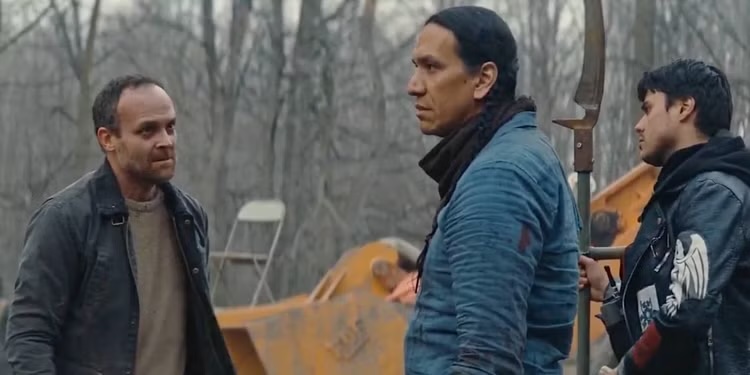
After encountering dead animals coming back to life and some serious chomping action from violent criminals and other random white people, Traylor gives up on passing this whole thing off as a Bad Monday. Naturally, the film escalates but not in a conventional manner. We jump forward to 6 months after this No Good, Very Bad Day and the Red Crow reservation is now an apocalyptic wonderland, looking quite a bit like something out of Mad Max or a George Romero film.
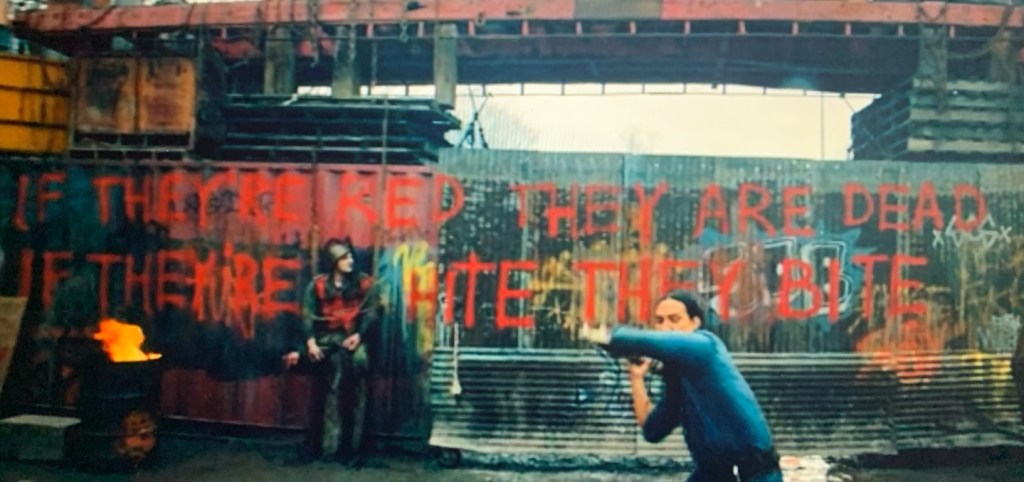
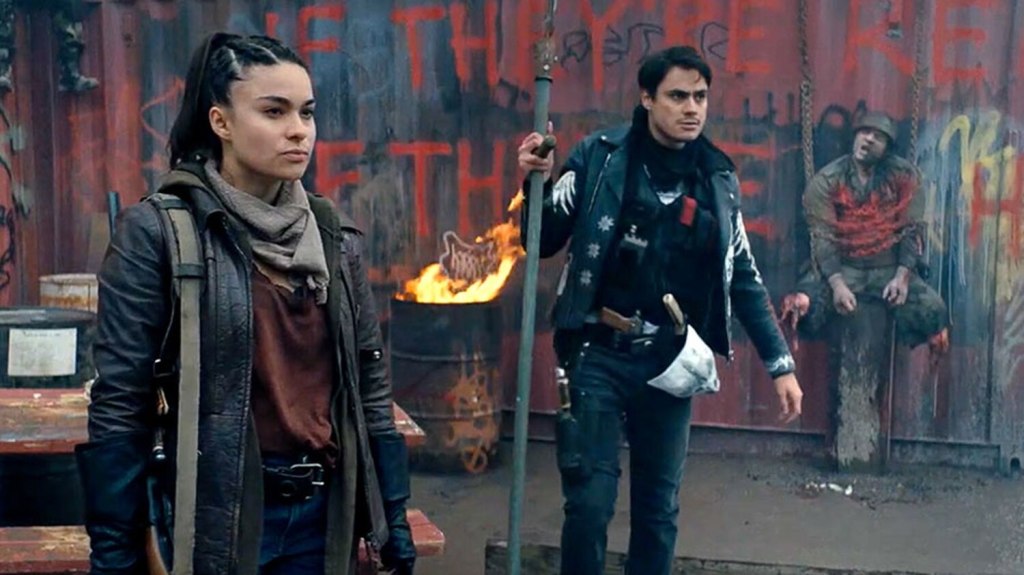
But it gets better. The big reveal comes next.
We discover that there have been no infections within the Red Crow tribe even though people like Traylor were bitten by the infected. As it turns out, the Indigenous genetics of the First Nations people made the Red Crow immune to the bites and the resultant plague that “turned” people. But other people didn’t get so “lucky.”
Most of the population (read: white people) do not have that genetic safety code. And these people periodically come to the compound begging and pleading for safe space and shelter.
What a conundrum.
AND WHAT A FUCKING PREMISE.
And that’s just the tip of the iceberg.
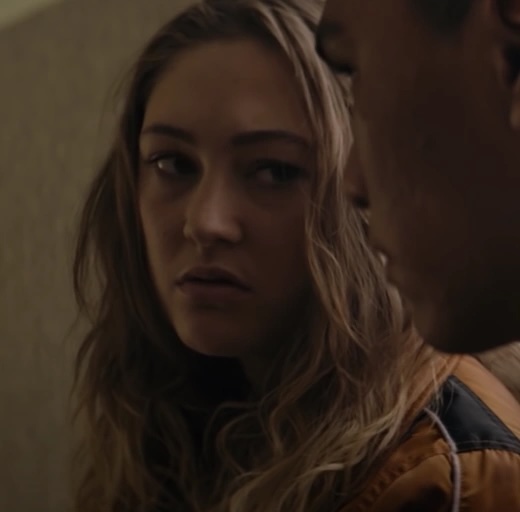
The interracial relationship between Traylor’s son, Joseph, and his white (very pregnant) girlfriend makes life very complicated for, well, everyone. She’s the only white person who lives there and is somewhat (and I do mean somewhat) accepted. I could write an entire blog just on her positionality, white privilege and non-comprehension of the whole situation.
Then there’s Traylor’s other son, Lysol, raised in foster homes and burning with anger at not only white people but the world in general. He’s a genuinely fascinating character and represents colonial damage and trauma in a whole different way (which I will hit on later) but ends up having a massive impact on the narrative and everyone in it.
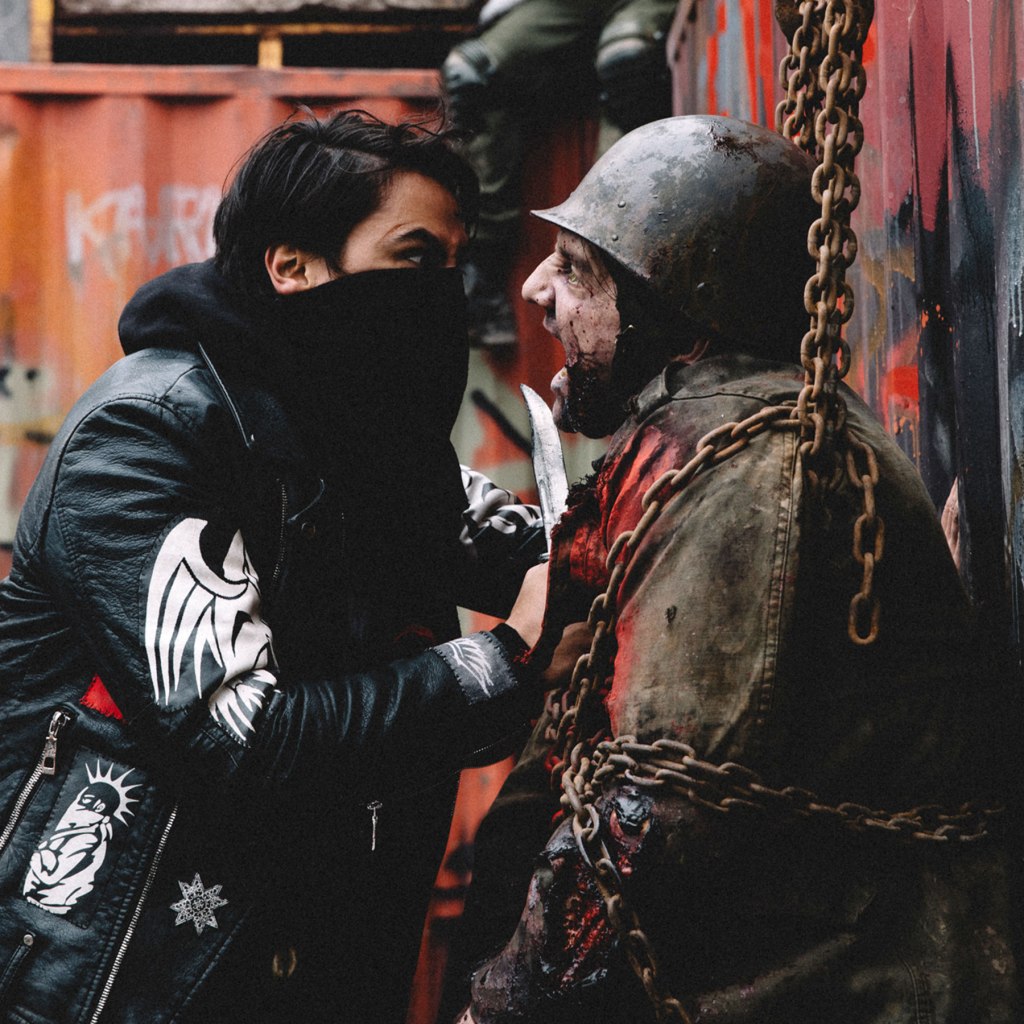
Blood Quantum is an exquisitely layered and complex film bursting at the seams with the full-throttle gore and excitement of a proper zombie film. The FX are no joke and they do not cost the plot anything. While I would certainly be a bit annoyed if people only watched it for that and straight up ignored the immense dexterity with which Barnaby wove a properly intelligent anti-colonial narrative into an electrifying horror film…I guess I would just be glad people are watching it. After all, I don’t see how you could, in all seriousness, call Blood Quantum just a “zombie film.” Most of it is in Mi’kmaq. That linguistic jump alone is a massive shift and just as important as the title.
The majority of viewers will view this as a “foreign language” or see this as qualifying as a “foreign language” title, but I would like to correct this. English is technically the “foreign language” in Blood Quantum. Mi’kmaq is a living language and has been spoken in North America (primarily in Canada’s Atlantic Provinces but going all the way down to Maine) for thousands and thousands of years. Far longer than white settlers have occupied Canadian or US soil. There is a mix of English and Mi’kmaq in the film but Mi’kmaq carries clear dominance. As I watched Barnaby’s film and it became more and more apparent that Mi’kmaq carried more power than English, I cried. I love horror films so much but to have a genre film actively rip apart the horrors of colonialism in a language that has actively survived the terrorism of white supremacy was a very emotional experience. This wasn’t the only time I cried. It brought out a lot of feelings, even amidst the blood and guts.
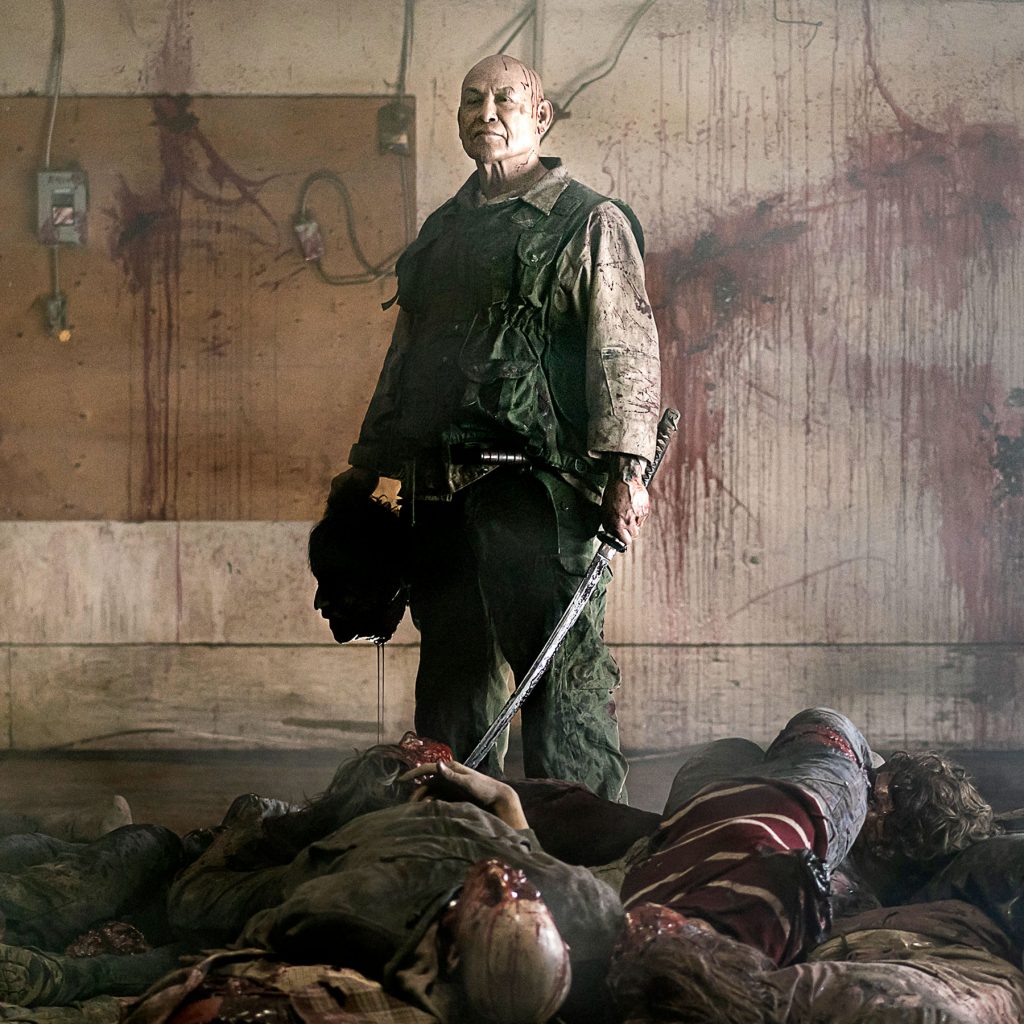
Most zombie media (especially that which directly references plague and sickness) facilitates ruminations on the self, identity and relations to community and future survival. That’s kinda a no-brainer, pun intended. And, of course, Blood Quantum is no different. But meditations on survival and community from the perspective of a colonized population do not hit the same way as a the frightened bleatings of privileged white folks. It’s not that I don’t have sympathy for General Zombie Film People, it’s just that white privilege exists all day every day and when hordes of white zombies are trying to invade a First Nations reservation? It changes everything. Not only does everything go up to 11 in terms of socio-critical relevance, but it becomes a different film. It becomes a re-imagining of past trauma when white people did the exact same thing just…without zombie-ism as an excuse. And bless Barnaby for this.
There is a lot of discussion amongst the Red Crow about whether the compound should allow white people in and whether they should save white people. Watching this conversation happen on film was incredible. But it was also gut-wrenchingly sad. That it should take a zombie invasion to revert proper agency and power to the very people whose land it was to begin with just gutted me (also pun intended, I guess).
And yes, these conversations about human decency and survival were real, especially when they dealt with children. But for me, I kept thinking: this is a First Nations community that has worked like hell to make themselves safe in the middle of an unsafe time and they are able to be safe from white folks for the first time in history. Why should they help white people?? If situations were reversed, what would have happened? Would white people have helped the Red Crow? I doubt it. As many zombie films/tv shows have shown, white folks are very much out for themselves in survival situations. But I guess that was part of the point.
Charlie, Joseph’s pregnant girlfriend, is white and (as such) tries to plead for “everyone” to survive. But it’s hard to watch her do that. Knowing that just outside the walls there are thousands of hungry and detrimental beings who are part of a population that has been trying to kill the people within the walls of the compound since the day they arrived on North American soil. White people in this film are zombies and diseased but…haven’t we always been? Even if we don’t have an actual “plague”? Isn’t colonialism a sickness? And, yes, I do say “we” because I am white and I cannot remove myself from this problem just because I am against the kyriarchy and am a fundamentally anti-colonialist individual.
I’m spending a lot of time on this because it hit me hard. Especially since it discusses land/space/property and safety so explicitly, things that First Nations people have never had the luxury of. The eventual allowance of a few white people in to try to save them was done out of altruism but it ultimately felt suspicious to me and echoed the history of white people taking advantage of Indigenous people and their kindnesses.
Ultimately, however, the story doesn’t go wrong because of the centuries-old obvious hate from white people, it gets undone by someone on the inside. Which is the most frightening aspect of the film. The hatred and rejection that Traylor’s son Lysol (given name Alan) has internalized (from all sides) causes him to act out in the most violent of manners, primarily against his own tribe, destroying everything and everyone in his wake.
I couldn’t help but think that this was also a comment on colonialism as well. Lysol, the product of foster homes, was did not receive the same sort of care and love that Joseph got, turning out bitter and fiercely angry. He was not the same kind of person as the rest of the people on the reservation. A troublemaker, into drugs and drinking, he comes off as a genuinely unhappy and hateful person, becoming more hostile as the film goes on. He vigorously repudiates Charlie for being white and vocally rejects her interest towards saving anyone outside the tribe, defending himself by saying that it was only to keep the Red Crow reservation safe.
Lysol’s past created him and, once again, I think we can turn to colonialism for an explanation. There is a tragically large historical precedent for First Nations children being removed from their families and getting placed in Foster Care. Blood Quantum takes place in 1981, putting Lysol smack dab in what is called the Sixties Scoop. This horrific collection of official policies in Canada forcibly took thousands and thousands of Indigenous children from their families and placed them in non-Indigenous homes, sometimes as far away as the UK, Australia or Germany. Suffice to say, they did not usually get treated well nor were they allowed to explore their culture.
While Blood Quantum takes place in Quebec, the Sixties Scoop affected all provinces and the discourse on Lysol as a foster child is real and so is the trauma he exhibited. Does it make his villain turn right?
No.
Does it make it understandable?
Hell yes.
Can we still look to and blame the horrors of colonialism and terrible whiteness for the terrifying conclusion to Blood Quantum?
ABSOLUTELY.
Blood Quantum asks a lot of important questions of the viewer and I believe that, unlike other, more mainstream horror works, postcolonial horror films give answers. Whether people are ready to listen is another story. I believe strongly that horror is the perfect genre to question and investigate difficult subject matter. I am so grateful for Blood Quantum.

