Elevated to the Gallows pt 3: Colonialism and New Zealand: Mārama (2025)

I have always loved the gothic subgenre. Its dark and twisted nature has held me in a chokehold since I was a kid. Horror, romance, whatever larger genre the word “gothic” attached itself to…I’ve always been 100% here for it. That said, through the years I have certainly asked myself whether or not my attraction to this subgenre was…healthy. While the Magic 8 Ball in my brain occasionally responded with a rather impolite “outlook not so good,” I never quit being interested in the gothic media landscape. Healthy or not, I was transfixed.
In fairness to gothic”ness”, it is a subgenre that shamelessly displays its dysfunctionality on its voluminous pitch black taffeta sleeves. It doesn’t pretend to be anything it’s not. I find that to be quite respectable.

Indeed, gothic horror, gothic romance, gothic “insert the larger genre here” doesn’t even attempt to hide the fact that its basic premise will always lie within stories about fucked up people with fucked up problems and a severe lack of control over their situations. To make matters worse, the viewer/reader will almost always end up hideously heartbroken for one or more characters due to the dramatic beauty and sadness that are par for the course within a gothic narrative.

Perfect examples of this can be seen in just about every iteration of Frankenstein that has ever been made, from literature to screen, every iteration of Rebecca that has ever been made, from literature to screen, and every iteration of The Haunting of Hill House that has ever been made, from literature to screen. Obviously, the quality of some versions are better than others and some exude more camp than others but the skeleton of gothic”ness” remains the same. And I love it all.
Dysfunction be damned.

But then I saw a film a few weeks ago that turned my world around and upended my conception of what was possible with gothic horror. This film took all my previously held concepts of gothic storytelling as a slightly damaging or damaged storytelling device and threw them out the window. I saw a film that was so genuinely important that it couldn’t be ignored or denied. This film was the New Zealand film, Mārama (2025).

Much like what I wrote about Blood Quantum, this movie takes horror genre tropes and clichés (specifically gothic horror in this case) and flips them in order to make bold and vital statements about cultural identity and the terror of colonialism.

Mārama (2025) was written and directed by Taratoa Stappard. A filmmaker of Māori descent, he noted that he made this film to honor and remember the women in his family. He has also spoken of plans to make more films on this theme, which delights me to no end. At the time of this post, Mārama is available to stream on Shudder, and I firmly recommend viewing it. Multiple times. Not only is it visually stunning, but the performances are phenomenal and the story itself is remarkable.
I’ve never seen a movie like this and doubt I ever will again (unless Stappard fulfills his movie-making promise).
It is horrifying, heartbreaking and infuriating. It is other level in its high caliber filmmaking and brutal honesty.

It does the British no favors. The manner in which it portrays their sheer indifference to cultural heritage destruction is wild. And completely on point. The best and worst thing about Mārama is how realistic it feels and comes across.

This film is challenging and a true horror film in every sense of the word.

Brief Synopsis:

A Māori woman named Mary Stevens receives a letter from a man in Yorkshire, England who claims to know something about her family. In true gothic fashion, once the lady arrives at said location, she is told by Nathaniel Cole, the master of the house, that the man who wrote the letter is now dead. She reluctantly accepts a position at Cole’s estate as a governess for a young girl living there, mostly based on the fact that this girl speaks te reo Māori, Mary’s native language. However…strangely…so does Nathaniel Cole. Mary soon discovers that this mysterious house is festooned with Māori cultural artifacts, including a wharenui (traditional Māori communal meeting house) that has been shipped all the way from New Zealand to Yorkshire and is simply sitting in the backyard.
It is by this building that Mary reveals her real (Māori) name to her young charge as Mārama.
While their relationship building is quite positive, the brightness of that moment darkens quickly and the story gets bad from there and a lot more bloody.

I hesitate to include too many spoilers as this is a film that needs to be seen and experienced.
The opulence of the gothic aesthetic plays monumental havoc with the savage flashbacks and psychic visions that Mārama experiences throughout the film. These images, seen only by Mārama and the viewers, lay bare the damage that British colonialism has caused the Māori people in no uncertain terms.
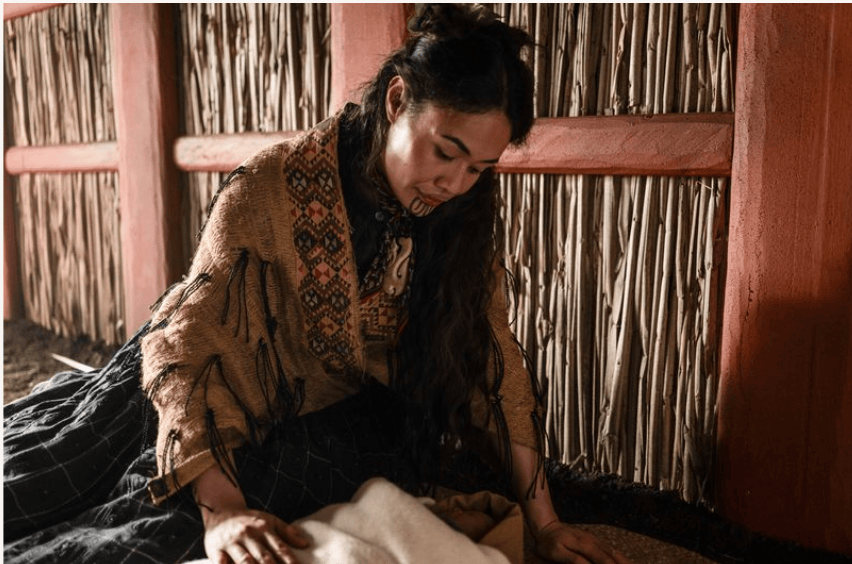

Traumatic and unquestioningly cruel, what we see through Mārama’s visions leave us no room to wonder what the relationship between the British and the Māori ever was but it does leave many questions about why this mysterious house has so many Māori treasures in it, including the wharenui and the little girl who fluently speaks te reo Māori.

Then, as if things couldn’t get any worse…they do. And when I say they get worse? THEY GET SO MUCH WORSE.

This will be the only scene that I will spoil. But it’s a big scene to me and I sobbed and cheered and gasped. I’ve never had a scene in a horror film produce so many sounds from me in such a short span of time. To call it brilliant would belittle its sheer power. It might well be one of the most important scenes in modern horror cinema.

Up until this point the film had a slightly supernatural edge with Mārama’s various flashbacks and psychic visions (although most were clearly trauma-induced so not supernatural at all), but this scene introduced the stone-cold reality and barbarous nature of colonialism. Every shot, every line of dialogue was real as fuck, and as such…it hit HARD.

It is a party scene- the birthday party for Nathaniel Cole, the master of the house, Mārama’s employer- and her presence has been requested. She has even been told what to wear. When she comes down to the celebration she sees a friend of Cole’s, another British man named Jack Fenton. She is shocked at the meeting. Not only does he, like Cole, speak her language, but he has tā moko tattoos, traditional Māori facial tattoos.
At first she thinks he’s a just a drunk creep, but then he does the unthinkable and the absolutely unforgivable.

Jack stands up in front of the whole party and puts on a dancing and singing performance parodying the Māori people. He sings a song that begins by celebrating Captain Cook (without whom British colonialism of Indigenous peoples would have been impossible) and concludes by belting out lyrics centering on the rape of Māori women, all while wearing what appears to be a cartoonish version of Māori dress. It’s one of the most horrifying displays of misogyny and colonialism I have ever witnessed cinematically.
The crowd, all white mid-Victorian folk, laugh gregariously, enjoying the presentation immensely and cheering Jack on with drinks and huge applause.

But the tension in the room is real.
Mārama is standing in the corner, burning with emotion. She has fully divested herself of the Mary Stevens identity that she arrived to England with and it is clear that she now sees herself as the free and proud Māori woman she is. Not only is she disgusted with what she has just witnessed from this fetishizing exploitative white man, she is furious.

And so she does exactly what any proud Māori woman would do in that circumstance: she challenges him to fight by performing a haka, a Māori ceremonial dance. It is beautiful and arresting and I’ve never seen it matched in horror cinema. The closest thing I could think of that held that kind of vibe was the build-up to and unleashed fury from Sissy Spacek as Carrie White in the prom scene of Brian DePalma’s Carrie (1976). And while this scene is certainly connected to that kind of energy it is also layered differently as it is not just coming from being a woman who has been done wrong systemically, it’s coming from being a colonized woman, who has been done wrong culturally and historically which brings in entirely different traumas and experiences of oppression.
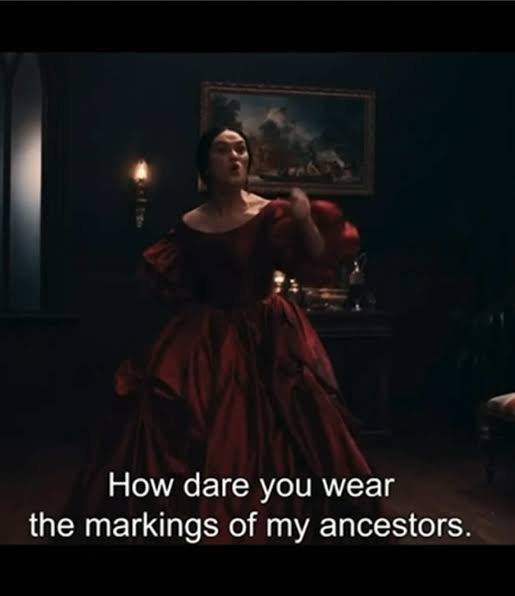
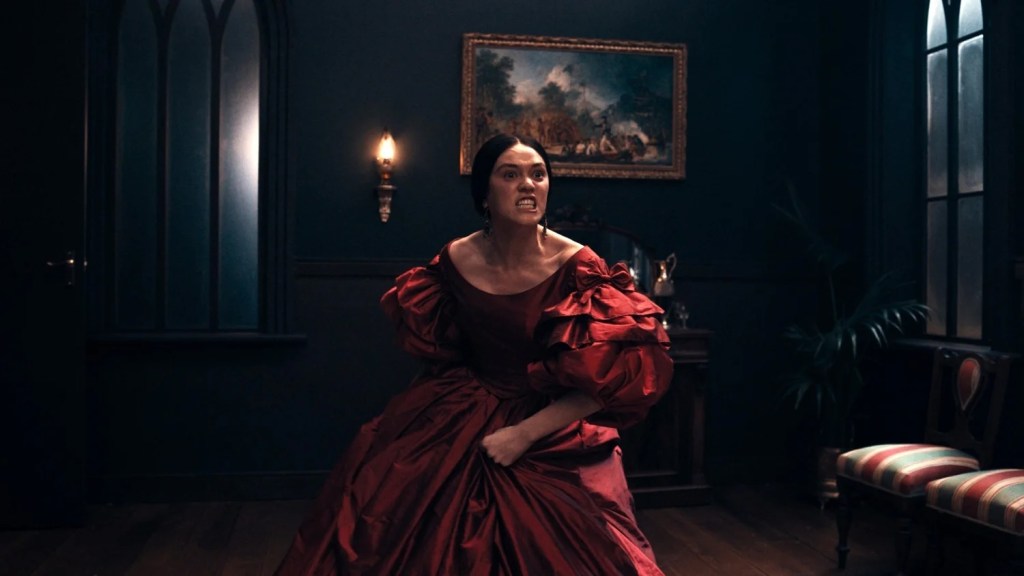
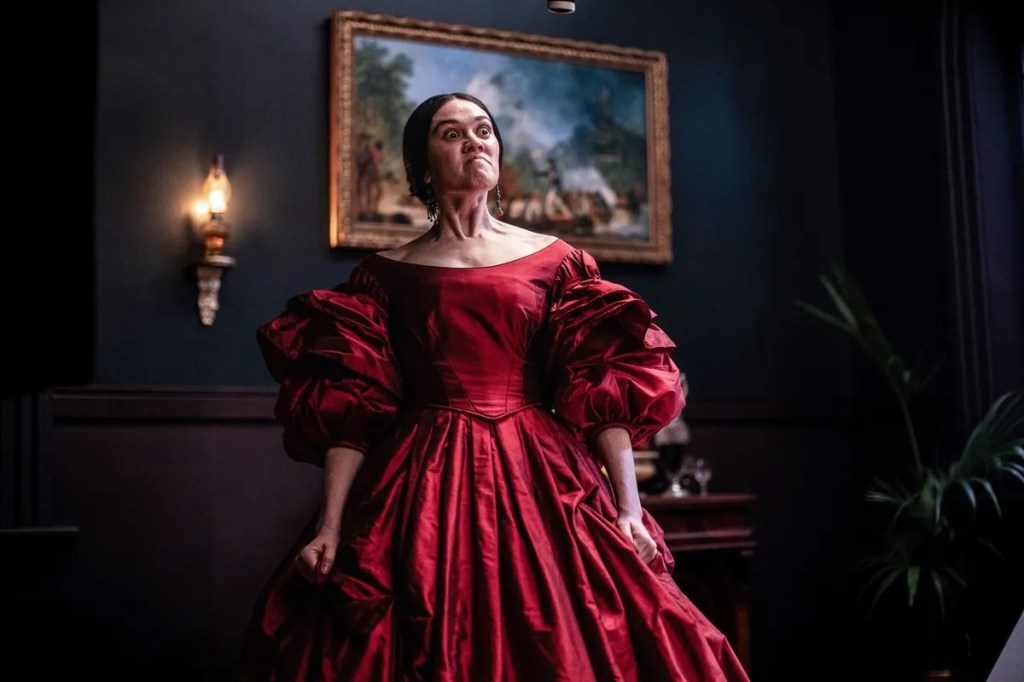

As Mārama is concluding her haka, Jack understands what she is doing, as he has some cultural comprehension. So he looks terrified. But the rest of the partygoers think that her reaction, her haka, is simply “part of the performance” and they laugh even harder. At her. At her challenge to Jack. She has told him exactly what she wants to do to him in no uncertain terms but the white audience doesn’t understand as they speak only English.

Again, since watching Mārama, De Palma’s Carrie has been on my mind. The whole transition between Margaret White telling Carrie, “They’re all going to laugh at you” to the shots of the whole auditorium of teens laughing at Carrie…that humiliation. That pain. It’s so very real. And Mārama’s humiliation and pain after that racist performance and the laughter? That’s about as real as you can get. While I don’t see many analogies narratively between these two films, there are certain threads that run parallel. Certainly no one laughs at Carrie White as a result of her cultural expressions or her being an Indigenous person, but they do laugh at her because they don’t understand her, which is essentially what happens to Mārama in that room, both culturally and linguistically.

Thankfully, both movies end with (what I feel) is proper catharsis for our heroines.

I’m not going to expand upon the way Mārama concludes as I REALLY REALLY want you to watch it for yourself.
But I will say that it’s bloody and glorious and it’s a hellova revenge film.

What I love about Mārama (besides everything) is that it pays significant attention to colonial history, cultural detail and it doesn’t play around or make things soft. It’s a genuine horror film and stays true to it’s gothic horror roots. But it complicates gothic horror! It troubles the genre perfectly because gothic anything is historically a very white area and this film is very much not. I love that. We desperately need more films like this.

Finally, much like Blood Quantum, Mārama is yet another horror film that makes the wholly cogent point that English is actually the foreign language. It is pure historical fact. Just like Mic’maq in Blood Quantum, te reo Māori was being spoken in New Zealand far before English was. This may seem like a small detail, but it is huge.

Until next time…enjoy Spooky Season!


Mother Knows Best

From the very opening of Grace, I had a feeling that it might be a slightly different kind of film. With its very delicate and feminine visuals and sounds, it opens as a film that is very much in accordance to what ends up being the subject matter: maternalism and child-rearing.  However, as it is indeed a horror movie, the light and airy features of these opening shots and the camera drifting languidly over Jordan Ladd’s recumbent naked form seem remarkably eerie when the promos so very clearly advertise death and something “unnatural.”

graceposter

So the opening, with its almost Downy-commercial-type cleanliness, seems to be underscoring not only the most physically sensual elements of the female but the very natural elements of the female body in general, as the first action we see in the film is the sex act (and what could be more natural than that?).

Throughout the film, what is “natural” seems to be a running theme, which I found to be quite interesting. At first, since there were so many discussions about health food, midwifery and non-traditional health methodologies in general, I initially took the film to be making a critique of all these kinds of hyper-liberal vegetarian/vegan sensibilities. However, I then realized Grace had much deeper-seated and smarter thematics then that. See, ANYONE can take a horror film and chuck in a few “Oh, check out the seitan-eating, soy-milk drinkin’, edamame chompin’ folks!” jokes. That’s simple. Put a few of those in, then have them be the first to suffer and/or die, and *presto*!!  Instant laughs from the horror community!  Hell, I’d probably laugh…if they were funny! But it takes a pretty special film to take these issues and involve them into a deeper seated narrative that discusses mother issues and what is natural to being a mother. It also was pretty impressive to me, as a female, that there was a male director who was able to hit on as many issues as he did in this film without it feeling in any way, shape or form invasive, exploitative or disgusting.

This was a horror movie. No doubt about it. But it was very sophisticated and brought a great many women’s issues to the forefront, whether intentionally or not. To a woman like me, who digs on women’s issues? I found that pretty exciting.

So let’s get my problems with the film out of the way first: the lesbian shit. There was one character who had a jealousy issue and…the actress wasn’t my fave and the lesbian jealousy weirdness angle is…a bit played out in my opinion. HOWEVER, it was done with a bit more class than normal, and I’m not sure if I could see another route to take if they were gonna have that involved, and it sorta was part of the story, so…I guess it was alright. I really do wish that there could have been a different way that the narrative could have gone without using the age-old (and somewhat tired) old college-relationship between 2 women that comes back as a central figure within the film, but…hey- it didn’t distract me SO much that I didn’t like the movie. It was the ONLY thing that I had ANY problem with and to say that? That’s pretty awesome. It means that this is a pretty damn good film.

On to the good stuff: EVERYTHING ELSE. This movie has tension coming out of every pore of celluloid. When we stayed for the Q&A, the composer discussed some of the aural reasonings why and I thought that those reasons ALONE were incredible. Turns out that Austin Wintory recorded actual baby cries and then mixed them into the music that he composed for the film. The reasoning for this, he said, beyond the actual sound which increased tension in and of itself, is that the pitch of a baby’s cry is the one sound that every human can hear (well, unless you’re deaf, I suppose), no matter what. Scientifically, he reported, the sound is at such a level that your body will respond to that sound in a way that it does not respond to anything else in the world. Indeed, I would say, this does seem to make sense, as somehow we can ALWAYS seem to hear babies crying whether we want to or not. Wintory used the example of being on an airplane and being able to hear a child in the very back of the plane and yet having it sound like the infant was right in your face. Ever been there? Thought so. At any rate, I am a huge sucker for music in film, and THIS FILM had it, and I will say that Wintory’s intermingling of baby sounds with the rest of his lullaby-esque tunes as well as the other scoring was incredible. A good score/good music can make or break a horror movie for me. Would Halloween have been the same without that tune? Psycho? Exactly. So…well done, Mr. Wintory, good addition!

Carrie_Piper_Laurie_Margaret_White

Margaret White *seriously* loved HER daughter!

On to the story now…Within the horror film genre, we have seen some pretty interesting mother figures,  have we not?

Norman tried to please you, Mrs. Bates, he really did!

Norman tried to please you, Mrs. Bates, he really did!


Dude, Mrs. Voorhees, we get it. We would've been pissed if Jason was our kid, too.

Dude, Mrs. Voorhees, we get it. We would've been pissed if Jason was our kid, too.

The mothers represented within Grace bring forth a whole new kind of mothering to the horror world that I feel has begun within the last few years, and I last saw represented within the astonishingly fantastic French film, Inside. It seems to me that there has always been a certain amount of fascination with the mother figure within the world of horror. Clearly, as shown above, that figure has not always been the figure of protection in, um, the most positive manner, shall we say? Now within films like Grace and Inside I feel like we may have turned a corner. I’m wondering, since men made BOTH of these films, if there hasn’t been a certain change within the way that these directors have come to synthesize the maternal representatives within the slasher genres at large, as well as other horror cinema venues. It seems that, with these films, we are starting to witness a kind of sea change that, frankly, is ALL TOO WELCOME.

Fuckin’ A, do I love a good horror movie. Slashing, hacking, blood, guts. You name it? I love it. I ADORE GORE. But I’m not one of those people who loves without discrimination. I *am* particular. But what I love, I do love very much. And I am extremely fascinated by this new turn in the world of horror. It seems that for years and years we have had a certain set of (for lack of a better term) Horror “Family” Values, many of which have been covered by academics such as Carol J. Clover, Barbara Creed, Harry Benshoff, just to name a precious few (as there are *so* many goodies!). These Horror Family Values have very stringent ideologies in regards to sexuality and motherhood. Essentially, in a horror movie, if you fuck, you’ll die and if you’re a mom, you’re a crazy homicidal bitch with no redeeming qualities whatsoever, emphasis  on the crazy, if-you-please. While I think we’re still all waiting for a film where kids can safely orgasm and survive past the post-coital beer (if they even get that far before a knife/axe/murdering-object-of-choice rips through their young nubile flesh), the Mother Issue seems to be making a change.

I hate spoilers, EVEN in reviews, so I’m not going to give anything away. But I will go so far as to say that starting in the film Inside and now continuing on with the film Grace, I’m seeing an evolution in the depiction of motherhood in horror which I quite like. While I could attempt to use some of my Freudian feminist film scholarship stuffs on this, I’m not sure I want to at this juncture. My feelings about this transition probably need more fodder in order for that kind of highly formulated (and quite possibly extensively boring to many) discussion on Sigmund and where he’s at today. I’d probably use the ol’ Virginia Slims adage, “You’ve Come a Long Way, Baby.”  I think that the concept that we are no longer treating the mother figure with anger and exposing her to the kind of harsh negativity within the horror film that we have been doing for YEARS is a big step.

It could definitely be argued that both of the mothers seen in Grace have elements of Teh Crazy in them, and Have Issues. However, on the whole, I feel that their portrayals actually have a kind of yin/yang sensibility to them, and do more for exploring female mother issues and issues of loss and attachment. And to say that there are characters in a horror movie that are explored with class and sensitivity is a pretty bold statement, but it must be said. This is a very mature film, and comes with high recommendations from me.

So, here’s to ya, boys. Its fascinating to see that it took a few young men to promote women and motherhood within the horror world. I like it. I like it a lot. I hope to see more people do it. It has actually brought the calibre of the horror film UP, significantly, which, in my eyes is DREADFULLY needed sometimes! End points? If you haven’t seen Inside, holy shit- SEE IT!!! And if you haven’t seen Grace? WELL, what’re you waiting for?

See ya in the front row!

Killer (Prom) Queen

So, pun intended, I suppose, let’s get something straight: I fully support gay rights, k?

But I am also a critical thinker and so when I see or read something that catches my eye and makes me think “Hrm, I dunno…” I gotta say something. Especially when no one else really seems to be doing so. In the Proposition 8 melee, we cannot afford to lose our critical thinking skills simply upon hearing about something that seems celebratory within the gay world, correct? If we do, then we become sheep and vegetables with opposable thumbs, clapping and saying “Hurray!” at anything that seems like it might be progress. Because, see, what if it really isn’t progress? And even morese, what if it isn’t progress in the way that we would like it to be? Kinda like a ballot measure that hides its true intentions underneath a whole lot of political mumbo jumbo and gobbledy-gook that the average person cannot understand, some things really need to be looked at under a much higher lensed microscope.

That said, I’m not saying that this issue is evil or like one of those measure. FAR from it. It is a very simple everyday type thing. However, the way I see it, it should be at least gazed at a bit closer due to the simple fact that it IS such a simple local “nothing” issue.

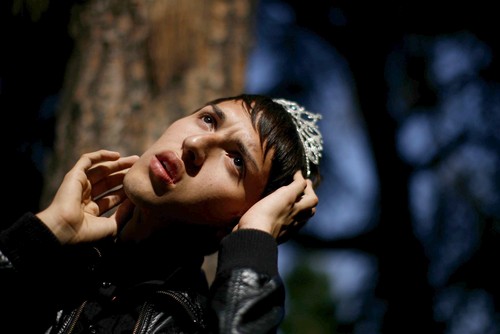
So I opened up my Facebook today, and I noticed that a few of my friends were posting this article about Sergio Garcia, a Senior at Fairfax High School. Apparently, this young man was just crowned “Prom Queen.” Um, OK, no big. Kinda cool, right? I went there, I know what that school was like when I was there, so I was excited in a way to have this occur. So I posted it. But….I took it down within 2-3 minutes.

Houston, we have a problem.

Should’ve been fine. Should’ve been great. Should’ve been able to just add this to the list of the pro-gay equality stuff that I post on the ol’ social networking stuff. Except…I couldn’t. Whether it was due to the writers or due to his own speech decisions, what was within the article made it impossible for me to get behind this issue. As a woman and as a woman who has been a significant gay-rights advocate for her whole life. See, the byline underneath his picture in the LA Times quotes him as saying, that he “felt invincible after beating out the female candidates.” OUCH. Then, to add to that, within the article he states that he doesn’t want to be a girl, reiterates that he will not be wearing a dress, and that the whole thing began as a “stunt or a challenge.”

promqueen

Perhaps if they had not postured the entire thing as Sergio having “beaten out” the female candidates. And perhaps he was misquoted. But I bristled a bit. I really did. I asked myself, “Would a woman have been able to run for prom king?” And………..I got a resounding NO WAY, JOSE. So, I ask you, is this progress? I suppose it is in a way, but most of us recognize that the younger generation really could care *less* about sexuality. It’s even stated in the article.

See, there’s also this historical dilemma about women and the gay community, too. When the AIDS crisis was at its height, an incredible amount of women’s health groups and lesbian groups supported this issue, marched and helped out, even though it wasn’t even “their issue” at the time. In countless documentaries that I have seen, and people I have spoken with, these same women have expressed a sad sentiment that they do not feel or have that same support from the male gay community. (*disclaimer: this is not meant to be a statement about all gay men, btw*) As a woman who can (and has) go to (male) gay leather bars and usually exchange phone numbers sometimes more often than in a straight bar, I very clearly have a wonderful relationship with the male gay world. However, there is a certain misogyny that exists. There is a prejudice against men that exists within certain areas of the lesbian community, as well, I have seen that too, but…in a world that already predicates itself in a manner that does not necessarily favor those of the XY-chromosome persuasion…..well? It can be tough.

At any rate, back to prom, right? Look, I’m excited for this kid. He made headway in something that made him feel proud and happy, he feels like he did good for his gay community and made strides or whatnot, and I do support him in his struggles. He’s a latino kid in LA who is openly gay and proud, which is problematic in and of itself. I mean, his homelife can’t necessarily have been a picnic, right? Add gay archetypes to the mix and, well, we have something else entirely. In this way, I believe that Sergio is taking it to the next level. Applying an aspect of gay culture to high school culture, in a way, enmeshing the two into one. However, I do not believe that this is a necessity nor do I believe that it is a positive or a progressive stance to take, for women or for men. In fact, I feel it is quite self-centered and selfish. However, as we all know, high school kids are some of the most self-centered people in the universe so this is no big surprise. But it is by no means a malicious act, and I do want to be clear about that as well.

The issue comes from not thinking ahead and not listening to his peers and not thinking about what the effects of this act could be. Sure, it’s cute enough, have a prom “queen.” But the LA Times positioned it poorly- they (whether he intended it or not) made it sound like he was quite pleased to have won over the girls, which sounded pretty nasty to me, although not to the immediate reader, still reeling from Prop 8’s fucked up repeat beatdown the other day. Most everyone these days is looking for something-anything-positive to hear/post/know about how people are reacting to the gay world. But the problem is, this isn’t the thing. And we really need to take a closer look at what would have made a real difference.

Wouldn’t it have been more effective to have him be the prom king and come with his male date? Wouldn’t that be more of a fuck you in the face of the masculine-defined idea of “prom king” a la films like Carrie? He states that he does not want to be a girl and that he’s a boy with a “different personality.” So how does “different personality” all of a sudden equal prom queen? He’s not a tranny, nor does he express the desire to be one, he seems to be quite secure in being a gay male of the most average variety. What was wrong with running for prom king?

I’m just not sure how to place this one. And to an extent, writing this makes me feel like I’m a hater, which I know, full well, that I am not. I know that this is a messy and tricky situation that puts women in a precarious situation where they get to play second fiddle. And while I do love my gay boys something fierce, I think I’d be pretty pissed if a guy won for prom queen and I was running and had a chance to win. ESPECIALLY if they were initially just doing it for a lark, and then the idea got unintentional momentum.

I guess what I am trying to say here is that this situation is quite a bit more complicated than just posting the article on Facebook. I couldn’t do it. It is not 100% celebratory for me. I support, but I question. It may simply be prom, but hey- prom means a great deal to a lot of folks. Look at Carrie. That’s a perfect example of how that event can be so momentous in one person’s life. Also good example of why you should treat people better in high school, but that’s a WHOLE different blog.

While I congratulate you Sergio, I would ask you to take a closer look at what your royalty has actually given you. Publicity, sure, yup. You got your 15 minutes. But where does it go from there? Please think about what equal rights means, not to mention the progression of archetypes and stereotypes. Is a “queen” what you wish to represent? Is that who you are? Is that what you are? Does that actually do much for the positive progress of the gay community, let alone this marvelous program that you seem to have been a part of at your school?

As for me, I find it disappointing and disheartening. Until the day comes when we can have a prom king who is a female, I think the idea of a prom queen who is male and does not consider himself to be transgendered is a bit more than frustrating and a bit head-shakingly irritating, to be perfectly honest. And accompanying that is the passion and fervor with which people seem to overlook these issues in favor of positive stories about gay issues. Hey! Newsflash! Positive stuff happens all the time and always has! Even before Prop 8! Hard to believe, I know, but true. Either way, keeping your eyes on the prize also means keeping your eye on the ball and staying critical. So long as we do that, we should be fine. For now, I hope the young man enjoys his tiara.