I have no words for the land of my birth right now. At least…no good ones. And I’m afraid to say the ones I want to say. This has never happened to me in my life.
A short time ago, a very evil man with the initials “CK” was killed and I said something on social media about him and my account was suspended for 24 hours. This is, of course, nothing in comparison to the multitudes of people who have, in turn, lost their jobs (or worse) simply for doing the same: speaking their mind.
I’m a writer. I have been a writer since I was a young child. I figured out pretty early on that I was not a fiction author. Couldn’t finish a story to save my ass. But I’m damn good at criticism, theory and media analysis. So that has been what I have run with. Lucky for me, I have found some success at that after landing here in Korea. I only had a fair run in the US. But the last almost 6 years here have shown me that my examination of oppression, gender studies and representation has some kind of place here. What that is is still anyone’s guess (Korea is still developing in certain regards) but my work is being appreciated in various sectors.
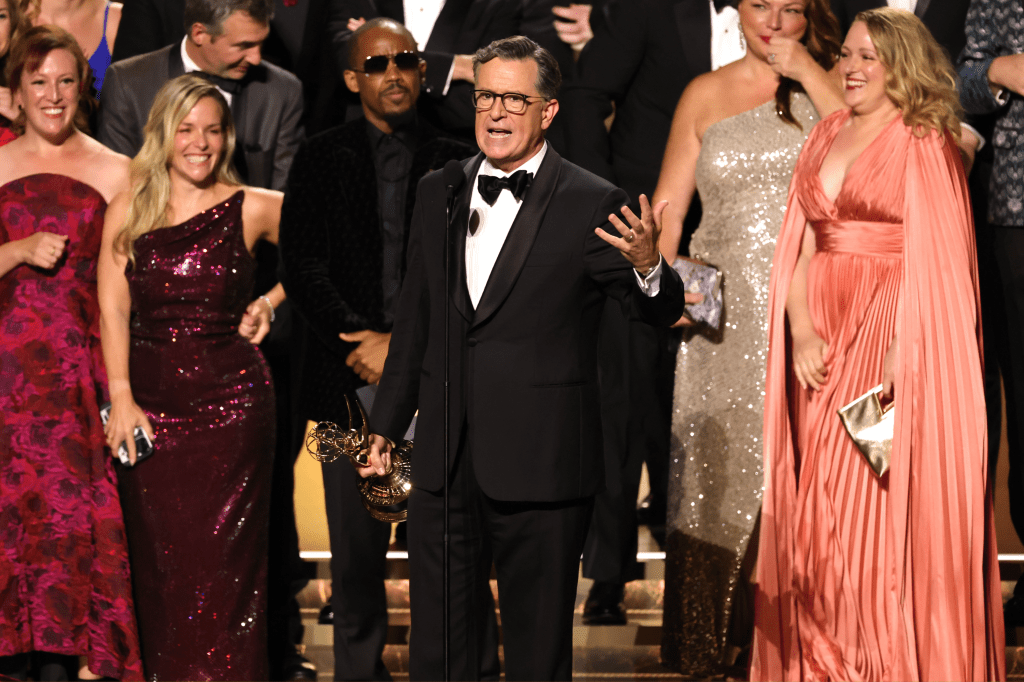
I talked with my mom today and I just couldn’t imagine what my extremely socially-conscious grandparents would say if they read the news and saw that these fairly innocuous late-night hosts were being censored. And when I say “fairly innocuous” I don’t mean that they are not powerful. They are. But let’s think about it for a moment- did people who hated Colbert really watch Colbert? Not bloody likely. Thankfully the man won an Emmy and quoted Prince (❤️) as the bookend to his on-air tenure, but really?
Men like Colbert and Kimmel…they’re a salve for the wounded (us). To paraphrase Kris Kristofferson, they are there to help us get through the night. They’re not going to physically make anyone get out of their chairs and go on a march. That is up to the individual her/him/themself. Mind you, there is a gigantic difference between the two hosts- Colbert was highly critical of the world around him so he did “punch a higher floor” while Kimmel? He was there to entertain. But we need entertainment. Silly laughter during some pretty apocalyptic times is just necessary.
Honestly, the importance of late-night hosts cannot be overstated. And when they come under attack, that is a bigger deal than we think. Why? Because what else is there late at night, after a hard day, when the world is not what you want and maybe you just want to zone out and catch up on a few jokes? Late Night is a tradition. And it’s slowly being murdered by the censorship machine. This scares me. Like many things.
In Korea, Late Night is not a tradition. The thing here is variety shows- quiz shows, game shows and all kinds of really fun cooking and reality shows that put the US ones to shame. I don’t always understand what is going on during all of them (my Korean is improving but certainly not *quite* at that “understand what the hell is going on during a game show” level) but they are always a relief to watch. They are full of fun graphics, unique contestants and highly interesting situations. So the viewer response is…similar to that of Late Night.
Korea would flip the fuck out if these shows started to get taken away. If anyone was paying attention to recent politics here, you saw what we did with our last president so I think you can guess that we would never allow these TV shows to get chucked.
But Korea is not the US. And I guess I’m glad for that, as I live here now and no longer in the US. But all the people I love still live in the US and…what if I ever have to come back? Will there be anything for me to come back to?
Late Night has always had a revolutionary side. So…sure. I can see why the Right would be scared. Ed Sullivan was adamant about having black performers on his show and treating them not as equals but like the stars they were during a time when they were unable to sit at the same lunch counter as white folks. The Smothers Brothers…well, you can google them. That’s a whole entry in and of itself. And maybe those were different kinds of shows.
But Late Night Television has a long and varied history that is centered on being able to BE THERE FOR YOU at the end of the day. No matter who you are. Sometimes the episodes are just stupid promos for a celeb’s new movie. Sometimes they are more. Are they dangerous? Only if you think the public should be remotely happy or feel some kind of peace for a brief shining moment in their currently chaotic existence.
I have a lot of shame as an American ex-pat right now, and, from the looks of things, I better get a bigger Shame Bucket cuz it seems like the one I currently got? Ready to overflow.
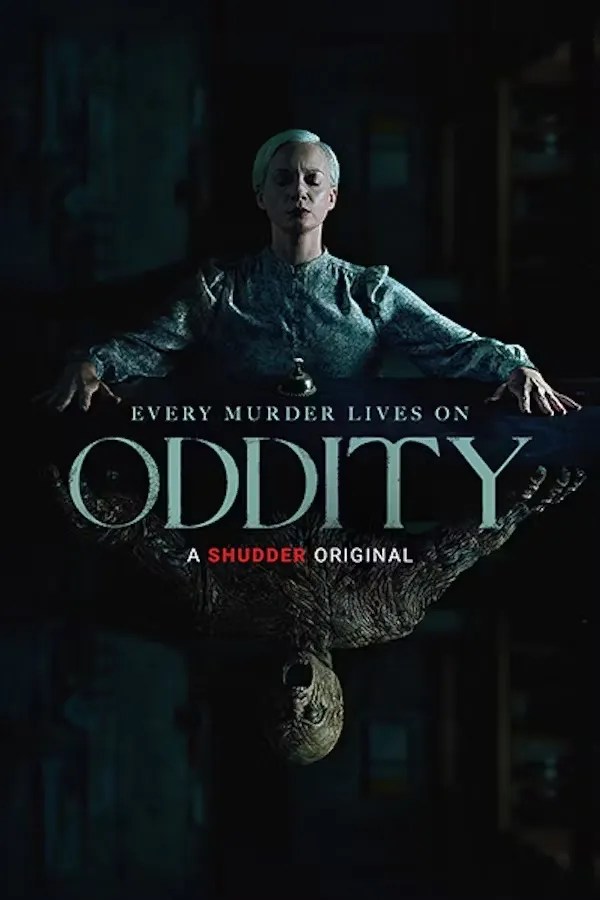
Last night I watched Damian McCarthy’s 2024 film, Oddity. Needless to say, I absolutely loved it. As a horror film (it gave me a jump scare! SO rare for me!!), as a women-in-horror-film and as what I saw as this violent bridge between toxic masculinity and domesticity in cinema.
Obviously domesticity has played a massive role in film over the years, but with this series I want to examine how there is a preponderance of films that align men’s need for power and their ownership for a home/house. I will take this and weigh it up against women’s safety issues and delve into a variance of thoughts that I have on heteronormativity and domestic lives, class, and what consists of “home,” “safety,” and “power.”
Generally, I hate spoilers and I don’t do them. But since this is more of an academic project (and they don’t care a whit about spoilers) I’ll just give you the upfront right now: There will be spoilers. So if you care about those things, see the film before you read each of these pieces.
On to Oddity and my need to start exploring this topic, especially now.
I’ve been trying to watch more films recently and this one was on my list for a while. I have also been thinking about concepts of “home” a lot so it was pretty odd that they ended up integrating these things within one work. But that happens sometimes. Ah, film, you therapeutic bitch! You know exactly what I need sometimes!
Anyway, all that aside, the story isn’t overly preoccupied with the theme that I’m preoccupied with. It’s primarily centered on connections- familial, supernatural, and the toxicity shared between two supposedly “sane” men who work in a clinic for the mentally ill.
Dani and Darcy are twin sisters (both played by the remarkable Carolyn Bracken). Dani, married to psychiatrist Ted Timmis (Gwilym Lee), has just moved out to the countryside to the couple’s new home which (because Horror Movie Rules Say So) has very little cell phone service. This is, however, completely acceptable in the film. It’s that good. We learn from a short exposition by Timmis to his clearly slimy coworker Ivan (Steve Wall), that he’s quite into his new home.
Then Dani dies. But the film does not exactly tell us how. Which is excellent. It hints at it through a thoroughly terrifying scene starring one of Dr. Timmis’ recently-released mental patients, Olin Boole (Tadgh Murphy), but it does what truly great films do- gives breadcrumbs of information, not entire slices.
In a film like this, you really don’t want a sandwich. You just want continual tastes. And that’s what McCarthy does. He builds it like a delicate dollhouse; you’re almost afraid to take a breath with each new scene revelation. It doesn’t unravel, it builds. Even up until the very conclusion. What a film.
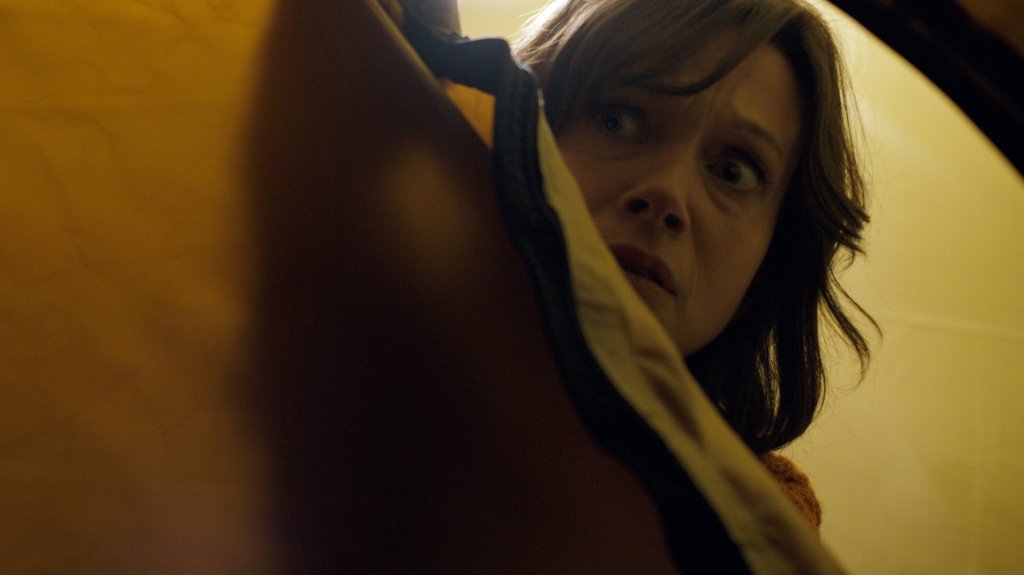
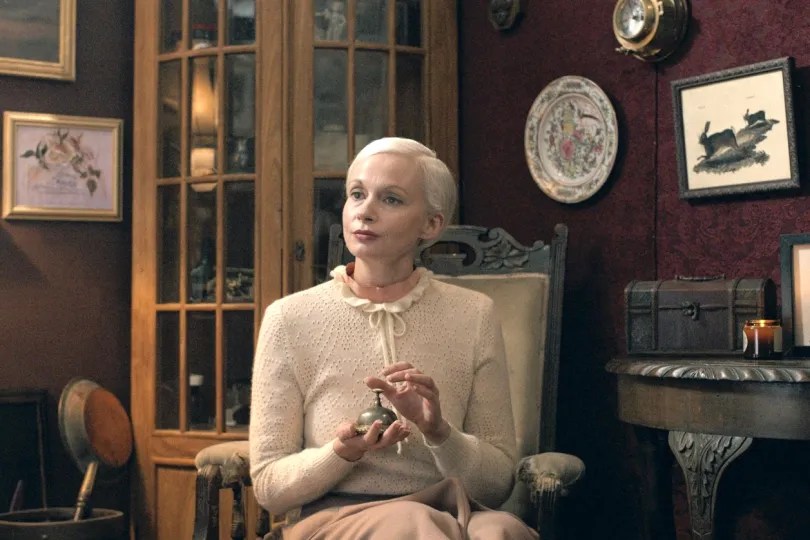
Darcy, who is blind, travels to the remote countryside house around the time of Dani’s birthday for various reasons, such as her now former brother-in-law suddenly has a new girlfriend living at the house less than a year after Dani’s murder. So Darcy’s more than a little curious. Unfortunately for Darcy, this doesn’t work out well.
I don’t want to spill the precise details. I want you to see the film.
What I DO want to talk about is ideas of home, domesticity and safety within the context of Oddity.
Concepts of mental balance are of prime significance in the film as are the strength or veracity of relationships.
Dani’s last call to Darcy literally states, “We are connected.” While that is meant to refer to cell phone status, it means far more. Not only are they twins, they are both women. In addition, Darcy is a psychic and medium, maintaining supernatural alliances as well. There are a plethora of connections reflected through this one sentence relayed over voice message. Played multiple times within the film, it is done so in order to emphasize that this is one of the only true and reliable relationships that exists.
*major spoilers start here*
Our poor murder victim is unable to see the reliable relationships in her life. This is a direct result of the primary unreliable one: her husband. As we come to find out later, he is the cause of her death. But she has been warned- again, through someone who she sees as an unreliable source: Olin Boole. Dani does not think Darcy is well, as she confers to her husband in the beginning of the film, asking him to see if she is willing to see a doctor. He agrees. If Dani doesn’t trust her own sister’s state of mind, why would she trust the warning of one of her husband’s former patients?
She doesn’t, of course, until it is too late and horror, literally, enters her newly purchased home.
Dr. Timmis is more than a little consumed with this house. He keeps it after Dani’s murder, going so far as to move his “new” girlfriend Yana (Caroline Menton) into it. She complains how uncomfortable it is and tells him she cannot/will not reside there. Begrudgingly, her boyfriend tells her that he will return to her apartment in the city with her, but it is clear that he is dragging his heels more than a little on this statement.
In a conversation he has with his colleague Ivan, he discusses the meaning behind the house, how much he adores it and how it holds a great deal of value for him. To be fair to the doctor, he’s telling the absolute truth. He values the hell out of that house. Enough, apparently, to order multiple women to be murdered in the confines of the structure and wish to continue to reside there.
What is the power and/or the strength of this house? What is the draw for him? While it might be argued otherwise, I propose that Oddity is not a haunted house film. While horror films around homes generally aggregate around ghosts/hauntings, House Fights Back, or some variation of these themes, Damian McCarthy’s work is something else entirely.
This film is a deep gaze into what happens when a man pours the poison of domestic violence and toxic masculinity into a building to live in. Instead of allowing the space “house” to grow into the warm creation of “home,” this hand-built environment has devolved into a supernatural reflection of Dr. Timmis’ own brutality. He is left alone with the trappings of his kills and a cold dark vehicle for existence. But, McCarthy does inquire in that lovely final scene, for how long?
There are a variety of other things to examine within this work- its references to the Jewish Golum, different ghost stories, etc. But I find ideas of reliability, mental stability, domesticity and connectivity most interesting.
The male “sane” characters- Timmis and Ivan- are remarkably unbalanced and figures of white male normalcy. The released “insane” patient, Olin Boole, is terrifying and appears disfigured and monstrous. Yet he is one of the most balanced characters in the narrative. Oddity is truly a film that is about the idea that perhaps not everything is as it seems. Domestic bliss is, perhaps, not as blissful. The charming ideal husband? Perhaps not so charming and ideal after all. But, of course, as in all heteronormative plots, the wife is generally the very last to know.
The bloodshed that transpires due to Timmis’ house obsession is very much about male-domination. While domesticity and concepts of “home and hearth” are attributed regularly to the feminine, ownership and spatial control are traditionally male concepts. Timmis wants the house to beHIS, he rejects the feminine- all the feminine. Dani, Darcy…even Yana in the end. That kind of control is the paradigm of traditional toxic masculinity and it is explored brilliantly within this film. It is also undermined and shown to be dangerous and horrifying by the finale (which I will not spoil for you).
While Dani is clearly preparing a home at the beginning, Timmis doesn’t give a shit. He just likes that he has this new house. It’s just a thing to him, not a larger way of life or an evolving connection with a partner. Obviously, the domestic violence (exacted through someone else’s hands) proves that. He wants to clear the way so he can Have What Belongs to Him
Oddity is a solid film with brilliant performances and really creative work. The women in it are unique, showing a realness that is ultra-rare. But the underlying fear that the men show of losing their manhood is a great touch, especially when underscored (and ultimately outdone) by strong women who are almost all characterized as disabled. Darcy has had cancer and is now blind and it is intimated that Yana was actually a patient in the mental institution. But my question at the end of the film is…what is the real disability?
I have named this series after the Elvis Costello song, “Home is Anywhere You Hang Your Head,” so I will leave you with that. Until next time….
This is the beginning of a series of posts originally posted on a wonderful and lovely website called Dangerous Minds which is now a thing of the past.Please enjoy them as I truly enjoyed writing them and didn’t think they should have dwindled away into the ether of the Internet.
This is one of my all-time favorite photographs. I have no idea who took it, where it was taken, dunno who the hell these ladies are. But goddamn. I adore them all.
I’ve seen tons of people look at this photo and mock these women for unconventional hairstyles, awkward facial expressions, and what is likely a highly Texan aesthetic (my geographic guess). Fine, laugh. But there’s something so charming, so uniquely pleasurable about the way these women (probably family) are enjoying each other’s company, standing out in that ratty backyard. That yard of dead grass laid out in front of a patio overhang that seems to be one short storm away from crashing to the ground. And our youngest girl- the one with the flowing hippie hair and glasses- she’s wearing pink slippers! There’s this weird strength reflected here in this cadre of creatively-coiffed chicks. I bet they made great cocktails and killer cookies.
Women’s hair and beauty dynamics are intensely personal. Since the beginning of time women have invested spaces like beauty parlours/salons with the power of the personal in order to have a location to freely access aesthetic self-care practices. Generally, we do this for our own benefit, to impress someone else or both. These spaces have also traditionally served another equally important function: they are community social zones and “safe spaces” for women to gossip, exchange intimacies that they would never do around male friends/family. Beauty parlours have always served a critical function for women.
The cosmetology world made huge advances in the 1920s. Thanks to the invention of the hair salon (and hair salon franchise) by Canadian-American business woman Martha Matilda Harper, women’s beauty centers shifted from “home visits” to the communal environment we are now familiar with. Harper sold many of the franchise models to lower income women and ended up profiting greatly as a result, even though it could have failed.
With these advances, there are some unfortunate facts. These sacred communal spaces were structured for Straight White Women and they have never quite lost that flavor, even today. What’s most unfortunate (but not surprising) is that there are women of color who helped establish this space and should be far more famous than they are. Women like Sarah Breedlove Walker aka Madame CJ Walker was born to freed slaves and was an extraordinary businessperson. Employing some of the highest numbers of black women in the United States, Walker developed her own line of beauty products and became one of the first self-made millionaires in the United States.
Looking through what has been visually documented on this topic, it is very rare to see women of color getting their nails done or sitting under a dryer. One of the most unfortunately things salons have done has been to reinforce the “Whiteness is the ideal beauty standard” concept.
The photographs of beauty parlours and women sharing moments are great. There are outstanding and surreal bouffants and curls, brilliant beehives and up-dos galore. And who knows what they’re chatting about? They could be sharing recipes or gossip about their horribly abusive husband because it is under that dryer that they feel safe. We’ll never know.
I do know one thing, however. The privilege in those shots gives me pause. I treasure these photographic connections between women during “hair moments” and that helps me examine intense pictures like this one deeper. It is from a Japanese internment camp in Colorado, and this is a beauty salon that they created because there was a need.
The thing about being a writer is that you need to write.
The problem with having AuADHD is that you need routines and things that require deadlines.
Put the two together and…pretty damn fine writer.
Until you run out of deadlines. Or pieces to write. Or you get picky and niche.
Or people are too flexible with you.
Or…you find some reason not to be writing.
And you end up depriving yourself of the greatest joy you’ve ever felt in your life: better than sex, better than romance, better than a perfectly cooked meal. And you don’t know why you’re so cruel to yourself, so abusive. You weren’t raised this way.
You were taught to celebrate your gifts. And you usually do. You’re so proud of the work you’ve done; the things you’ve accomplished.
Then Big Trauma busts its way into your life like Lee Marvin in Who ShotLiberty Valance? and, like, what the fuck else are you expected to do? You’ve tried all the “normie shit”- drinking, fucking, eating…even that new-fangled thing all the kids are talking about called “bed-rotting” but it still doesn’t get you the same high. You know no one is gonna read what you write (or precious few) but what the hell are you supposed to do when you find yourself this alone in a foreign country and nothing makes sense anymore?
Oh.
Yeah.
You do what you’re best at.
You write anyway. So I am. And I’m going to.
I cannot describe the pain of losing two of the most influential people of my last 35 years within the same 5 months. I think that as a writer, that may be the worst part. I have so many words for so many things. I can describe decaying flesh, wild parties, drug-induced orgies…but I have no vocabulary for what it feels like to experience what I am now realizing is the loss of my youth. I am old now. My young times existed in the most glitteringly golden safe space where I was treasured and loved and held and protected from all the worst elements. It was punk rock at its finest. Bowling alleys and strip poker; mushrooms and trust. I have never been in love the way I loved everyone in my FriendFamily. I am still madly in love with each of them in a way that no one but them will ever understand. Dumb jokes about being in someone’s pants and the sounds of ska, Agent Orange and Oingo Boingo quilted into the Santa Ana Winds.
I danced and drank and celebrated life and us for a solid weekend back in the US and it was like one of those Big Chill experiences and that was both nightmarish and heavenly. FTR, our soundtrack was WAYfucking better, end of story. And The Big Chill rules.
But…..I’m obvs biased. Also, I’m right. But those of you who knew the person involved Get What I’m Sayin’.
I don’t even know.
I want my mommy and I HAVE my mommy but my mommy is also all of my friends that I’ve known since I was a nerdy teenager who told me how proud of me they are and gave me more love than I’ve felt in a long time.
See, I don’t regret moving to Korea.
Especially now that my former home is a fascist state
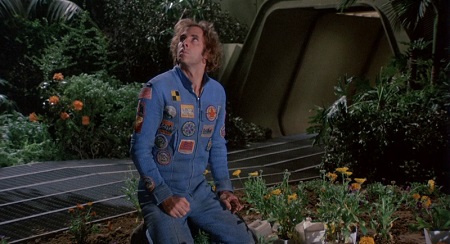
But I also feel like Bruce Dern in Silent Running sometimes…like I’m doing something really important but it’s super lonely and like…plants can’t talk back. And robots? They’re just robots.
If you don’t get that reference just, see Silent Running. It’s genius.
I miss talking to people who get my references.
Is being brave worth it if you have to put your heart and soul in your back pocket sometimes because people are just not gonna get that George Romero joke?
Anyway, back to trauma and writing.
What writer wasn’t chock full o’trauma.
Can you really call yourself a writer or an artist if you don’t have trauma?
I guess I just didn’t need all this all at once. It’s a little much. But maybe I did. I’m writing.
And, more importantly, I want to be writing.
I want to be writing more than I want to be doing almost anything else right now so I’m trying to focus on that. I want to talk about the things that I love. Why I’m here. So I realize it’s been a long while.
But I am going to make an effort to come back.
It’s only fair to me.
You may not give a shit about me or my writing but hell- it’s the best thing I do.
Which might be why I thought that this song was actually called “A Pretty Good Year” not a “A Very Good Year.” I was trying to come up with some clever title that wasn’t simply “Hi! These are the media texts that got me through 2021…barely.”
Everything has taken on a dulled haze to it. Like Seoul was really foggy a few days ago. Which could have been the fine dust, could have been the weather, but it just seemed to reflect 2021 perfectly. There’s nothing about this year that has gone off without a hitch. Everything seems to have had some kind of aftertaste or leftover on the plate that just. won’t. disappear.
Do I think that will change in 2022? Naw. But many of us will be better equipped to deal with it. Even to manage the morons who can’t seem to fathom that some positive changes have come out of this relentless non-stop blast-beat of tragedy. People have learned how to provide greater access to workplaces, media/entertainment and everyday life-needs (shopping, medical needs, etc). Complain as much as you like about Zoom and washing your vegetables, but the expansion of delivery services, remote learning, working and more have opened doors that many disabled people have been knocking on for years.
Note- it wasn’t hard to provide these things. It was only hard to do because…disabled people? Who? Single parents? Who? The concept that these remote options might disappear “when the pandemic does” is also ridiculous. These were things that should always have been options.
This has certainly been a shitty year in my life. I love Korea. I genuinely do. But my depression has been the worst I have ever experienced. It is hard to be here with only the barest amounts of contact from my friends at home. I am always the oldest person when I meet people (by a solid amount of years) and I am regularly confronted with the statement: WAIT. You have TWO Master’s Degrees? From UCLA? Why are you teaching English to really young children?
Simple: if I want to do what I love (writing about Korean classic cinema, Korean film history, gender in Korean classic films), I have to have a roof over my head, health insurance and food for my cat and, I suppose, myself. 🙂 It’s not easy. I don’t get paid to write like I did when I was in the US. It’s all for free. My day job is stressful and I’m incredibly lonely and isolated everyday. I don’t have the same support system I used to.
I’m never happier than when I’m doing research and writing on Korean cinema. Never.
And I miss doing my podcast so very much.
Like I said- this year has been hell. For so many people. So many friends have died this last year, so many people I know, and so much senseless agony beyond COVID. I can’t even fathom.
But in that time, I watched some really wonderful things. I don’t like lists (AND YES, I KNOW THIS IS BASICALLY A LIST POST, SHUDDUP) but I think everyone should have heads’ up on these things I watched. I loved them.
Please know that this is not everything I watched– Things that I have yet to see that I know I will love and would have made it to this list had I gotten a chance to complete them or watch them yet: –NIGHTMARE ALLEY (GDT) –CHUCKY (Don Mancini) –SUMMER OF SOUL (Questlove)
Things I recommend:
Faves of BIFAN
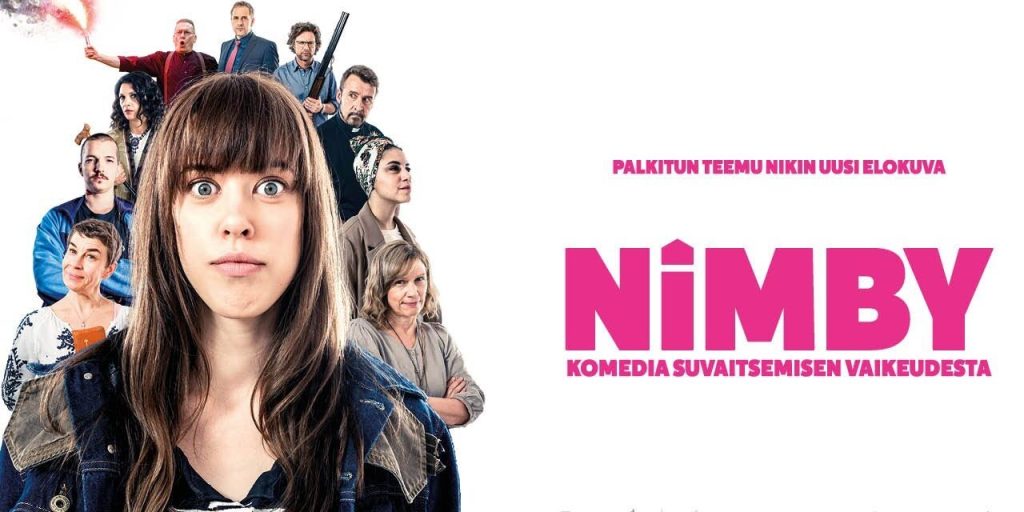
Nimby, directed by Teemu Nikki Queer, hilarious, mindblowing, AMAZING. Find this and see it.
Death Knot, Directed by Cornelio Sunny Wonderfully terrifying!!!
TV Stuff
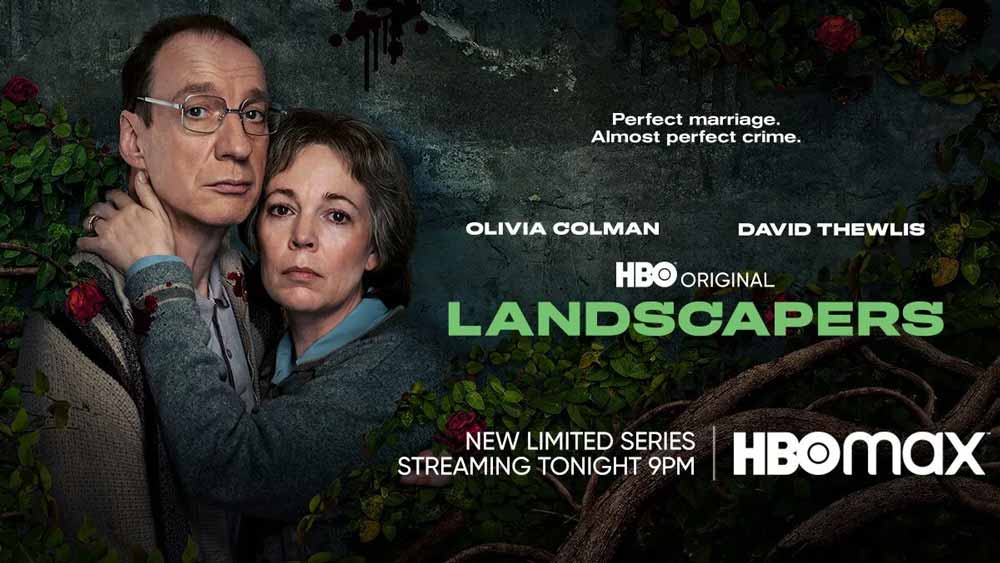
Do not pass go.Do not collect $200. WATCH THIS LTD SERIES. One of the best things I have seen on TV or in film in years. I am a true crime person but Colman and Thewlis are beyond genius and the structuring and directing of the work as a whole left me with my brains bleeding out of my ears (in a good way). THIS IS HOW YOU DO IT. It’s dark, classy and WOW.
Yeah, I like murder mysteries & crime stuff. But when it’s queer & has solid representation for a range of marginalized characters, it really makes me love it. Well-written & well-done.
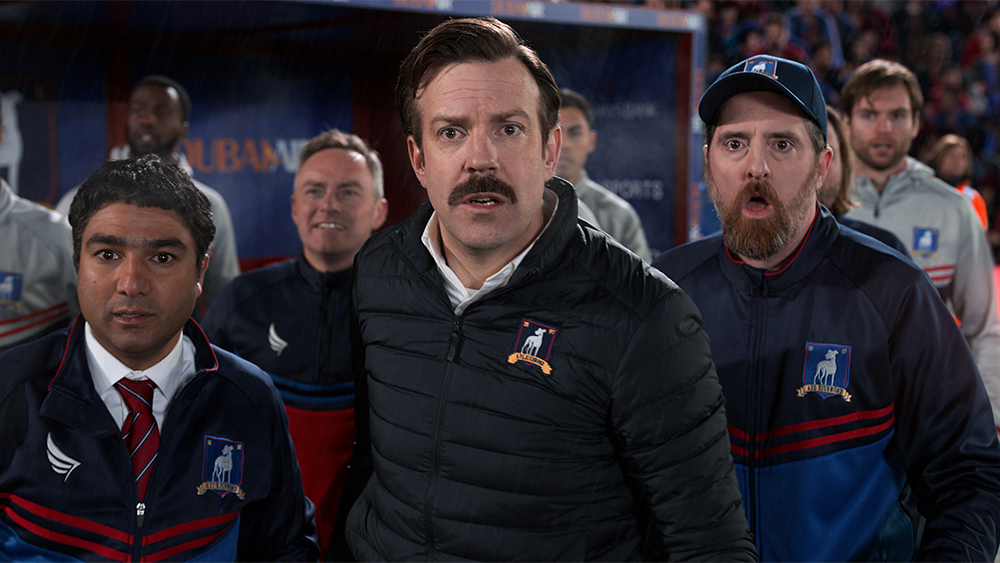
TED LASSO. I can’t help it. This show is beyond any mac & cheese/ice cream/blankey show I could ever have dreamed of. There are so many little jokes that I love and it’s just…I wish I didn’t like it so hard but I LOVE IT SO FUCKING HARD. And that makes me feel a little uncomfortable. I don’t usually like “feel good” TV. Damn you, Ted. Damn you and your biscuits.
Documentaries
Attica, by Stanley Nelson Jr. Key Art for ATTICA. Photo credit: Courtesy of SHOWTIME.
This is not for everyone. It is EXTREMELY GRAPHIC and very disturbing. A lot of footage that had never been released or seen. A lot of survivors talking about what happened. I would not recommend it for any of my Black friends, certainly. But this is one of the most incredibly powerful and important films to come out in 2021.
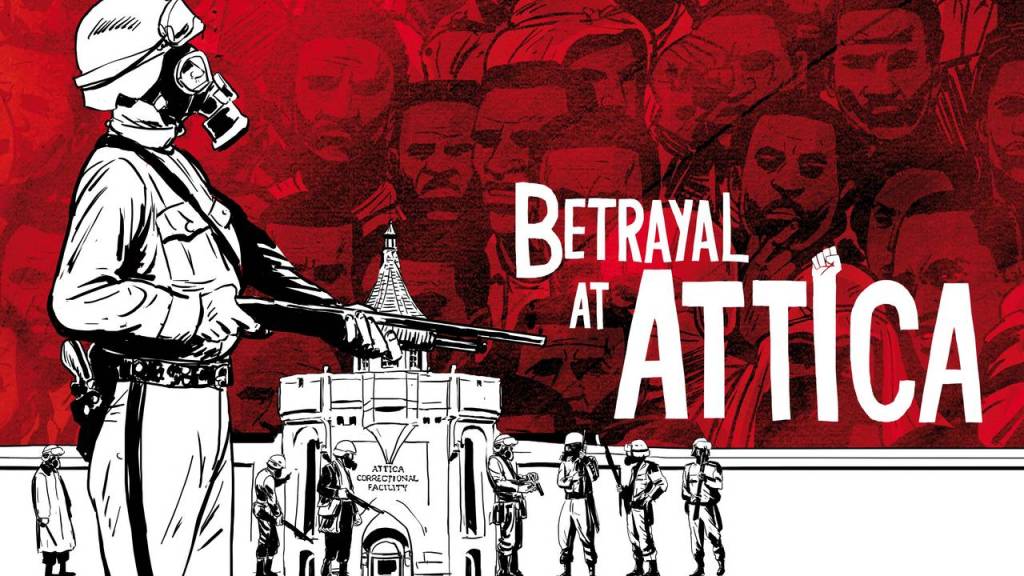
Betrayal at Attica, by Michael Hull
Yes, this is another doc about Attica and it’s just as heavy. PLEASE WATCH BOTH. THEY ARE V DIFFERENT FILMS!!!!!!!!!!! This one is really interesting from the archival and legal perspective as it also looks at how the woman who “liberated” the films/images and the organizations that sprang up to help the folks after Attica. The prison system is racist and awful. Nothing has changed. And this just reiterates all of it.
If you love them, don’t know who they are, have a passing interest, any variation of these…you will love this film. SO MUCH FUN!!
Feature Films
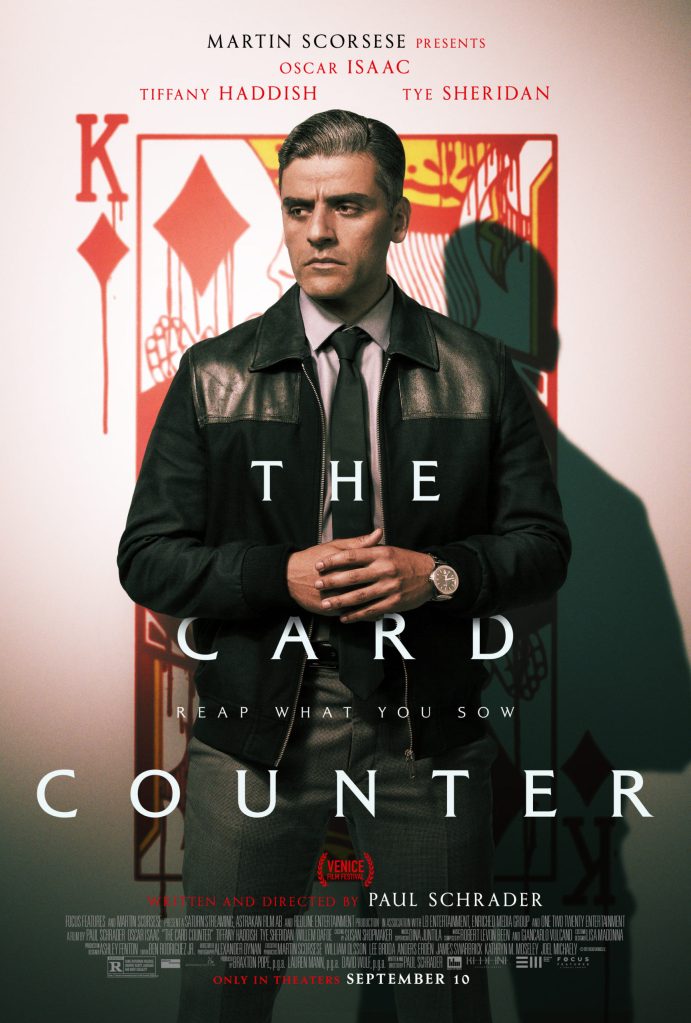
The best feature film I saw this year was Paul Schrader’s The Card Counter. I saw some great stuff and had to think a lot about what I saw, but this was the winner. I’m not posting a trailer because I think the trailer tells too much. Just watch the movie.
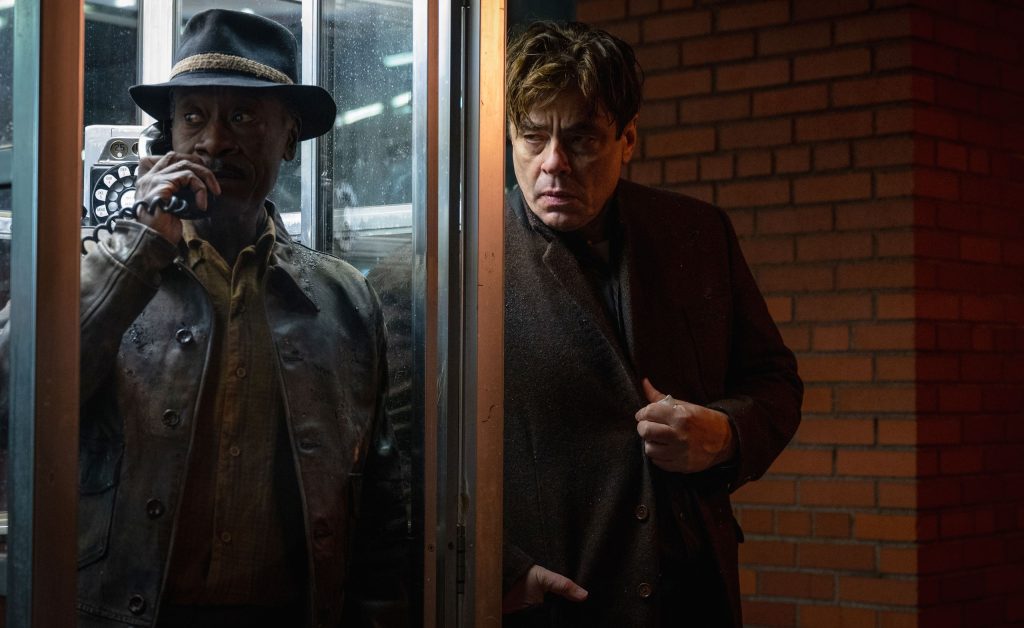
Steven Soderbergh’s No Sudden Move is wow. Again, no trailer because it should just be seen.
Both this and Card Counter were really my favorite films of 2021. I feel good about that. They are incredible films that offer mindblowing performances from their casts. Soderburgh’s film is more of a heavy-hitter ensemble film-noir piece and the longer I am away from it, the more perfect I realize it is. Also, fucking Bill Duke. Bill effing Duke.
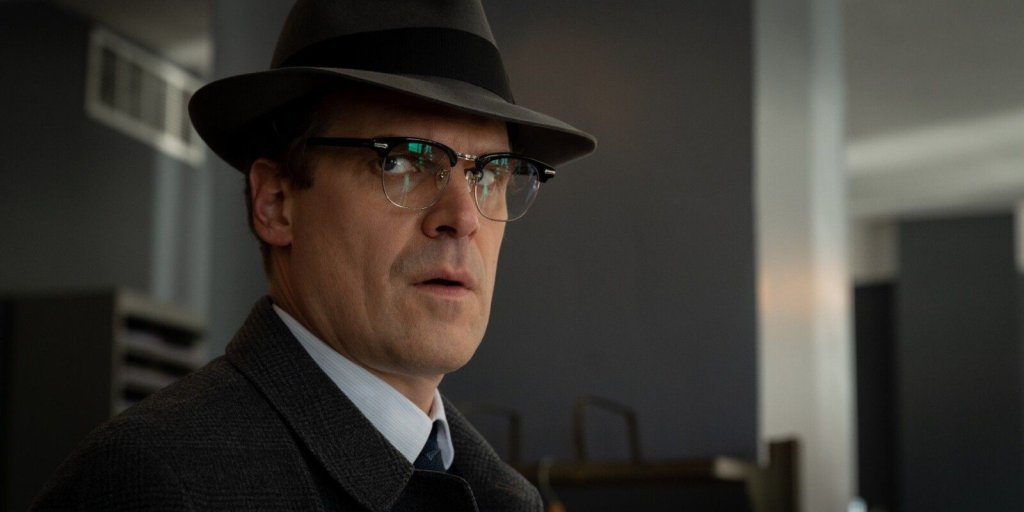
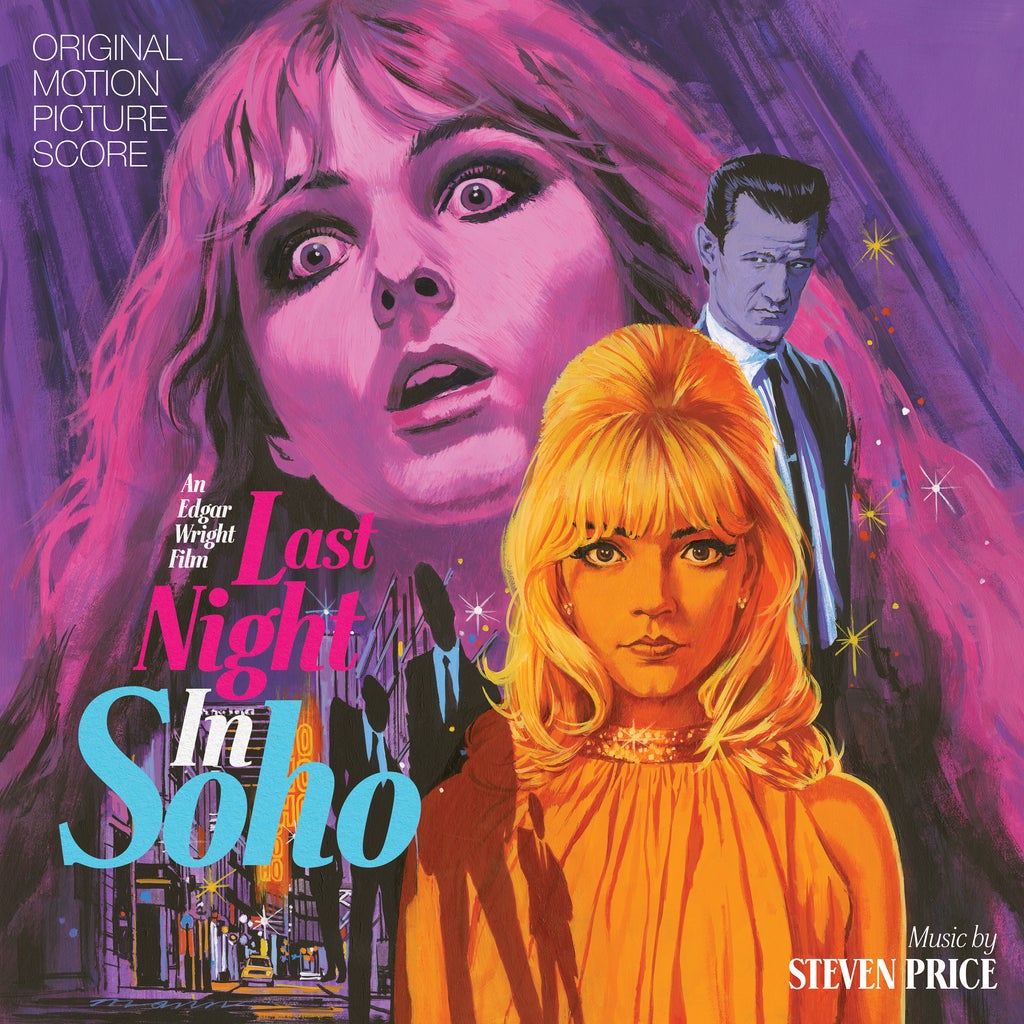
Again, no trailer for this. The less you know about Edgar Wright’s Last Night in Soho the better. But I have not stopped thinking about this film since I saw it and (much like the Sparks doc) I have been listening to almost only the songs/bands I heard in the film ever since. Matt Smith’s performance is…wow. The less I say about it…the better. When you do see it, please read my friend Marc’s piece about it. It’s GREAT. But ONLY AFTER WATCHING IT. It’s spoiler-ific.
Todd Stephens’ Swan Song UDO KIER FOREVER!!!!!
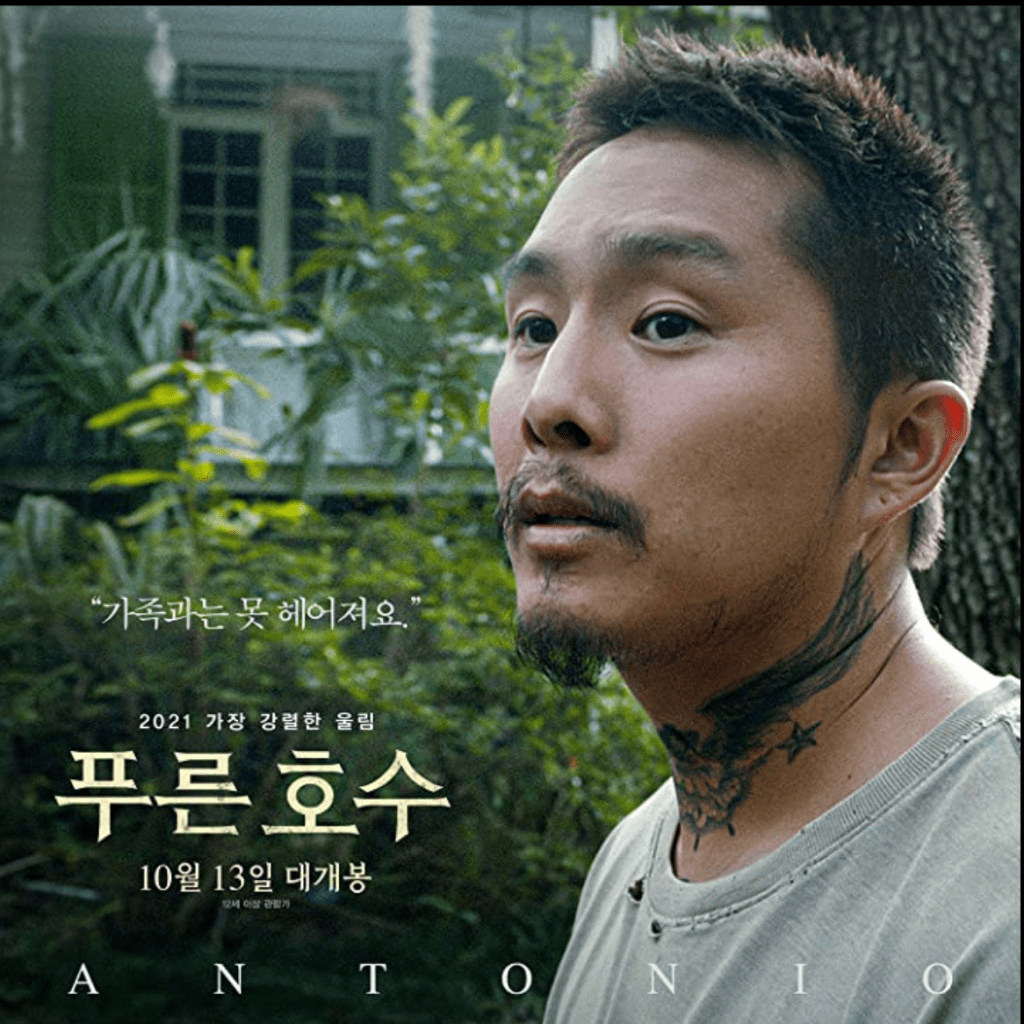
Justin Chon’s Blue Bayou This film broke me. But I love everything he has ever made. I hope he makes movies forever.
There’s just a few of the NEW films, TV shows, docs, etc that I watched. Just some. I watch things almost every night.
And I got new discs from the Korean Film Archive too this year. Those are beautiful! At any rate this is my 2021 update, over and out. It’s 10:30pm. Time to put something on. Maybe next month I will update with my fave films I watched in 2021 that weren’t films from 2021.
Take care, stay safe, and if you watch any of these because I recommended them…Hey- let me know what you think!
So, here it is. December 24th, 2020. Christmas Eve. I’m finally living in Seoul, I’ve left Paju, it’s a year and change since I left the United States and the entire world is ENTIRELY DIFFERENT.
I don’t want to dwell on the pandemic too much- after all, this is supposed to be movie talk- but here I am sitting in my apartment, the yacht rock station playing (shuddup, it’s better for writing background music), thinking about friends all over the world. All over the US.
For those of you who know me, you know I’ve loved Korean cinema for well over a decade. Once, I even participated in a Korean Blogathon to get over an intensely bad break-up. FTR, it totally worked! In this last year, my interest in Korean cinema intensified into something more than what it had been. That was sorta to be expected, right? I live here and all. What shook me was how deeply and completely I fell in love with…Classic Korean cinema. This is beyond all other kinds of cinemas I’ve ever studied, watched, consumed. It’s devilishly specific and I cannot get enough of it. I am ridiculously addicted to it and my career/training as an archivist only makes this situation more painful: much of it is no longer available, has deteriorated, or is, in some fashion, lost or unaccessible.
There was a link that people were passing around like popcorn before I left for Korea about the Korean Film Archive and their YouTube channel. While I will pursue a more archives-and access-centered piece on the specific topic of the YouTube Channel itself at a later date, I want y’all to know that EVERY. SINGLE. THING. I recommend to you here I watched on that channel. They have been putting films up there for almost 10 years, I think, and they constantly add new things. If something I recommend is no longer on there, it was likely taken down due to a Blu-ray release or something of that sort. And the BR releases are just amazing 😱
I have been thinking & planning this list for a while. Some bits of it are clipped from personal emails I have sent to people but the rest…is totally new. I’ve had a lot of people asking me for my selections. I will tell you, flat out, every movie here is one I will BACK 100%. These films changed me. LAST VERY IMPORTANT POINT: Know that classic Korean films are long but they are WORTH IT. Do not let their running time deter you from watching them. They are like NOTHING you have ever seen or ever will see again.
And now, without, further ado, my holiday gift to you….
I will be listing some films under directors w/bio info & some just as films. Some I have done a LOT of research into and some I have not. Obvs, you will be able to tell my successes & failures. Be kind. Also, just watch the movies. They’re just omfgsogreat! Also? In Korea, many of these are age-restricted because they are, uh, well…you’ll see. So the links I have here go straight to the YouTube channel where they should play fine. Let me know/leave me a message if you have ANY problems….
김기영/ KIM Ki-Young
I’m going to start with KIM Ki-young. He was nicknamed Mr. Monster. He’s 100% my favorite favorite favorite. Most people call him a cult director or a horror film guy. His most famous film is The Housemaid/하녀 (1960) which has been classified as a noir also but I strongly disagree with that classification as well. As you can tell, he is very difficult to classify which is why he is amazing. He was an independent genre filmmaker during a time when that just didn’t happen & was deeply influenced by playwrights like Ibsen & O’Neill. His shit is off the hook & not simple “cult” or “horror” cinema.
Second Film:Insect Woman 충녀 (1972) this one is KILLER for visuals!! I mean, all his stuff is but…sex and colors and total lunacy…mmmm…. https://youtu.be/Mwh2Z1Q8q9o
Insect Woman
Third Film:Woman of Fire ’82 화녀 82 (1982) yes, it’s like the first WOF. Which is kinda like The Housemaid. Yes, he liked this narrative. But I would argue that the repetition of this narrative in different eras, houses, and with different class discussions really works well. https://youtu.be/ssNg3hDGH_o
Woman of Fire 82
김수용/ KIM Soo-yong
So this is the second director KIM in my list, but HFS. I just started watching his films the other day and I’m pretty sure that I haven’t recovered. I had watched a few of his films when I first got to Korea, but then I decided to watch a few more and I was in awe. KIM Soo-yong was born in 1929 and he’s still alive, by the way. He has made a lot of commercial films and seems to have played nice throughout all the chaos and censorship that made the Korean film industry not…the most pleasant place to work at all times. More than 100 movies under his belt and, so far, he made a few that were so striking in how they dealt with gender and sexuality. These films are no bullshit films and I am still in awe that they were made in the 60s and 70s and earlier. I’ve never seen anything like these and I hope you watch them.
First film:The Seashore Village 갯마을 (1965) QUEER representation, sexual desire & more. Wow! https://youtu.be/BwbQgeavk-Y
The Seashore Village (1965)
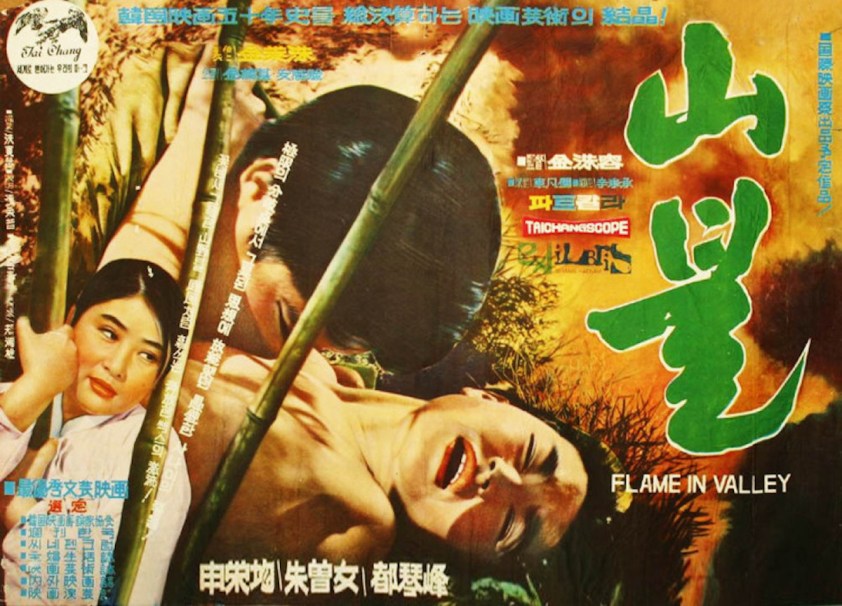
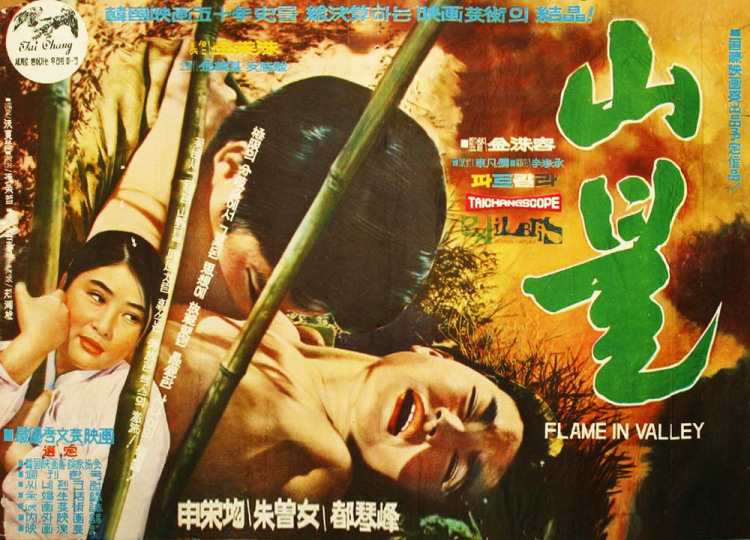
Second Film:Burning Mountain (1967) Politics, sex, war, desire, masculinity deconstruction…unbelievable film. I still struggle with the fact that this film exists. Does it? https://youtu.be/XMyBmK8enLg
Burning Mountain
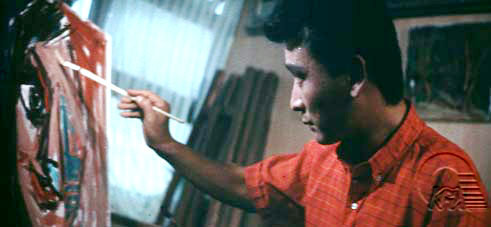
Third Film: Starting Point 시발점 (1969)- it is highly doubtful that anyone other than me will recommend this to you. I was going to put one of Director Kim’s other films that people really adore but this is one that rocked me. Visually spectacular w/a great story, I hope it thrills you like it did me. I was floored. https://youtu.be/s75SVqui3wI
Starting Point
The 80s/early 90s
I’m going to recommend a few different films from the 80s that I think are dynamite and should be seen at all costs. Korean cinema in the 80s was a different monster than the 60s or the 70s and definitely different than the late 90s. MANY of the filmmakers who had been working in the 60s and 70s were still making movies in this period and made stunning work during this period. It’s almost as if the word “flop” didn’t exist in their vocabulary. Or maybe those films got lost? Who the hell knows. Watch these movies, y’all.
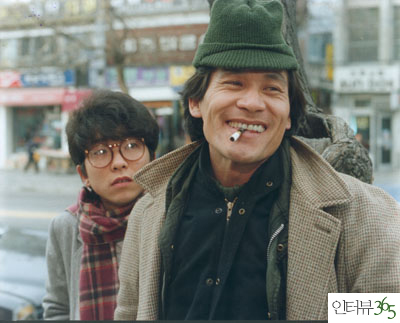
Whale Watching 고래사냥 (Bae Chang-ho, 1984)- This is an anti-road road movie loosely about shitty crushes and how it is hard to be young. But that’s a VAST oversimplification. It stars one of my very favorite Korean actors 안성기 Ahn Sung-ki and if you watch a lot of Korean films, you’ll know him cuz he’s been in almost 200 films and started acting when he was a kid. Just watch it. It’s not like any road movie or feel-good youth crap you’re used to. And if you like it, look up the director. He’s fabulous. https://youtu.be/Fl-ns4OVC2g
Whale Watching
Our Twisted Hero 우리들의 일그러진 영웅 (Park Jong-won, 1992)- I wanted to include this one because honestly? I haven’t stopped thinking about it since I saw it. The poster for it is the background for my Kakao profile. It’s based on a very well-respected and famous book in Korea that many kids still have to read in school, I believe. When my ex-boyfriend saw my Kakao page, he super freaked out. He was like, “That movie is amazing! How do you know that movie?” Again, I just found it on the Korean Film Archive (KOFA) Classic Film Youtube channel and watched it. It’s definitely got some history in there and it’s not a light film. Josh Ethier, if you’re reading this, I thought of you when I first watched it, so it may be your cuppa. I highly recommend this film but it’s definitely a rough watch. I love it though. God, I love it. FUN FACT: everyone’s favorite Oldboy star Choi Min-sik is in this film as a very young, very good looking teacher! https://youtu.be/De0ZkC1mCxc
Our Twisted Hero
The Age of Success 성공시대 (Jang Sun-woo, 1988) – My feelings will actually probably get a little hurt if you watch this film and do not like it or at least have some very strong feelings about it. This film was one of the first films that really wooed me into the Classic Korean Cinema bedroom. After 성공시대, I think I was a goner. Centered on advertising and scheming/slimy sales reps obsessed with power & climbing the ranks, this stars my fave dude, Ahn Sang-ki. If you like Mad Men, American Psycho and watching wonderfully surreal 80s landscapes & perfectly horrible people like I do, THIS IS YOUR FILM. Other thing to think about: this came out one year after Oliver Stone’s Wall Street. https://youtu.be/3DLNGgfbXfo
Age of Success
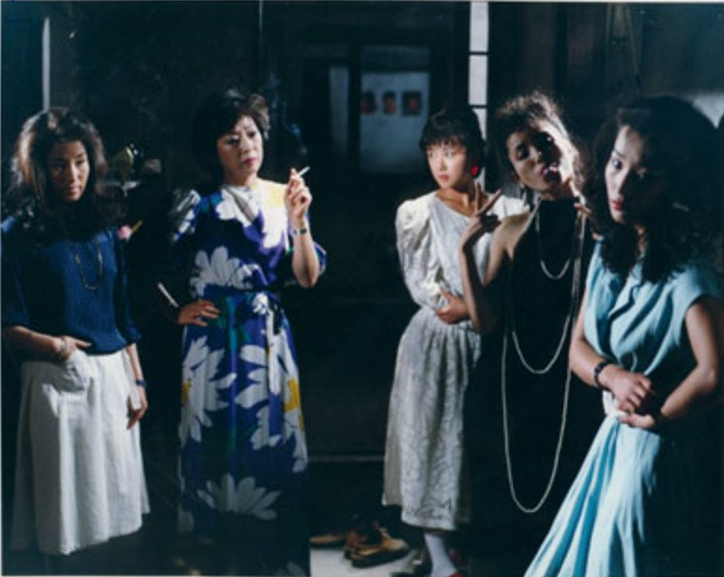
Ticket 티켓(Im Kwon-taek, 1986)- In general, film history has not been a huge thing here in Korea. And their own film culture has not been platformed in a positive way up until, well, LAST YEAR tbh. So when I tell people I’m obsessed with classic film, they don’t really respond to most of the names I say except one: Im Kwon-taek. He’s been a widely recognized Korean filmmaker and is highly respected on a global scale. He’s made a lot of excellent films. I haven’t seen most of them but those that I have seen I’ve liked. This one? I LOVED. Ticket is a brilliant work that explores the lives of bar hostesses on a very intimate scale. Hostess films are an entire Korean film genre and I am quite taken by them. There is a lot to unpack there. And I think you will find that there is a lot to unpack in this film. Let me know what you think. The actress who plays the bar manager, Kim Ji-mee, is excellent and has done over 300 films (!!). https://youtu.be/N6RH1rEcrQg
Ticket
Final goodies
I could keep talking about these films, performers, themes and historical points for ages. But my food delivery just arrived and I actually want to watch a movie. So I’m going to give you a few last ones and then feel free to leave a comment and let me know what you liked, hated, etc and I can maybe make another post if I’ve got time.
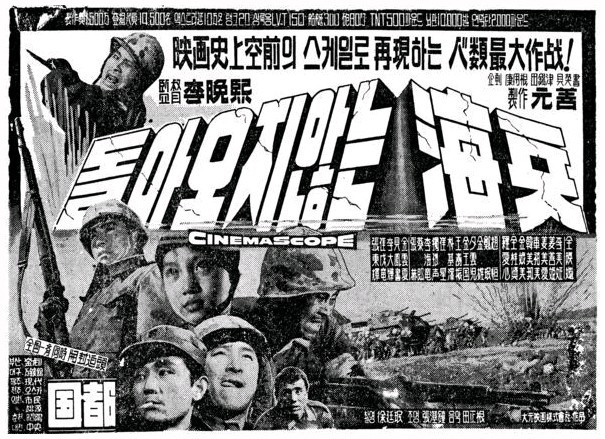
The Marines Who Never Returned돌아오지 않는 해병 (Lee Man-hee, 1963) – LEE MAN-HEE IS ONE OF THE BEST FILMMAKERS EVER TO HAVE LIVED AND HE DIED TOO EARLY. I said it and I damn well meant it. Everything he did (depressingly not much) was perfection. This war film was released in the US in 1966 under the title Marine Battleground but it got director Lee a best director award at the Grand Bell awards in 1964. Watch this movie. You’ve never seen anything like it. Then buy the Blu-ray of the The Evil Stairs from 1964, one of the best (if not THE best) horror noirs I’ve ever watched in my whole life. Watch everything you can from him. But here’s a taste: https://youtu.be/8rrBUUWRlwc
The Marines Who Never Returned
A Bloodthirsty Killer/A Devilish Homicide 살인마 (Lee Yong-min, 1965) – From the title it sounds like an action film but it’s actually a really great horror revenge film…with lots of cat stuff! Meowwwww! https://youtu.be/rVVtAPh2M9Q
A Bloodthirsty Killer/A Devilish Homicide
The Body Confession 육체의 고백(Jo Keung-ha, 1964) – Technically this is somewhere between melodrama and hostess film but it defies all that. This film is a massive work and discussion on the damage that the US did to Korea and Korean women. Be forewarned: there is some dialogue that has racial slurs and it’s definitely…wow. I had to really think about it for a while. It’s a very complicated film with complicated characters in a landscape of high trauma. The women in this film are some of the most badass women I’ve ever come across. The madam of the nightclub – you meet her almost right away- is played by Hwang Jung-seun. You might recognize her from Seashore Village and Burning Mountain and I HIGHLY recommend you seek out her performance in the MINDBLOWING & EARTH SHATTERING film, Rainy Days, linked there. Heheheheh. Had to sneak ONE more link in before this final link… https://youtu.be/lO78j-5Tgi8
The Body Confession
All right, y’all. I’m gonna go eat. You take care and enjoy these films. Let me know what you think.
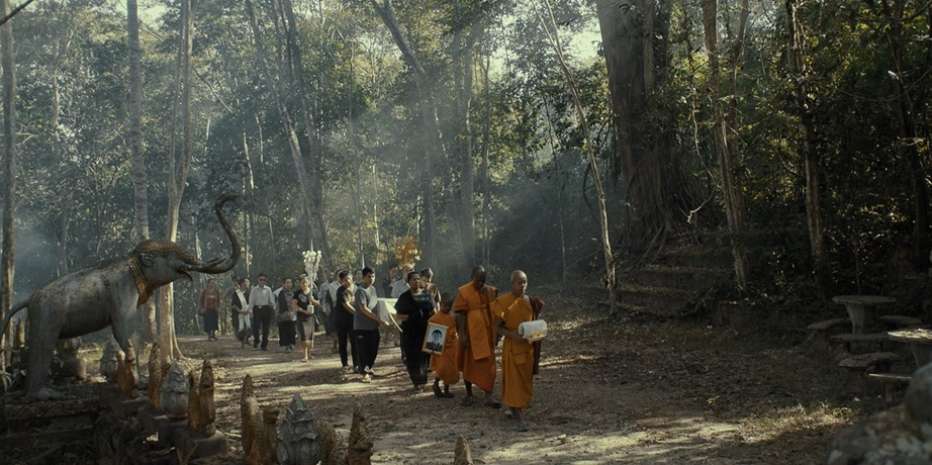
Writing calmly about Mattie Do’s The Long Walk is difficult. But sometimes you just have to be honest and shout (digitally) about a damn fine film. In all honesty, what I want to do is grab people by the shoulders like a crazed John Carpenter character and say: have you seen the way to horror? It is Mattie Do! But I’m not that creepy and there’s a pandemic on. I will say to you, reader: Mattie Do is everything I want from a horror filmmaker.
Thanks to LAAPFF for programming this film. While Mattie Do is California-born, she lives and works out of Laos and is Laos’ first (and only) female filmmaker (as of the date of this review). Platforming her work is critical to women in genre-filmmaking and the Laotian cinema world in general. The LAAPFF has featured a litany of incredible films all by, for and about Asian women. Effective on regional and global levels, it is a continual joy and inspiration to watch and write about these films. My great hope is that these films play everywhere, not just in festivals. Everyone should see this work.
I like to know as little about a film as possible before I see it. I call it the “Tabula Rosa approach.” No trailer, no reviews, no reading of descriptions or reviews. Genre & country are usually enough for me and occasionally if someone I know says: YEAH, that was awesome, I listen to them.
All I knew about The Long Walk before watching was that it was Laotian and a horror movie. I am BEYOND glad that was all I knew. Deftly written by Chris Larsen and hauntingly lensed by Matthew Macar, Mattie Do’s direction makes this movie a genuine force to be reckoned with.
I’m going to try to keep this as spoiler-free as possible. I don’t want to say too much. Honestly?
JUST SEE THE DAMN MOVIE. IT’S LIKE NOTHING ELSE YOU’VE SEEN BEFORE.
Admittedly, there are some aspects to this movie that make it a subjective hole-in-one for me. So here are a few of my personal sweet spots and why The Long Walk is definitely one of those films that was “made for me” but may not be everyone’s film.
First of all, it has the “told through a kid’s eyes” aspect. I love films like that. Germany: Year Zero (Roberto Rosselini, 1948), Come & See (Elem Klimov, 1985), and Forbidden Games (René Clément, 1952) are all films told through the perspective of a child and films that I consider favorites. They are also some of the. Most. Disturbing. Films. Ever. While this film isn’t Klimov-level, it certainly holds its own and the way Mattie Do utilizes the child’s perspective in this film was a good call. Her sensitivity to innocence and betrayal was perfectly balanced, depicting the kind of confusion and discomfort only a child can feel.
The tragic life of the young boy (played exquisitely by Por Silatsa) is certainly a story we’ve seen before, but it is in the telling that the dynamism becomes real. Do’s regional specifications and temporal involvements of modernization are what drive this part of the film. What would be a simple dysfunctional family story is transformed into grounded work and distinct circumstances in small town Laotian life.
The Old Man (Yannawoutthi Chanthalungsy) is one of the great new figures in modern horror cinema. Chanthalungsy’s performance is just mind-blowing. I am desperate for more people to watch this film so they meet him (and, selfishly, so we can talk about his narrative!). Rarely has such a calming character led me on such a beautiful and horrific ride. Inspiring empathy, anger, nausea, pity and frustration, this is a fucking horror movie in every sense of the word.
The Long Walkis a meditation on ghosts (personal and supernatural), death (natural and not-so-natural) and concepts of growth and stagnation. The underlying narrative of technology in the Laotian countryside plays a critical role, upping the ante and bringing different kinds of monstrosities to the landscape. This language might not be making it sound sexy, so like- if you need that kind of review or recommendation? Let me reassure you- this is a scary and messed-up film!
Playing with ideas of horror and science fiction with skillful fluidity, The Long Walk will make genre-rule-obsessed viewers uncomfortable as hell.
To those viewers: Concede the fact that fantastic cinema can work within and between genres. Genres are like gender: fluid as fuck and that’s how they SHOULD be. To produce quality art like The Long Walk, you need to be able to be slippery while maintaining suspense, terror, and the right to whip out OMGWTF moments at the right time.
And I live for those shifts when they are done well. This was absolutely an exercise in How To Do It. Every Western filmmaker who tries (and fails) should take some classes from this film. Big ups on this. It wasn’t exploitative, it was smooth, and it kept on rocking the film. That third act. Hot damn. I shouted at my screen: “OH hell no. What????? No way. Shiiiiiit.” On the other hand, my cat then went into the other room. He may not be a fan.
Finally, while the film features men as the protagonists what hit me hard was that their stories were actually entrance points to a larger exploration of women and women’s experiences. Like horror is wont to do, The Long Walk viciously reveals some of the worst parts of humanity. But it does so in a nuanced and complex way. A road trip of masculinity and growth, this movie takes a scalpel to gender issues and power structures, ripping those bodies open like a drunk mortician, allowing us to revel in the pure unadulterated pain, joy and liberation that exudes from that screen.
Part of theLAAPFF, this film can be seen through the Eventlive link here starting on October 15, 2020. It’s only up for a few days so get on it!!! This film is only available to viewers in Southern California (excluding San Diego County) from October 15, 2020 at 12pm PT to October 18, 2020 at 11:59pm PT
Leah Borromeo’s Award-winning short film on a 24-hour funeral parlor in Manila and its clientele is not for the weak of heart (or stomach). But every frame is worth it. This short film, initially created for the Al-Jazeera Witness documentary series, is yet another lesson in the almost trite slogan of ACAB but this is on an entirely different and global level.
Mortician is a detailed and heartbreaking examination of Orly, the elderly (yes) mortician whose job it is to take care of some of the most savaged and battered dead bodies of the city. As this documentary unfolds, Borromeo shows Orly’s complex ethics and personal life with great skill, making Mortician of Manila one of the most incredible documentaries I’ve seen in years. Orly is a challenging and complicated character to follow but there’s truly no one like him. Charming and maddening at the same time, this Mortician has to be seen to be believed.
With a sign on the wall reading “Autopsy is Free of Charge,” Orly believes he is doing a service to the painfully poor community that he serves. But this community (and the entirety of the Philippines) has been ruptured and is continually terrorized by current President Rodrigo Duterte and his anti-drug policies. These policies (the Philippine Drug War) actively target the poor, authorize public citizens to kill drug addicts (the government does not see them as human), established death squads, and encouraged police to murder young Filipinos and plant evidence on them to establish “guilt.”
Let’s be clear: this is a very graphic short doc and totally qualifies as a horror movie. But it will leave your heart shattered by the end. The terror of these families who would rather see their children stay in prison for a safer environment is a real thing. Young men in their 20s are shot like animals and left to die in an alley, families just accept this as life and move forward trying to make the next step…if they can afford it. Which they usually cannot. Funerals are a luxury. Orly does what he can but…it’s tough out there. Bodies keep coming and the money isn’t there for anyone.
This is a must-see if you can handle hard-watches. Leah Borromeo is an excellent documentarian. Using Orly’s story as a through-line, heartbreaking social issues, political commentary and graphic imagery are handled with sensitivity and incisiveness. An incredible film.
This film is part of the Juke In The Box package for the LAAPFF, only available to viewers in the United States from September 24, 2020 at 12pm PT to September 30, 2020 at 11:59PT. From October 1, 2020 at 12pm PT to October 31, 2020 at 11:59 pm PT, this film is only available to viewers in Southern California (excluding San Diego County).
When I moved from Los Angeles in November of 2019, I knew I was going to miss the Los Angeles Asian Pacific Film Festival terribly. It was an event that I regularly attended for many years. Whether it was just for one movie or the entire run-of-fest, I could always count on the LAAPFF’s programming for charming, challenging and entertaining content. Year after year, the LAAPFF has consistently kept me engaged in what I love doing most: watching movies. So having this virtual option and the wide access that they have introduced has been very satisfying.
This year, I started out by watching a World Premiere documentary short. I try to know as little about a film going in as possible so all I knew about Akira Boch and Tadashi Nakamura’s Atomic Cafe: The Noisiest Corner In J-town was that it was about Los Angeles and punk rock. Being born and raised in Los Angeles (Hollywood, specifically) and having cut my musical teeth on local punk, this film was definitively unique and dominantly Angeleno.
At one point in the film, an interviewee notes, “From pop stars to kids from East LA, everyone was [at the Atomic Cafe].” That was the punk scene in LA at the time. The ease with which everyone mingled at the Japanese American-owned restaurant named after the atomic bomb was impressive but like…punk AF. Years and years later, patrons of the Cafe still remembered their favorite dishes and relished describing them to the documentarians. But it really wasn’t ever about the food. It was about the space and those that made it happen. And isn’t it always?
Opened in 1946 by the parents of “Atomic Nancy” Sekizawa, the Atomic Cafe established the Sekizawa family in Little Tokyo/J-Town. Nancy’s parents had seen their fair share of suffering but the Cafe’s placement in Los Angeles weaved them into the downtown Japanese American community. The film does a wonderful job of looking at the kind of people the Sekizawas were and the kind of tolerance and acceptance they gave to the misfit punk kids who came to their restaurant (including their daughter who then ran the shop).
I felt wildly awkward because while I knew about the rest of the places mentioned in this piece- Madame Wong’s, The Masque- I knew very little about the Atomic Cafe and even less about Nancy Sekizawa and her family. I wanted to call myself out- LA punk rock cred has been rejected! Hometown privileges revoked! How did I not know the Germs hung out here? This was a place where X used to go? But by the end of the film, when they show where the location was, I realized that I had been to that place a thousand times (not as Atomic, of course) and it brought it home in a really surreal and sad way. I love my city so much and I love punk rock so I definitely teared up a bit. My heart was here for this film.
The Sekizawa family, LA punk, Japanese American history and the cafe are cleverly quilted together in this excellent documentary short. People in the film use the word “magic” repeatedly to describe the restaurant and I don’t think they were wrong. Atomic Cafe: The Noisiest Corner In J-town is a vital story. The images shown examine the history of Los Angeles, music and the Japanese American cultural experience and what it really means to be punk rock.
This film is available to watch online via the LAAPFF through this link here.
Don’t miss it!!!
This film is only available to viewers in the United States from September 24, 2020 at 12pm PT to September 30, 2020 at 11:59PT. From October 1, 2020 at 12pm PT to October 31, 2020 at 11:59 pm PT, this film is only available to viewers in Southern California (excluding San Diego County).
Friendly Interactions & the Comfort of the BIFAN Community
I generally travel solo. Sometimes other people are too wishy-washy about attending events or committing to things and at some point I just decided that I would make sure that I never missed the things that I wanted to go to. No shade on anyone else, it’s a me thing.
Traipsing around on my own? It’s what I did in LA. But Los Angeles has a melancholic and toxic sense of loneliness, it makes you feel shitty being alone. I thought that I liked being on my own there, watching people and reading alone in bars. But I like the independence I have here in South Korea much more. In LA, everyone is a lone alone. Here, people just happen to go out by themselves. It’s a different feeling.
Meeting new friends at the festival felt great! People-watching in Bucheon is top-tier, lemme tell you. And having dinner and drinks post-films can’t be beat! If it wasn’t for Grace I don’t think I would have had 1/10th as good a time. That girl is a miracle.
I only had one night where things went off the tracks. The night after Grace left I got terribly lost in the pouring rain. I walked around searching for the place we had been hanging out for the last few nights, trying to use Naver maps, photos I took, you name it.
I finally ended up crawling into a bbq restaurant when hunger and the downpour got the best of me and simply huddled over my banchan and meat like a wet rat, dripping and grumpy. I had never experienced rain like that in my life. My umbrella was about as useful as my earrings. But I ordered some beer and soju and started eating kimchi. These three items, by themselves or in some combination, can cure almost any hardship. That is fact.
I proceeded to sit there shaking my head and laughing at myself. I looked at my wet dress, my flattened hair, my miserable state. The fact that my ass was stuck to the rubber stool and made a noise every time I moved because…WET. It was fucking hilarious. I felt like I had been thrown into the deep end of a swimming pool. But I considered this: after the films I had seen that day, did I genuinely care about water? To hell with monsoon season. There was meat, beer, alcohol. I was finally out of the pour. It was a phenomenal night. It doesn’t get better than that.
I haz a frown from being so sopping wet. That changed quickly 😀
It has been argued that one of the more unique properties of film as an art form is in its modality; how it functions. In particular, it is the experience of moving image exhibition that sets it apart. The projection of time-based media in a theatrical space shifts the identity of individuals from being separate to communal. When the lights go down, that collection of perfect strangers transmogrifies into The Audience. Anyone who’s been to a movie has felt it. You lose yourself into the sea of spectatorship in that theater and it is glorious! It is why theaters are still important. That magic doesn’t happen at home with Netflix.
For those who go to film festivals like BIFAN, it is an experience that, whether each person is aware of it or not, becomes a central part of the Festival Journey and is instantly heightened. Seeing a film, a viewer is part of The Audience for the duration of that singular work. However, should that same viewer attend a film festival, they become part of something much larger- a community. You become Community Audience. More specifically, you are Festival Audience. You see familiar faces at screenings. Volunteers and staff recognize you and wave, you nod at others you have seen sitting near you…you have shed your skin and are no longer The (singular) Audience, you are Festival Audience.
I felt this hard at BIFAN and I kept thinking: yes, this is why I am here. This is absolutely why I moved to Korea. These people- this community of film lovers- these humans who come to this festival and are so joyful about cinema- that is what I have been searching for.
I felt so welcomed. It was remarkable. One of the BIFAN programmers- Jongsuk Thomas Nam- was so kind to me and invited me to two online events and while I certainly felt awkward and a little fangirlish, I still felt like I belonged. I sang Olivia Newton John’s Xanadu at the BIFAN zoom karaoke with a cadre of folks I had never met. While it certainly would have been better if I had been back at my hotel to sing, I just went ahead and did it sitting at the restaurant I was at (don’t worry it was outside). Soju…helped.
Zoom Karaoke! It happens!
I got a chance to meet Pierce Conran which was great! We had some absolutely fabulous conversations about mutual friends (Hi Doug!), underappreciated UK noir, Westerns and cinema in general. I was just thrilled to get to nerd out. Again- this reinforced that I was in the right place.
Seeing him around the fest and checking in on movie opinions also made me feel right at home- it’s something I love doing, whether or not a friend or colleague and I agree on a film. Seeing a buddy in between screenings and doing the “what did you think? What did you like? What are seeing next?”- is one of my favorite parts of festival-ing. It made me miss Phil Blankenship and Jackie Greed. I always used to do that “check-in” when I saw them at AFI Film Fest.
Epic cinema conversations! So fabulous!
While I did spend the bulk of BIFAN on my own, these interactions were so joyful and really highlighted how special the Korean film community is and made me even more grateful to have moved here and been able to experience this festival. I experienced no pretension, no weird looks, no looking-down-the-nose simply because I am passionate about my love for cinema and expressive about it. I felt so happy. BIFAN really made me feel at home.
Then More Movies Happened….
Day Three: Sunday July 12, 2020 The films that I watched this day were: Blink (Han Ka-ram, 2020) – Korea Queen of Black Magic (Kimo Stamboel, 2019) – Indonesia Pelican Blood (Katrin Gebbe, 2019) – Germany
This was a HELLOVA day. I don’t even know where to start. While Blink had no subtitles, I was able to understand it with the basic Korean that I do know and the rich cinema vocabulary that I possess. I wish I could convey that to the filmmaker and actors since I could even reflect on the performances and the manner in which they engaged with the genre (Science Fiction) and its representation of gender and power structures. It was part of a special aspect of BIFAN called SF8, which is an anthology SciFi series from 8 different directors. Normally I’m not a SciFi person- I’m painfully picky about anything in that area- but Blink was incredible. It hit the right chords for me in the strong woman category, the unusually creative homage to Terminator (but not a rip-off! SO GREAT!!!!) and detective stories (I’m a straight-up sucker for a good head-strong detective, especially a woman detective). From that I went right into Queen of Black Magic which was A. Great. Horror. Movie. YESSSSSSSSSSSSSSSSSSS. But if you hate bugs, that movie is not for you! I may return to this and write about it again because it is a remake of an earlier 1981 film which I need to watch. There were frames of that film in the end credits and I was so enthralled by that. As a film preservationist, it did my heart good to see that and I was genuinely giddy at the way this was just such great horror. But like…I should have known it would be fun and utterly watchable. The name for fun and utterly watchable was right next to the writing credit: Joko Anwar. Here’s the trailer but SERIOUSLY. IF BUGS SQUICK YOU- DO NOT WATCH THIS.
But Sunday’s movie that made me rethink my eyeballs was a German film by a first-time feature filmmaker named Katrin Gebbe. This film, Pelican Blood, ended up winning the Best of Bucheon Award (and deservedly so). I’ve never seen another movie like it. I thought I knew where it was going and then there was a FULL ON NO-HOLDS-BARRED WTF MOMENT where I exclaimed through my face-mask into the theater: “OH. OK. That just happened then.” I didn’t mean to. But it happened. And it wasn’t like in other films where I’ve wanted to talk back to the screen for…reasons. The power of this film triggered some kind of feeling in me that set my vocal chords going and by the time the words formed on my lips I couldn’t stop and then there we were. But Pelican Blood is a film that takes no prisoners and doesn’t give a fuck about you. It’s a film that gives zero fucks, in fact. It’s a naked, raw, terrifyingly brilliant piece of film making that looks at motherhood, childhood, darkness, mental health and all kinds of human pain in a truly extraordinary manner. I LOVED IT. I feel weird about wanting to see again because it made me so uncomfortable but it’s such an addictive film to watch. I cannot believe a film like that even exists and I can’t wait to see what this woman makes next.
Day Four: Monday July 13, 2020 The films that I watched this day were: A Witness Out of the Blue (Andrew Fung, 2019) – Hong Kong Bloody Daisy (Xu Xiangyun, 2019) – China The Hand (Choi Yun-ho, 2020) – Korea
I love Hong Kong action films. And I love Louis Koo. Might not be everybody’s thing but hey- I’m not a fan of peanut butter and most people are so…to each their own, right? Bottom line: A Witness Out of the Blue didn’t have to work hard to please me. But I don’t want to damage the film’s credibility either. It’s a truly funny and enjoyable movie! You can’t tell by the trailer (which makes the film look like a Very Serious Action Movie) but within the folds of this action-packed Hong Kong heist genre pic you will meet a detective who runs a cat shelter, a parrot who is the only witness to the major crime, and a more than generous helping of quirky side-characters and their background stories. If you’re as familiar with Hong Kong and Asian Action Cinema as I am, then you know this to be one of the most delicious aspects of these films. I adored A Witness Out of the Blue and hope you will as well.
Few films I’ve seen in recent years have made me want to just turn on my heel and go RIGHT BACK into the theater and re-watch the same film, but Bloody Daisy was a film I instantly wanted to watch again. Alternating between scenes of pure drama, action and suspense, this film pays homage to some of the best crime film genres that exist. While the chronology of the picture goes from 1999 to modern day, the life changes, relationship fluctuations and character developments make this a highly charged and multi-layered thriller. The grim nihilism of Hong Kong action films of the 80s and 90s, American film noir and the 70s anti-hero buddy cop films were paid beautiful homage in Bloody Daisy. While I am not certain that the writer/director intended this reading, it is what I received from the film, why I loved it so much and a major reason why I would rewatch it. Aside from the fact that it just rules.
My only criticism (and it almost threw the film for me in certain respects): there is a rather uncomfortable tag during the end credits that has a big thank you to all the policemen working in China, giving all their time and their lives. I find this difficult for me to gauge. It’s very heavy-handed. Therefore, it being China in 2020, I feel a little awkward at this credit sequence message. The feeling towards police globally is not exactly positive and for good reason. On the other hand, Bloody Daisy, an incredible movie ABOUT is not a film about bad cops. HOWEVER the end credit praise was a little off-color for me and didn’t service the film well. I just wondered if he was asked to put that on in order to get the film made or…I have no idea. I don’t want to make any assumptions. It’s uncomfortable.
After Bloody Daisy I went and saw The Hand which was a really fun independent Korean horror short film about a hand that comes out of this guy’s toilet and starts killing people. It was super funny in a Evil Dead kind of way. I stayed for the Q&A which (as with the others I went to) was wonderful, even if I didn’t understand the majority of what was said.
Day Five: Tuesday July 14, 2020 The films that I watched this day were: Sheep Without a Shepard (Sam Quah, 2019) – China Impetigore (Joko Anwar, 2019) – Indonesia
So Tuesday was another strong day. I mean, hell. They were all strong days. Who am I kidding? There were some films that I loved and some films I only liked, but I enjoyed every single film I saw and I cannot believe what a good time I had at BIFAN.
So let me give you these trailers. If you are bothered by horror, do not watch the second one. Also, neither is TOO spoilery but if you think you will see these films (Impetigore is about to be available for streaming on Shudder) I would advise NOT watching the trailer and just going in blind:
So Sheep Without a Shepard knocked my socks off. Enough so that it’s probably going to get its own individual post since it’s a remake of another film and I want to watch that film and do a compare/contrast. As those who know me are aware, I have done a lot of work in adaptations and remakes and that is an interest for me. In my research on Sheep Without a Shepard, I found that the originating material was actually an Indian movie made in 2013. So, that post will come! Bottom line, this film won the Audience Award at BIFAN so…it’s a well-loved film and should be seen.
Now on to Impetigore. The first thing you should know is that if you get the streaming channel Shudder or have the ability to rent it FROM a Shudder-connected platform, this face-melting film will be available to stream from July 23rd onwards according to what I have read here. So the question is…should you? Well, if you like horror films, there is only one answer:
So let’s not disappoint Varla, shall we? But in all seriousness, Impetigore fucking rules. You know when you’re watching a movie and you’re so deeply involved with it that you absolutely forget that you’re watching a movie? YEAH. SO Impetigore. That was my experience. Now, I can’t say that this will happen for male viewers. This is probably one of the strongest horror films I have ever seen with women as protagonists and central figures. I could probably talk about how much I loved this film for hours based on the dynamism of the women characters and the involvement of puppetry alone but…there is just so. much. to. love. about. this. film. I cannot wait to watch it again when it comes out on Shudder. Sure, you can certainly see the influence of films like Texas Chainsaw Massacre and more but it’s what Joko Anwar did with the idea of homage that I loved. He translated it into creative intent and unique synthesis not simply repetition.
Day Six: Wednesday July 15, 2020 The films that I watched this day were: Fallen (Lee Jung-sub, 2020) – Korea Mrs. Noisy (Amano Chihiro, 2019) – Japan Taro the Fool (Tatsushi Omori, 2019) – Japan The Interviewees (Hwang Seungjae, 2020) – Korea
So I could definitely feel the Film Festival Fatigue by Wednesday. But I kept going. Because HELLO. MOVIES TO WATCH.
I started out with Fallen which Grace had told me about. There was a lot to like about it. But it was a little bit messy. Things I quite enjoyed: the smart way that it mixed the idea of a woman writer, true crime and women’s issues that are very specific to Korea. Fallen examines media exploitation of women, molka, Korean society and its response to queerness, bullying and suicide. It loses the path when it starts to go too deep into the Science Fiction realm. It seemed to be trying to handle too many genres at once which disappointed me because the visuals were strong, the performances great and any 3 or 4 of the things the film had would have worked together but not all 5-6. It just couldn’t hold up under all the multi-genre pressure. Worth watching but just difficult to work with at points.
I loved Mrs Noisy. Ootaka Yoko’s performance alone is extraordinary. It’s hard to talk about the film without saying too much but I definitely have some thoughts. I will try to keep this as vague as possible!
While I may have found myself disappointed with what I saw as a traditional return to domestic values in the third act I don’t believe the film can be chalked up to simple recuperation in that manner. The relationships and discussions are far too complex for it to be that easy.
This sensitive and funny women-centered film examines deeply flawed people and critiques modern parenthood in unique ways. While traditional family values are certainly present, they are not overbearing enough to disregard a film as worthwhile as this. Don’t miss it.
So Taro the Fool. Wow. I’m not a fan of Harmony Korine or Tod Solondz. I just can’t watch their work. And Lars von Trier…well, I like a few of his films but not many. When I got out of Taro the Fool I thought I completely hated it. I thought it was in the Solondz/Korine school of cinema masochism that drives me absolutely insane. And I still think it might be.
BUT DAMN. I couldn’t get that film out of my head for two days. I just kept. Thinking. About. It. I could not stop thinking about it. There are only a few films that I’ve ever had that experience with: Breaking the Waves (Lars von Trier, 1996), Straw Dogs (Sam Peckinpah, 1971), Germany: Year Zero (Roberto Rossellini, 1948) and Come and See (Elem Klimov, 1985).
I am in no way suggesting that Taro the Fool holds a candle to those films; it doesn’t. Whatever Taro the Fool shares with these other films has no name. Taro the Fool wears discomfort and weirdness as a garment, traverses shock, swims through sadness, visits melancholy and returns to revel in awkwardness and anxiety. Sometimes I like films that have all those elements! But used in this fashion…I still can’t decide! The lady in front of me couldn’t hang. She straight-up walked out at the scene that reminded me a bit of Alejandro Jodorowsky (who I adore). I get that. But she missed some heartbreaking monologues that made me think: I don’t know if I like this film, but this scene is some of the most amazing film making and most intense shit I’ve ever seen. I fucking love it. So…Taro is incredibly challenging. I’m still in the “unsure” category. But I sure appreciate it and thank BIFAN for having given me the opportunity to have experienced whatever it was!
My last film of the night was The Interviewees. There was a lot to like about this film since it is clearly based on actual interviews done with people talking about real-life situations in and around employment, happiness, life, death and other day-to-day existential matters and that non-fiction element makes it interesting. But it also weighs down the fact that it is a SciFi film. Much like Fallen, I think this film might have been trying to do too much and maybe couldn’t decide where it was going. On the other hand, I really enjoyed the performances, the structure and the “twist.”
Day Seven: Thursday July 16, 2020 The films that I watched this day were: The Kind-Hearted Man (Yamanouchi Daisuke, 2019) – Japan
I ended the festival with a bit of pink film from Japan. It’s definitely not for everyone so I would advise you look into pink film and decide if that is something that you would be interested in before watching this title. That said, it’s a pretty fun horror film with great scares and SFX make up. So some creepy old dude sex scenes, some kinda hot guy sex scenes, some scenes where I was like: “I don’t know if women’s bodies can actually do tha…oh, um, I guess they can. Learn something new everyday,” and some pretty awesome ghost shit. I’m not going to complain ONE BIT about ending my BIFAN on that note. It was fun as hell!
After the film ended, I went to get some food and joined a bunch of folks for the Zoom online reception. Again, I felt so honored just to be there. People from ALL OVER THE WORLD were on this zoom call. People who are usually at BIFAN. People who were talking about how much they love the festival, the community, how sad they are they had to miss it but they’ll be here next year. Listening to everyone’s updates from Europe, South America, Taiwan…It was truly an incredible experience. My friend Ivy from LA was on the call too (she was one of the only people I knew on the Zoom Karaoke) and it was really nice to see her.
I’ve gone to a lot of after-parties, tons of receptions in my life. I grew up in the industry, on film and TV sets. It’s not that filmmaking or filmmakers in particular make me feel all geeky it’s just that I have a lot of respect for people like the group that were on this closing night zoom call. It was so obvious that it was a huge international collection of human beings who create genre work and REALLY LOVE THE CINEMA and that awed me. I just love people who love the movies and these people love the movies. BIFAN seems to bring those people out and…how magical is that?
I closed my evening at this small restaurant where I got a chance to meet a few of the volunteers who had been smiling and waving at me throughout the festival. I seemed to go into their particular theaters more often than others. Sometimes that just happens during a festival- you end up watching movies in only house 3 and 10 for two days!
Some of the BIFAN Heroes!!!
Talking to these young women was so much fun. First of all, it was a really good chance for me to actually speak Korean (I rarely get a chance to speak Korean where I work and live- it’s basically all foreigners/English speakers). And I didn’t do as badly as I thought! I only used Papago when I needed to say really MAJOR things and for a word here and there. Also numbers. I am awful at the number system. Both native and sino-Korean. Don’t judge.
Festivals could not happen without volunteers. And these folks basically don’t even get to see most of the movies! So they were on their way out and I asked them to sit (they weren’t sure at first) and then they did. They asked what movies I preferred (I told them), then we just talked about Korea and why I’m here, how much I love it and random other things. It was one of the best parts of the festival. I loved being on the Zooms with the people who made the films for BIFAN. I loved Zoom Karaoke. I loved seeing the Q&As and I loved the movies. But I really really really loved talking to these three women who worked so hard to make sure that everyone stayed safe, healthy and happy at the festival.
So grateful to the BIFAN Heroes for their hard work and awesomeness!!
That was a tough job. I watched. If you think being a volunteer at a film festival is hard…trying adding the additional aspects of temperature taking for each film, bracelets, ID form filling out, and monitoring all that information when guests go into the theater. I was so proud just to be able to thank them and talk about movies and have some laughs with them on my last night in town. It was the best way to end my first, and certainly not my last, BIFAN.
And thank you again to everyone who made this festival possible, from festival director and staff to programmers, jury members and other attendees. It was a dream come true. I am still floating 6 feet above the ground in happiness from this experience. BIFAN has made me the most ecstatic film nerd in the north of South Korea. Until next year film friends….




























 Movies Are My Boyfriend