Elevated to the Gallows pt 3: Colonialism and New Zealand: Mārama (2025)

I have always loved the gothic subgenre. Its dark and twisted nature has held me in a chokehold since I was a kid. Horror, romance, whatever larger genre the word “gothic” attached itself to…I’ve always been 100% here for it. That said, through the years I have certainly asked myself whether or not my attraction to this subgenre was…healthy. While the Magic 8 Ball in my brain occasionally responded with a rather impolite “outlook not so good,” I never quit being interested in the gothic media landscape. Healthy or not, I was transfixed.
In fairness to gothic”ness”, it is a subgenre that shamelessly displays its dysfunctionality on its voluminous pitch black taffeta sleeves. It doesn’t pretend to be anything it’s not. I find that to be quite respectable.

Indeed, gothic horror, gothic romance, gothic “insert the larger genre here” doesn’t even attempt to hide the fact that its basic premise will always lie within stories about fucked up people with fucked up problems and a severe lack of control over their situations. To make matters worse, the viewer/reader will almost always end up hideously heartbroken for one or more characters due to the dramatic beauty and sadness that are par for the course within a gothic narrative.

Perfect examples of this can be seen in just about every iteration of Frankenstein that has ever been made, from literature to screen, every iteration of Rebecca that has ever been made, from literature to screen, and every iteration of The Haunting of Hill House that has ever been made, from literature to screen. Obviously, the quality of some versions are better than others and some exude more camp than others but the skeleton of gothic”ness” remains the same. And I love it all.
Dysfunction be damned.

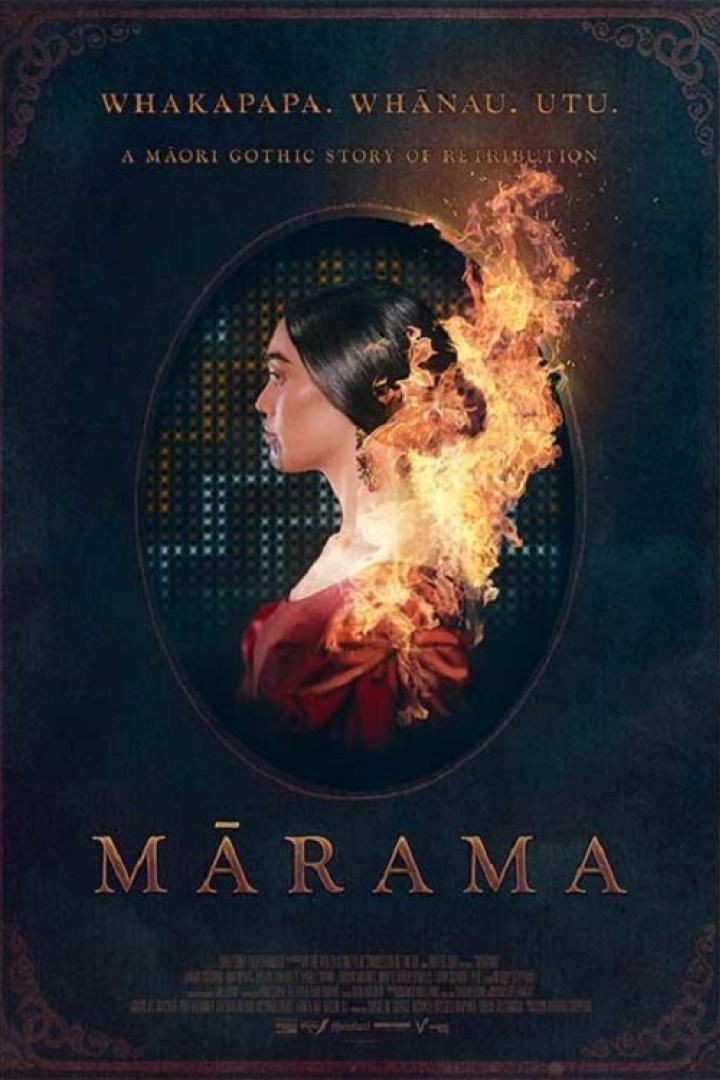
But then I saw a film a few weeks ago that turned my world around and upended my conception of what was possible with gothic horror. This film took all my previously held concepts of gothic storytelling as a slightly damaging or damaged storytelling device and threw them out the window. I saw a film that was so genuinely important that it couldn’t be ignored or denied. This film was the New Zealand film, Mārama (2025).

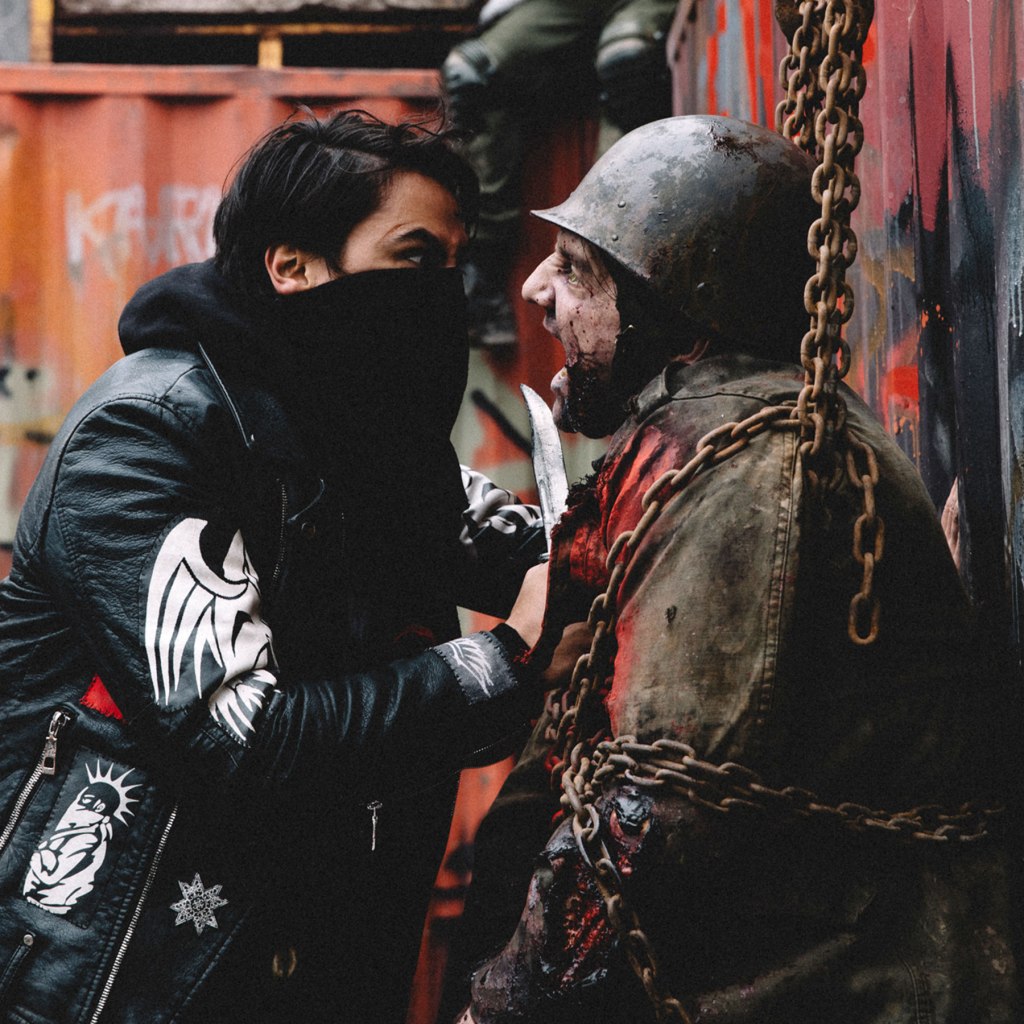
Much like what I wrote about Blood Quantum, this movie takes horror genre tropes and clichés (specifically gothic horror in this case) and flips them in order to make bold and vital statements about cultural identity and the terror of colonialism.

Mārama (2025) was written and directed by Taratoa Stappard. A filmmaker of Māori descent, he noted that he made this film to honor and remember the women in his family. He has also spoken of plans to make more films on this theme, which delights me to no end. At the time of this post, Mārama is available to stream on Shudder, and I firmly recommend viewing it. Multiple times. Not only is it visually stunning, but the performances are phenomenal and the story itself is remarkable.
I’ve never seen a movie like this and doubt I ever will again (unless Stappard fulfills his movie-making promise).
It is horrifying, heartbreaking and infuriating. It is other level in its high caliber filmmaking and brutal honesty.

It does the British no favors. The manner in which it portrays their sheer indifference to cultural heritage destruction is wild. And completely on point. The best and worst thing about Mārama is how realistic it feels and comes across.

This film is challenging and a true horror film in every sense of the word.

Brief Synopsis:

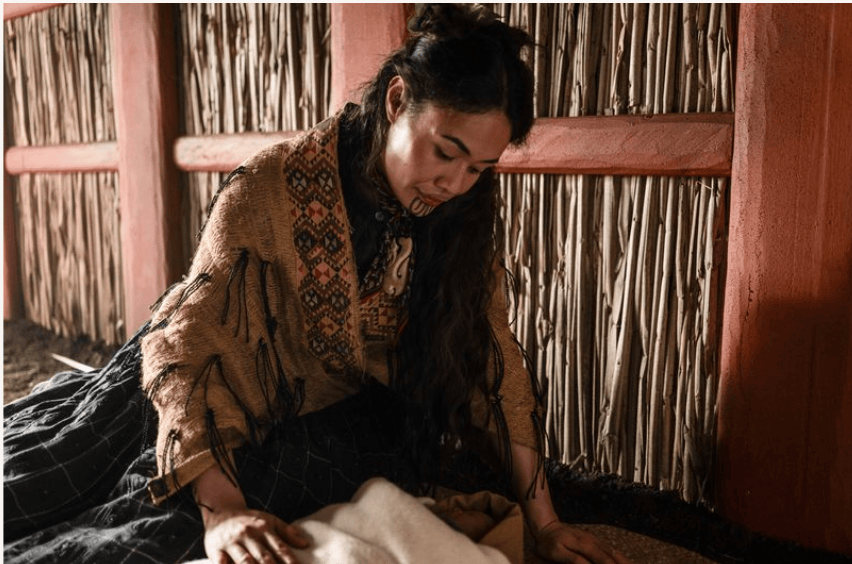
A Māori woman named Mary Stevens receives a letter from a man in Yorkshire, England who claims to know something about her family. In true gothic fashion, once the lady arrives at said location, she is told by Nathaniel Cole, the master of the house, that the man who wrote the letter is now dead. She reluctantly accepts a position at Cole’s estate as a governess for a young girl living there, mostly based on the fact that this girl speaks te reo Māori, Mary’s native language. However…strangely…so does Nathaniel Cole. Mary soon discovers that this mysterious house is festooned with Māori cultural artifacts, including a wharenui (traditional Māori communal meeting house) that has been shipped all the way from New Zealand to Yorkshire and is simply sitting in the backyard.
It is by this building that Mary reveals her real (Māori) name to her young charge as Mārama.
While their relationship building is quite positive, the brightness of that moment darkens quickly and the story gets bad from there and a lot more bloody.

I hesitate to include too many spoilers as this is a film that needs to be seen and experienced.
The opulence of the gothic aesthetic plays monumental havoc with the savage flashbacks and psychic visions that Mārama experiences throughout the film. These images, seen only by Mārama and the viewers, lay bare the damage that British colonialism has caused the Māori people in no uncertain terms.


Traumatic and unquestioningly cruel, what we see through Mārama’s visions leave us no room to wonder what the relationship between the British and the Māori ever was but it does leave many questions about why this mysterious house has so many Māori treasures in it, including the wharenui and the little girl who fluently speaks te reo Māori.

Then, as if things couldn’t get any worse…they do. And when I say they get worse? THEY GET SO MUCH WORSE.

This will be the only scene that I will spoil. But it’s a big scene to me and I sobbed and cheered and gasped. I’ve never had a scene in a horror film produce so many sounds from me in such a short span of time. To call it brilliant would belittle its sheer power. It might well be one of the most important scenes in modern horror cinema.

Up until this point the film had a slightly supernatural edge with Mārama’s various flashbacks and psychic visions (although most were clearly trauma-induced so not supernatural at all), but this scene introduced the stone-cold reality and barbarous nature of colonialism. Every shot, every line of dialogue was real as fuck, and as such…it hit HARD.

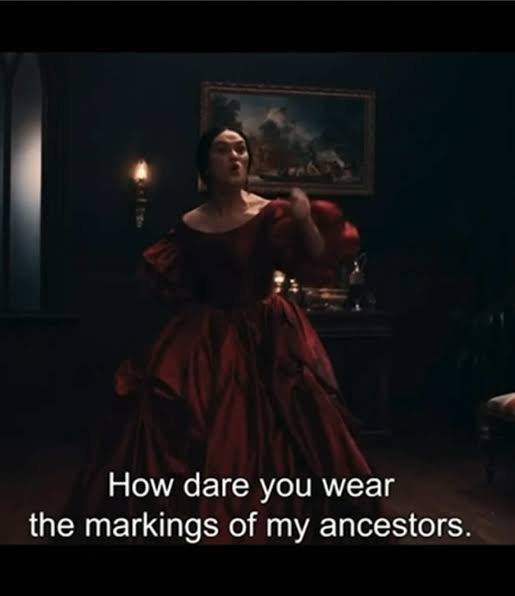
It is a party scene- the birthday party for Nathaniel Cole, the master of the house, Mārama’s employer- and her presence has been requested. She has even been told what to wear. When she comes down to the celebration she sees a friend of Cole’s, another British man named Jack Fenton. She is shocked at the meeting. Not only does he, like Cole, speak her language, but he has tā moko tattoos, traditional Māori facial tattoos.
At first she thinks he’s a just a drunk creep, but then he does the unthinkable and the absolutely unforgivable.

Jack stands up in front of the whole party and puts on a dancing and singing performance parodying the Māori people. He sings a song that begins by celebrating Captain Cook (without whom British colonialism of Indigenous peoples would have been impossible) and concludes by belting out lyrics centering on the rape of Māori women, all while wearing what appears to be a cartoonish version of Māori dress. It’s one of the most horrifying displays of misogyny and colonialism I have ever witnessed cinematically.
The crowd, all white mid-Victorian folk, laugh gregariously, enjoying the presentation immensely and cheering Jack on with drinks and huge applause.

But the tension in the room is real.
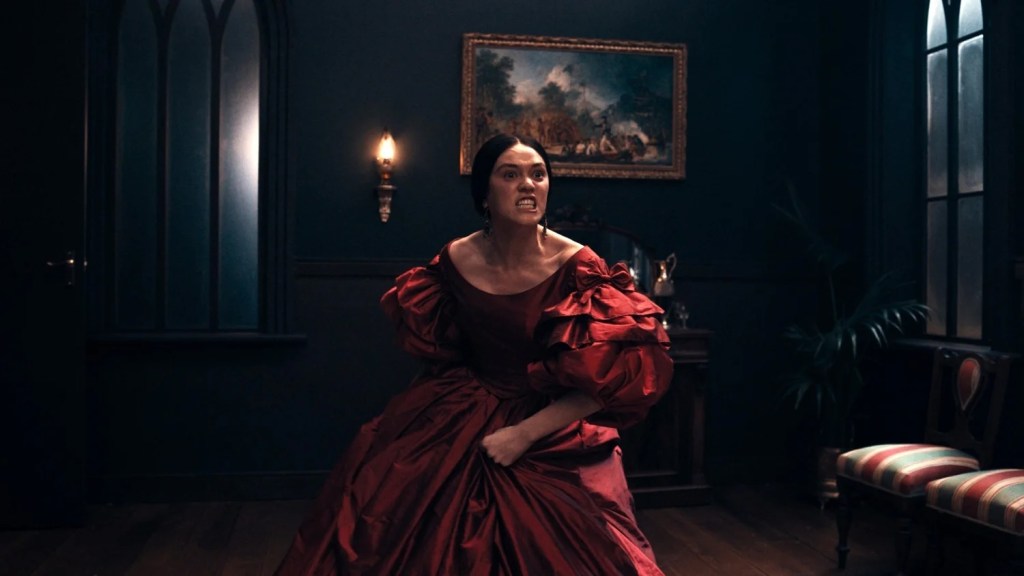
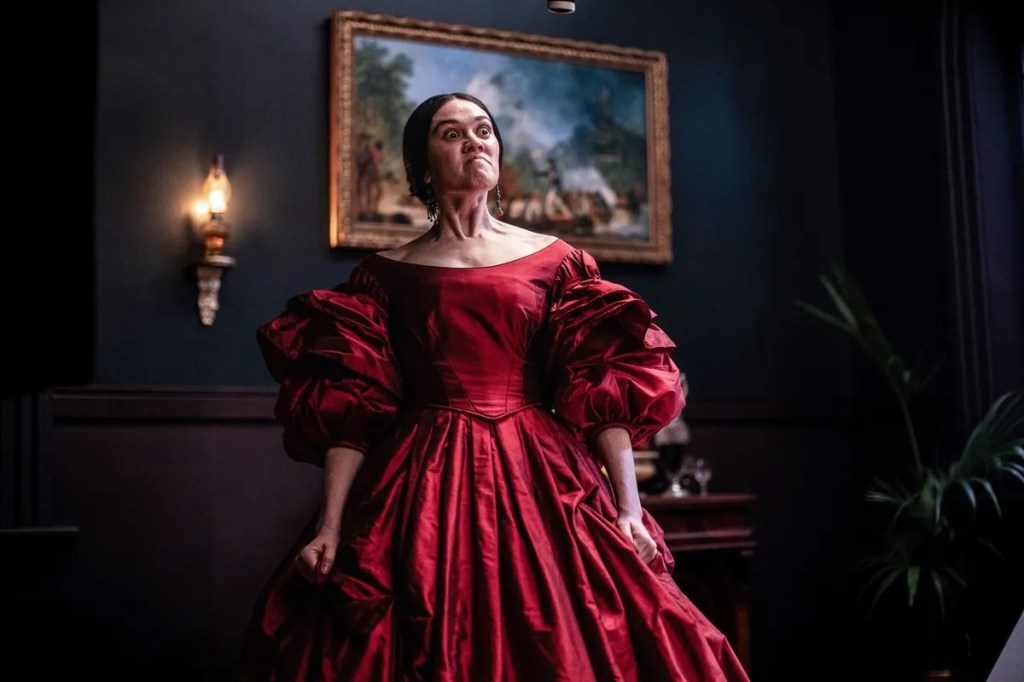
Mārama is standing in the corner, burning with emotion. She has fully divested herself of the Mary Stevens identity that she arrived to England with and it is clear that she now sees herself as the free and proud Māori woman she is. Not only is she disgusted with what she has just witnessed from this fetishizing exploitative white man, she is furious.

And so she does exactly what any proud Māori woman would do in that circumstance: she challenges him to fight by performing a haka, a Māori ceremonial dance. It is beautiful and arresting and I’ve never seen it matched in horror cinema. The closest thing I could think of that held that kind of vibe was the build-up to and unleashed fury from Sissy Spacek as Carrie White in the prom scene of Brian DePalma’s Carrie (1976). And while this scene is certainly connected to that kind of energy it is also layered differently as it is not just coming from being a woman who has been done wrong systemically, it’s coming from being a colonized woman, who has been done wrong culturally and historically which brings in entirely different traumas and experiences of oppression.


As Mārama is concluding her haka, Jack understands what she is doing, as he has some cultural comprehension. So he looks terrified. But the rest of the partygoers think that her reaction, her haka, is simply “part of the performance” and they laugh even harder. At her. At her challenge to Jack. She has told him exactly what she wants to do to him in no uncertain terms but the white audience doesn’t understand as they speak only English.

Again, since watching Mārama, De Palma’s Carrie has been on my mind. The whole transition between Margaret White telling Carrie, “They’re all going to laugh at you” to the shots of the whole auditorium of teens laughing at Carrie…that humiliation. That pain. It’s so very real. And Mārama’s humiliation and pain after that racist performance and the laughter? That’s about as real as you can get. While I don’t see many analogies narratively between these two films, there are certain threads that run parallel. Certainly no one laughs at Carrie White as a result of her cultural expressions or her being an Indigenous person, but they do laugh at her because they don’t understand her, which is essentially what happens to Mārama in that room, both culturally and linguistically.

Thankfully, both movies end with (what I feel) is proper catharsis for our heroines.

I’m not going to expand upon the way Mārama concludes as I REALLY REALLY want you to watch it for yourself.
But I will say that it’s bloody and glorious and it’s a hellova revenge film.

What I love about Mārama (besides everything) is that it pays significant attention to colonial history, cultural detail and it doesn’t play around or make things soft. It’s a genuine horror film and stays true to it’s gothic horror roots. But it complicates gothic horror! It troubles the genre perfectly because gothic anything is historically a very white area and this film is very much not. I love that. We desperately need more films like this.

Finally, much like Blood Quantum, Mārama is yet another horror film that makes the wholly cogent point that English is actually the foreign language. It is pure historical fact. Just like Mic’maq in Blood Quantum, te reo Māori was being spoken in New Zealand far before English was. This may seem like a small detail, but it is huge.

Until next time…enjoy Spooky Season!


Elevated to the Gallows pt 2- Colonialism and North America: Blood Quantum (2019)

After Obsession left such a bad impression on me, I have decided to go a different direction with this series.

Instead of deconstructing why I dislike the term elevated horror (which has been done so many times already by plenty of good people), I have decided to use the term elevated in a different sense: to actually ELEVATE a collection of radically underseen and under-appreciated horror works that deserve discussion, exploration and recognition.

When it comes to horror, the bottom line has traditionally been set at “what is the scariest thing you can think of experiencing?” With very few exceptions, that award has gone to the realm of the fantastic. From undead slashers and invasive serial killers, from deep dives into the supernatural and/or the occult to your standard borderline scifi creature features, horror has provided plenty of good scares. And while there is nothing wrong with these categories and I love all of them, the hill that I will 100% die on is that colonization and its accompanying trauma is the most terrifying and horrific experience that a human being could possibly undergo.

This month I sit firmly on the side of highlighting a certain area of horror cinema that has (thankfully) entered the horror canon unapologetically without taking no for an answer. Using classic genre tropes and rhetoric, these movies explore critically important and highly ignored narratives while intentionally reappropriating horror elements much in the way that the cultures and peoples discussed in these films have had themselves and their own cultures reappropriated. These films fucking rule.

And it makes me so. Grateful. For. Horror. Horror is probably the only genre that allows for the full-blown no-holds-barred graphic nature of this historical experience to be fully explored without compromise. And when it comes to exposing colonialism, its hateful nature, players and behavior, there should be NO COMPROMISE. So that said…I will warn you: if you’re not ready for some pure unadulterated anger and perhaps some of the most horrific rage-driven violence you’ve ever seen, these are not the films for you. But maybe they are. And maybe you need them regardless.

So let’s start.

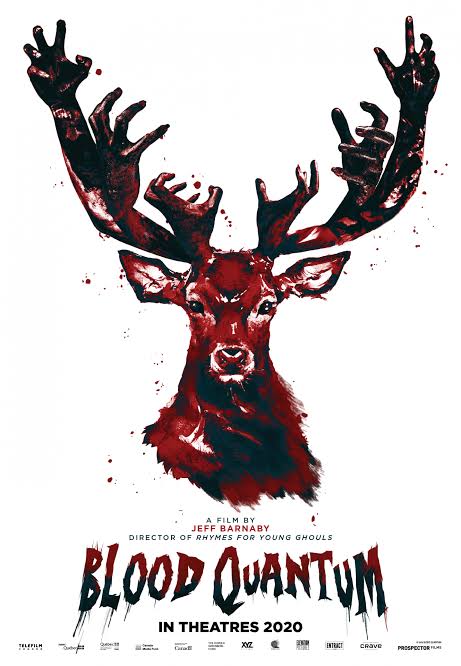
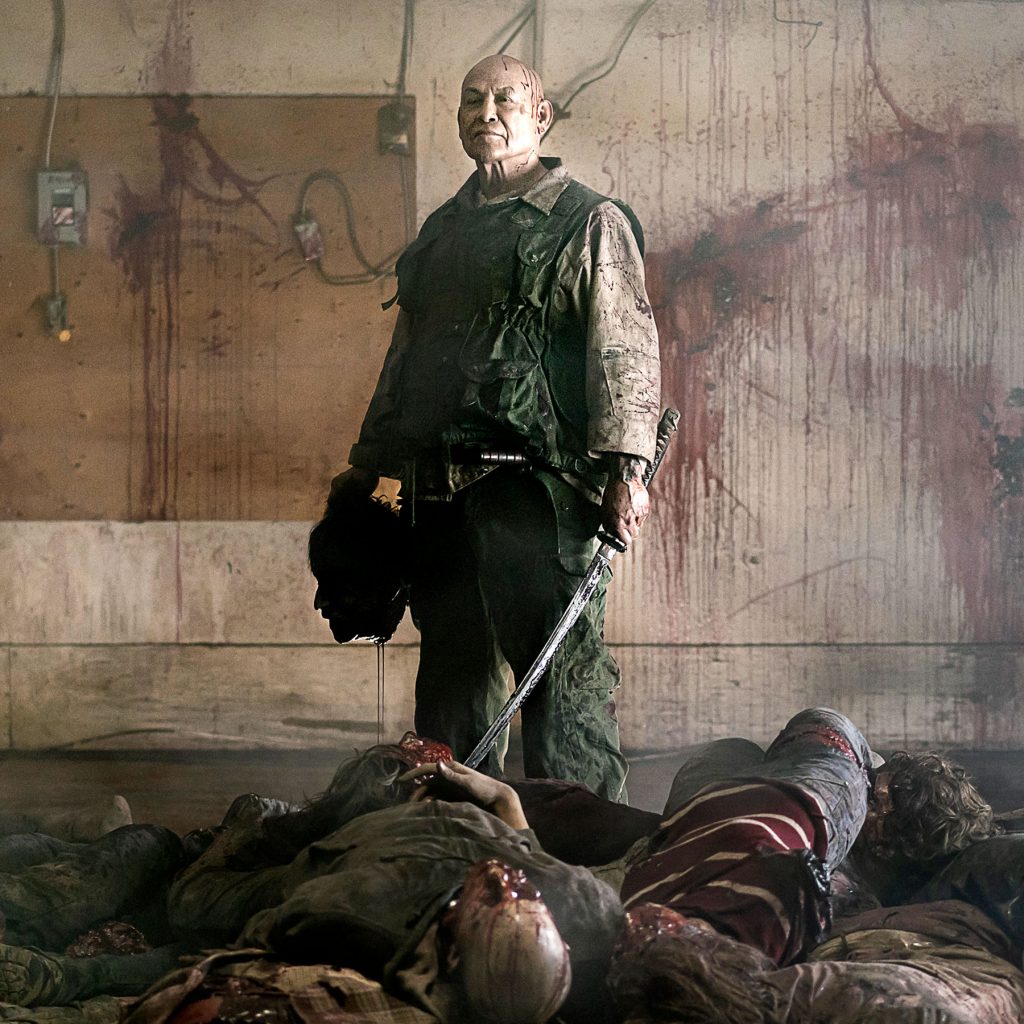
This week was Indigenous Peoples’ Day in the US so I want to discuss a genuinely striking film from 2019 called Blood Quantum. This film was written and directed by Jeff Barnaby, a First Nations/Mi’kmaq filmmaker who was born on a reservation in Listuguj, Quebec. Blood Quantum takes White Colonialism to task for its treatment of Indigenous peoples throughout the years via the classic horror tropes of zombies and their relationship to viral illness/plague. And when I say it takes White Folks to task…IT DOES THE JOB, PROPER.

In all honesty, I wanted to revisit this film before I wrote about it because it is so heavy-duty, layered and, frankly, concurrently violent and beautiful. But I also wanted to publish this as close to Indigenous Peoples’ Day as possible. So choices have been made. If this article doesn’t do Blood Quantum justice, I apologize. I just want people to watch it.

I had heard good things about this film for a long time. I don’t know why it took me…6-7 years to watch it? But when it was released, everyone I know was raving about it. I wish I had seen it then so I could’ve had some interesting conversations.

I genuinely wonder what your Average White Guy Horror Film Fan thought.
I hope he was uncomfortable. I hope he was REALLY uncomfortable. This does a lot of things that a film like Get Out kinda…was just too accessible and nice to do. This film is. Not. Fucking. Nice. It does not play. And that’s a beautiful thing. But at the same time, it made me cry due to its sensitive character portrayals and genuine investigations into human relationships. This is a well-written film and brutal as fuck. It’s 100% my jam.

So let’s start with the title because, well, it plays a huge role in the plot and has historical significance.

According to a piece from the Native Governance Center, blood quantum is

a concept created by white settlers that refers to the amount of so-called “Indian blood” that an individual possesses. Blood quantum appears as a fraction and is “calculated” based on an individual’s family tree. Rooted in eugenics, the concept lacks any scientific basis…Blood quantum is a stand-in device for lineage imposed by the U.S. federal government to disempower Indigenous people and separate them from their lands, resources, culture, identities, languages, and futures…

This may sound familiar to those who are familiar with US Colonialist history. If you’ve heard of the “One Drop” rule for African-Americans (having “one drop” of African-American blood automatically made you Black) it was a similar mythical instrument of racial identification. And, as we can rightly see, both were based on completely whacked out White People “Racial Science” and they were both weaponized as horrific tools of colonialism and White Supremacy, allowing for entire populations of people to endure more pain and suffering than can any white person could possibly imagine.

But blood quantum has become more complex as the years moved on and that certainly comes into play in the film. Many tribes still use this colonial construct to decide who is accepted as part of the tribe and gauge “Indianness” and lineage. But as this interview with Elizabeth Rule has noted, much like Barnaby’s film, many times it’s now used simply as a tool of endurance. Rule states,

The thing that I’ve found to be most interesting about both arguments — in support and against blood quantum requirements — is the language of survival. So, lineal descendant supporters think about high memberships through the lens of existence as a resistance right. And so there’s a desire to build up tribes’ numbers and capacity in order to survive and perpetuate the tribe. On the other side, those who defend blood quantum requirements also evoke this language of survival, and they look upon those blood quantum minimums as a way to preserve an already existing closed community that’s very close and … usually very culturally connected.

So, the film’s title.
It’s already loaded. Without most of the audience knowing exactly how loaded it is.

SPOILERS AHEAD:

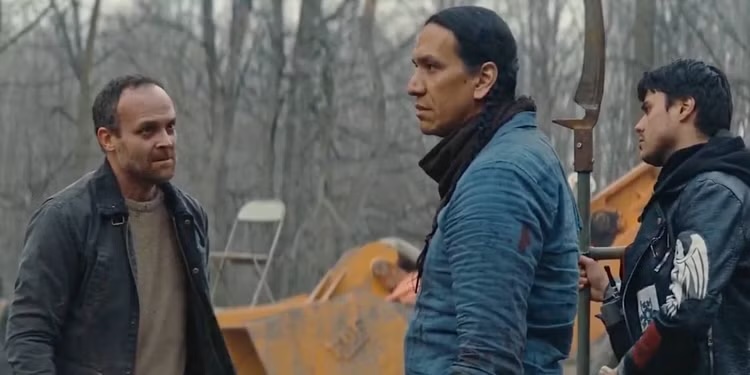
The film begins, as horror films usually do, on a perfectly normal day…Until it isn’t. We are introduced to Traylor, a First Nations police chief sheriff on the Red Crow Reservation.

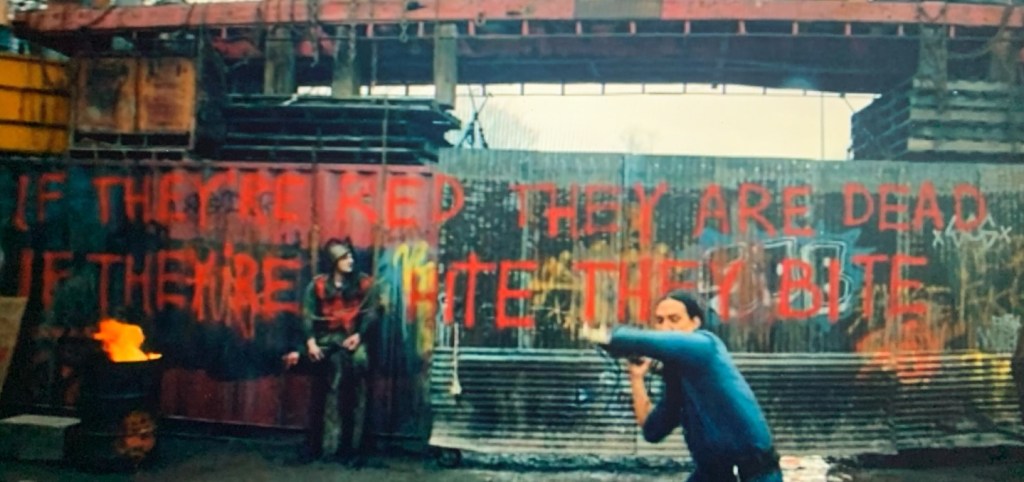
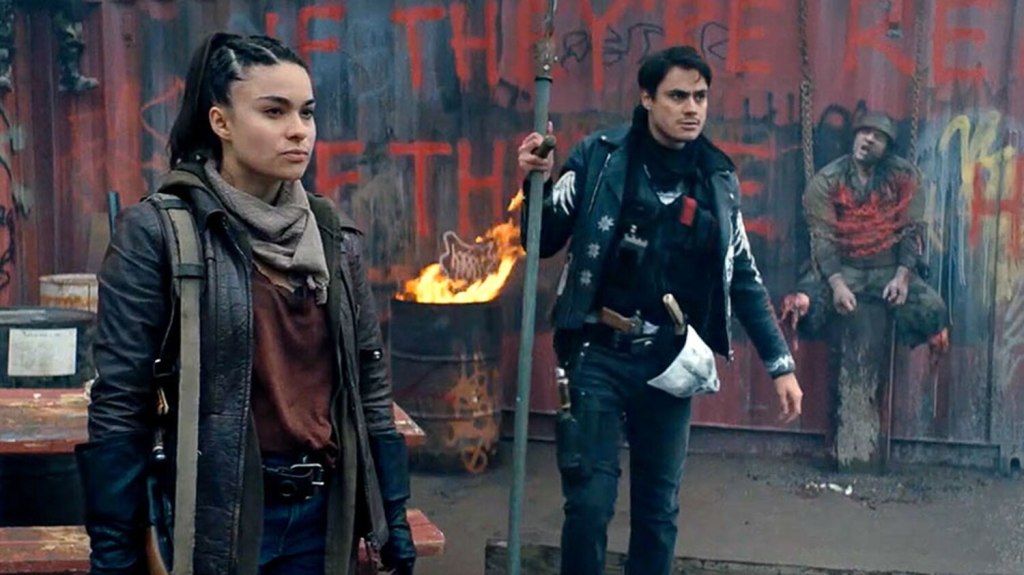
After encountering dead animals coming back to life and some serious chomping action from violent criminals and other random white people, Traylor gives up on passing this whole thing off as a Bad Monday. Naturally, the film escalates but not in a conventional manner. We jump forward to 6 months after this No Good, Very Bad Day and the Red Crow reservation is now an apocalyptic wonderland, looking quite a bit like something out of Mad Max or a George Romero film.


But it gets better. The big reveal comes next.
We discover that there have been no infections within the Red Crow tribe even though people like Traylor were bitten by the infected. As it turns out, the Indigenous genetics of the First Nations people made the Red Crow immune to the bites and the resultant plague that “turned” people. But other people didn’t get so “lucky.”
Most of the population (read: white people) do not have that genetic safety code. And these people periodically come to the compound begging and pleading for safe space and shelter.
What a conundrum.

AND WHAT A FUCKING PREMISE.
And that’s just the tip of the iceberg.
The interracial relationship between Traylor’s son, Joseph, and his white (very pregnant) girlfriend makes life very complicated for, well, everyone. She’s the only white person who lives there and is somewhat (and I do mean somewhat) accepted. I could write an entire blog just on her positionality, white privilege and non-comprehension of the whole situation.

Then there’s Traylor’s other son, Lysol, raised in foster homes and burning with anger at not only white people but the world in general. He’s a genuinely fascinating character and represents colonial damage and trauma in a whole different way (which I will hit on later) but ends up having a massive impact on the narrative and everyone in it.


Blood Quantum is an exquisitely layered and complex film bursting at the seams with the full-throttle gore and excitement of a proper zombie film. The FX are no joke and they do not cost the plot anything. While I would certainly be a bit annoyed if people only watched it for that and straight up ignored the immense dexterity with which Barnaby wove a properly intelligent anti-colonial narrative into an electrifying horror film…I guess I would just be glad people are watching it. After all, I don’t see how you could, in all seriousness, call Blood Quantum just a “zombie film.” Most of it is in Mi’kmaq. That linguistic jump alone is a massive shift and just as important as the title.

The majority of viewers will view this as a “foreign language” or see this as qualifying as a “foreign language” title, but I would like to correct this. English is technically the “foreign language” in Blood Quantum. Mi’kmaq is a living language and has been spoken in North America (primarily in Canada’s Atlantic Provinces but going all the way down to Maine) for thousands and thousands of years. Far longer than white settlers have occupied Canadian or US soil. There is a mix of English and Mi’kmaq in the film but Mi’kmaq carries clear dominance. As I watched Barnaby’s film and it became more and more apparent that Mi’kmaq carried more power than English, I cried. I love horror films so much but to have a genre film actively rip apart the horrors of colonialism in a language that has actively survived the terrorism of white supremacy was a very emotional experience. This wasn’t the only time I cried. It brought out a lot of feelings, even amidst the blood and guts.

Most zombie media (especially that which directly references plague and sickness) facilitates ruminations on the self, identity and relations to community and future survival. That’s kinda a no-brainer, pun intended. And, of course, Blood Quantum is no different. But meditations on survival and community from the perspective of a colonized population do not hit the same way as a the frightened bleatings of privileged white folks. It’s not that I don’t have sympathy for General Zombie Film People, it’s just that white privilege exists all day every day and when hordes of white zombies are trying to invade a First Nations reservation? It changes everything. Not only does everything go up to 11 in terms of socio-critical relevance, but it becomes a different film. It becomes a re-imagining of past trauma when white people did the exact same thing just…without zombie-ism as an excuse. And bless Barnaby for this.

There is a lot of discussion amongst the Red Crow about whether the compound should allow white people in and whether they should save white people. Watching this conversation happen on film was incredible. But it was also gut-wrenchingly sad. That it should take a zombie invasion to revert proper agency and power to the very people whose land it was to begin with just gutted me (also pun intended, I guess).

And yes, these conversations about human decency and survival were real, especially when they dealt with children. But for me, I kept thinking: this is a First Nations community that has worked like hell to make themselves safe in the middle of an unsafe time and they are able to be safe from white folks for the first time in history. Why should they help white people?? If situations were reversed, what would have happened? Would white people have helped the Red Crow? I doubt it. As many zombie films/tv shows have shown, white folks are very much out for themselves in survival situations. But I guess that was part of the point.

Charlie, Joseph’s pregnant girlfriend, is white and (as such) tries to plead for “everyone” to survive. But it’s hard to watch her do that. Knowing that just outside the walls there are thousands of hungry and detrimental beings who are part of a population that has been trying to kill the people within the walls of the compound since the day they arrived on North American soil. White people in this film are zombies and diseased but…haven’t we always been? Even if we don’t have an actual “plague”? Isn’t colonialism a sickness? And, yes, I do say “we” because I am white and I cannot remove myself from this problem just because I am against the kyriarchy and am a fundamentally anti-colonialist individual.

I’m spending a lot of time on this because it hit me hard. Especially since it discusses land/space/property and safety so explicitly, things that First Nations people have never had the luxury of. The eventual allowance of a few white people in to try to save them was done out of altruism but it ultimately felt suspicious to me and echoed the history of white people taking advantage of Indigenous people and their kindnesses.

Ultimately, however, the story doesn’t go wrong because of the centuries-old obvious hate from white people, it gets undone by someone on the inside. Which is the most frightening aspect of the film. The hatred and rejection that Traylor’s son Lysol (given name Alan) has internalized (from all sides) causes him to act out in the most violent of manners, primarily against his own tribe, destroying everything and everyone in his wake.

I couldn’t help but think that this was also a comment on colonialism as well. Lysol, the product of foster homes, was did not receive the same sort of care and love that Joseph got, turning out bitter and fiercely angry. He was not the same kind of person as the rest of the people on the reservation. A troublemaker, into drugs and drinking, he comes off as a genuinely unhappy and hateful person, becoming more hostile as the film goes on. He vigorously repudiates Charlie for being white and vocally rejects her interest towards saving anyone outside the tribe, defending himself by saying that it was only to keep the Red Crow reservation safe.

Lysol’s past created him and, once again, I think we can turn to colonialism for an explanation. There is a tragically large historical precedent for First Nations children being removed from their families and getting placed in Foster Care. Blood Quantum takes place in 1981, putting Lysol smack dab in what is called the Sixties Scoop. This horrific collection of official policies in Canada forcibly took thousands and thousands of Indigenous children from their families and placed them in non-Indigenous homes, sometimes as far away as the UK, Australia or Germany. Suffice to say, they did not usually get treated well nor were they allowed to explore their culture.

While Blood Quantum takes place in Quebec, the Sixties Scoop affected all provinces and the discourse on Lysol as a foster child is real and so is the trauma he exhibited. Does it make his villain turn right?
No.
Does it make it understandable?
Hell yes.
Can we still look to and blame the horrors of colonialism and terrible whiteness for the terrifying conclusion to Blood Quantum?

ABSOLUTELY.

Blood Quantum asks a lot of important questions of the viewer and I believe that, unlike other, more mainstream horror works, postcolonial horror films give answers. Whether people are ready to listen is another story. I believe strongly that horror is the perfect genre to question and investigate difficult subject matter. I am so grateful for Blood Quantum.


Eastern Ways in Western Dress: Cultural Hybridity and Subversion in Yojimbo

This post is for the Japanese Cinema Blogathon.  It was started to help assist in the earthquake & tsunami relief. If you like my post/hate my post/are bored to tears by my post, or just enjoy the damn pictures, PLEASE help. Living, as I do, in an earthquake-prone locale (Southern California), earthquakes are quite frightening, and I would like to do my part. Since I am broke as hell, all I can realistically do is what I do best: write. And so I will write for Japan, and hope that someone makes a donation off of what I’ve written or just makes a donation, period. Japan has given us some of the most incredible cinema in the entire world and will continue to do so. Let’s help out a little in appreciation, shall we?

The standard assumption about modern Japanese culture is that because it contains elements familiar in the west, perhaps even born in the west, it has become, in effect, entirely Westernized. Looking closer at Japanese culture, however, we can see that this assumption is about as ridiculous as saying that the United States has become more Chinese because a good many people prefer that cuisine. It is only an example of the kind of binary thinking that revisionist histories and neo-colonial thinking have created within the world that would necessitate this kind of compartmentalization.

Within this essay, I will be looking at an example of Japanese cinema that expresses not only the Japanese-ness noted previously, but also certain aspects of cultural hybridity and significance within Japanese culture. In order to explicate my argument, I will be using a variety of texts varying from discussions of cultural hybridity and Japanese history to Hamid Naficy’s work on accented cinema. What I hope to show in this work is the remarkable ability of one culture (Japan) to reappropriate and “poach” different themes and iconographies from another culture (United States) and feed them through their own, culturally specific machinations in order to create something wholly new and different.

The film I have chosen, Yojimbo (Akira Kurosawa, 1961) illustrates the ways in which cultural identity is asserted through the conscious blurring of boundaries and intentionally fluid interpretations of genre. By re-placing the American Western within historically important samurai contexts, Japanese cinema can be seen to be making its own cinematic space.

Yojimbo (1961), Akira Kurosawa

This claiming of cinematic environment and demand for a location of cultural expression places modern Japanese cinema squarely within the definitions of Third Cinema. As defined, Third Cinema is “an alternative cinema…a cinema of decolonization and for liberation.”[1] By retaining individual signifiers and insisting upon their own generic interpretations, these films reject cultural depreciation and celebrate ethnic identity, and expound the tenets of the Third Cinema in a very localized fashion.

In order to truly understand Japanese cinema, it is crucial to know the history of the country itself. As Teshome Gabriel writes,

Lacking this historical perspective, the film critic or theorist can only reflect on the ways in which this cinema undermines and innovates traditional practices of representation, but he/she will lose sight of the context in which the cinema operates. An equally significant component of the critical perspective that must be adopted is the recognition of the TEXT that pre-exists each new text and that binds the filmmaker to a set of values, mores, traditions and behaviors- in a word, “culture”—which is at all moments the obligatory point of departure.[2]

Thus, in order to not fall into the “trap of auteurist fallacies and ‘aesthetic’ evaluative stances,”[3] I shall give a brief historical and cultural outline of Japan. Although by no means exhaustive, I will cover the primary events that many historians feel to be the most essential and transformative, as well as those occurrences that have singular importance to my argument.

Although there was clearly a great deal that went before, the Heian period, which lasted from 794 a.d. to about 1185 a.d., is where we will begin. During this era, there was a “flowering of classical Japanese culture in new capital of Heian-kyo (Kyoto). Court aristocracy, especially women, produced a great body of literature–poetry, diaries, the novel The Tale of Genji–and made refined aesthetic sensibility their society’s hallmark.”[4]

image from the illustrated scroll, "The Tale of Genji (Genji monogatari)" - a narrative novel authored by Lady Murasaki; painted by Takayoshi in the 12th century

The cultural product that resulted from this period was significant and vital, being reproduced continually even today, within Japanese painting, cinema and television. However, although the creative vitality still existed, the relative peace was not to remain, as the Kamakura Period (1185-1333) ushered in the beginning of military rule. The significance of this was vast, as it replaced noble rulers with the samurai (warrior). Although there is recognition of artistic development during this time, the primary feature for over a century is civil war, and until approximately 1600, Japan is immersed in Sengoku Jidai (Era of the Country at War). There is no unified Japan, only a series of warlords fighting with each other. Intriguingly, this is also the period during which the Portuguese enter the Japanese islands and introduce firearms and attempt missionary work to convert the Japanese to Christianity. The Portuguese fail in their religious mission, however, and are punished severely for attempting to dilute the national culture.

In 1568, a man named Oda Nobunaga starts the process of reunifying Japan. Followed by Toyotomi Hideyoshi, the foundation of modern Japan is laid. However, although these men laid down the base, it was up to another man to change the course of Japanese history forever. After he brutally beat Hideyoshi (and a few years later forced Hideyoshi’s legitimate heir to commit seppuku, ritual suicide), a man named Tokugawa Ieyasu became the Shogun, and ruled with a strict, isolationist sensibility. He cut off exchange with all countries except China and the Netherlands, expelled Portuguese missionaries and essentially shut the doors of the country for 200 years. Michael Cooper, the former editor of Monumenta Nipponica, an interdisciplinary journal on Japanese culture and society, states quite simply that, “Tokugawa wanted to clear the board of all these foreign influences which were just muddying the waters, making life more complicated.”[5] And clear the board he did. Not only was trade extremely limited, but also foreign books were outlawed, travel abroad was forbidden. For 200 years Japan was kept away from the rest of the world, and the rest of the world was kept out of Japan.
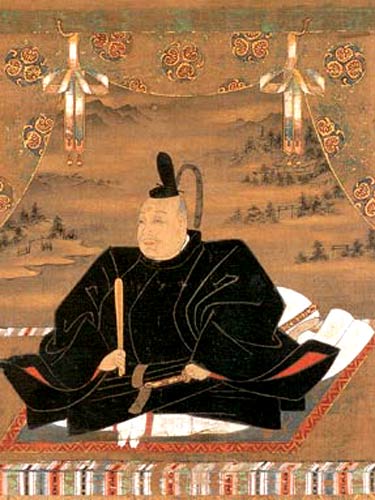
Tokugawa Ieyasu

During this period, however, the Japanese had ample time to refine and hone its multitude of cultural assets, without any infiltration or any disturbance from anyone. Literature, ritual customs, art, and theater all prospered in this period. However, this could only last for so long. Finally, around 1867, the Tokogawa shogunate was ended and this started the Meiji Period.

The Meiji Restoration (called this because power was restored to the Emperor Meiji) began the colonization of Japan by the west. It is noted that during this period, the Japanese, “like other subjugated Asian nations…were forced to sign unequal treaties with Western powers. These treaties granted the Westerners one-sided economical and legal advantages in Japan.”[6] Beyond this, significant modernization and Westernization occurred. Compulsory education, now reformed to resemble French and later German systems was implemented, as well as a European-style constitution in 1889.

1686- the Meiji emperor of Japan moves from the old capital, Kyoto, to the new capital, Tokyo

After being closed off from the rest of the world for so long, its seemed to the Japanese that they needed to hurry and “catch up,” so they sent scholars away to different countries to attempt to get what they needed in a more condensed fashion. However, after a certain period of time, and successfully winning two wars, all of this Westernization became repugnant to the Japanese, and there was a significant rise in nationalism again.

Western forms of modernity proved to be like a virus- once they entered the Japanese system they stayed. The symptoms were treatable, but the virus would always be there. On the other hand, the more this virus showed itself, the more nationalistic the country got. The West continued to colonize Japan until the end of World War II, when Japan was physically occupied by the US, and forced to alter everything from cultural specifics (such as what they could and could not put in cinematic or literary texts) to political structures (religion and state were now entirely separated). After two hundred years of relative peace and cultural unity, it took less than half that time for the West to rope Japan in, and force it into what they saw as submission.

While the historical evidence does show the “conquer” of Japan, and its subsequent punishment and demonization within much of Western culture (especially the US), what occurred within the cultural borders of Japan was something very different. With the sudden influx (initially desired, consequently abhorred) of so many different cultures after the Tokugawa period, it is difficult to conceive of Japanese culture not having been influenced in some way. However, the consolidation of nationalistic identity was so strong before the ports opened that even the influences that had become present were now filtered through a Japanese lens.

The three phases that Frantz Fanon discusses in the progression towards cultural decolonization are defined by Teshome Gabriel as

(a) The unqualified assimilation phase where the inspiration comes from without and hence results in an uncritical imitation of the colonialist culture; (b) the return to the source or the remembrance phase, a stage which marks the nostalgic lapse to childhood, to the heroic past, where legends and folklore abound; and (c) the fighting or combative phase, a stage that signifies maturation and where emancipatory self-determinism becomes an act of violence.[7]

If you follow Japanese history from the end of the Tokugawa Period forward, it seems that Fanon’s text is accurate and appropriate. Certainly the Japanese were fascinated by the outside culture that they had not experienced for over 200 years, but when that outside force sought to dominate their carefully nurtured autochthonous culture, the Japanese bristled. In fact, according to Donald Ritchie and Joseph I. Anderson, the Japanese reaction to new innovations in early cinema followed Fanon’s structure as well. In the beginning, the Japanese audiences “embraced the novelty of the moving picture with at least as much enthusiasm as other nations” but they did not, however, embrace the new cinematic methods, and neither did the directors. Now whether this was due to culturally bound aesthetic preference or not is still up for debate, but Ritchie and Anderson do note that in this aesthetic decision, the audience was “following what has become recognized as a peculiarly Japanese pattern of behavior: first the enthusiastic acceptance of a new idea, then a period of reaction against it, and finally the complete assimilation and transformation of the idea to Japanese patterns.”[8] If this is indeed the case, the Japanese have been in the process of decolonialization in the cinema for almost as long as the cinema has been around.

The cinema in Japan, though initially full of foreign product, soon began to create its own, complete with genres that celebrated nationalism and cultural history. Fernando Solanas and Octavio Getino write that “real alternatives differing from those offered by the System are only possible if one of two requirements is fulfilled: making films that the System cannot assimilate and which are foreign to its needs, or making films that are directly and explicitly set out to fight the system.”[9] What if, in the presentation of these highly ethnocentric and history-centric pieces, Japan was able to do both? I maintain that Japan’s early genre cinema was not only a way of recuperating feelings of nationalism and pride in cultural identity, but also a way to fight the virus of colonialism that had already swept through the country.

Two of the most popular genres in Japanese cinema (up until they were occupied and forced to change cinematic content) were jidai-geki (historical dramas) and gendai-geki (modern dramas). Stories such as Chushingura (the tale of the forty-seven Ako ronin), which was set in the Tokugawa period and based on historical incidents, were incredibly popular. In fact, that particular story was made into a film over eighty times between the years 1907-1962![10]
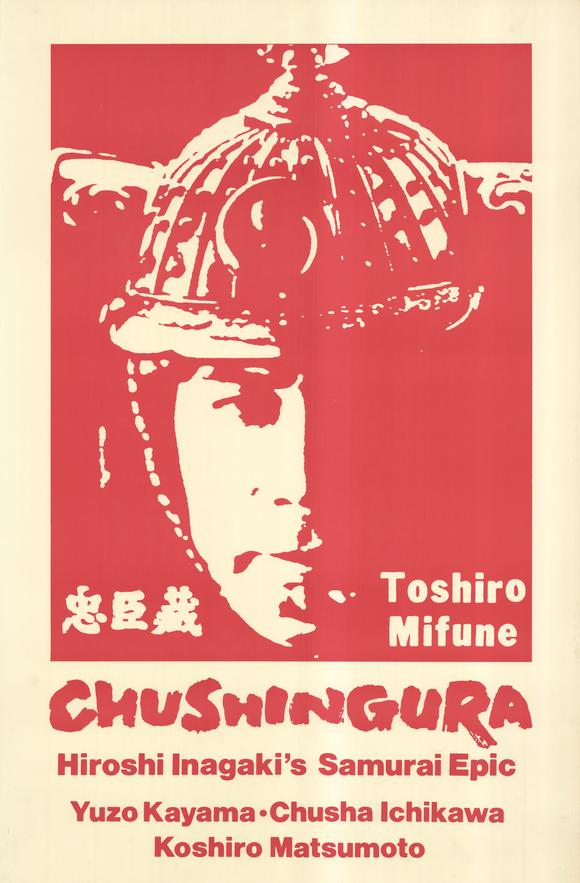
Chushingura (1962)

But stories like Chushingura would not have been assimilable to an outside culture, let alone the System that Solanas and Gitano mention. And the jidai-geki made up close to half of the feature films in Japan from 1910 onwards![11] The very structure of Japanese Cinema, from its origination, prohibited its cooptation and cultural dilution. By utilizing their history and cultural signifiers within the cinematic texts, they not only denied the System but also outright thumbed their nose at it.

Donald Ritchie discusses the theory that it was Japanese theater conventions that helped teleologically maintain the cultural identity of the Japanese cinema. It is a distinct possibility that theatrical features like the benshi (a live interpreter for the silent films), or the use of men acting in women’s roles did help in the cultural preservation. However, I feel that Ritchie’s own analysis is far more perceptive. He states that though these theatrical attributes might have “somehow served to preserve the ‘Japaneseness’ of this cinema, protecting it from rapacious Hollywood, [this theory] fails to take into account the fact that…any Hollywood ‘takeover’ was a highly selective and invitational affair. If anything, it was Japanese companies that took over the ways of the California studios. It is probably safe to say that Japan has never assimilated anything that it did not want to.”(italics mine)[12] While it is of utmost consequence to recognize the agency that Ritchie mentions, it is also appropriate here to mention the concept of cultural hybridity. The nature of Japanese cinema is not one of assimilation but of translation. While Japan was a colonized nation, considerably flooded with Western ideology, they managed to hybridize the west with the east, and filter it through their own cinematic language. In their own way, they did what Francisco X. Camplis was suggesting when he connected Raza cinema to Third Cinema, stating that, for decolonization, Chicano cinema needed to “explore and discover our own sense of aesthetics. Our own language.”[13]

Japan, while maintaining sovereignty over their cultural product, also enunciates their voice through the hybridization of colonial product. This technique of cultural hybridity is a highly subversive act of decolonialization, according to Robert Stam. He writes, “these aesthetics share the jujitsu trait of turning strategic weakness into tactical strength. By appropriating an existing discourse for their own ends, they deploy the force of the dominated against the dominant.”[14]Thus, when films such as Akira Kurosawa’s Yojimbo (1961) re-place the Western within a samurai context, it is actually creating a site of resistance.

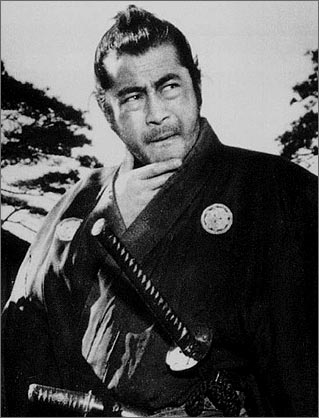
Although Kurosawa has been called the “most Western” of all Japanese filmmakers,[15] he himself stated that he made Western films for “today’s young Japanese.”[16] While these statements might appear to have similar meaning, it is crucially significant that Kurosawa designates who his audience is. While Western critics may be able to see familiar narrative patterns or generic properties, Kurosawa’s work is a multi-layered text that, although seeming familiar to them, is still a foreign film. A.O. Scott writes that “filmed images do not require translation; we know what we see. Narratives, of course, are another story; even when they seem to be transparent, they come encrusted with local meanings, idioms and references, some of which will inevitably be lost as they move from one audience to another.”[17] Although immediately recognizable as an example of the Western genre, Yojimbo is a perfect example one of those films that, as Scott notes, is “encrusted” with its own set of culturally-bound signifiers.Toshiro Mifune as Sanjuro Kuwabatake/ The Samurai

The story of Yojimbo takes place just after the end of the Tokugawa period. A ronin (masterless samurai) who was “once a dedicated warrior in the employ of Royalty, now finds himself with no master to serve other than his own will to survive…and no devices other than his wit and his sword”[18] Traveling in solitude, he comes upon a village and is fascinated to learn that it is in the middle of a turf war between two extremely morally corrupt clans. The ronin, Sanjuro, takes it upon himself to rid the town of these evil clans and their warlike ways by pitting them against each other, and letting them do the damage. In the end, the two clans do destroy each other, but the irony is that when they do, the town is left empty- a literal ghost town.

The two clans do battle

In his book, An Accented Cinema: Exilic and Diasporic Filmmaking, Hamid Naficy writes,

Accented films embody the constructedness of identity by inscribing characters who are partial, double, or split, or who perform their identities by means of the strategies already mentioned. By so engaging in the politics and poetics of identity, they cover up or manipulate their essential incompletion, fragmentation, and instability.[19]

In Yojimbo, Sanjuro’s constant changes in affiliation between the two fighting clans underscore his fractured character. Sanjuro is a wanderer. He is a man with no allegiances and no home. He has arrived in a town that is already split in two, and now, in order to unite the town (and perhaps his own identity), he must fracture himself even further by playing both sides. To go even further, whatever side he is playing is also instable because it’s a lie. David Desser describes Kurosawa as a “dialectical” filmmaker. He describes Kurosawa’s films as cinematically split, noting that Kurosawa “offers enjoyment to the audience seeking escapism and the audience seeking substance; he speaks to the Japanese and to the West. More importantly, through a dialectical combination of the two, he speaks to both about each other.”[20] If this is indeed the case, then Sanjuro’s split identification is standing in for Kurosawa’s, a self-reflexive position that, Naficy notes, is also not unusual for accented film.

Sanjuro (Toshiro Mifune) and director Akira Kurasawa

In accented cinema “neither the home-seeking journey nor the homecoming journey is fully meliorating. The wandering quests, too, are often tempered by their failure to produce self-discovery or salvation.”[21] Kurosawa’s deliberately open-ended yet dark and ironic close to Yojimbo attests to that theory. After all the effort that Sanjuro put into saving the town, the only people who are left alive at the end are the coffin-maker and the tavern keeper. Sanjuro looks at them, says, “Now it’ll be quiet in this town,” turns his back and walks away, clearly continuing on with his journey. It is clear that, although he has saved the town, there was really nothing there to save. Although nihilistic, this scenario further explores Kurosawa’s identity as an accented and hybridic filmmaker and reaffirms Sanjuro’s identity as his cinematic double. With this ending, Kurosawa clearly demonstrates his own border consciousness, which “like exilic liminality, is theoretically against binarism and duality and for a third optique, which is multiperspectival and tolerant of ambiguity, ambivalence, and chaos.”[22]

Yojimbo possessed many of the standard features of the Western genre, yet also ended up revolutionizing it. I contend that Desser’s theory of Kurosawa as a dialectical filmmaker should be widened to include his position as a dialogical filmmaker as well. Yojimbo did not remain contained within Japanese borders. In 1966, director Sergio Leone remade it in Almeria, Spain. The film starred Clint Eastwood, and was released under the title Fistful of Dollars. Jim Miller writes,

Although the storyline remained much the same in Fistful as it did in Yojimbo, a man alone playing both sides against each other, the end result of Clint Eastwood’s role brought about a whole new look at the Western hero as a lone wolf, anti-hero that was totally different from characters John Wayne had played. The anti-hero had been done before and been well received…but…[this] was a Western anti-hero who had not been viewed by American moviegoers, and that made the character and the actor who played him a different kind of Western hero.[23]

While Fistful of Dollars became the first in what would be a series of films starring Clint Eastwood as Sanjuro’s American surrogate, the Man With No Name, it is integral to recognize that the American translation of Kurosawa’s work introduced a new archetype. My position is that Japanese films (even Yojimbo, which David Desser admits is “dependent on Western [genre] structures”[24]) subvert Western colonial narrative structures through their cultural filtration system. This is further proven by Miller’s discussion of the reception of Clint Eastwood’s character.

The three central roles in the Western genre are “the townspeople or agents of civilization, the savages or outlaws who threaten this first group, and the heroes who are above all ‘men in the middle,’ that is, they possess many qualities and skills of the savages, but are fundamentally committed to the townspeople.”[25] Kurosawa’s conflation of archetypes is vital and entirely intentional. By creating a climate in which the townspeople are the savages and the hero is committed to the destruction of the townspeople, he is forcing the spectator to reflect on “a world of uncertainty.”[26] In many ways, this film can be seen as analogous to the confusion brought on by Westernization. The main villain, Unosuke (the son of one of the clans), is in possession of a gun, and waves it around like a cowboy. The rest of the men are armed only with swords. The presence of this weapon, and Unosuke’s ultimate defeat, signifies that even though the Western world might have invaded Japan historically, forcing change and cultural infiltration, the basic structures of Japanese identity are strong enough to withstand that change. Essentially, Sanjuro’s abrupt but confident departure from the town signifies the triumph of the samurai, symbol of loyalty and honor, and Japanese history, over the attempt by the West to conquer the East.

In the introduction to Donald Ritchie’s book on Japanese cinema, he traces the hypothetical life of a 50-year-old man in each period of early Japanese cinematic history. From the man in 1896, who “would have been born into a feudal world where the shogun, daimyo, and samurai ruled” to the man who “would have witnessed the forced adoption of the Gregorian calendar, the emergence of a nationwide public school system, the inauguration of telephone services…and the construction of railways,” Ritchie briefly looks at what a Japanese man might have experienced. But, Ritchie says, “through it all, he…would have been told to somehow hold on to his Japaneseness. [A] slogan indicated the way: ‘Japanese Spirit and Western Culture’ (Wakon Yosai)- in that order…[and] In this manner, it was hoped, Japan might avail itself of the ways of the modern West and, at the same time, retain its ‘national entity.’”[27] Teshome Gabriel says that Third Cinema “must above all be recognized as a cinema of subversion.”[28] By working through the ideas of Wakon Yosai, the Japanese cinema is a proud and active part of Third Cinema. Through the jujitsu model of hybridity and a refusal to dilute their national identity, Japanese cinema has, and is continuing to have, the best of worlds. They truly have subverted the dominant paradigm and are only richer as a result.


[1] Gabriel, Teshome. Third Cinema in the Third World: The Aesthetics of Liberation. Ann Arbor: University of Michigan Research Press, 1982.

[2] Gabriel, ibid.

[3] Gabriel, ibid.

[4]Heinrich, Amy Vladeck.  Ask Asia, a K-12 Resource of the Asia Society, History of Japan, 1994. available at http://www.askasia.org/image/maps/timejape.html, Internet; accessed 16 March 2011.

[5] Michael Cooper, interviewed in “Japan: Memoirs of a Secret Empire.” Empires, narr. Richard Chamberlain, PBS, 26 May. 2004.

[6] Meiji Period (1868-1912), Periods of Japanese History, Japan Guide, 2 June 1996. available at http://www.japan-guide.com/e/e2130.html, Internet; accessed 20 November, 2004.

[7] Gabriel, ibid.

[8] Anderson, Joseph I. and Donald Ritchie. The Japanese Film: Art and Industry. Princeton: Princeton University Press, 1982.

[9] Solanas, Fernando and Octavio Getino. “Towards a Third Cinema: Notes and Experiences for the Development of a Cinema of Liberation in the Third World.”

[10] Barrett, Gregory. Archetypes in Japanese Film: The Sociopolitical and Religious Significance of the Principal Heroes and Heroines. Cranbury: Associated University Presses, Inc, 1989.

[11] Ibid.

[12] Ritchie, Donald. A Hundred Years of Japanese Film. Tokyo: Kodansha International, 2001.

[13] Camplis, Francisco X. “Towards the Development of a Raza Cinema (1975)”. Chicanos and Film: Representation and Resistance. Ed. Chon Noriega. Minneapolis: University of Minnesota Press, 1992.

[14] Stam, Robert. “Beyond Third Cinema: the Aesthetics of Hybridity.” Rethinking Third Cinema. Ed. Anthony Guneratne and Wimal Dissanayake. New York: Routledge, 2003.

[15] Desser, David. The Samurai Films of Akira Kurosawa. Ann Arbor: UMI Research Press, 1981.

[16] Ritchie, Donald. The Films of Kurosawa. Los Angeles: University of California Press, 1965.

[17] Scott, A.O. “Us & Them: What is a Foreign Movie Now?” NewYork Times Magazine, 14 November 2004, 79.

[18] Yojimbo, dir. Akira Kurosawa, perf. Toshiro Mifune, Tatsuya Nakadai, DVD, Criterion Collection, 1999.

[19] Naficy, Hamid. An Accented Cinema: Exilic and Diasporic Filmmaking. Princeton: Princeton University Press, 2001.

[20] Desser, Ibid.

[21] Naficy, Ibid.

[22] Naficy, ibid.

[23] Miller, Jim. “Clint Eastwood: A Different Kind of Hero.” Shooting Stars: Heroes and Heroines of Western Film. Ed. Archie P. McDonald. Bloomington: Indiana University Press, 1987.

[24] Desser, ibid.

[25] Kitses, Jim. “The Western: Ideology and Archetype.” Focus on the Western.Ed. Jack Nachbar. Eaglewood Cliffs: Prentice-Hall, Inc, 1974.

[26] Desser, ibid.

[27]Ritchie, Donald. A Hundred Years of Japanese Film. Tokyo: Kodansha International, 2001.
[28] Gabriel, ibid.