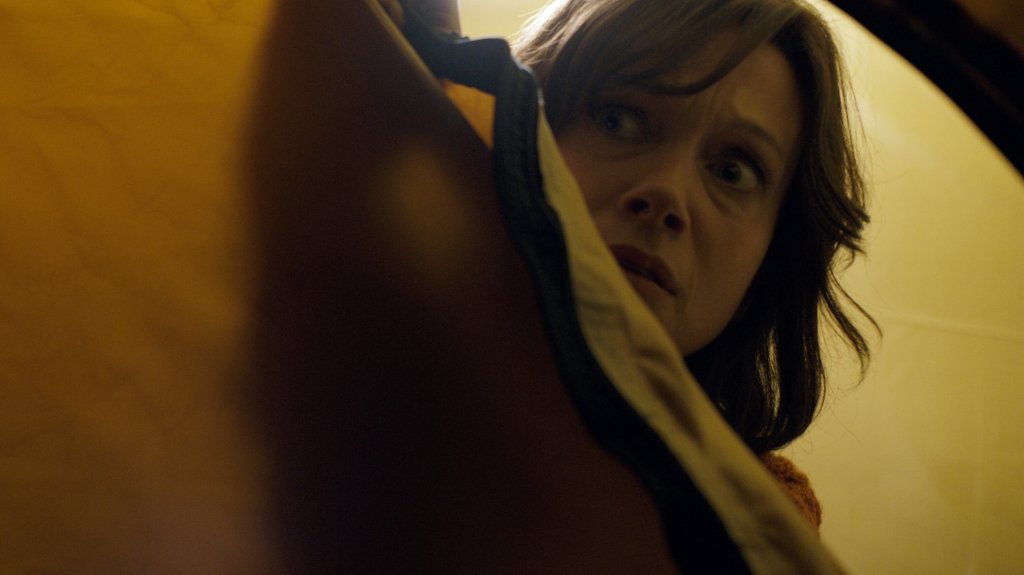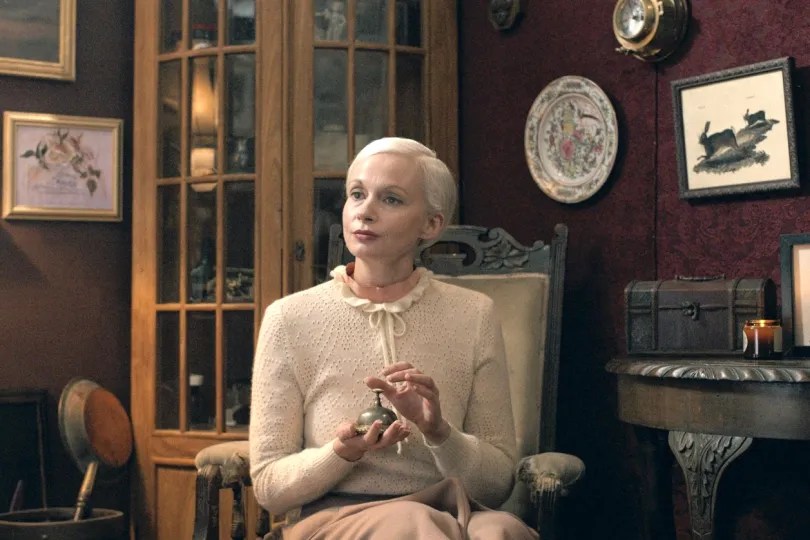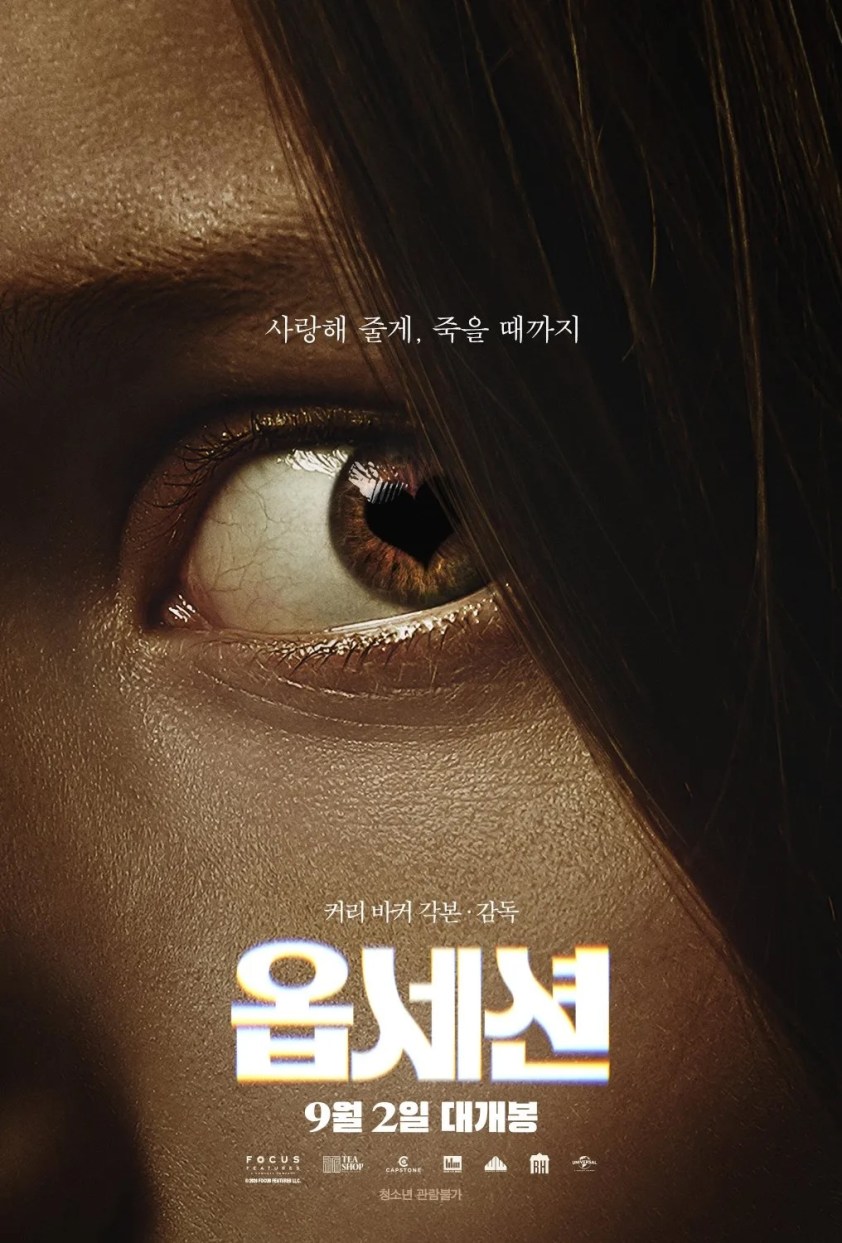
Korean Obsession poster

Elevated to the Gallows, pt.1 : Why I’m Not Obsessed with Obsession

This past Sunday, I had a really nice dinner with my friend David after the worst week of probably both of our lives in a long time. Truth be told, we had both been through real life versions of a horror film as we both lost our longtime companion cats this week completely out of nowhere so the grieving has been real, here in Seoul. That kind of loss is simply unendingly painful and unspeakable and the experience is truly horrific so we needed a day to decompress and so we went out.

During our meal, as we are wont to do, we started speaking about cinema, more specifically, horror films. I had just finished catching up on a collection of titles on Saturday that I had been trying to watch and so we chatted about the Good, The Bad and the Ugly of these works. Annnnnnd, of course, the term “elevated horror” came up. We agreed on many points but the main one being that it’s a slightly condescending and/or silly term that has the unfortunate ability to undercut and undermine current horror cinema works but also disregards the caliber of previous work.

Thus I have decided to write a few pieces on “elevated horror” for Spooky Month, 2026. I’m going to start with a film that I had very serious issues with because some friends asked me to explore that in a larger setting than a simple Letterboxd review or Bluesky post. I am, of course, happy to do because there were many things about Curry Barker’s Obsession (2025) that I found not only objectionable but flat-out upsetting.
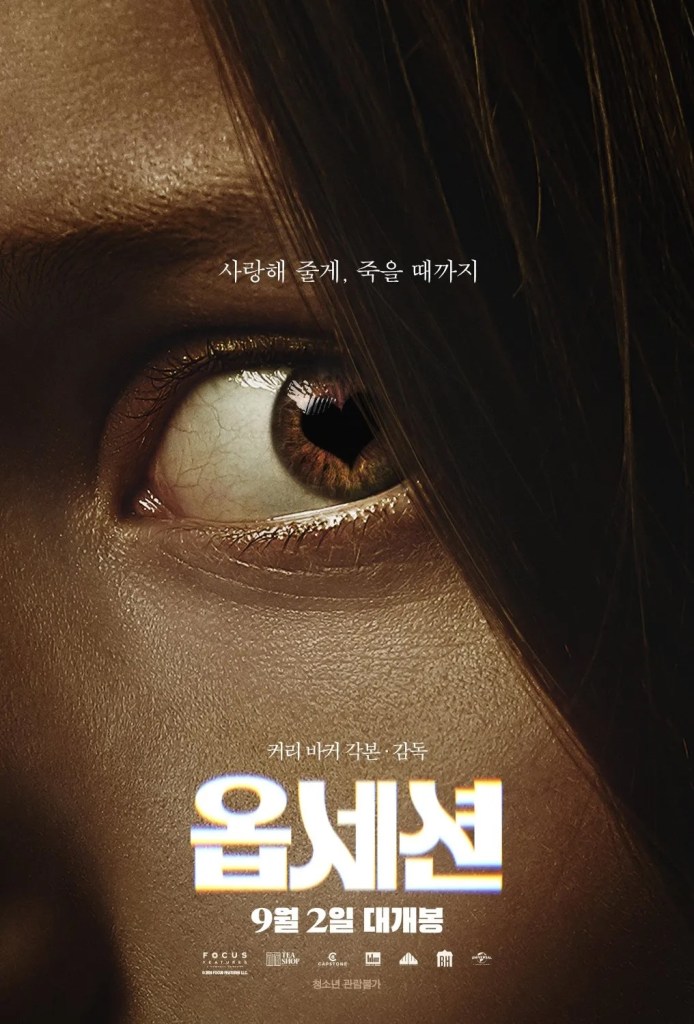
First I want to talk about what a sensation this film is here in Korea. It’s HUGE. And that alone is unsettling in a country where, statistically, young men do not play well with their ladyfriends. Stalking is massive here. I have had more women friends and acquaintances than I can count relay horror stories to me about having to deal with an ex who evolved into a horror-film-style stalking presence in their lives. Not that this doesn’t happen in the Western world but in my almost 7 years of living here, it’s one of the bigger negative issues I’ve noticed that stands out in a way that it never has in any other country I’ve visited or lived in.

So how does this relate to Obsession? Well, the popularity of this film here in Korea concerns me as a) not all the representations are positive (many are flat-out negative) and b) I think it’s a clumsy attempt at social commentary costumed in the gown of this whole Elevated Horror thing.

A film synopsis (SPOILERS AHEAD!): a young man named Bear has a hard-core crush on his friend, Nikki. She doesn’t seem to be returning his affections, so he makes a wish on a novelty item for her to “love him more than anyone else” and it becomes a Monkey’s Paw situation but worse (if I ever thought that to be possible). The horrors that reveal themselves after Nikki becomes possessed with the obsession are not only terrible to watch and manage to be so toxic that they leave everything and everyone in their lives and friend-group completely destroyed (and mostly dead). By the end of the film the person who is left to deal with literally all the consequences is the Real Unobsessed Nikki because the only way to break the wish is for Bear to die by suicide (which he eventually does).

So I do want to be clear that I think the film has had a lot of fascinating reactions, many of which are quite positive. But that doesn’t make it a good movie. In fact, I see these things as simply by-products of a film that is largely hateful towards women. There is an extensive discourse that has followed between couples and various men and women post-release that, in my eyes, is quite a good thing. Obsession has certainly created a space in which men can show their asses and women can reject them for being the asses that they have shown themselves to be. What am I talking about? Let’s do a bit of amateur sleuthing.

If you take a look on Reddit, TikTok, Instagram or even simply type in “couples breaking up over the film Obsession” there are now copious hits. You can find dozens upon dozens of videos, posts, rants, blogs and real-life internet horror stories about women who went to see the film with their partners only to discover, post-viewing, that said-partner (always a cis-male, usually white) was on the side of the character Bear and felt no sympathy (let alone empathy) for the character of Nikki. That part isn’t as interesting as the fact that these women are actively seeing this as a big ol’ red flag and ending their relationships over it. Over a movie. Which…I support. Because I do think this film kinda hates women. If it didn’t, it would have been far more meticulous and caring over the representation of Nikki. Even a horror movie has to love its characters. And the Obsessed “Freaky Nikki”? She did not get much love.
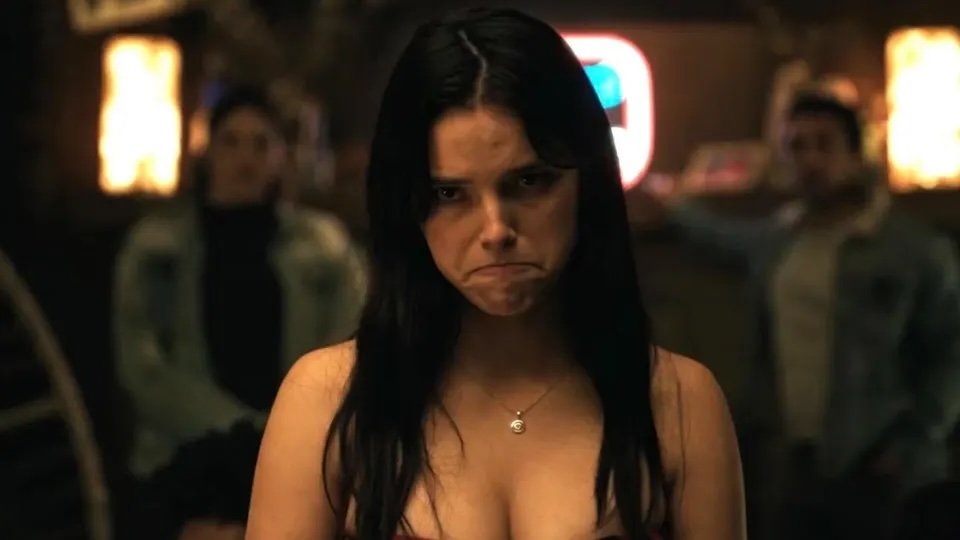
I understand that Barker likely never intended to demonize Nikki or make Bear the hero. But if you make a clumsy film, you get clumsy results. And, sadly, when you attach age-old misogynist tropes to a female character (even one who is “not herself” at the time of said-portrayal), it’s destined to backfire. While Nikki is clearly supposed to be a different person while she is Obsessed, Obsessed Nikki resonates far too well with areas of toxic masculinity that I virulently reject.

Haven’t we seen enough women acting like babies or being child-like for attention? This patronizing male fantasy made me physically ill. Nikki acts like she’s 7 not in her early 20s with her pouty-face, stomping and throwing tantrums. Barker makes the horror film-effort to take it to 11 and underscore Bear realizing that his fantasy is no longer so fantastic, but it’s the honoring and uplifting of a male fantasy nonetheless, while sacrificing a woman’s dignity.

Not only that, but clearly, with the film’s Wish Fulfillment (in the Freudian sense and the narrative sense), Nikki’s agency is not only denied but she becomes trapped in her own body which no longer belongs to her and also she cannot control. Even basic bodily functions like urination (which she does on Bear’s carpet, like an untrained animal), are no longer within her grasp. One might argue that this is a commentary about the patriarchy, but one might also be wrong. The kinds of suffering and humiliation that we watch this woman go through just because one dude was upset about being friend-zoned is just a bucket full of ladyhate. We see this everyday. Why exploit a woman’s body and soul just to show what a dick Bear is?

Literally, we get it. He’s not a good guy. He’s not the Nice Guy everyone thinks he is. Not every Nice Guy is a Nice Guy. Ok, fine. But I didn’t need to watch the woman protagonist/antagonist run through the litany of stereotypes that men have about “bad girlfriends”- I certainly didn’t need to see the nagging, screeching, needy cliché played out. That’s so old. And it’s not smart. This film certainly had potential but it missed the target with all the anger directed towards women. And boy howdy, that was a lot of anger.
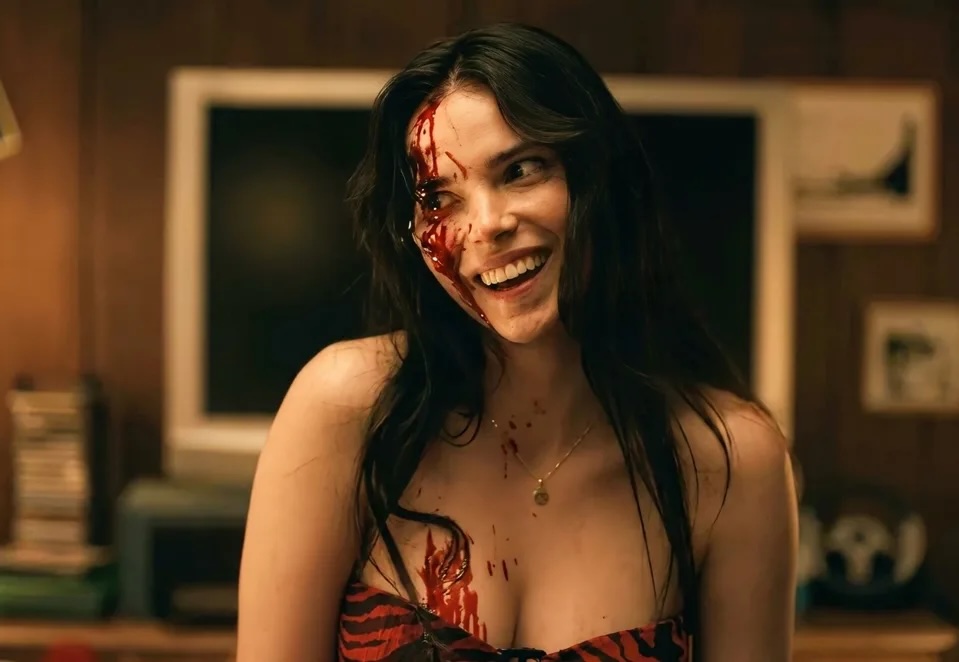
I will freely admit that Inde Navarette, who plays Nikki, does a fantastic job. She plays the role perfectly. But it’s not a role that is meant to be liked. If anything she is meant to be pitied, and what woman wants to be pitied?

I think that Bee Dolores in her carefully considered critique of Obsession, said it best when she wrote:

The swell of the manosphere…has been devastatingly plastered inside Obsession in a way that’s neither cheeky (as good satire should be) nor poignant in deconstructing male rage against women. In 2026, I’m not advocating for subtlety (we’re long past that), but I do demand a far more careful and critical analysis of our culture, especially if you are a cis straight white man making movies.

So I ask- is this “elevated horror”? Is this what we are talking about when we are imagining this new “smart-scare” genre? I think not. It does not like or respect women and its inclusion in the new “elevated horror” continuum allows it to argue for its complexity and its social “responsibility.” Sure, it’s horror, but it’s ladyhatin’ horror. Which we certainly don’t need any more of these days.

A well-made film with great effects and great performances, but extremely problematic and emphasizes some of the issues in the “elevated horror” umbrella term. And sometimes you just have to call this shit out. Basically, in my eyes, if it looks like a duck, and it acts like a duck…well, fucking quack quack. It’s a damn duck.

interior of a spooky broken down house

Home is Anywhere You Hang Your Head: Oddity

Last night I watched Damian McCarthy’s 2024 film, Oddity. Needless to say, I absolutely loved it. As a horror film (it gave me a jump scare! SO rare for me!!), as a women-in-horror-film and as what I saw as this violent bridge between toxic masculinity and domesticity in cinema.

Obviously domesticity has played a massive role in film over the years, but with this series I want to examine how there is a preponderance of films that align men’s need for power and their ownership for a home/house. I will take this and weigh it up against women’s safety issues and delve into a variance of thoughts that I have on heteronormativity and domestic lives, class, and what consists of “home,” “safety,” and “power.”

Generally, I hate spoilers and I don’t do them. But since this is more of an academic project (and they don’t care a whit about spoilers) I’ll just give you the upfront right now: There will be spoilers. So if you care about those things, see the film before you read each of these pieces.

On to Oddity and my need to start exploring this topic, especially now.

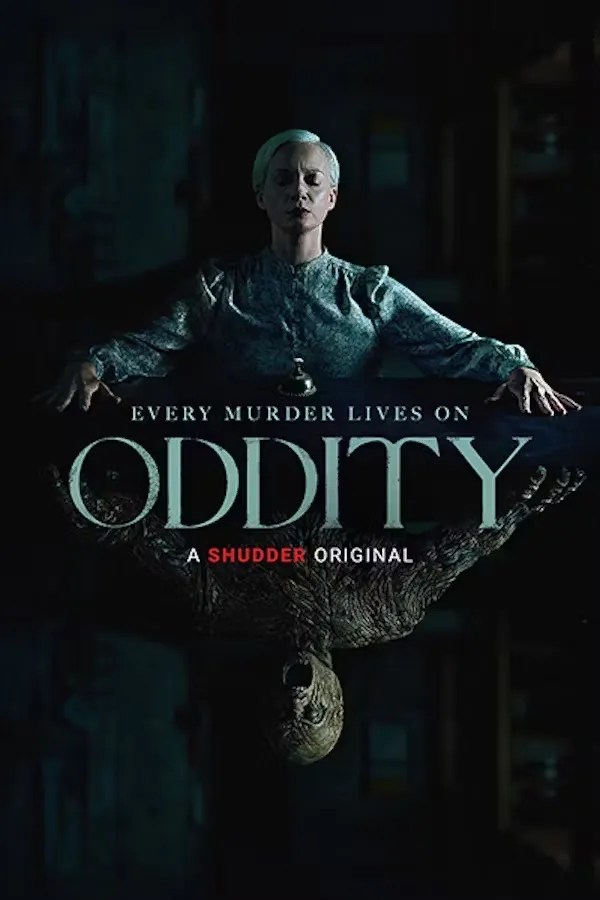
Oddity film poster from 2024

I’ve been trying to watch more films recently and this one was on my list for a while. I have also been thinking about concepts of “home” a lot so it was pretty odd that they ended up integrating these things within one work. But that happens sometimes. Ah, film, you therapeutic bitch! You know exactly what I need sometimes!

Anyway, all that aside, the story isn’t overly preoccupied with the theme that I’m preoccupied with. It’s primarily centered on connections- familial, supernatural, and the toxicity shared between two supposedly “sane” men who work in a clinic for the mentally ill.

Dani and Darcy are twin sisters (both played by the remarkable Carolyn Bracken). Dani, married to psychiatrist Ted Timmis (Gwilym Lee), has just moved out to the countryside to the couple’s new home which (because Horror Movie Rules Say So) has very little cell phone service. This is, however, completely acceptable in the film. It’s that good. We learn from a short exposition by Timmis to his clearly slimy coworker Ivan (Steve Wall), that he’s quite into his new home.

Then Dani dies. But the film does not exactly tell us how. Which is excellent. It hints at it through a thoroughly terrifying scene starring one of Dr. Timmis’ recently-released mental patients, Olin Boole (Tadgh Murphy), but it does what truly great films do- gives breadcrumbs of information, not entire slices.

In a film like this, you really don’t want a sandwich. You just want continual tastes. And that’s what McCarthy does. He builds it like a delicate dollhouse; you’re almost afraid to take a breath with each new scene revelation. It doesn’t unravel, it builds. Even up until the very conclusion. What a film.

Darcy, who is blind, travels to the remote countryside house around the time of Dani’s birthday for various reasons, such as her now former brother-in-law suddenly has a new girlfriend living at the house less than a year after Dani’s murder. So Darcy’s more than a little curious. Unfortunately for Darcy, this doesn’t work out well.

I don’t want to spill the precise details. I want you to see the film.

What I DO want to talk about is ideas of home, domesticity and safety within the context of Oddity.

Concepts of mental balance are of prime significance in the film as are the strength or veracity of relationships.

Dani’s last call to Darcy literally states, “We are connected.” While that is meant to refer to cell phone status, it means far more. Not only are they twins, they are both women. In addition, Darcy is a psychic and medium, maintaining supernatural alliances as well. There are a plethora of connections reflected through this one sentence relayed over voice message. Played multiple times within the film, it is done so in order to emphasize that this is one of the only true and reliable relationships that exists.

*major spoilers start here*

Our poor murder victim is unable to see the reliable relationships in her life. This is a direct result of the primary unreliable one: her husband. As we come to find out later, he is the cause of her death. But she has been warned- again, through someone who she sees as an unreliable source: Olin Boole. Dani does not think Darcy is well, as she confers to her husband in the beginning of the film, asking him to see if she is willing to see a doctor. He agrees. If Dani doesn’t trust her own sister’s state of mind, why would she trust the warning of one of her husband’s former patients?

She doesn’t, of course, until it is too late and horror, literally, enters her newly purchased home.

Dr. Timmis is more than a little consumed with this house. He keeps it after Dani’s murder, going so far as to move his “new” girlfriend Yana (Caroline Menton) into it. She complains how uncomfortable it is and tells him she cannot/will not reside there. Begrudgingly, her boyfriend tells her that he will return to her apartment in the city with her, but it is clear that he is dragging his heels more than a little on this statement.

In a conversation he has with his colleague Ivan, he discusses the meaning behind the house, how much he adores it and how it holds a great deal of value for him. To be fair to the doctor, he’s telling the absolute truth. He values the hell out of that house. Enough, apparently, to order multiple women to be murdered in the confines of the structure and wish to continue to reside there.

What is the power and/or the strength of this house? What is the draw for him? While it might be argued otherwise, I propose that Oddity is not a haunted house film. While horror films around homes generally aggregate around ghosts/hauntings, House Fights Back, or some variation of these themes, Damian McCarthy’s work is something else entirely.

This film is a deep gaze into what happens when a man pours the poison of domestic violence and toxic masculinity into a building to live in. Instead of allowing the space “house” to grow into the warm creation of “home,” this hand-built environment has devolved into a supernatural reflection of Dr. Timmis’ own brutality. He is left alone with the trappings of his kills and a cold dark vehicle for existence. But, McCarthy does inquire in that lovely final scene, for how long?

There are a variety of other things to examine within this work- its references to the Jewish Golum, different ghost stories, etc. But I find ideas of reliability, mental stability, domesticity and connectivity most interesting.

The male “sane” characters- Timmis and Ivan- are remarkably unbalanced and figures of white male normalcy. The released “insane” patient, Olin Boole, is terrifying and appears disfigured and monstrous. Yet he is one of the most balanced characters in the narrative. Oddity is truly a film that is about the idea that perhaps not everything is as it seems. Domestic bliss is, perhaps, not as blissful. The charming ideal husband? Perhaps not so charming and ideal after all. But, of course, as in all heteronormative plots, the wife is generally the very last to know.

The bloodshed that transpires due to Timmis’ house obsession is very much about male-domination. While domesticity and concepts of “home and hearth” are attributed regularly to the feminine, ownership and spatial control are traditionally male concepts. Timmis wants the house to be HIS, he rejects the feminine- all the feminine. Dani, Darcy…even Yana in the end. That kind of control is the paradigm of traditional toxic masculinity and it is explored brilliantly within this film. It is also undermined and shown to be dangerous and horrifying by the finale (which I will not spoil for you).

While Dani is clearly preparing a home at the beginning, Timmis doesn’t give a shit. He just likes that he has this new house. It’s just a thing to him, not a larger way of life or an evolving connection with a partner. Obviously, the domestic violence (exacted through someone else’s hands) proves that. He wants to clear the way so he can Have What Belongs to Him

Oddity is a solid film with brilliant performances and really creative work. The women in it are unique, showing a realness that is ultra-rare. But the underlying fear that the men show of losing their manhood is a great touch, especially when underscored (and ultimately outdone) by strong women who are almost all characterized as disabled. Darcy has had cancer and is now blind and it is intimated that Yana was actually a patient in the mental institution. But my question at the end of the film is…what is the real disability?

I have named this series after the Elvis Costello song, “Home is Anywhere You Hang Your Head,” so I will leave you with that. Until next time….

two women gossiping under hair dryers, 1950s-era

Hairy Moments: the Deep Roots of Women’s Hair History

This is the beginning of a series of posts originally posted on a wonderful and lovely website called Dangerous Minds which is now a thing of the past. Please enjoy them as I truly enjoyed writing them and didn’t think they should have dwindled away into the ether of the Internet.

This is one of my all-time favorite photographs. I have no idea who took it, where it was taken, dunno who the hell these ladies are. But goddamn. I adore them all.

I’ve seen tons of people look at this photo and mock these women for unconventional hairstyles, awkward facial expressions, and what is likely a highly Texan aesthetic (my geographic guess). Fine, laugh. But there’s something so charming, so uniquely pleasurable about the way these women (probably family) are enjoying each other’s company, standing out in that ratty backyard. That yard of dead grass laid out in front of a patio overhang that seems to be one short storm away from crashing to the ground. And our youngest girl- the one with the flowing hippie hair and glasses- she’s wearing pink slippers! There’s this weird strength reflected here in this cadre of creatively-coiffed chicks. I bet they made great cocktails and killer cookies.

Women’s hair and beauty dynamics are intensely personal. Since the beginning of time women have invested spaces like beauty parlours/salons with the power of the personal in order to have a location to freely access aesthetic self-care practices. Generally, we do this for our own benefit, to impress someone else or both. These spaces have also traditionally served another equally important function: they are community social zones and “safe spaces” for women to gossip, exchange intimacies that they would never do around male friends/family. Beauty parlours have always served a critical function for women.

The cosmetology world made huge advances in the 1920s. Thanks to the invention of the hair salon (and hair salon franchise) by Canadian-American business woman Martha Matilda Harper, women’s beauty centers shifted from “home visits” to the communal environment we are now familiar with. Harper sold many of the franchise models to lower income women and ended up profiting greatly as a result, even though it could have failed. 

With these advances, there are some unfortunate facts. These sacred communal spaces were structured for Straight White Women and they have never quite lost that flavor, even today. What’s most unfortunate (but not surprising) is that there are women of color who helped establish this space and should be far more famous than they are. Women like Sarah Breedlove Walker aka Madame CJ Walker was born to freed slaves and was an extraordinary businessperson. Employing some of the highest numbers of black women in the United States, Walker developed her own line of beauty products and became one of the first self-made millionaires in the United States.

Looking through what has been visually documented on this topic, it is very rare to see women of color getting their nails done or sitting under a dryer. One of the most unfortunately things salons have done has been to reinforce the “Whiteness is the ideal beauty standard” concept. 

The photographs of beauty parlours and women sharing moments are great. There are outstanding and surreal bouffants and curls, brilliant beehives and up-dos galore. And who knows what they’re chatting about? They could be sharing recipes or gossip about their horribly abusive husband because it is under that dryer that they feel safe. We’ll never know. 

I do know one thing, however. The privilege in those shots gives me pause. I treasure these photographic connections between women during “hair moments” and that helps me examine intense pictures like this one deeper. It is from a Japanese internment camp in Colorado, and this is a beauty salon that they created because there was a need.

These spaces are precious.