
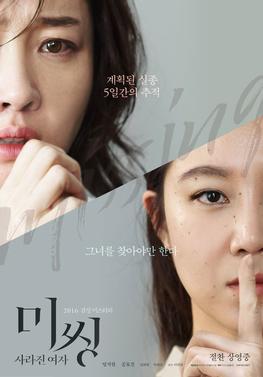
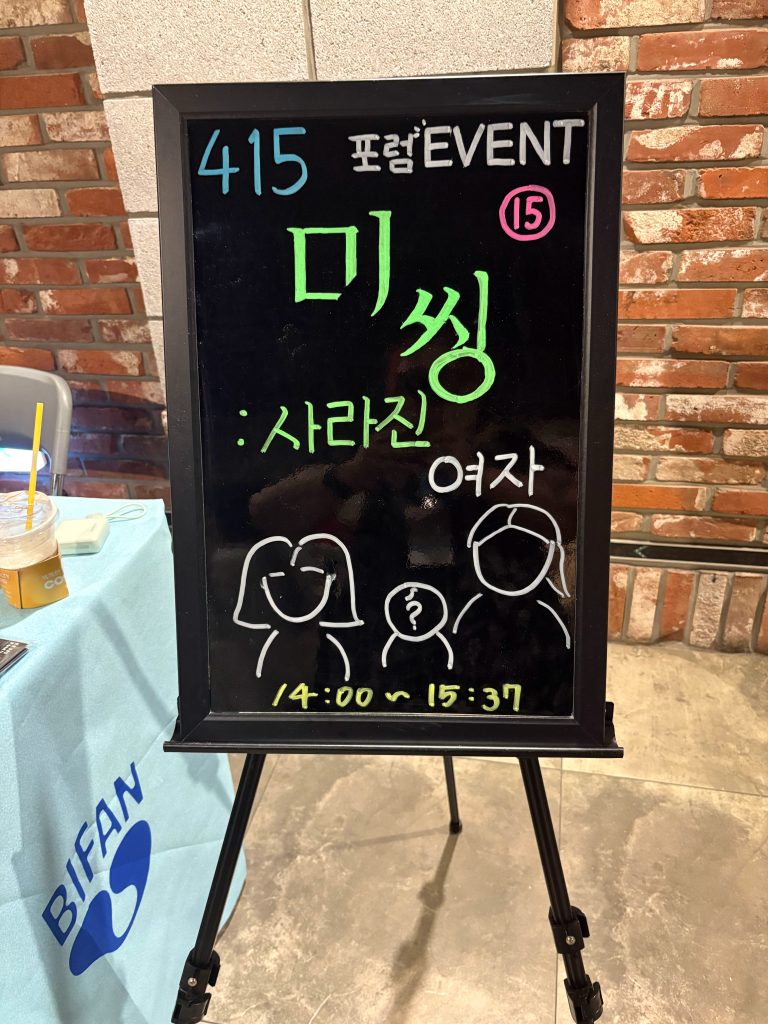
So the first film I went to see at BIFAN 2026 was a suspense thriller in their women-fronted section called Missing (Lee Eon-hee, 2016).
I think part of me knew what to expect, but I was pleasantly surprised. I was really happy to have made that choice. While not flawless, it was really enjoyable, especially on a big screen (as all good cinema is).
The film centers on a workaholic mother dealing with a nasty divorce and custody battle whose child is suddenly abducted by her nanny. Although this narrative seems relatively basic, the film does investigate a lot of women’s issues that don’t always get worked through in Korean media (or elsewhere).
[some spoilers ahead]
Missing is an older film (2016) so I knew that it was going to have some things to contend with, time and culture-wise. Older films always do. But (in my opinion) that’s usually the easiest part to acknowledge and get past. My issue is always with the body and soul of the film. If a movie is missing the meat- if the story is as solid as Swiss cheese- then it usually misses the mark for me. I feel like this film held up, especially as a film for women’s issues and as a women’s thriller. I enjoyed the ride and it gave me plenty to think about. It was suspenseful and action-packed and the challenges for the primary character were real.
I did have concerns at first…One of my first concerns was the nationality discourse. There was a cultural conflict between the Chineseness of the nanny and the Koreanness of the mother. As a woman living in Korea, I am quite aware of the racist feelings that are present between Korean and Chinese cultures. So in a situation that has a very clear class and socio-economic differential (a mother and a nanny), I was more than a little worried as to where this story might go, especially when the mother was on the search for her daughter in brothels and other desperate locations.
However, I was pleasantly surprised to see the film flip this uncomfortable environment and relationship text over and make it go into a different direction than I thought it would. That was probably my favorite part of the film.
But I also saw that it was definitely a film made by a woman who felt the need to pack too many unnecessary elements into the film which is (sadly) not unusual for a woman’s film. Men get a lot of chances to make movies. Even if their first film doesn’t kill it, they have historically gotten more opportunities at second films than women. And I felt that there was a certain amount of “overstuffing” going on within the narrative.
I wasn’t opposed to the items that were included, by any means, as I think they were all very important…but I think they made the film too busy. A mother who never gets to see her child due to the work-or-die culture in Korea, a virulently bitter and angry Mother-in-Law, a man from the criminal element who tries to help the main character on her journey to find her baby, several other things that don’t necessarily pan out. A few of those things worked in the films favor but…other things made it messy and too full.
Sometimes (especially in older films- and 2016 is technically a bit older now) when a film IS a bit packed…if it’s woman-directed/headed up, I give it a little more leeway. I think Missing qualifies. I had a good time watching it and it is worth checking out.
**In between this film and the next one I’m going to write about, I met people, I went to parties, I had 100% one of the best Karaoke 노래방 nights of my life with a few of the most excellent people who I will mention again later and I continued to celebrate cinema…again, BIFAN is a non-stop festival of film love and joy and I just love it so much!!! Now…back to the movies**
My next film was a re-watch, so I was initially only medium excited about it. But I WAS SO WRONG!!!!! Watching this on the big screen in Korea, not to mention a 4K restoration was just….a GIFT. I wish I could properly describe all the feelings running through my body as I watched this amazing work of cinema on the big screen, but it would be absolutely impossible. BUT I WILL TRY.
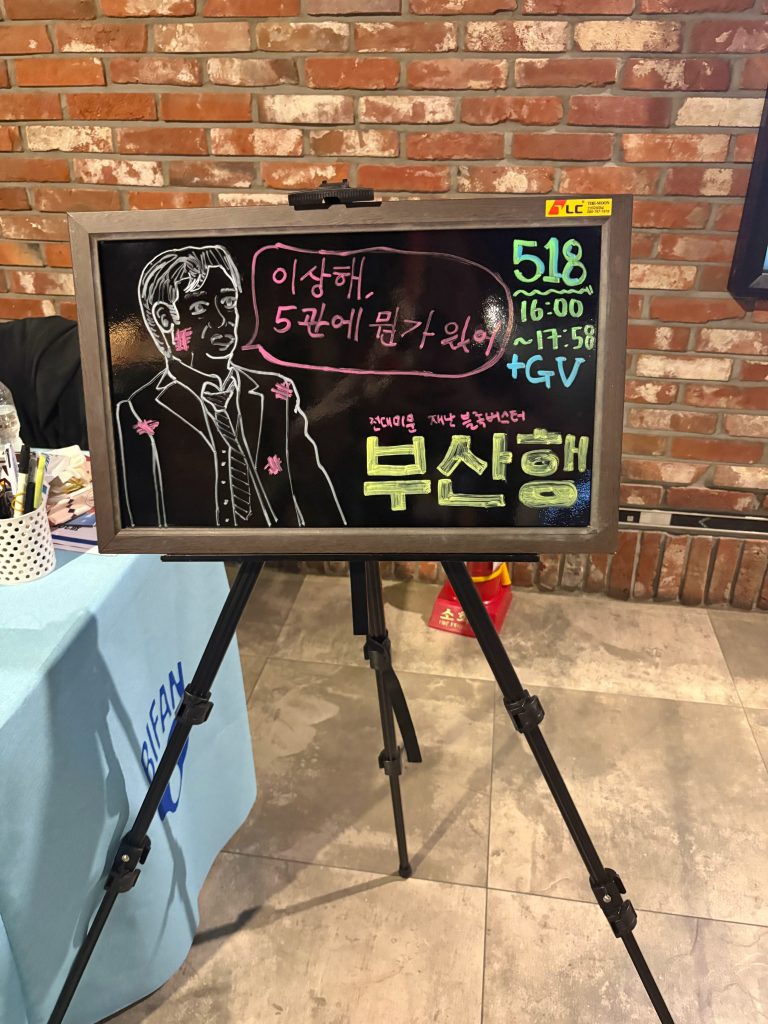
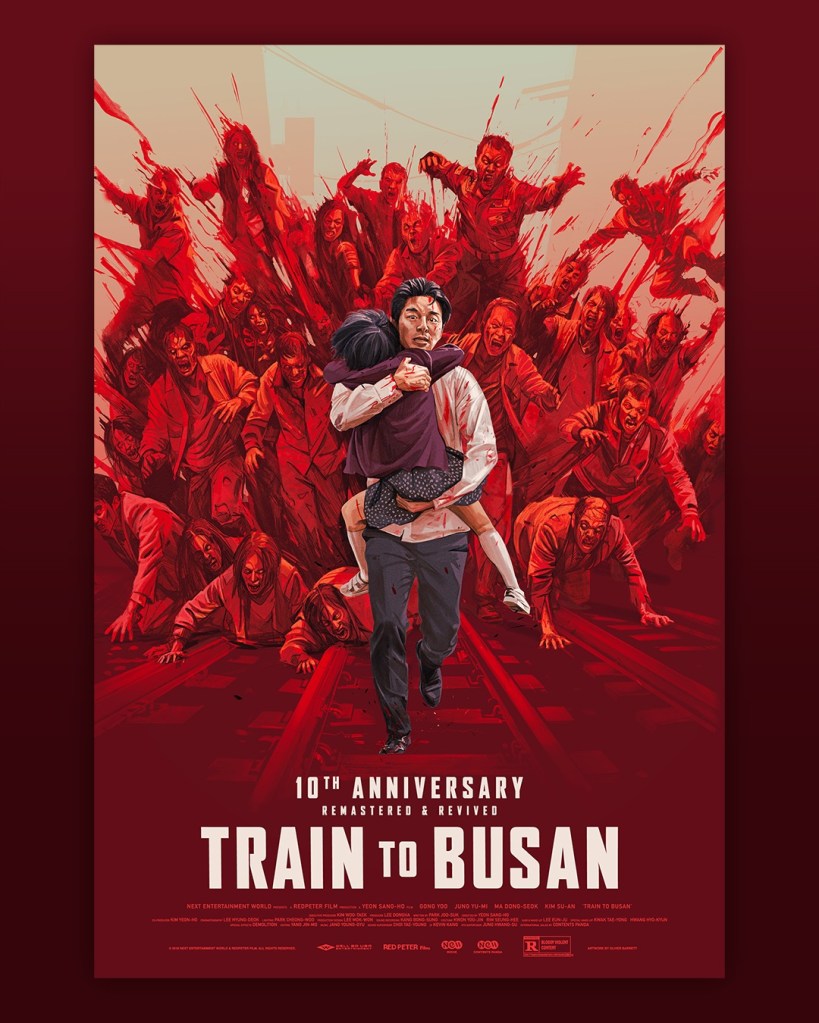
I moved to Korea in 2019, so I have had to really really think if I have seen Yeon Sang-ho’s absolute masterwork, Train to Busan a) in the theaters or b) since I moved here.
The conclusion I came to was that I **may** have seen it in a theater in LA, but I have never watched it in Korea. Like, never ever. And considering how long I have been here…my comprehension of the film has changed 360 degrees. This is a brilliant film from all perspectives but its absolute Koreanness and ties to Korean culture were missed by the non-Korea-living-Ariel.
That all changed with this mind-blowing, ear-blessing (the sound is sooooooooo good! Massive kudos to those who restored the sound!!!!), restoration. I’m not going to say that I was Korea-stupid when I lived in LA- I wasn’t. Obviously not. That’s part of why I picked up and left my life there and moved here. But, that said, the critical nature of this film was not as clear to me when I saw it previously (although it should have been- it’s a fucking zombie movie- THE horror genre of “social commentary”, amirite??). That said…let’s get on with it, as they say.
As a film archivist, this is a killer restoration. It really is like seeing the film for the first time, even if you’ve seen it. It’s crisp, clear, and visually perfect. The colors are stunning and it’s not overly digitized. It’s very clear that the people who worked on it cared about what they were doing and didn’t “go for the gold” as far as excessive motion work or FX as far as what is available. There is a lot of new technology that has become available in the restoration world in the last 10 years and we are dealing with fast zombies, not Romero’s classics. Could’ve been so bad. And it wasn’t. It was truly lovely.
The film was cleaned up the way it should have been, meticulously cared for and not excessively worked over. No one looked like they’d had plastic surgery (no one’s skin was too smooth), all the materials (clothing, train seats, environments, etc) kept their original “skins” and the color tones were time-appropriate (year and time-of-day). I know these things sound nerdy as hell (or weird) but they are important to someone like me who spent a lot of my life working in the preservation and restoration world.
But restoration and preservation was not the only thing I was watching for. Train to Busan is one hell of a motion picture.
I had THE best time watching it and got a whole new experience out of it.
Now that I live here, I have a deeper and fuller appreciation for the film. There is so much meaning in these characters. From the baseball team and the little girl with the separated parents to the salaryman who was a social zombie in his life before he was a dead flesh-eating zombie (very Romero) these characters all really got under my skin in a different and amazing way. Sure, I love zombie films and this one has always been top-notch. But the massive differential in when I saw it near its release in the US and now, upon restoration, living in the country its from is real.
Anyways, whether you live in Korea or elsewhere, do not miss this restoration. It is the real deal.
More BIFAN updates to come….
 Movies Are My Boyfriend