One of the main reasons that I love going to BIFAN every year is that, like clockwork, I meet One of My Kind. And if that sounds weird or like I’m some kind of alien being, so be it.
The bottom line is that when I’m at home (whether it was LA-home or my current Seoul-home), it’s very difficult to meet people who you click with. Especially when you’re a film addict like me.
I got REALLY lucky this year. I feel like I won the damn lottery. Not only did I meet several people who were Just My Type but they were also filmmakers! So OMG. EVEN BETTER. The people who I jammed with on these levels were creative and making things I could enjoy??? How did I get so lucky??
BIFAN is truly the epicenter of my happiness in Korea. As a genre film junkie, it gives me all the things I need in people, cinema and fun. And this year- the 30th Anniversary- was no different. Dinners full of laughter and film geek chatting, drinks until the late night/early morning, discussions about everything cinema and media culture…It’s really heaven on earth.
So one night I went to this party. And it was hot so I was just really happy about the air conditioning. But I also noticed this very stylish man with great hair and glittery long shorts who was truly holding court with everyone he met. I thought: “I would like to meet him at some point” but I also was ensconced in beer and conversation with the people at my table.
The night wore on and lo and behold…the amazing woman that I spent a great deal of my time with this year, Elizabeth, decided that he and I HAD TO MEET so she brought him over. And the rest (as they say) is history.
THERE WAS 노래방 / KARAOKE MADNESS until the sun came up. I loved his energy and his thoughts and attitude towards cinema and the world and I hadn’t even seen his film yet.
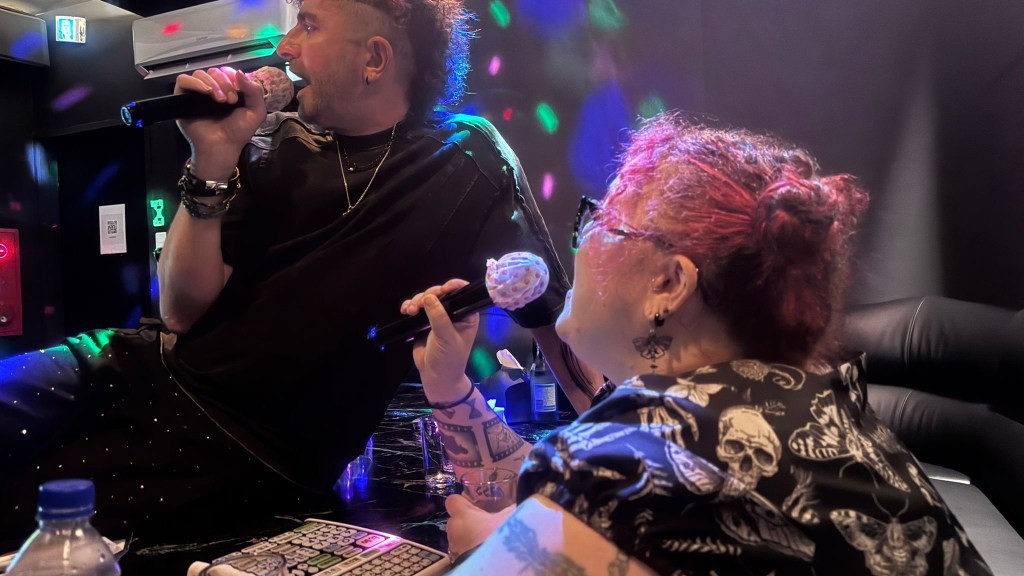
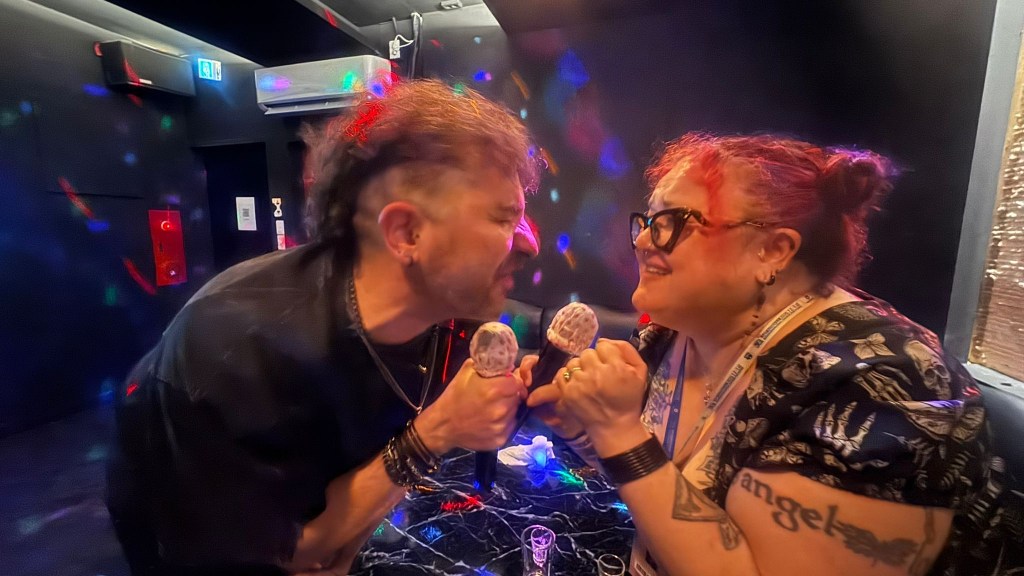
WHEN I SAW IT? I was floored. Welcome to the incredible Dean Francis, a brilliant queer Aussie filmmaker who truly knows what’s up. Our conversations were dynamic and political, funny and important. His outlook towards the world is unique and I adore it. He is 100% punk rock in the true meaning of Punk Rock.
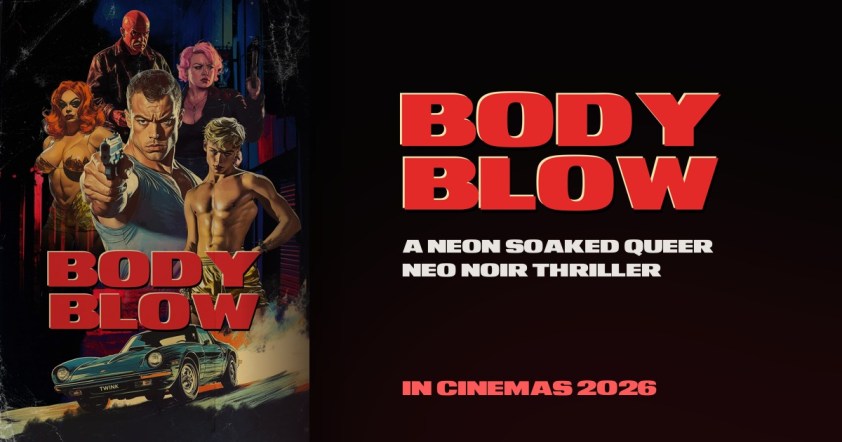
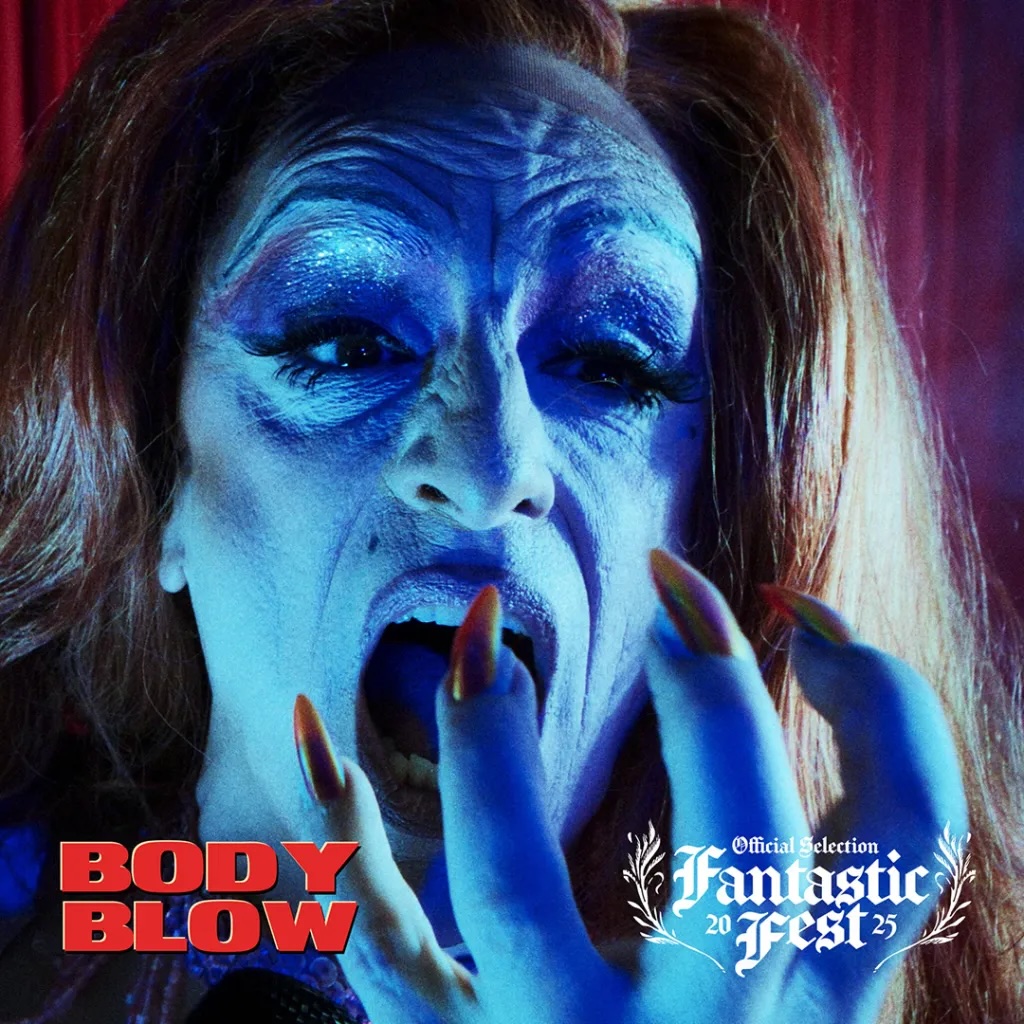
So what is this incredibly enticing piece of film that Dean has created? Let me just show you a picture first. The thing about his film is that it is SO VISUAL and beautifully stylized that it’s practically impossible to just tell you about. I just want everyone to see it. It’s worth watching for a cadre of reasons. To start with, its pictorial elegance, while stylized and opulent, also edges towards the deliciously sleazy and sordid. It drips with both vice and victory in its depictions of sex and violence. So obviously it was MY kind of film. Rarely do I get the privilege of watching a film that so effortlessly slides in and out of seediness simply through optics. It was SO FUN.
Its director, Dean Francis, who I will continue to celebrate and praise, had this to say about the way the film was shot:
Visually, I wanted to speak in the language of De Palma’s moving camera and
strong colours, Billy Wilder’s noir shadows, John Waters’ camp, and Greg
Araki’s nihilistic danger. I wanted to keep the seams of the film showing —
grainy textures, front-projection car scenes, under-lit rooms — like a film
forgotten in someone’s closet.
Just look at one of these shots….
It would be disingenuous of me to pretend that this film was a simple crime film or just a neo-noir. Because that’s just not how Body Blow works. It’s so much smarter than that. When Dean and I met, he told me it was an homage to 90s erotic thrillers. Which…if you don’t have an appreciation for, why are you reading my blog? They have such a great love for the complexity of women and y’all know that’s my jam!
So when I got the chance to see this film…OH HOLY SHIT DID I CRY WITH JOY! We really need more films like this. It’s all good and well to rewatch Sharon Stone and Glenn Close make that screen explode over and over with the classics, but I genuinely think it is possible to bring this genre into a new age and that Dean Francis has been able to do it. He does his film and the erotic thriller genre so much justice in his words. Check it:
I grew up in the ’90s, and it felt like movie characters defined how we
thought about ourselves and who we wanted to be. In those hyper-masculine
film worlds, the rules were the same: the man wins, the woman is the prize,
and their kiss is the final stamp of validation. As much as I loved
everything about those ’90s erotic thrillers, my growing awareness of my
gayness meant I always watched them as an outsider.
BODY BLOW was conceived as a way to explore these ideas and reclaim the
erotic thriller from a queer perspective. I craved the seductive, dangerous
pleasures of Body Heat, Basic Instinct, and Crimes of Passion, but wanted to
create gay anti-heroes we could all idolise and lust after.
To me, this film also reflects everything that I enjoy about a good crime or noir film- a heist, a “wrong man” scenario, a femme fatale (in this case a homme fatale), an deeply tortured/conflicted lead character and a deep questioning of authority and right/wrong… Body Blow blatantly revels in the glorious narrative textures and complex discussions that caused me to fall deeply and desperately in love with films like The Big Heat (Fritz Lang, 1953), Laura (Otto Preminger, 1944) and Where The Sidewalk Ends (Otto Preminger, 1950). Of course, this is not a classic noir by any means. Those three films I mentioned are certainly part of Body Blow‘s cinematic cloth, but the film is far more than that. I hate being this hyperbolic about something, but after my conversations with Dean about the queer scene in Australia and the birth of this piece, I was so struck by the revolutionary-ness of Body Blow.
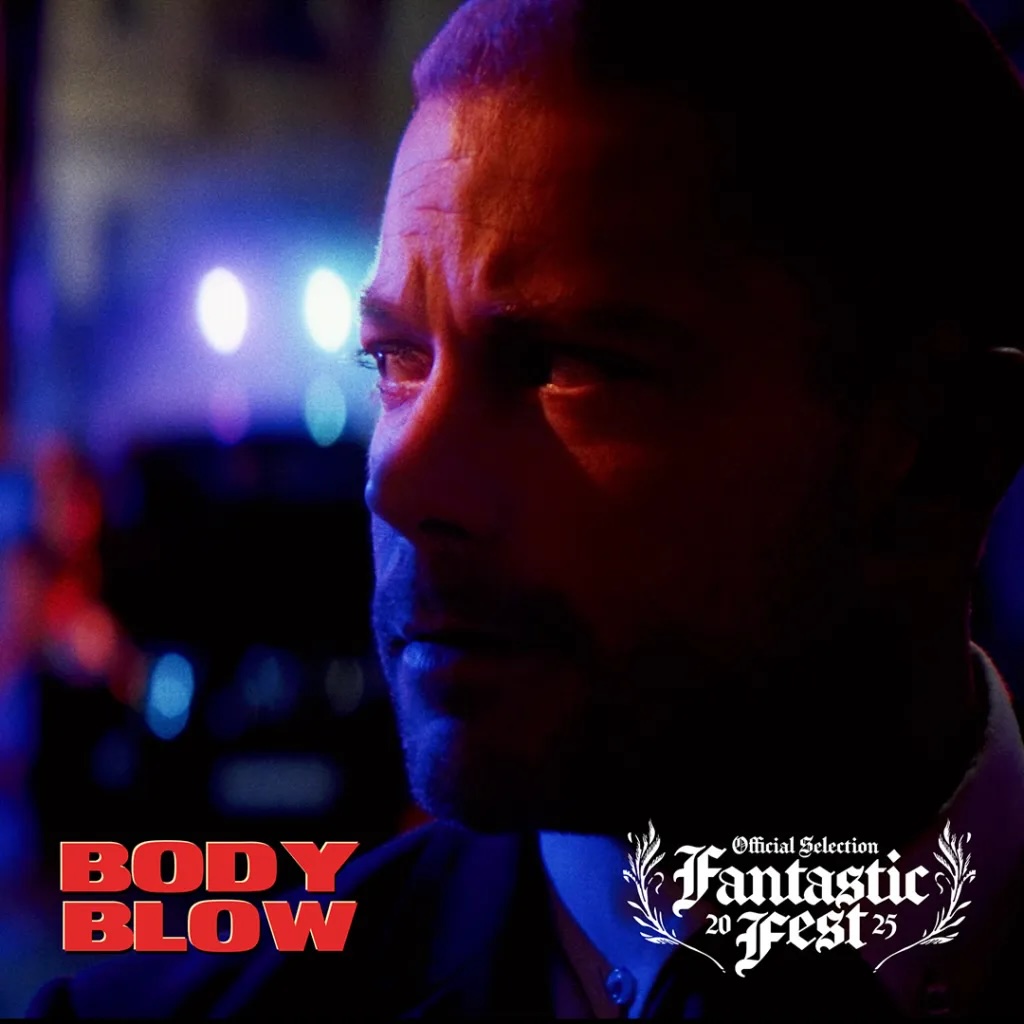
What’s unfortunate is that people don’t seem to know a whole lot about Australia, Australian film or what’s going on in Australia. Sure, loads of people have seen Muriel’s Wedding or Pricilla, Queen of the Desert (both great) but Australia has this wild and fascinating genre-bound film history and many of those films center on being an outsider or being isolated, much like Body Blow. Even the non-genre films tell stories of ostracism. A few of my favorite examples are Angel Baby (Michael Rymer, 1995), Stone (Sandy Harbutt, 1974), and Picnic at Hanging Rock (Peter Weir, 1975)- still one of the most terrifying films I have EVER SEEN. But I think the most relevant films are films like Sweet Country (Warwick Thornton, 2017) or The Sum of Us (Geoff Burton and Kevin Dowling, 1994), two films that truly focus on the trauma that exists (and builds) as a member of an oppressed community- one aboriginal, one queer.
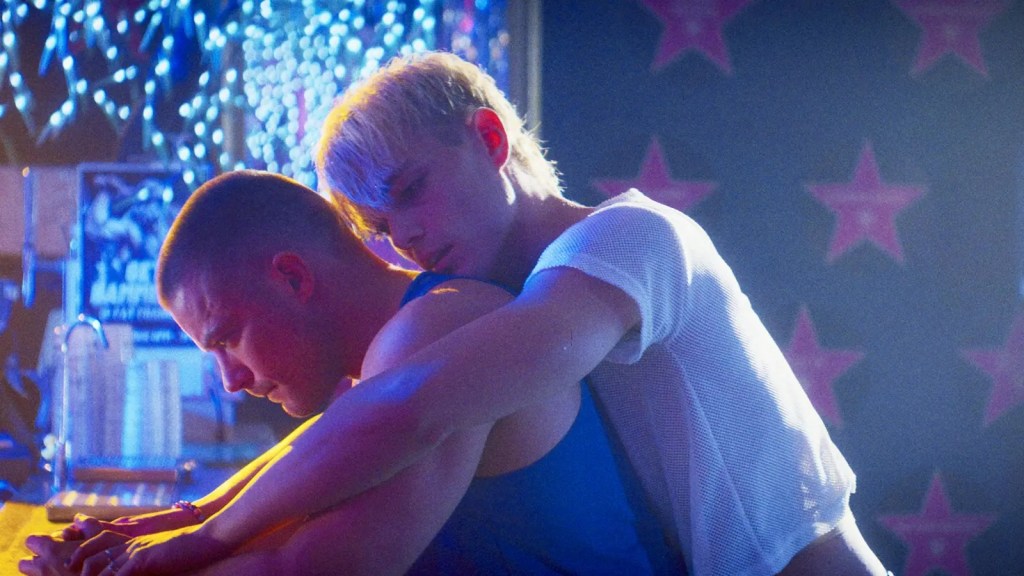
Queer films are, and always have been, revolutionary…Body Blow is “an act of resistance” as Dean has written of his film. That is their nature. But the background on this is exceptionally important and while going into it without prior knowledge is fine (I’m one of those people who likes to go in that way), I think knowing the history and continued issues going on in Australia are not only important but rather shocking.
When I met Dean, we spoke of many things regarding the film but one of the things we focused on was the police angle and what that meant within the queer world, the Australian queer world and larger concepts of force and authority. Being from Los Angeles, I obviously have my own feelings about the police, their presence at Pride, and more. But apparently the current situation in Australia is not very progressive. There are bar raids, hate crimes and more. By the police. So using the police to question positions of power and flipping the situation completely, making it a queer police squad…is so smart and so very brutal at the same time.
It would be a dire mistake to see Body Blow as a film that supports or is somehow “pro” police. That is so far from the truth it’s not even funny. If that is what you see, I beg you to examine this work further. It’s a really goddamn smart film. It would be sooooo easy to make a good guy/bad guy movie where the police (who are *supposed* to work for good) are your “winners.” And sure- Francis made a point of not killing the queer heroes. But THAT’S a choice too. Go into Body Blow understanding that it’s not only a meticulously created piece, but complex and smart. Don’t take everything at face value. That would undervalue this piece.
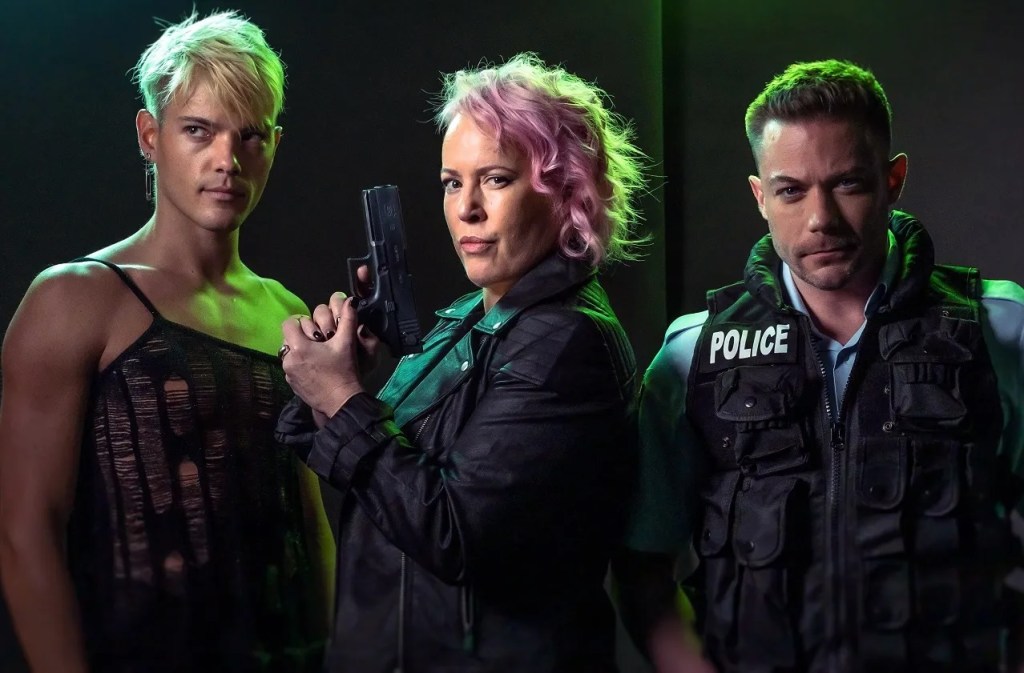
Context is essential when it comes to Body Blow and I want to place this film in the correct context so that you, my reader, can understand how critical the narratives of power, authority and “official conduct” are when it comes to this brilliantly layered neo-noir queer film.
When I spoke to Dean, we talked about his formative years and what it was like to be gay in Australia. This is a very personal film for him, and I think that needs to appreciated. We look at genre films in a way that separates them from the author because they are “genre” but the truth is that many genre works are deeply personal. Body Blow is no exception.
In a recent conversation, Dean had this to say:
When I first started going to gay bars I was underage and I was an actor on TV. It was a few years after the Tasty raid – in which around 450 people were strip searched by cops in a gay bar. So as if the lingering fear of HIV wasn’t enough at the time, closeted boys like me lived with the constant fear of being raided, outed, fired, humiliated. My formative sexual experience happened in this environment of fear. So themes of power / control / permission / submission in the film probably come from that. It was more subconscious at first in developing the film, but I’m honing in on it a bit more…
Things are not very progressive in Australia at the moment – or ever. This is despite there being a general mentality in Australia that we are the lucky country, worlds apart from the sort of facism we’re seeing in the US or Europe. We have a Labor Government and many independent members of Parliament. The “right wing” of politics is pretty crippled. Australians just don’t open their eyes. Anything to deny we’re living in a colonial police state…
We held a rally in Hyde Park, just like we did after the June 10 raids and after a serving police officer allegedly murdered two gay men in their beds a couple years ago (he’s about to go on trial). But history keeps repeating.The same history in which gay men were thrown off the cliff face at Marks Park near Bondi Beach and, despite being found dead with hair that was not their own under their fingernails, classified as suicides for decades by the cops. That was the 90s. There was an inquest a few years ago that achieved next to nothing because the police basically refused to cooperate.
So now they just get away with it. Like when they beat a teenager half to death at the Gay and Lesbian Mardi Gras a decade ago. Then harassed elderly members of the 78ers, the very people who were beaten and arrested and publicly shamed by cops in the first parade in 1978. Just this year they were back at it again. They do it every year. And everyone in Australia just seems to think it’s normal.
Body Blow is an important film. It is important for a number of reasons. It’s critical that it’s Australian. That it’s queer. That it’s celebrating erotic thriller culture. It’s important that it literally asks the audience to critically examine power structures and authority figures. This is a different and wonderful film. I see it as a crime/noir cousin to Female Trouble (John Waters, 1974), subverting every socially acceptable norm and not just subverting them but rejecting them and undoing them for significant reasons. Female Trouble fiercely attacked heteronormativity using camp tactics. Body Blow actually goes a bit further (not to undermine Saint John of the Waters) and utilizes anger, frustration and cinema passion to underscore revolutionary statements.
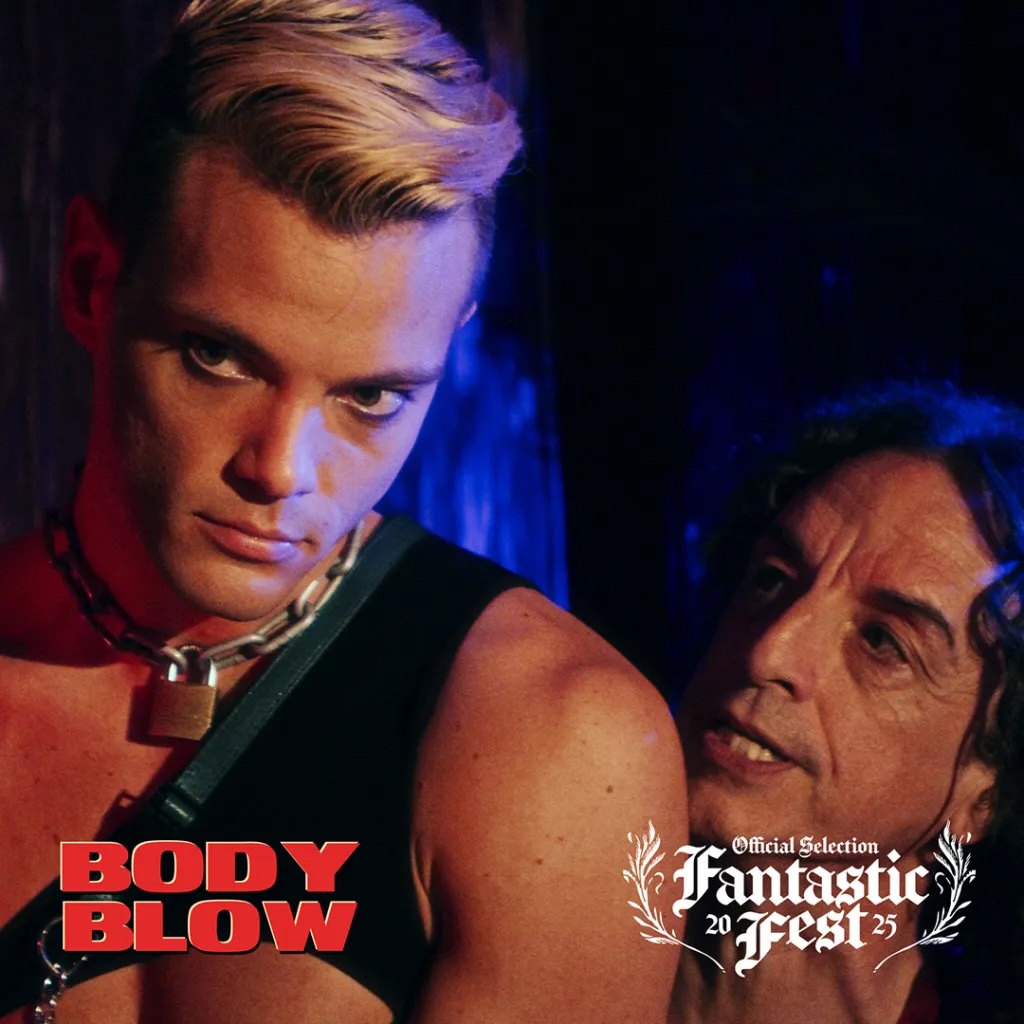
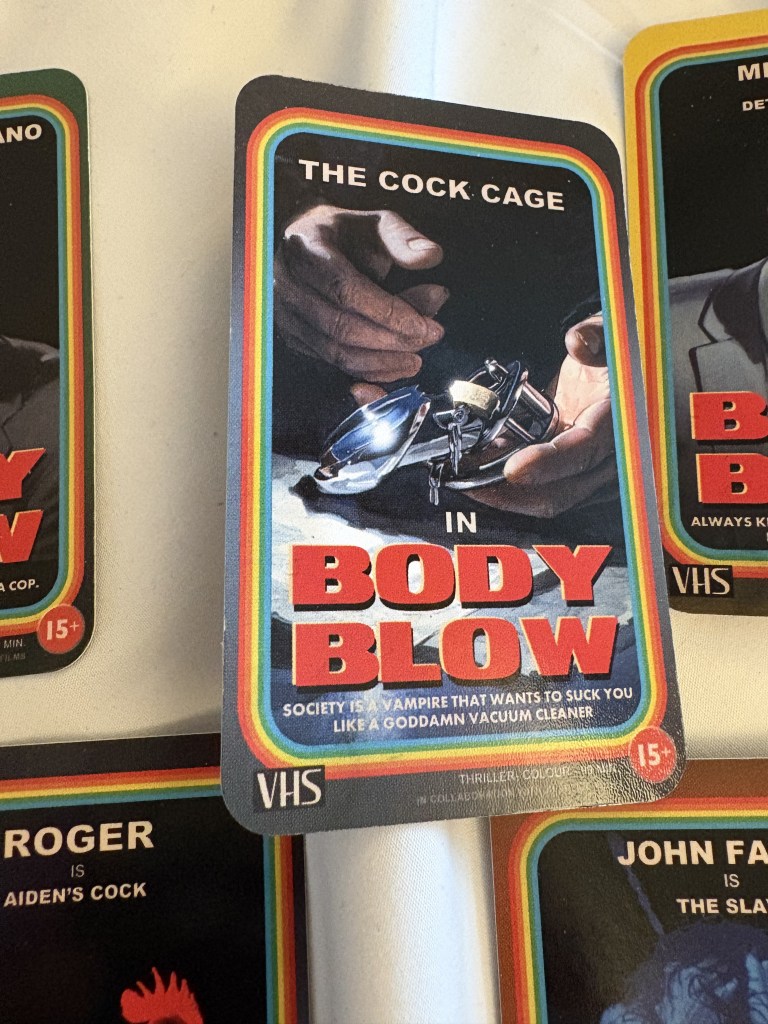
If I have filled your head with too much serious shit, please let me release you from that bond. You are free from that cock cage (in Body Blow terminology). While I am always someone who wants to investigate ideas of gender, sexuality and subversion (my holy trinity), let me reassure you that this film is easy to just enjoy.
The story is good, the performances are hot, and it’s a solid piece of queer neo-noir.
I was stunned by the way it held up and didn’t rely on its stylization (because it’s highly stylized).
And while it certainly bears the Stamp of Camp (not a detractor), it gives space for so much exploration. And that’s what a proper crime film will do.
This film makes you think. This film is layered. And, most importantly, this film is enjoyable.
The characters are well developed and unusual. The story is well-constructed and the experience of Body Blow is like nothing else you will ever have.
Go see it or rent it. You won’t have any regrets.
For a viewing near you (or one that you SHOULD travel to) go here.
For AWESOME merchandise? Same link, but I’ll link it again….here

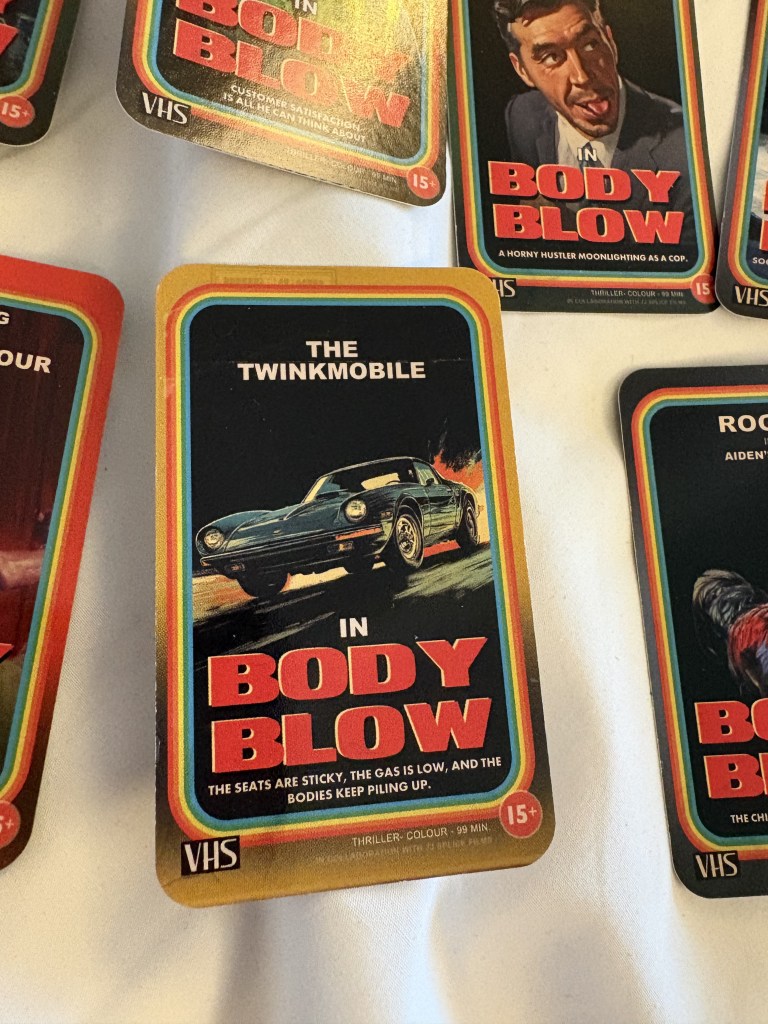
Also, please let me show you some of the merch designed for this amazing piece of cinema. I feel so lucky to have gotten these cards!!!