So I think its time to have a little conversation about value, worth and intersectionality.
Things are pretty weird right now. I was talking with a girlfriend the other day and both of us have been in the film community for a really long time. Long enough to remember when internet-based film writing/promotion and communities didn’t rule the scene. Imagine that! But internet/no Internet, there has always been misogyny. Always been racism. The homophobia has been lesser to an extent, but…that’s entertainment. It’s still there. We all know that transphobia is awful no matter where you go so…end scene.

Let’s set the stage. Current events: if you’re a straight white male celebrity who sexually assaults women, you might want to start getting scared. James Woods found this out the hard way when Amber Tamblyn called him out on Twitter last week. She wrote two brilliant pieces on Teen Vogue and the NYT, in response to him calling her a liar after she recounted his ill-fated pick-up attempt when she was just 16. Tig Notaro’s recent season of One Mississippi dedicates 2 episodes to addressing sexual assault, which is a direct shout out to Louis CK. Tig has spoken widely about CK’s refusal to address his problem, as have other female comedians.

Real talk: this shit has been shoved under the rug in the entertainment world since the casting couch was invented and studio heads invited women in for “lunchtime interviews,” promising them the “role of a lifetime.” But women are finally breaking their silence. Which is great. This should be supported and encouraged, especially by powerful men in the media world. But there’s a big chance it won’t be. Why not? Because making a “bold move” such as that might mean outing their friends or losing their buddies. And that’s scary and uncomfortable.
Dudes, I’m calling you out. It’s time. It’s not brave for you to step forward and join us in talking about what’s actually going on. If anyone tells you you’re “brave” or thanks you, tells you how “amazing” you are for standing up, that’s straight up bullshit. You should have always been doing this. You just finally smelled what The Rock was cooking, ok? No back pats, no OMG YOU’RE SO AWESOME!
Make a decision. Look at what’s going on and be on the right side of history. Because history does not wait and it certainly has no sympathy.
Over the last week, some straight white men in the film community have had a few real HOLY FUCKING SHIT moments. These were all heavily tied into the fact that they have absolutely zero comprehension of what VALUE means or what or who might, in fact, be VALUABLE.
It is important to note that most of the recent conversations being had in the film world have been incredibly white and privileged conversations. We have not stopped for one second to address women/people of color, trans bodies, or any communities that might have felt equally bludgeoned by what has been happening in the repertory theater scene. And by that I mean the recent scandals at the Alamo Drafthouse and the Cinefamily.
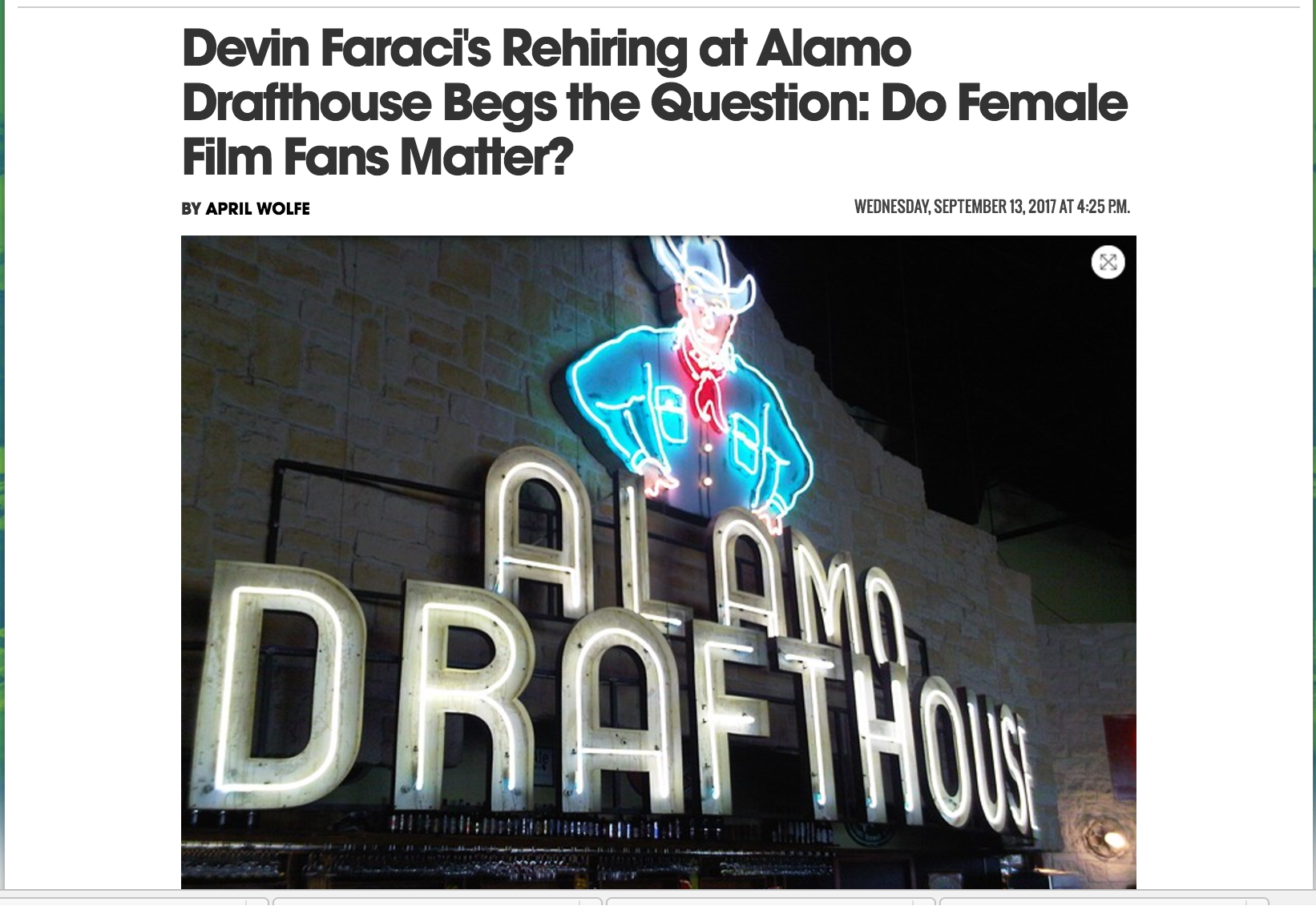
LA Weekly, September 13, 2017
I want to approach this discussion of VALUE on an intersectional level and include every body that has ever felt assaulted by today’s straight white male dominated film culture. It is a structure designed specifically to celebrate all that is white, male, moneyed and heterosexual and oppress all that are not. All marginalized groups-defined as women (women of color especially), people of color, queer folx; trans and non-binary identifying individuals- are considered outsiders from this Primary Group and ostracized. We may try to affiliate ourselves with those in this Clique, but the very nature of its construction denies us entry. We haven’t gotten good seats in the movie theater for quite some time.

I have been in the world of cinema and media studies for most of my adult life. The world has changed a lot in the last twenty years, and I’ve changed with it. The one thing that has not changed is the way that marginalized groups have been treated. This is absolutely a question of VALUE. We are simply not considered to have worth.
Structures of value and worth are why women are spoken over on newscasts and televised political arenas. It’s the reason so few brown faces are protagonists in feature films, there are currently no Asian superhero movies and why black bodies have rarely been lit correctly on film and television until work like Insecure (creators: Issa Rae & Larry Wilmore, 2016) or Selma (Ava DuVernay, 2014).

Issa and Molly, Insecure, Photo: HBO
The incidents I will be discussing- the sexual assault troubles at LA repertory movie theater Cinefamily and the sexual assault/employment cover-up/what-have-you at the Austin-based Alamo Drafthouse- are not ones that I plan to give space to here. Please feel free to Google them at your leisure; there are tons of articles available on both subjects. I will be using them and specific details/ experiences in context that I believe to be important to this piece but I don’t believe that I need to link any articles.
Moving forward then- value has been an issue for hundreds of years in marginalized communities. Consider the following: a body’s worth measured in economics (slavery) or a body’s worth measured in marriage and reproduction (a son is good, the family name/legacy continues, a daughter is bad except for marrying off/childbearing). What about a slave body that can reproduce another slave body (a woman of color)? Think on these things. These evaluations are not done by the bodies themselves but by an outside force; an oppressor. Whether it is White Supremacy or Patriarchal Heteronormativity, dominating another body because of your self-created value structures is just fucked up.
One of the primary topics of this article is sexual assault, an act that involves our physical selves. Our bodies. Our bodies are a big part of our worth. Our bodies are physical containers but they are also reflections of our PERSONAL worth. We value ourselves and we value our bodies. So what do we do when our bodies are violated? Worse than that, what do we do when those whom we value enact violence upon our valuable, worthwhile bodies? Who do we turn to when we are viewed as so invaluable that we cannot even be consulted about intimacy? That’s a fucked up feeling.
This was something many women faced at Cinefamily and have faced for years in the film community. Who would believe that so-and-so did THAT? “He’s so coooool Are you sure you remember right? You weren’t just a little drunk?” Because then he’s off the hook. If you’re drunk, the incident didn’t happen. And if he’s got some kind of high-level rep or if he’s famous then it definitely didn’t happen.

IndieWire Headline, Aug 22, 2017 11:21 pm
Intimate violence is visited upon our bodies and we can do nothing about it. We are not believed because we have women’s voices. Or queer voices. Or black voices. Or trans voices. While white women like Amber Tamblyn can reveal their stories and talk back to James Woods, do you think anyone would’ve believed a black trans woman who wasn’t famous?
Let’s look at social structures of VALUE. White people don’t value POC. If we did, black bodies wouldn’t be strewn lifeless throughout American streets, while the white bodies that violated them are legally allowed to move on without repercussions. Women/women-identifying folx are not valued. If we were, there would be no such term as “mansplaining.” White women are valued more than Women of Color but that in and of itself makes me cringe. And let’s be honest: trans and non-binary identifying individuals get the worst of it. It’s not just that people don’t value them. People pretend they don’t exist. Value and worth. If society, structured exclusively by White Rich Straight Older Men sees no value in you, you play no part and you are worthless.
Having attended the Cinefamily for a long time, I always noticed that there were many female employees and volunteers. Like an overt amount. I knew a few of them. I also saw a huge turnover rate. I stopped going a few years ago except to certain screenings. I saw brilliant and painfully talented people get treated poorly and that left a bad taste in my mouth.
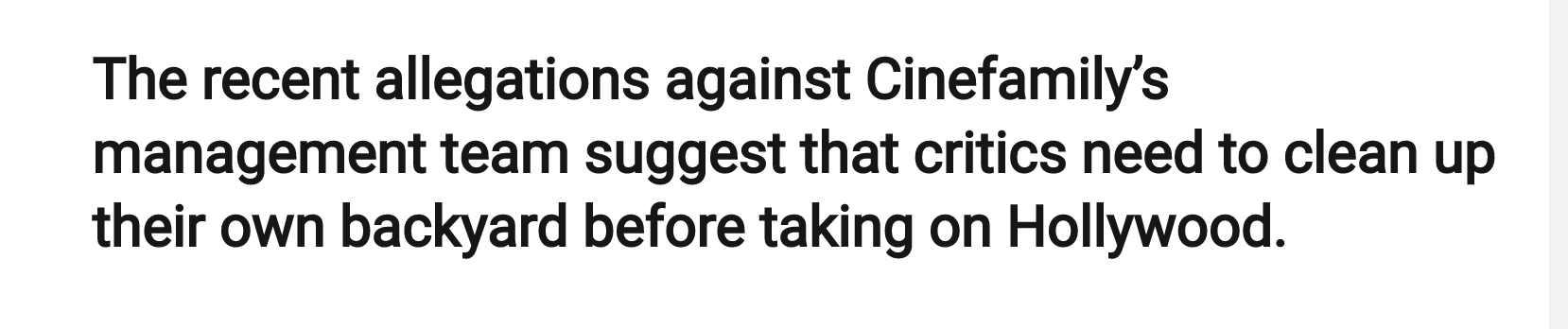
Film School Rejects, AUGUST 25, 2017
There were a few men employed there, but for the most part, it was women and not in an “empowering women” way. Looking back, the presence of so many women employees had a display case feel. Which I thought was strange. I chalked it up to Cinefamily being an “extreme hipster” theater but that was definitely not it. Sometimes we tend to compartmentalize when we don’t want to see things that are staring us right in the face. This was one of those things.
To Hadrian (Cinefamily founder), cultivating the look and molding the culture around that theater was part of its cachet. He did a masterful job in many ways. On the other hand, other people who never received the credit did much of the work attributed to him. What is critical here is that he created an environment where the only value system at play was his own. In any other work setting, this would have been seen as abusive. In any other work setting there would’ve been a HR person to assist his employees. But his male-dominated upper management structure (which includes the board) was in charge of the entire feel and social landscape of Cinefamily, from screen to popcorn maker.
So the regular floor employees were intimidated as fuck. The value of the women had been as objects, the men as continuing the promoting of the world/culture that had been created. Sounds a little bit culty. Which has been mentioned before. But I really read this as a lot of fear and sadness and a deterioration of personal worth as you continue to be abused by a workplace situation that you used to adore.
Here’s the even shittier part: this is what the world of repertory theaters and film festivals has been like forever. So the fact that Cinefamily exploded when it did made me roll my eyes a little. I couldn’t help but think: OH FUCK. Here we go. So who’s next? And let me stress right now that I have a lot of love for a lot of people working in the film festival and repertory worlds. My archivist/preservationist world is 100% not without its horror stories. In fact, we are probably due for some explosions too. But we’ll deal with those when they happen.

As for theaters and festivals and their dreadfully loosey goosey culture…These white, straight and male-dominated events and networks have always had Questionable Incidents. In the past, they were sighed at, and “Oh, that’s just so-and-so”-ed at. It really was like Mad Men. Whispers and secret confrontations swept under the rug. It was expected and built in. But when the ladies talk behind closed doors, we’re not fucking happy about it. And we haven’t been happy about it for years.
Did you know that, guys? Or did you think things were ok? Because a lot of you had to know about a lot of the heinous shit that has happened over the last 20 years. Whether I am in academia, the film festival world, entertainment journalism or my current archiving/preservation community, I want some answers. If my girlfriends and I know, if we’ve been frustrated and angry because we couldn’t call someone out because they were Too Big Time, then you guys must know the stories too. You probably know worse stories and have laughed or just rolled your eyes about it. Every time you didn’t warn us or stop those guys or call them out or do something, you let the women in your life and in the film community know that they were not valued.
Friends. WE JUST HAD TWO NUCLEAR MOVIE HOUSE EXPLOSIONS IN LESS THAN TWO MONTHS. Think there’s something rotten in the state of theatrical? Cuz I fuckin’ do.
So let’s update. It’s 2017. Less rep houses, mostly due to the analog/digital changeover. So we’re down a lotta movie houses and up a hellovalot more film festivals. What did that do? Well, it gave us the white, straight male-dominated film culture that focuses on the White Male Film Geek as Lord King God. It is literally White Geek-Bro Supremacy. This is something that has been planted, cultivated and grown over the years, carefully and intentionally. Fed with social media and entertainment journalism, it is so large that it IS VALUE and considered something OF WORTH. Basically, these geeks bring in the bucks. But at what cost?
I’m here to tell you fuck White Geek-Bro Supremacy. There is nothing valuable that can be created by this system. It does not create communities of worth. It gives NOTHING back. The Cinefamily, Alamo Drafthouse, Fantastic Fest are examples of this dynamic in action and each one of these has either imploded completely or fractured under the weight of its toxic masculinity.
Communities established under this structure do not value women of color who love to read comic books or cosplay because it is joyful. In fact, the communities developed by White Geek-Bro Supremacy do not center joy at all. White Geek-Bro Supremacy centers competition, bullying, and one-upsmanship instead of goodwill, respect and an infectious love for cinema. The cradle of this system is binary viewpoints (best/worst) and list-dependency (top ten most ___). It was heavily nurtured with the idea that some media was indubitably to be valued and some not to be valued, based upon a knowledgeable hierarchy that rose to the top of the message board/chat group communities and eventually published blogs and articles. Incidentally, this is how men ended up dominating authorship of Internet movie sites.
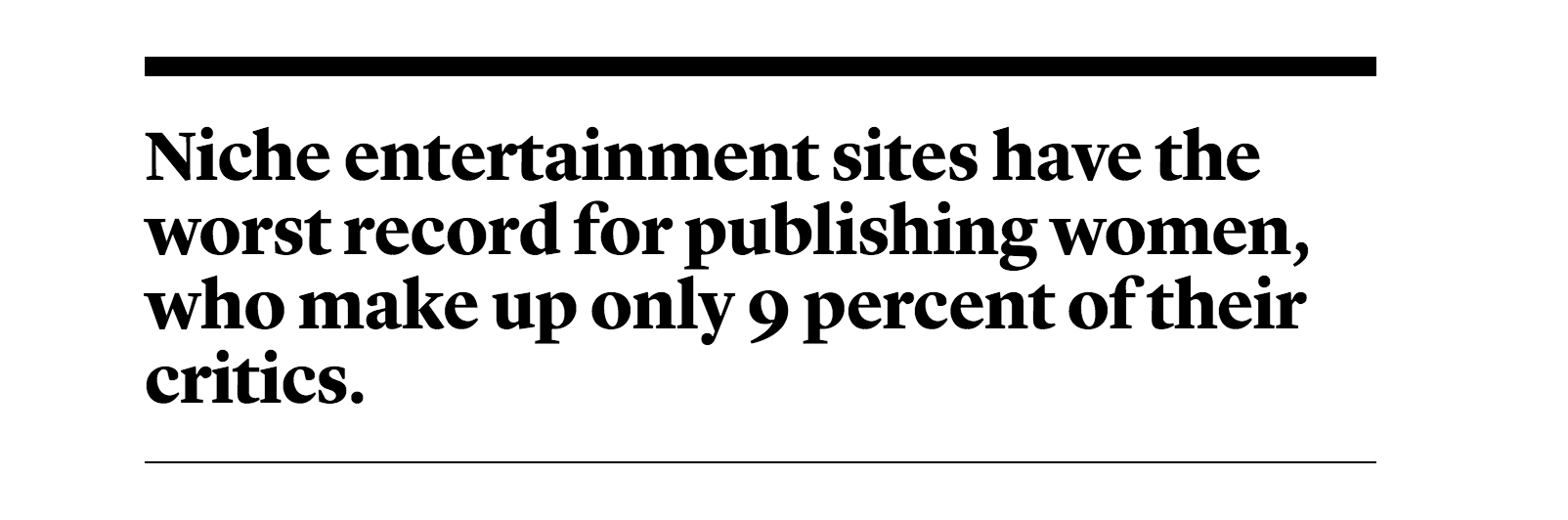
from Katie Kilkenny’s article, “Why Are So Few Film Critics Female?” in The Atlantic, Dec 27, 2015
White Geek-Bro Supremacy is what was working overtime during the Alamo Drafthouse turmoil this week.
Many thought the mess was about a sexual assault(s) committed by a former writer for an Alamo Drafthouse publication. It was about more than that. It was about a severe lack of transparency, the preferential treatment for a pal and the willingness to risk an entire company’s reputation and national operations on an individual relationship. This speaks of a special kind of blindness: Privilege Blindness. As my friend John Wildman eloquently wrote, a large problem in the Alamo Drafthouse founder Tim League’s “crisis management” was that he never stopped to listen to those who should have been listened to.
This is a recurring theme with privilege. Those with White Privilege, Male Privilege, and Heterosexual Privilege have the idea that their privilege affords them earplugs & blinders. The definition of Privilege Blindness is “I will not make the space to listen to you because of xxxx reasons.” Guess what, honey? Not one of those xxxx reasons is valid. Grab a beer. Pop the top. Just get uncomfortable with this.

When you do not take the time to listen to another person, you are telling them, “You are not valuable. You are not worth anything. You have nothing to tell me of any value. I do not see you as someone who could add value to my life. Your experiences/thoughts/feelings mean nothing to me.” When you do that to someone in a marginalized group, it can be both achingly familiar (we’ve lived our whole lives not being listened to) and possibly life threatening. While the aforementioned former writer for Drafthouse certainly did lousy things, he wrote one good thing on his now-deleted Medium post: “Believe women. Especially when they are talking about you.”
What is it going to take to destroy these systems of oppression? What is it going to take to break down years of abuse? The men and women who have spoken out against the ongoing practices at the Drafthouse are mirror images of those at Cinefamily. They feel ignored, stepped on, devalued and left in the cold. They were not hip enough. Not in the cool kids club. Stories of floor staff at the Drafthouse being treated as “lesser than” because they were not within the upper echelon of the Who’s Who. And I get it: it’s largely impossible in a company that size to have some utopian vision where people are all partying together. But it is possible to have people feel appreciated and like they are part of an institution that is doing something amazing for the cinema community, which is the image that the Drafthouse outwardly projects. Bottom line: the party should never end up being more important than the people who decorated the room for the celebration.
As for Fantastic Fest… Tim League’s gotta be a little sad about that right now. His actions have put him in that funky little zone where moral values have impacted his Financial Value. Fox Searchlight pulled their film from Fantastic Fest. That’s kind of a big deal. While FF usually goes for more unusual fare, it could always use a big studio film for a bump, especially after recently launching new distribution shingle, Neon. Get rid of the testosterone-fueled boxing-matches, limit the VIP-only bashes that create such clear hierarchies and go back to what made the festival unique- its content.
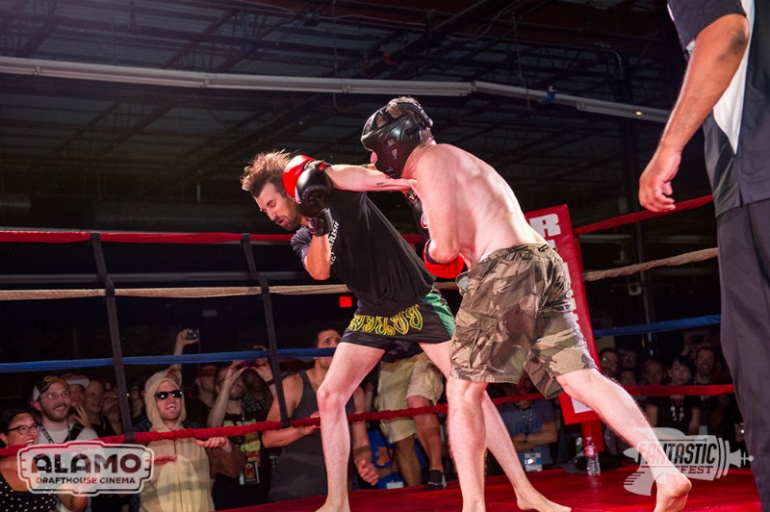
Boxing match from Fantastic Fest 2014, Photo: Alamo Drafthouse, September 21, 2014
So this may have been a lot to get through for many of you. And it may not have made sense or connected to the Cinefamily and Drafthouse situations for some. But please trust me- it all does. Obviously right now I don’t give a shit about TL;DR. Some will read this, others won’t. I’m really pissed off. I hate that it’s taken the devastation of two cinematic institutions and one film festival in order to knock some sense into dudes’ heads and make them remember that women are people too, with feelings and needs and all kinds of INSANE THINGS.
And please know- I never wanted Cinefamily to die. However, in the form that it was in, with that board of directors (some of whom are still very active in the LA rep theater scene), it was impossible. There were amazing people at Cinefamily and amazing people are suffering unemployment now due to its closure. I also do not advocate skipping Fantastic Fest (unless you feel you need to). I think that taking the discussion to the source and holding people accountable is key. But don’t just talk the talk, walk the walk.
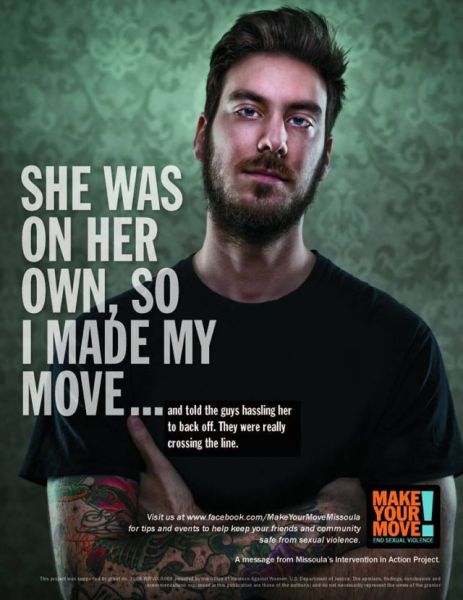
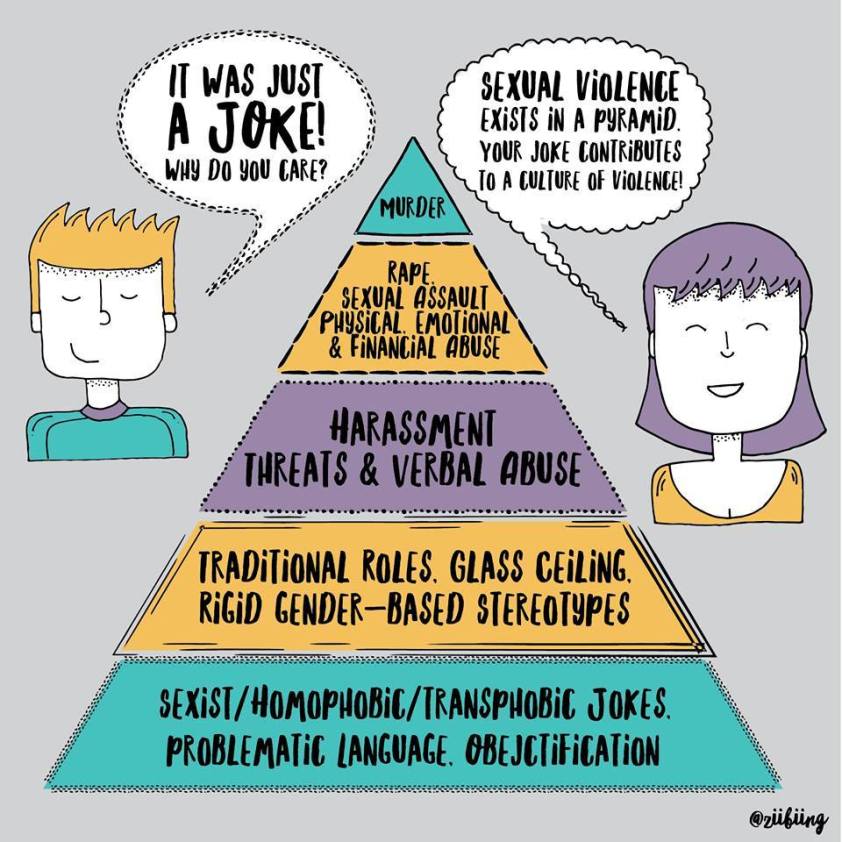
An interesting ad from an anti-rape campaign in Missoula, MT.
I don’t want to see Drafthouse go down in flames but I would like to see its encouragement of White Geek Bro Supremacy stop. This will take more than a few professional sessions with a “crisis management” team. This will mean letting real people – women, POC, queer folx, trans/non-binary film lovers- talk to you, Tim League. And you need to shut up and listen.
Turn a new page. It’s possible, but it’s going to take work. It’s going to take a lot of listening and a lot of people are going to have to get really uncomfortable. A lot of people are going to have to do some major self-reflection. But as Amber Tamblyn wrote to James Woods, “What you are experiencing is called a teachable moment. It is called a gift.”
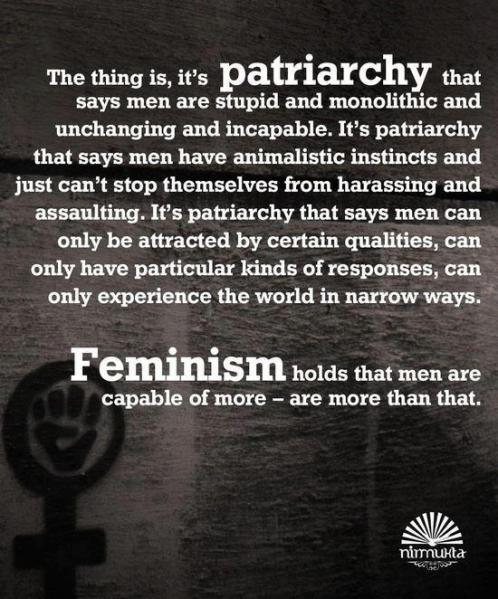
Women and other marginalized groups are done being quiet. We know our value and our worth, even if rich straight white dudes don’t. For many of us, discovering intersectionalism has helped. Working together we can be more powerful than by focusing on just our own separate issues. Many of us have discovered new definitions of value and worth in community organizing. But that also means that structures of white supremacy and patriarchy are in serious danger. We’re only going to get louder and more powerful.
So White Male Geek Squad? Y’all should get your shit together and clean up your act. We’re coming for you. And that’s a promise.



 Movies Are My Boyfriend