While I wasn’t initially going to include this film, I was watching TCM the other night, and learned some new information about it that made it a whole new film to me. It’s not that I don’t enjoy the film, but there are other films that I think deserve a little more attention. See, this film is everyone’s favorite film and, to a certain extent, this little piece of information that I learned on TCM is the reason why!
7) It’s A Wonderful Life (Frank Capra, 1946)
Inspired by an unsuccessful short story called “The Greatest Gift” by Philip Van Doren in 1939, Frank Capra’s film was released with a great less of a successful response than originally anticipated. While some attribute that to its dark themes or non-linear narrative, it also was going against super patriotic films like Best Years of Our Lives (William Wyler, 1946) , which definitely gave it a run for its money.
So how did this film make the jump to becoming one of the most loved films in all Christmas-film-history?
Simply put, the answer to that question is copyright issues and television.
The film, released in 1946, was guaranteed protection under standard U.S. Copyright Protection laws for 28 years. So when 1974 came around, the film came up for copyright renewal. Within that time period, the film was only allowed to be played with proper permission and through proper dispensations, lest the individuals who wanted to show the film get in trouble for copyright infringement.
However, when 1974 rolled around, Republic Pictures, the original copyright holder, dropped the ball and didn’t renew the copyright. This started a media chain reaction that caused the film to become as fundamental to the Christmas world as Apple Pie is to the US image.
Long story short, It’s a Wonderful Life became public domain and shown on just about every channel on television during Christmas time for many years. You couldn’t switch a channel without seeing Donna Reed’s face. If it wasn’t for this little “accident” of Republic’s (which was “fixed” a few years later, thus why it doesn’t get played as such a multi-channel orgy as it had previously), this film would not be anywhere near as popular.
A little bit of history and copyrights go a long way…
I figured that for Christmas Day I would do a potpourri of sorts. See, alongside all the seasonal-related films that I adore, there are a whole bunch of TV shows, specials and songs with music videos. So this one is a little different from the others.
6) Holiday Audio-visual Mixtape
The first in all of this madness is a song I cannot go without hearing at Christmas time. It’s by one of my favorite bands, The Pogues, and features vocalist Kirsty MacColl. I have a special memory around this song, actually, related to the holidays. Sad, but Christmas-and-song-specific. I was in Ireland in December of 2000, spending my holiday break there. I was at University in England at the time, but I figured, “Hey- Christmas in Ireland, New Year’s in Scotland, sounds good to me!”
As I was walking around (I believe I was in Kilkenny at this point although I may have been in Galway– when I relocate those journals, I will correct this part of the blog), I was hearing a goodly amount of Christmas music and every place I went to seemed to be playing this particular song. While I didn’t think much of it, when I went into Supermac’s (the Irish McDonald’s, essentially), it seemed a little odd that these places were all playing the same exact song at the same time. At first I shrugged it off, and then, upon passing a newsstand, I saw the front of the newspapers: Kirsty MacColl had been killed in a very tragic swimming/boat accident in Mexico. I was devastated. Thanks to a friend I’d had since an early teen, I’d been a fan of her solo work as well, so this was just awful news. But at least I understood why every place was playing this song at the same exact time.
On the other hand, it was December, it is a Christmas song, and it has always been pretty popular so…who knows? It may have been playing anyway. In any case, I love Fairytale of New York, and you should too.
Another piece of music that I am highly tied to is one that came out in 1984, at the very height of when I was buying most of these individuals’ albums. It was a collaborative effort put together to combat famine in Africa and it was released around Christmas time. I remember that they blasted the living hell out of it when it came out and, hilariously enough, they still do. I remember being insanely excited about the video primarily (burgeoning archivist that I was, even then) because I wanted to make sure that I could name every single person singing in the video, and if I couldn’t (ie I didn’t know who it was), I wanted to find out more about them. Aurally I could identify almost everyone when I first heard it on the radio. Then matching it up visually was so. Much. Fun! At that age, I’m not sure if I was overly concerned about the kids in Africa as much as the fact that I owned an album from almost everyone on the Band Aid team (except, strangely enough, U2).
So, if you haven’t seen it before, welcome to the video that started them all…
On the Band Aid tip, there was a video that one of my favorite bands did that, while not Christmas-themed, was meant to parody this, and I would be remiss in my efforts here if I did not include it. I listen to this song every year around the holidays due to the video and its relation to the Band Aid video and also because it’s just a damn good song. Warning: if you hear the recorded version, it will not sound at all like the version you are about to witness, due to the fact that the recorded version is done by the band, and this version?? Well, you’ll see. It’s pretty fabulous.
So aside from the music video stuff, there’s a whole televisual side of Christmas that I dig on, and no, it’s not the Star Wars Christmas Special. While I’ve seen that and it’s…got its points, there are much better things you could be watching. If you want a little bit of the kitsch, I personally think that Peewee’s Playhouse Christmas Special (Wayne Orr, Paul Reubens, 1988) is probably one of my favorites. Anything that involves the Del Rubio triplets, Annette Funicello, Peewee Herman, and Grace Jones singing “Little Drummer Boy” automatically has me, no questions asked.
I’ve always been a Peewee fan, so a Christmas special from the Playhouse will always get my vote, but this one is especially fun. When it came out on DVD, I was thrilled to my eyeteeth. If you haven’t seen it, and that taste of Grace Jones whet your appetite, I would highly recommend it. It really is all that and a bag of chips.
On a more serious note, my favorite television episode having to do with Christmas comes from the mind of Rod Serling. If that didn’t clue you in, it is a wonderful episode of The Twilight Zone starring Art Carney entitled, “Night of the Meek.” Carney plays a man named Henry Corwin who is, for all intents and purposes, a seemingly “bad Santa.” As we meet him, he has just gotten fired for his drunken lateness to his job (playing Santa), and he is at the end of the line.
But, surprisingly for The Twilight Zone, this is an episode that has more of a redemptive stroke than normal and much more optimism (although for Serling, his kind of optimism is not everyone’s optimism). This episode is about what the season is truly about: holiday spirit. And no matter how grim I may seem at times about the holidays, and no matter how Grinch-y I might get, The Night of the Meek renews my soul.
But Rod Serling is the man who truly makes me think. About many things. So, while I love many of the other Christmas specials and films, it is truly Night of the Meek, Season 2, episode 11 of The Twilight Zone that truly makes the holidays a holy and sacred occasion. If you haven’t seen it, I beg of you to give it a chance. It will air this holiday season. Watch out for it. It’s what it’s all about, at the heart and soul of it.
Joe Dante is one of the nicest and most knowledgeable guys you’ll ever meet in your life. From the first time he ever programmed a festival at the New Beverly in 2008 (discussed here by the inimitable Dennis at Sergio Leone & the Infield Fly Rule), I knew he was one of the “good ‘uns.” Realistically, I had known this since I was a kid, but I reserve judgement on someone’s person until I get a chance to meet them (if I get that good fortune- which is rare- but in LA…it happens). However, Joe is absolutely golden. But I really should’ve known that since this was the man who gave us Matinee (Joe Dante, 1993), a film that has a lightly-disguised William Castle-like character (and I’m a huge Castle fan) and is dedicated to the undying love of cinema. I also should’ve known this since I remember seeing Innerspace (Joe Dante, 1987) with my mom in the theater as a kid and thinking it was one of the coolest movies ever, adoring the Sam Cooke song, and thinking that is this was what movies were about, I wanted to see ALL OF THEM all of the time. And yes, I’m a huge fan of The ‘burbs (Joe Dante, 1989) as well. I was so very pleased to get to see that at the New Beverly a little while ago as well.
But, as we are all aware, the erudite Dante made a Christmas film. And it is not just any Christmas film, it is the Christmas film.
5) Gremlins (Joe Dante, 1984)
One of my friends is probably the ultimate anti-Christmas-film person. He’s down with the food, but the “happy happy joy joy” stuff and any kind of religiousness? Keep that the hell away from him. It’s just not his style. But he loves Gremlins. He really, truly adores this film like it was going out of style. And considering some of his other favorite directors are Tod Solendz, John Woo and Werner Herzog and he believes that Salo by Pasolini is a staple…this is saying quite a bit.
He’s not alone, however. Gremlins is widely considered a classic. And I think it’s generally because not everyone likes Christmas in its Joyful Portrayal. See, every bright room has some dark time, and to many people (myself included) the dark time is, in many ways, a great deal more interesting. In fact, if you were to take a look at the other “classic” Christmas films, they are all a bit dark, which leads me to question why we have so much trouble recognizing that. I mean, to be completely honest, It’s a Wonderful Life (Frank Capra, 1946) is a film about a guy who wants to commit suicide. How cheerful a theme is that around holiday time?
Polish Gremlins poster. I love Polish posters.
A man I wrote about a few entries earlier, Bob Clark, has dipped into the “dark time” of the Christmas room twice, with Black Christmasand with A Christmas Story (Bob Clark, 1983). While the latter film is more comedic, it has more edge than a straight-up, feel-good comedy. Most of the film centers on the gun that the child-protagonist wants, and how his parents think that it will “shoot his eye out,” not to mention the rest of the dark things that happen to the young members of the cast. Are we supposed to injure children in Christmas films? Heh. Well, maybe in my kinds of Christmas movies. As long as they’re accompanied by the right balance that Clark gives us (which he definitely does, in Christmas Story– if you haven’t seen that one, see it).
Gremlins has monsters in it. And lord help me, I’m a sucker for a monster movie. I don’t care what season it is. And, more importantly, it has the significant interplay between human, monster, and sympathy. The things that will always get me. You put those things in a film, and more often than not, I’m YOURS. Then you add humor and a dark view of the holidays??? SOLD!! Gremlins has been on my list for these reasons and always will be. People can try to knock it, but they will always fail. In my mind, it is an essential. It wouldn’t be the holidays without it!
I realized after revisiting my last Christmas favorite, I really dig Christmas-themed films that are shot in/around Los Angeles and where Los Angeles plays a key role. Ok, so clearly a good chunk of the films made are filmed in Los Angeles. Of this I am clearly aware. However, what I am speaking of is the group of films that make it a point to mention the city, continually referring to it and positioning it, visually and narratively, as a character within the film.
One of my very favorites amongst these that also uses the Christmas theme is also one of the most beloved to many other folks I know.
4) Die Hard (John McTiernan, 1988)
While I have seen this film many times, I finally got the opportunity to see it on a big screen a few weeks ago and I was blown away. It was the perfect example of how a film changes completely in the transition from small-to-large screen. I argue with people all the time about theaters and supporting them and how necessary it is, but seeing Die Hard on a big screen, in 35mm, just drove that point home even moreso.
I could give you the standard spiel about how you notice more within the film on a big screen or how Die Hard is an action movie so it has better resonance and power bigger, but those are things you probably are aware of. The basic truth is that films were not created for small screens. They were made for the cinema. Therefore, whether you are watching them projected via 35mm or some digital manner, they should be seen the way the artist intended their work to be seen.
You wouldn’t hang an authentic Van Gogh painting in the local McDonald’s, would you? It would be inappropriate. Television is a different thing. That was created specifically for the little box. In that, it works perfectly, and it is platformed absolutely to its advantage. But as we start losing theaters, we start losing the possibility of seeing films like Die Hard on a big screen and that is a real tragedy.Seeing this film in all of its glory, large and in charge, was like seeing it for the very first time. I sat there and I thought: well, I may not celebrate Christmas, but the fact that I’m getting to see this, on a big screen, and it’s so exciting, and shot so well…this is my Christmas. John McClane is my barefoot Santa! Hurrah!
In general action films get me pretty happy, but this time I was practically exploding with cheer and good will towards the whole theater. It’s a celebratory film and the Christmas aspect of it adds that extra layer that makes it just that much more suspenseful. It would still be a good movie without the season’s greetings, but that makes it a great movie.
My third film pick is a piece of glory from one of my very favorite modern film writers today, Shane Black.
This film, like the last one, does not center on Christmas but it takes place during Christmas time and continues to remind the audience of the holiday season throughout in various ways (costumes, sets, etc.).
3. Kiss Kiss, Bang Bang (Shane Black, 2005)
I adore this movie. I think I have watched it more times than most of the films in my collection. But…that goes with the territory. Films written by Shane Black (especially those called The Last Boy Scout) are generally on heavy rotation around here.
But this film is especially precious to me. If you have read this blog for any amount of time or even glanced at other pieces I’ve written, you will notice that I enjoy the noir genre quite a bit. Well, this is comedy-Christmas-noir, in a sense. It’s self-aware and self-reflexive without being obnoxious; it’s entertaining and very smart without coming off as pretentious, it’s an all-around excellent film.
So let’s talk Kiss Kiss, Bang Bang. Not only is it a wonderful film, but it’s got historical roots. It may look and act like a modern-day piece, but in reality, it is not simply the Raymond Chandler names for the film “chapters” that are based in the literary past. The entire film springs from the tradition of pulp fiction. Shane Black got the inspiration for the film from a novel by author Brett Halliday, nom-de-plume for prolific writer Davis Dresser.
Novel that Kiss Kiss, Bang Bang was based on
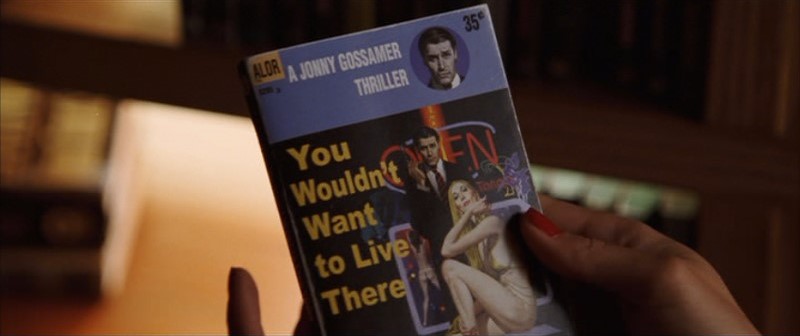
Dresser/Halliday’s work was made into several films in the 1940’s and a variety of radio shows as well, primarily featuring the detective Michael Shayne. Aside from the narrative, Black manages to engage Halliday’s work into Kiss Kiss, Bang Bang by inventing a series of pulp fiction books by a writer named Johnny Gossamer. The books look a great deal like the ones written by Dresser/Halliday and published by the company that he later formed with his wife, Torquil Publishing. While the average observer would simply be entertained by this and might think it perhaps a simple pulp fiction reference, I find it to be even more rewarding to have that extra “bonus” link to the Mike Shayne novels.
Kiss Kiss, Bang Bang does it all right. It works on all the “right” principles: Hollywood, holidays, intrigue, humor. It is also one of the first films to platform a gay character without having him function as a stereotype. While action and gun battles may not scream “jingle bells” to you, the gal running around in the Santa costume is pretty easy on the eyes, and Robert Downey Jr.’s detecting in this outdoes Sherlock Holmes any day of the week, any month of the year.
A "Johnny Gossamer Thriller" in Kiss Kiss, Bang Bang, looking pretty close to a "Mike Shayne Mystery"
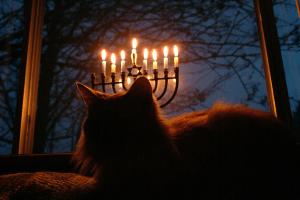
If you haven’t seen this film, please do. It’s highly recommended and highly rewatchable. And what are these films about anyway but insane rewatchability, right? In essence, when you’re finished lighting that menorah, chuck this in the DVD player, get this from Netflix, hell- do a blind buy on Amazon or at Amoeba or your local DVD shop. You won’t be sorry.
The next film on my list needs…well, a little bit of introduction. It may be the only film on the list that readers haven’t heard of and/or seen, and it is very likely to be the strangest of the bunch. While the whole film doesn’t take place at Christmas time, enough of it does that when I first saw it, I immediately put it on my list of “Favorite Christmas Movies.”
It is a Japanese film and the filmmaker is primarily known for directing television commercials. In addition, he is also quite well-known for his visually dynamic and surreal style. I was first introduced to this film at an all-night film fest, and was stunned into submissive awe, excitement and jaw-dropped silence (if all three of those can go together, which, in this case, they did). I attempted to search it out, and found that it was quite difficult to find. I was lucky enough to get a copy and can now watch it at my leisure (which I do).
This film, while definitely not for everyone, is a special film. I love it and am extremely happy that I own it and can add it to the films I will watch to celebrate Chanukkamas/Christmukkah.
2) Survive Style 5+ (Gen Sekiguchi, 2004)
The first thing to note about this film is that it is a pop-culture aesthete’s wet dream. Then again, it is a Japanese film. It is all shades of pinks, blues, greens, and neon…everything. In fact, one could even say the soundtrack is neon. Watching Survive Style 5+ is like mainlining immense amounts of acid and ecstasy to your eyeballs and narrative analysis zones all at once. In other words, this movie is a trip, man.
The inimitable Sonny Chiba
But I love it. Not only does it have Vinnie Jones of Lock, Stock and Two Smoking Barrels fame, but it also features Sonny Chiba (has been in everything), Tadanobu Asano (most famous for playing Kakihara in Ichi the Killer but also has a reasonable roster), and Jai West (in Love Exposure, another crazy film I adore, and played Young Ioki on the original 21 Jump Street TV show).
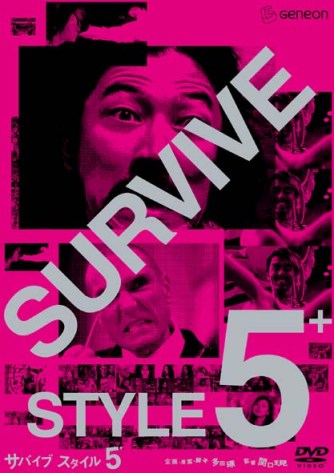
Survive Style 5+ : a movie that is unlike anything you have ever seen or will see again
The film doesn’t take place entirely at Christmas time, nor is Christmas the MAIN theme to the film (if there is just *one*), but in my humble assessment, it is during the “Christmas act” of the film where all of the different storylines take their final, pivotal turns. The film itself functions as a type of interlocking anthology piece of sorts, and when each storyline reaches the Christmas chapter, they peak, like they were on the drugs guiding the creation of this piece of enthusiastically adrenalized coloring-book madness.
There are tons of films that have “famous Christmas scenes.” As I’ve been watching all the multitudes of Xmas specials on television, most of them have been quoting Meet Me in St. Louis (Vincent Minnelli, 1944) as being first on that list. While there is no denying Minnelli or Garland, I have to say that the sheer visual explosivity of Survive Style 5+ mixed with just the right amount of sweetness works for me on a level that I treasure dearly. Yes, I admit to having very different proclivities when it comes to my holiday cinema treats, but I dare anyone to watch the Kobayashi family storyline and not become attached to their struggles within the narrative, surreal or not.
While Survival Style 5+ may not be Capra, it is certainly memorable, and I do not say that in any kind of backhanded compliment-type manner. While it may not initially come across this way, this film has wonderfully redemptive qualities, and (for me) makes perfect holiday viewing. The lessons that the characters learn within the sequence of events are not dissimilar from many within a standard Christmas special: love, family, loyalty, friendship, gameshows, psychotically-charged existential hitmen…ok, so maybe not every Christmas special involves the last two, but my point still stands.
Viva Friends!
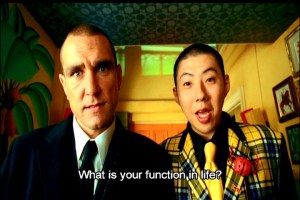
If you get a chance to check out this film, I highly recommend you do so. But before you do, I would suggest that you ask yourself what your function is in life. You might need to know. Just in case.
Right. So I missed the first night. In the spirit of the season, you should forgive me. I was busy hanging out with new friends, watching a National Geographic special about submarines in South America that attempt to smuggle cocaine into the US, a mini-documentary by David Schmoeller called Please Kill Mr. Kinski, and a police training film by the Milwaukee Police department called Surviving Edged Weapons. I have to say that this was a thoroughly enjoyable way to spend the 1st night of Chanukkah, considering there are really no “Chanukkah” movies.
So, aside from that wondrous evening, I realized that I really enjoy Christmas movies, and being that I have a platform to tell everyone what my favorite ones are and why…I should do so.
In the most Jewish way possible.
So here we go. Starting late (hullo Jewish Standard Time), I shall now give you…
Sinaphile’s 8 Nights of Cinema for the 12 Days of Christmas
1. When I think Christmas, I think: IF THIS PICTURE DOESN’T MAKE YOUR SKIN CRAWL, IT’S ON TOO TIGHT.
Black Christmas
Yeah, When I think Christmas, I think Black Christmas (Bob Clark, 1974). I can’t remember the first time that I saw this, but I think that it was probably some crazy after-hours screening around the holidays, and it had to have been probably a little under 10 years ago. I remember being utterly, completely, GLORIOUSLY and GUTWRENCHINGLY terrified. It made me so happy!!!! See, movies don’t scare me. This one did. It’s on the list of the three films that have ever managed to truly creep me out or scare me in my lifetime as a movie-watcher. That experience was the best gift that Clark could’ve ever given me.
Original poster for Black Christmas aka Silent Night, Evil Night
Since that first time watching it, I have watched it many, many, many times over. And the best part? It still scares me. Bob Clark was an amazing filmmaker and a truly talented man. The fact that he died so early and in such a horrible way (he and his son were tragically killed by a drunk driver in April, 2007) still saddens me.
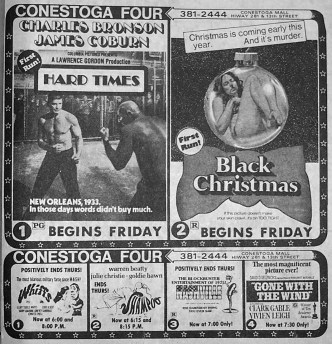
Original Black Christmas film advertisement, "first run" for the Conestoga Four Theaters in Grand Island, Nebraska
Clark had called the film Stop Me initially, but that was clearly not where it ended up. He retitled it to Black Christmas but the film was originally released as Silent Night, Evil Night for the US theatrical release then changed yet again to Stranger in the House for television broadcasts (although that ended up getting nixed due to it being “too scary” for TV). As shown, Black Christmas had a very indirect route to its title. Shot in Canada, it managed to do pretty well on release. While the critical reviews at the time were poor, it has since gotten to be more of a popular title, even spawning a remake a few years ago (which I categorically refused to see).
While Christmas time may seem like a time of happiness, joy and giving, jingle bells, snow and cider-y goodness, it warms the cockles of my heart to know that there’s always a good ol’ piece of classic slasher cinema there for me to dig my eyeballs into and get creeped out by. It makes me happy.
And if this trailer doesn’t get you…well, I’d do something about that skin.
A few days ago I was on Facebook, and I noticed that a friend of mine had posted a pictorial with some words accompanying it and it was getting quite a buzz. Due to the fact that I have a tendency to keep my eyes and ears open for issues having to do with gender and identity within the cinema, this one caught my glance in particular.
At first, I was amused. But I realized that I was amused at the comments, not the picture. In fact, the more I thought about this, the more highly problematic I found it to be.
The male body is an injured body. We have seen this played out time and time again. Internal damage becomes externalized in the form of the action, horror and thriller genres. Really, it happens in any film where extensive physical damage is known to take place to the male character(s).
“Hey, aren’t you a feminist?” you ask. “why be so concerned about this stuff? Is the male body any of your business?”
First of all, I am most unreservedly a feminist. And secondly, one of the things that makes me a feminist is my overarching concern with how the cinema fails both sexes, as feminism is not just about women and it never has been.
If you wanna get down to the nitty gritty differences in how this works, the harsh lens of the camera eye tends to sexualize the bodies of women while men’s bodies are physically attacked. Now I’m not saying that women aren’t injured or torn to ribbons. Look at Aliens (1986). However, Vasquez and Ripley were some tough-ass chicks, so that’s going to have to fall into “exception-not-rule” territory. What I’m saying is, on a general basis, what we find in cinema is that the female body is over-sexualized to our great disadvantage and the male body is damaged and physically traumatized beyond what is reasonable.
The male body does not feel real, does not feel whole until they are committed to the screen and the narrative as unwhole, taken apart, bloodied. We cannot properly swallow masculinity as authentic unless it has been made to withstand something physically and most likely emotionally.
Bruce Willis as John McClane in Die Hard- barefoot, bleeding, and hanging over a building. Oh, and did we mention it's Christmas?
Clint Eastwood as Josey Wales, a man who loses his wife and children to violence and never returns psychologically.
Where does this put our conceptions of the masculine ideal? Not in a very good spot, I’m afraid.
If these things make up our prototype of the real man we are no better off than we were with the over-sexed female icon. In short, we’re in trouble, mister, we’re in trouble good.
We are a gender-damaged culture that scoffs at the “manliness” of Robert Pattinson when compared to Clint Eastwood based upon heroism and tears. Surely we could find something more intelligent, more reasonable, to criticize the film about other than the manliness of a tough rugged cowboy archetype versus a brooding sparkly vampire!
In addition, I submit that we all need to truly reconsider our notions of what is a “real man” anyways. While I’ll readily admit to being a fan of Charles Bukowski’s literature , love Lee Marvin with every bone in my body and cannot seem to get enough of Sam Peckinpah’s cinematic delights,
Kris Kristofferson & James Coburn in Pat Garrett & Billy the Kid (1973)
I feel that a certain culture has arisen that has built a shrine to these men (and ones like them), and I’m not sure it’s for the right reasons. These are men who, in celebrating their own masculinity, produced a world of the hyper-masculine. So much so, that at times it would not be beyond reason to step back and ask, “Are you trying to convince me, or are you trying to convince you?” Within these men lies a mixture of pain and sexuality raging so very strong that it can only come out in one way: aggression.
Is this what we would like to consider our “reality”? Pain and darkness?
Here is my question: why don’t we celebrate Jack Lemmon? Is he too much of a “wimp” in the compare/contrast game? Is it just like in The Apartment (1961), where he can only win by a dark default? And is that really winning?
Jack Lemmon & Shirley Maclaine, The Apartment (1961)
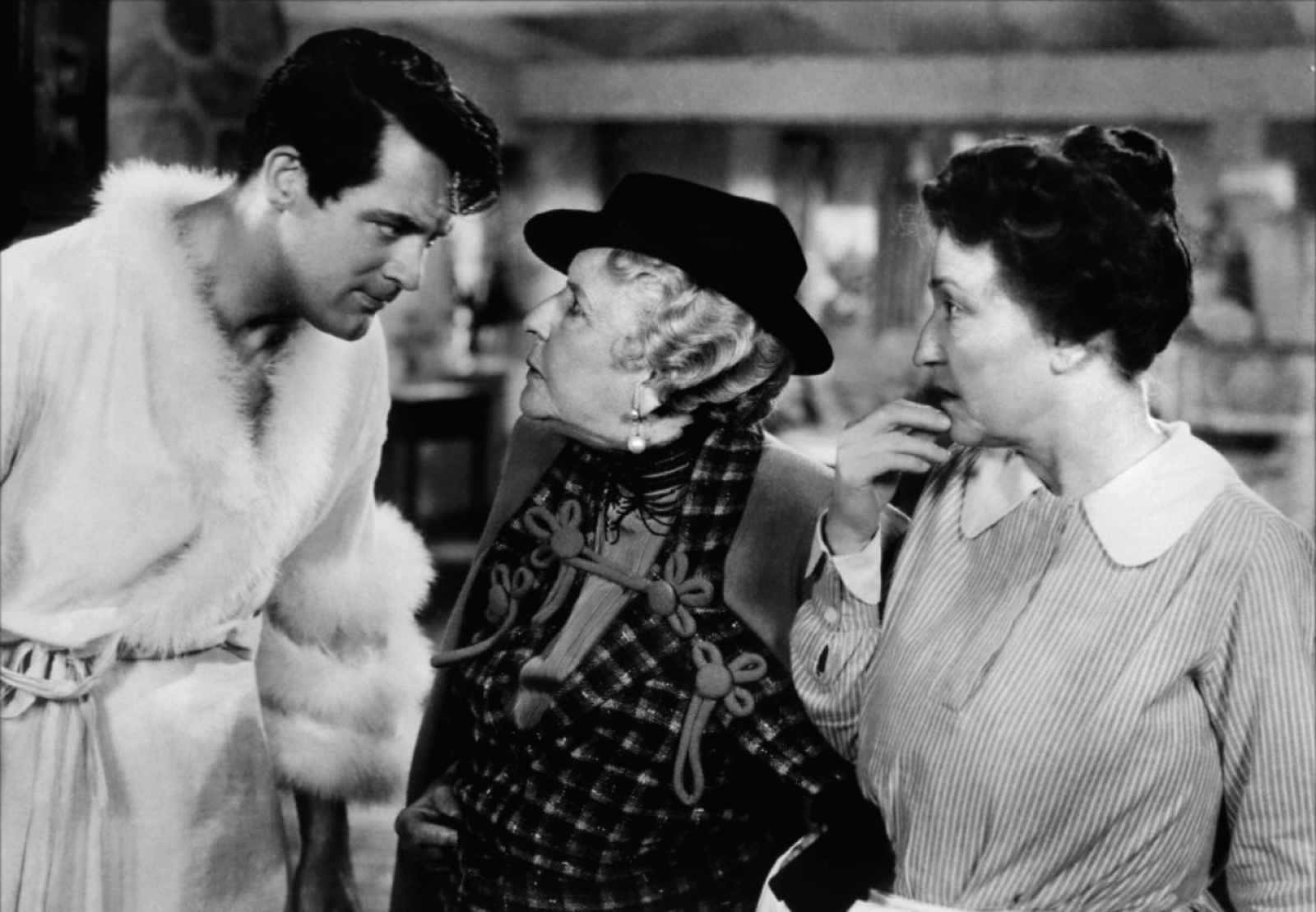
We call Cary Grant “dashing,” but is he a real man? Well, maybe. He did get chased down by a airplane and hang off Mount Rushmore.
Cary Grant, Bringing Up Baby (1938)
And back on the vampire tip, are YOU going to inform Christopher Lee that he doesn’t get to join because he played a bloodsucker for years and years or is Hammer “cool” enough to make it count?
Christopher Lee gets bitey with it...
As we vacillate between the poles of masculinity, looking at what is a real man and what isn’t, it stands to reason that we have some serious decisions to make involving some changes in perspective. I think that it is high time that we make them.
Where does this put our conceptions of the masculine ideal? Not in a very good spot, I’m afraid.
Last week I read an article that was being shuffled around my social media circles about the “death of the film camera.”
While I’ll admit I was saddened, I can’t say that I was shocked. I watched as the article made its way, slowly but surely, through all of my friends’ Twitterfeeds and Facebook pages. I considered the fact that a year ago I would have been devastated and that this year I don’t think that this article is the sign of the apocalypse, even if I do prefer cinema that is shot on film.
Today, on Panavision’s Facebook page, they announced that
As a rental company, Panavision is committed to supporting our customers worldwide by providing them a wide range of camera equipment which includes film cameras. We continue to support our fleet of film cameras, and that includes ongoing major refurbishment, which in many cases means almost a complete rebuild of existing product. There is still significant demand for film equipment in many of our key markets, including studio feature film productions. So, while our ongoing focus is the transition to future products in the digital world, the implication that we’ve quit the film business isn’t accurate.
I guess the idea is to learn and to think critically. It is also to understand that film is changing, even if it not always for (perhaps) the best.
The responses to Panavision’s statement are somewhat more fascinating than the concept that there will never be another brand-new film camera made. Clearly the lack of new cameras will not be problematic. The world is chock-full of them for rent, and, as Panavision stated, they are more than willing to make sure that said-items continue to function at top capacity. So then my question is this- what does the film camera “death” really mean to people? What does it mean to me?
There are no rules in underground cinema, only edges.--Cecil B. Demented (John Waters, 2000)
The people who reacted to Panavision’s facebook “status” were of a few types: the vultures (are you selling any cameras? I’ll buy ’em if you are!), the denial-ists (of course you’ll still support REAL film!) and the realists (this is great news for all sides). My reaction? More on the real. The digital is here and getting bigger but there is no reason to reject our foreparents. In my mind, there is no reason why it cannot all coexist. But that’s another entry.
What this is really about is a kind of nostalgia and fear that most of us cinephiles have. We react to change about as well as a Mogwai does to a midnight snack, which is to say…not very well. We hear the word “digital” associated with the cinema and, many times, it sets off a horrific panic in our system.
Let’s be honest here. How many people do you know who view modern changes to projection, prints, restoration, or filmmaking as somehow a personal attack? Realistically, this is not always the most mature or thoughtful (let alone intelligent) critical approach to a medium that you love above all things. I AM GUILTY OF THIS. But I have started to reconsider my fan-girl-esque issues as they may not come from a place of knowledge, only a place of viscera. I believe that it is when we can connect the knowledge and visceral centers that we can have well-constructed analyses.
While it may seem that I have “sold out” and the The Man “got me” that is wholly untrue. I am just as much of a True Believer as ever, only in a different, more centered way. I cannot let nostalgia and personal engagement take precedence over certain elements of the filmic world due to the fact that I do love it so very much. I am in training to become an archivist, and while I completely disagree with one of my professors that Carolee Schneemann‘s work could be digitized and maintain its integrity and meaning, I have come to understand that the digital does have its place and space.
Do I understand the issues involved with why all the theaters have gone digital with the exception of the wonderful New Beverly Cinema, and 2 or 3 others? Yep. I do. Do I like it? No, I don’t. This is one of the areas that I know has nothing to do with nostalgia: I just like sitting in the dark with other people and watching movies on real film. And I do wish that more studios would be sympathetic to the few theaters that still participate in this semi-arcane practice, at this point. Don’t just suggest that we play a Blu-Ray. I know Blu-Rays look REALLY nice, but…they don’t have the visual warmth. Especially with an audience. Realistically, I am totally willing to take base scratches on a print over the pristine cold of a Blu-Ray if I’ve got film fans around me. Movies are always 50% about what’s on the screen and 50% about who’s looking at the screen for me.
But the film world is this marvelously organic breathing changing thing. It always has been. I expect it always will be. To expect it to stay the same is to desire stagnation. The methods we use to tell our stories change. The ways we communicate our film discussions change. We change. I suppose we cannot realistically get any angrier at the technologies now than when sound came in. It was a rocky beginning, but who knows? Maybe in a few years?
That said, my patience only goes so far. This would have to be where I draw the line: I am exceedingly impatient at anyone in the younger generation (or current generation, for that matter) that uses their phone in a movie theater. To text, to call, to take a picture/screen cap of the screen, any of that. That is the one thing that drives me completely up the wall, and I will NEVER be able to tolerate that change in our world and I find that aspect of technology exceedingly tiresome. I do not have the ability to cope with that and I’m ok with that Area of Crankiness.
I do not believe that the death of the film camera means the death of film itself. I have also started to come to terms with the fact that film is heading in a very different direction than it ever has before and I am looking forward to becoming part of that world and making sure that a strong bridge between the old and the new is maintained. I think what will be key to this maintenance will be the formulation of a mutually beneficial structure amongst all the cinefiles. I’m not entirely sure that is possible, as cinefiles are amongst the most opinionated, obsessive and fan-culture-iffic folks I’ve ever met, but I believe it is worth a try and I certainly plan on doing my part.






 Seeing this film in all of its glory, large and in charge, was like seeing it for the very first time. I sat there and I thought: well, I may not celebrate Christmas, but the fact that I’m getting to see this, on a big screen, and it’s so exciting, and shot so well…this is my Christmas. John McClane is my barefoot Santa! Hurrah!









 Movies Are My Boyfriend