When I met Jamaa Fanaka, I was just discovering the term “Grindhouse.” I had just gotten myself this film-collector-projectionist boyfriend, and he knew everything about 42nd St and the cinema culture of that area. I have him to thank for my appreciation for the world of exploitation and, really, for my further exploration of film archiving which is now my career, but…I digress.
At any rate, we attended one of the showings of the Penitentiary films at the New Beverly Cinema and all I knew was that Mr. T was a featured performer. That was where my familiarity began and ended with Jamaa upon entrance to the theater. Leaving the theater that first time it was more. So very much more.
Penitentiary 2 (1982) had Mr. T within the cast. By the end of the evening, The A-Team was the LAST thing on my mind.
Not only had I been introduced to the world of Too Sweet and the madness of Fanaka’s prison outlook, but I had also been inducted into the Fanaka-verse. No small feat, my friend!
He talked. And he talked. And he talked. This was no Q&A. It was simply an A. But for a newbie like me? And a Grindhouse audience like that? Back in the day when folks had had a bit to drink or were still sipping their adult beverages surreptitiously in the back of the theater? It kinda worked.
Ladies and gentlemen, the man had SOUL. The man had ENERGY. He had that certain thing that few people on this earth have: storytelling ability.
Yep, his stories were sometimes batshit insane. Did he know that? Yeah, I think so. But he knew *exactly* how to provoke a response.
After all, isn’t that what he DID for a living and as an artist?? To an extent, isn’t that what all artists are? Provocateurs? It is just to what extent they manage to proke you. Ozu may illicit soft and calm responses from you as a viewer, while Fanaka…not so much.
Many people find his films problematic, and that’s fine. But he was pretty successful. He is still the only filmmaker to have written, produced and distributed three feature films while still enrolled in UCLA film school, and Penitentiary (1979) is the single most financially successful piece of the all the L.A. Rebellion films.
Fanaka himself could also be difficult on a professional level. Stories abound, and some former peers approach him tentatively in certain situations. I will readily admit that Jamaa Fanaka was not your standard filmmaker and he was not your standard personality. He was what my mother and my grandmother called “a character.” Jamaa was Jamaa. But on a personal level, Jamaa Fanaka may have been one of the most passionate and endearing men I have ever met in my life.
The night I met him at the New Beverly, he hugged me and called me “darlin’.” I remember the hug. It was so great. He was a big, great man! Much taller than me.
His talk had gone on for way longer than it should have and Brian (the moderator) tried to cut in politely but…that was just Fanaka at the New Bev. Kinda like Sinatra at The Sands: they just worked together; they were macaroni and cheese, pie and ice cream, etc. Jamaa and his parents (!!!) and whole set up left after the films, and my boyfriend and I were cleaning up around our seats (we liked to do that- it’s nice to do at movie theaters!) and we saw that Jamaa had left a few Penitentiary shirts on the seat. WAY too big for either of us. They were XXXXL. But we looked at them, looked at each other, and Fanaka had left so…I now have a Penitentiary nightgown.
Yes, I wear it. With pride.
A few years later, I find myself back in school after a long absence. Another master’s program, same theme, different struggle. Still film, only now I’m gonna be an archivist, not an academic.
I saw this great class called L.A. Rebellion taught by Allyson Field in conjunction with a film series to match. Looked pretty cool, so I enrolled. IT WAS AMAZING. As the class progressed, I looked at the syllabus, and there was my friend’s name, in glowing letters, for multiple films: JAMAA FANAKA.
I was beyond pleased. The night that I took one of my girlfriends to see Welcome Home, Brother Charles (1975) which had a great Q&A with him, I ran into him in the parking lot under the Hammer before the show.
“Remember me?” I asked him, “I’ve come to see you a few times at the New Beverly. You’re great. I love your stuff.”
“Ohhh yeahh!!” He enthusiastically said, smiling wide and hugging me tight, “How are you doing??? Great to see you!!”
I doubt he remembered me, but that hug was the greatest thing ever. Just a big bear hug from this guy who loved to tell stories about his life and other people’s lives and give it all *meaning.* It had meaning to me.
I wrote about that film in our L.A. Rebellion blog. I did so because I enjoy the film, but much of it was because of what he revealed in that Q&A. Welcome Home, Brother Charles may seem to be a ridiculous film to a great many people, but Fanaka’s intentions have never been ridiculous. His love for the medium, passion for filmic history and his respect for everything entailed within is almost intoxicating. You could feel it sitting there in the theater. He may have seemed silly to some people when he got off-topic sometimes, but a man who sits up there and states, quite simply, “If you have the cure for cancer, but no one hears you or listens, what good is that? Film is by nature a mass audience medium…” knows what he is doing with a film camera. He’s trying to reach others; he has a message. I find hope in Jamaa Fanaka, and I find joy in his big beautiful grin.
Losing Jamaa Fanaka is a really sad thing and it is a loss for a number of reasons. He was a filmmaker who, regardless of how you felt about Penitentiary 3 (1987) or Welcome Home, Brother Charles, really made something of himself and showed young filmmakers (especially filmmakers of color) that they can actually *do* it. He had some of the most amazing passion and drive of anyone I have ever met and that, to me, is what makes you a success. It isn’t a number #1 blockbuster, it isn’t $1,000,000. Those things are nice, but if you can achieve things based upon your own love-for-the-work? That is more than all the money in the world.
When I saw Jamaa speak at the L.A. Rebellion series, not only did I see a look on his face that said “Hell yes, I’ve made it!” But I also saw a look that said “Hell yes, I’ve made it to a place where people *respect* me.” These are two different things. When you deal in the kind of genre works that Fanaka has been known to work in, it is sometimes difficult to garner that kind of respect. Yet he was sitting up on that stage discussing classic cinema from the 1940’s and 1950’s in the Q&A about Welcome Home, Brother Charles and people were finally listening. Or, if they had listened before, it seemed to this viewer that Fanaka was registering that they were hearing his educated perspective. Fanaka was not a man to be underestimated. Sadly, I feel that sometimes much of his fanbase did.
I am heartbroken that we have lost our fountain of strange, creative energy that was Jamaa Fanaka. But I think if we were to do so, it was best that it was after he was able to experience what he did with L.A. Rebellion. I wish you all could’ve been there to see his face. I wish I had known it was going to be the last time I would. I would’ve asked for one last hug.
In 1983, Canadian musician Trans-X sang about what “living on video” might be like. A “computer fairyland” he murmured, all the while his bandmates slipping VHS tapes into VCRs and playing with other kinds of “new” equipment in the background. While the music video format dates back much further than the early 1980’s, the biggest music video aggregator in the world, MTV, had just begun in 1981 and Trans-X was clearly playing to that market. Not only was this song a synth-y piece of self-reflexivity and music media-awareness, but it expressed the massive influx of “new media” that was happening around that time as the moving image market expanded with the onset of home entertainment at large. While the world had been gradually dipping its feet into the waters of Video Cassette Recorders since 1974, it boomed in the early 80’s. By 1984, VHS had won the format war over Betamax, controlled 85% of the market (Total Rewind: The Virtual Map of Vintage VCRs), and home entertainment itself had blossomed to the point of threatening theatrical film exhibition.
As Jeff Ulin notes, “[b]y 1986…combined video rental and sales revenues ($4.38B) exceeded the theatrical box office ($3.78B) for the first time. By 1988, rental revenues alone ($5.15B) exceeded the theatrical box office ($4.46B)…It was the VHS format that took hold and by the mid-1980’s dominated.” (Ulin) While the ease and simplicity of the VCR may not have seemed like a big deal to the general populous, it rocked every layer of the moving image industry, all the way from production to archival institutions. Clearly, if the box office was being affected, things were going to have to change in the studios, and they knew it. What were they to do? Like the advent of television, this new technology had torn the audience away from the theater seats and the studios were going to have to do something to fix that. Unfortunately, Cinerama had already been invented. So much for that idea! So production was in a quandary.
On the other end of things, the moving image archive world’s take on video was a little different. It wasn’t necessarily about the money being lost as a result of the change in exhibition formats as much as the information caliber on the formats themselves. As usual it was about preservation of materials. Moving image archivists were already well-aware of the problematic nature of videotape as they had been working with those elements for quite a few years. While VHS may have been the “new kid on the block” so to speak, television studios had been using video tape itself since the late 1950’s. In other words, this was a format that the archival field was familiar with. With the introduction of the VHS (Video Home System), archives now were given an alternative manner in which to provide certain materials. From this point forward until the onset of the DVD market, the VHS proved to be the primary visual tool used for education in many classrooms and was an inexpensive and simple means of distribution for moving image access copies. Equally as important, VHS and its equipment became another tool used by many experimental/independent filmmakers because of its cost, ease of use and “instant” nature.
"High Tech Baby" (1987) by Korean artist, Nam Jun Paik, considered to be the "Father of Video Art." 13 5-inch color TV monitors, aluminum, painted wood cabinet and Heart Channel VHS video tape.
So what does all of this have to do with Video-On-Demand? After all, it’s no longer on video anymore. It’s a digitized format. There’s no real video that is being demanded, if we are going to get literal. Right now, in the moving image archiving field and the film industry we are going through a massive set of growing pains. While others might label it something nicer, there are too many unanswered questions and difficult situations for it to be anything less than painful at this particular juncture. But, like any growth spurt, the outcome should be much more fun than puberty and look nicer too. It’s just a little uncomfortable right now. Similar to the onset of the VHS revolution, everyone’s technology is changing. There’s 35mm going to digital. Films are being offered at home on the very same day that they are being released theatrically (VOD). Technology and business models are changing drastically just like they did 30 years ago. This time, however, it’s at a far more rapid pace than it was in 1984. Also, it seems to have taken on a very Bizarro-world feel to it. Whereas the 1980’s technology switch seemed to favor the everyman/public by furnishing them with access to moving images in a more affordable manner and allowing archives to provide access in a more inexpensive and reasonable way, this time it seems to be (at least partially) behind the folks with the bigger wallets who have the funding to support higher technology on all fronts, cable and its glories, and the higher echelon of goods. Halting to look and see some of the repercussions or wayside issues has not been of the highest priority. While the progress in the digital domain has been impressive, equally as essential are the issues that might get left behind.
This technological change has been functioning a bit like adolescence. It doesn’t seem to be the most organized process, as the communication between certain factions is non-existent (but who really communicated well when they were a teen?) and some moving image areas seem to be in a bit of a predicament due to that, but other areas seem to be doing exceptionally well as a result. Like being 15 years old, this entire situation of new technology seems to be a bit rocky. The moving image community, whether it’s production, distribution, or archiving is getting a new body and we’re all getting used to the way it works. Anatomy is a funny thing. Let’s look at what our new physiognomy is developing into, shall we?
Putting the Festive in Festival: Festivals and Archives
So what happens to all those films after you watch them at the Los Angeles Film Festival? And after you leave Park City or the last presentation at AFI, where do those films go? Have you ever stopped to wonder where all the used and unused festival submissions might end up? Many people will respond in an abrasive manner to this inquiry. “Probably in the trash,” (to which I may not disagree) they might say, “and if they didn’t bother to back it up or save it, well…that’s the filmmaker’s own fault!” At this point I might bristle. Can we ethically be thrilled upon hearing that John Carpenter’s student film was discovered and yet consciously disregard a person’s submission to a film festival because of their personal data management policies? I call shenanigans, pure and simple. We have no idea who that person might end up being, what the material may contain, and, according to archival principles, it just doesn’t matter. The submissions of a film festival, regardless of where they came from, are unintentional creative sampling. This is also the reason why they should maintain their provenance and be archived properly.
It seems that with some film festivals, the term “archive” is a very loose term, even when they are dealing with actual film elements. While some festivals do indeed recognize the word, they do not seem to apply it to the materials that they collect. The Raindance Film Festival in London has an “archives” area on their website, but unfortunately it is only to showcase past festivals. When you look into the Frequently Asked Questions, and see about what happens to leftover festival submissions, there are two options: the filmmaker will pay for the return of the submission (with no clear-cut guarantee on how the element will be shipped) or simply leave the materials to be “recycled.” (Raindance Film Festival) While other places like the Regent Park Film Festival actually seem to have an archive for their works (their site specifically states that “select preview tapes will be added to the RPFF’s archives for consideration to our year-round community screenings”) (Regent Park Film Festival) and the Dance Media Film Festival’s specifications hold for the custody of the preview DVDs (the “screening media” will be returned to the filmmaker after the festival) (Dance Camera West), it is frighteningly obvious that the vast majority of film festivals simply return or “recycle” most of their submissions post-festival.
Clearly, there is a severe disconnect between the festival circuit and the moving image archiving world, and the responsibility is as much ours as it is theirs. However, regardless of fault, we are both missing out on a golden opportunity to a) save valuable media objects (our responsibility) and b) have past events be maintained in a retrievable and accessible manner (their responsibility). While it is very likely that many of the larger film festivals (Sundance, L.A. Film Festival, Toronto, etc) do have vaults or libraries for a certain amount of items, it is far more likely that they do not have enough space. Thus their participants are forced to keep their materials elsewhere which could be home, the back of their car, lost, or simply at another vaulting facility. There is no way of knowing. What is known is that once materials are lost, if there is no secondary copy or if the piece is not somehow backed up… they are lost for good. These materials could be analogue, digital, or both. However, as we have previously noted, the world is continuing to move forward with technology, and festival submissions are more and more likely to be born-digital which makes them even more fragile than filmic submissions in certain ways.
Indeed, when it comes to preservation, the difference between analogue and digital is quite notable. Preserving digital materials is much like babysitting small children: they need to be properly cared for and checked in on frequently, lest they end up “dysfunctional.” The preservation of analogue materials, while no less meticulous, is more like the maintenance of a good relationship with a friend: make sure it is in good shape, the information is always correct, and it remains protected (should the situation arise).
One of the most important studies to have come out recently, the Digital Dilemma 2, took a serious look at film festivals and surveyed independent filmmakers. They noted that film preservation was “not a topic requested by film festival attendees.” Indeed, the concerns of the filmmakers were reflected in the statistics. Their films were simply not getting picked up or distributed. The 2011 Los Angeles Film Festival alone received 4,521 submissions and screened 153 (3 percent) while the 2011 Chicago Film Festival got 3,640 and screened 194 (5 percent). The 2011 New York Film Festival topped the list, including avant-garde shorts, screening 138 films out of 1700 submissions (8 percent). (Science & Technology Council) With figures like that, preservation of materials may not be the first thing on a filmmaker’s mind. Very likely, the most immediate thought in a submitting filmmaker’s head would be: my work didn’t get into Telluride- where can I submit it next? How can I still make this piece live?
Independent Demands: VOD and Independent Cinema
In many ways, Video-on-Demand has been the answer to many independent filmmakers’ desperate prayers. Initially, the changing film landscape looked grim for the “little people.” An independent filmmaker’s row has never been an easy one to manage. What were they to do now about the fact that, similar to the mid-1980’s, home entertainment was now making a serious comeback, and rocking the exhibition business model down to its chewy center? In this day and age, it seems to be a case of “if you can’t beat ‘em, join ‘em.” Theatrical exhibition may have seemed preferable at one time, but what if you could have your cake and eat it too? What if you were offered a deal where you could have your work displayed on all media platforms at the same time (televisual and theatrical) and still have the right to submit work to festivals?
VOD has been extremely successful with independent cinema. Strikingly so, in fact. As the Wall Street Journal reported in January of 2011,
Independent studios , including the small budget “specialty” divisions of the major studios, saw their share of box-office decline to 19% in 2010 from 33% in 2001…but video on demand has exploded and is beginning to edge out trips to the video store…consumer spending on VOD totaled $1.8 billion in 2010, up 21% from 2009. Sales of movies via digital download services like Apple, Inc.’s iTunes Store and Amazon.com Inc grew 16% in 2010, to $683 million. (Smith and Schuker)
Independent cinema has been a huge part of this growth. If it wasn’t for this market trend, films like 13 Assassins (Takashi Miike, 2011), Melancholia (Lars Von Trier, 2011) and Margin Call (J.C. Chandor, 2011) would have remained silenced. Their participation in the Video-on-Demand market, however, created more steam for everyone else, not to mention their own coffers. Margin Call was one of Sundance’s biggest VOD success stories. Handled by Lionsgate and Roadside Attractions, this “financial thriller” had a budget that was a bit under $3.4 million, was bought for $1 million, made $5.3 million domestically…and made another $5 million on Video-on-Demand. (Miller) And it seems that they weren’t alone in their triumph. The early VOD release of Melancholia blossomed into the most economically successful film director Lars Von Trier had seen since Dancer in the Dark (2000): $2 million gross to a $3 million theatrical take, in total. And Takashi Miike? He strutted away with $4 million from the VOD release, while theatrical only produced $1 million. Another director, Sean Bean, made $22,000 in theaters for his film Black Death and did a “Miike.” He too walked away with $4 million. (Lyttelton) Clearly there is a market for this brand of entertainment.
There have been various concerns raised about the Video-on-Demand process and there seems to be a kind of “format war” again; theaters and other industry voices are echoing sentiments not heard since the disappearance of Betamax. “It’s cannibalism,” they’re saying, “these films! The introduction of this new technology has horrific repercussions! Theatrical will suffer! What are we going to do?” And they are not fretting for nothing. Exhibitors have valid apprehensions. According to current statistics, “theater owners usually divide profits 50-50 or 60-40, but cable companies typically allow distributors and their partners to pocket about 70 percent of a film’s VOD profits.” (Lang) While this makes Video-on-Demand an incredibly tasty morsel for independent filmmakers who have a small budget to begin with, it makes it quite difficult for theaters who are already suffering great losses due to the fact that audiences are lessening all the time. According to the New York Times, there has now been “four consecutive summers of eroding attendance, a cause for alarm for both studios and the publicly traded theater chains. One or two soft years can be dismissed as an aberration; four signal real trouble.” (Barnes) While it is highly unlikely that it is solely the VOD market that is responsible for this change in the viewing landscape, it is not difficult to see why exhibitors might have a slight problem with films that are released to a waiting public, in their homes, either before the theatrical release date or on the same date-and-day.
In many ways, they are absolutely right. Aside from the economic implications, a film like Melancholia really has no business being displayed on a television. It was designed for a huge visual canvas, made to be watched in a large roomy area surrounded by other silent people contemplating the moving images on the screen. As someone who was blissfully shaken by that film, I can attest to this fact. That piece dearly wants to be on a big screen. However, as Susan Jackson of Freestyle Digital Media notes, “There are a lot of films that are not critical darlings and won’t break through to the masses so [Video-on-Demand] becomes a great way for people to see them.” (Lang)
The 2011 New York Film Festival advertisement featuring Lars Von Trier's Melancholia
It’s rough to try to navigate the Video-on-Demand world. On one hand, everyone should have access to these films and watch them. In that sense, VOD has opened up worlds that no one ever dreamed possible. On the other hand, some of these films, as Jackson stated, are not exactly “standard fare” thus will benefit from the Video-on-Demand format. Independent cinema has never been a mass audience affair, thus a smaller and more personal technology like VOD suits the genre of “indie.” In addition, the outreach implications are tremendous. People in the middle of small towns can watch whatever they wish. Certain films that they might not be able to take their families to or tell their friends that they have an interest in, such as Rob Epstein and Jeffrey Friedman’s Howl (2010), which opened up Outfest in 2010 can now be viewed in the safe space of one’s own home. The “flyover states” are privy to the same works that those of us in big metropolitan areas have. The same night that I go out with a girlfriend to watch Kill List by Ben Wheatley here in Los Angeles in the theaters, someone in the middle of Idaho could be accessing the same film via Video-on-Demand.
There is something to be said for this, and yet it may have changed our entire outlook on the film-viewing process. One must stop and think: is the ability to have films catered directly to us affecting the manner in which we affect the filmic process?
In discussions on the Video-on-Demand process, John Schloss of Cinetic Media stated, “There’s much less overall preciousness about the theatrical experience…there’s a long history of filmmakers who want their movies to appear on a big screen, but that’s less and less the case. The quality of the home entertainment experience has gotten so much better, there are new screens and equipment.” (Lang) I feel that this quote begs the question: has the theatrical experience gotten less precious? Does the influx of new toys mean that a night out has lessened in meaning and/or quality? Is this the reason that people treat the movie theaters as though it were their living room, making phone calls, texting friends, carrying on extended conversations throughout the film? Has bringing the theater into our homes meant that we, in turn, bring our homes into the theater?
I believe this to be the case, and I believe this to be the most dangerous outgrowth of a technological advancement such as Video-on-Demand. While it certainly platforms the work of independent filmmakers and assists them in ways that they would never have dreamed possible, the new home entertainment technologies rip us away from what moving image entertainment is designed to be, and forces studios to come up with higher ticket prices, and IMAX 3D to the nth power just to get audiences to “return home.” The content is not the issue in this circumstance. It is the method through which the content is communicated and the lack of balance and structure that these organizations have created between home and live viewing. We are at a film industry crossroads at the moment, much of it due to over-excitement about new toys and poor planning/education about options. As an archivist in training, I see a time when the present technology will change too. And when this occurs, what then?
You Don’t Have to Go Home, But You Can’t Stay Here: VOD and the Archive
So what happens to all these films after they get shown “on-demand”? Do they suffer the same fate as the festival films and get “recycled”? Chances are, the original materials are returned to the filmmakers after digitization. However, once again, there is the chance that those may disappear and never get seen again. Realistically, many VOD titles are actually born from festivals. If you talk to someone like Michael Murphy, SVP of Gravitas Ventures, entertainment “aggregator,” he’ll tell you that Video-on-Demand is the best thing that has ever happened to independent and festival cinema. He would likely have a small army of small-budget filmmakers behind him to back him up, agreeing wholeheartedly. They have made money and livelihoods that they never would have made otherwise, simply by getting his company’s assistance. Murphy’s stance is simple: judging by the way that the market is at the current time, you want to get while the getting’s good. The minute you have “buzz” on your film, get it to Gravitas. They will then do a cross-platform release (television and theater) all at once, and you will at least be able to say that your work was in 50,000,000 homes across the US. In the meantime, you can still submit it to festivals, and wait for it to have a theatrical date. While the films mentioned earlier (Assassins, Melancholia, etc) could be considered independent on a technical level, they are nothing like the kinds of films that Murphy works with on a regular basis. Those are the real indie films. But, as he will tell you himself, Gravitas Ventures is simply a programmer and distributer. They “don’t handle physical goods.” (Murphy)
In an interview with Adam Benic of the Sundance Institute, he states, “Often times, films have left our festival without any distribution. Artist Services was born out of the need to get those films out there and VOD is the most direct and cost-effective way to do so.” (Benic) The Sundance Artist Services department was started in order to assist in funding, distribution, marketing and theatrical support for filmmakers related to Sundance. One of their more modern, media-savvy projects has been their Video-on-Demand push. It may not be associated with the cable arena, but it’s hooked up to work perfectly with all the online distribution methods: iTunes, Netflix streaming, Hulu, Amazon VOD, SundanceNOW, Xbox, Playstation and Vudu. Benic emphasized that VOD itself has actually assisted in promoting Sundance’s mission, and if you study the structure of the organization, the Sundance Artist Services Initiative offers an automatic digital distribution deal through all the aforementioned avenues in order to assist their artists. Benic underscores the importance of this new technology to the work that is received at Sundance, and how crucial it is for access purposes. He states that VOD is the conduit for the “niche films that often have trouble acquiring traditional distribution…This has strengthened the independent market because it encourages more innovative (and cost-effective) distribution strategies, and distribution is the ultimate end goal for any filmmaker- they want their stuff seen!”
From Gravitas to IFC, the Video-on-Demand world has made the moving image archive landscape extremely complicated. Not only is there concern over the preservation of the various different types of festival submissions (and festivals!), but there is ample disquiet about the materials that have moved through the ranks and made it to the honored position of Video-on-Demand. While this is clearly a step in the right direction for the creative talent, what does this mean for the archives? Why is it that there is not an open communication between professional moving image archives and professional organizations that are, in fact, aggregating the materials? It seems to this moving image archivist that there is something rotten in the state of VOD. The reality of the situation is that not only are the original materials used for the VOD broadcasts in need of an archival home, but in the process of migrating each element to a form that is “demand-able” new materials are being made, thus creating more materials for each title. My question here is…who is caring for them and where are they going afterwards?
Judging by the study that came out this year (Digital Dilemma 2), there does not seem to be a great deal of preservation concern amongst the VOD-independent cinema community. This is cause for alarm. While the success of independent cinema due to the VOD-strategy should be celebrated, it will mean nothing if there are no films to be watched down the line. This is a unique opportunity for moving image archivists, film industry professionals, and Video-on-Demand experts to come together in a consortium in order to create unique collections for the filmmakers, the festivals, the VOD companies, and the archives themselves. The preservation of these materials at an archive means long-term care and access, and not simply for the filmmakers themselves. Depending on the donor/deposit agreement, the placement of these materials could grant scholarly admission and perhaps the eventuality of future requests to license said materials for financial compensation. Additionally, if there were ever to be a festival retrospective of any sort, all the elements would be in one location and not dispersed or, heaven forbid, non-existent.
They Said It Couldn’t Be Done: Examples of Film Festival Archives
Opening the lines of communication with filmmakers and other professionals is not always easy. But in this circumstance, it is necessary. As Lynne Kirste wrote in her discussion of the Outfest Legacy Collection, “amateur and independent productions are rarely widely distributed, [and] typically only a few elements exist of each title. If these elements remain in filmmakers’ closets and basements, they will eventually deteriorate, suffer damage, or be discarded and lost. In the meantime, only the filmmaker has access to the materials. To make these images viewable now and in the future, archival outreach is essential.” (Kirste) What Kirste wrote in regards to Outfest is sadly accurate about all independent and festival cinema and is particularly applicable in this situation. These independent filmmakers are the only ones who have access to the preservation copies of their work. As for any newly-produced VOD-digital copies, it is hard to say who might be in the possession of those. Whatever the case may be, for the same reasons that Kirste writes about, these elements need to be located, collected, and organized into collections. While it may sound difficult now, it will be much harder further down the road when someone is doing a retrospective on a famous director, finds out that his/her first work was a festival film that was direct-to-video/Video-on-Demand, and the digital copy produced for IFC was not preserved. To avoid situations as the one just described, it is crucial to impress upon both the creative talent as well as the business side that it is in their best interests to coordinate with a professional moving image archive for storage, preservation and access purposes.
There is precedence for this activity. The Outfest Film Festival archives its materials at the UCLA Film and Television Archive as does the Sundance Institute. Both of these film festivals made this choice for a reason. They decided that forming a strong relationship with a moving image archive when dealing with that much cultural heritage on a daily basis could only benefit their organizations. Both institutions archive films that get shown at their festivals, but each project has a different goal that they are trying to achieve by housing their collection with UCLA. Sundance’s goal is quite clear. As stated in the Digital Dilemma 2,
While long-term preservation is a consideration for the Sundance Collection, its primary emphasis is to support the Sundance Institute’s broader mission that includes enabling artists to reach a wider audience. Since most distribution deals for independent films are for a finite period of time, providing archival resources increases the chances that these films and their source elements will survive long enough to secure follow-on distribution. (Science & Technology Council)
By working with UCLA, the Sundance Institute has managed to secure a location where they know, without a doubt, their materials will be kept safely. This way they can continue working on their main goals and build their archive. Indeed, through their partnership with UCLA, Sundance’s goals are being met in two ways: 1) the simple act of preservation/archiving of materials and 2) by UCLA’s ability to provide access for a more extensive audience of students, scholars and possible business opportunities.
The UCLA Film & Television Archive is, after the Library of Congress, the largest collection of media materials in the United States, with more than 220,000 film and television titles and 27 million feet of newsreel footage.
Outfest is going in the same direction with slightly different objectives. While their festival films are also housed within UCLA’s vaults, they are done so under the designation of the Legacy Project. The Outfest Legacy Project is a “collaboration between Outfest and the UCLA Film and Television Archive [and] is the only program in the world devoted to saving and preserving lesbian, gay, bisexual, and transgender moving images.” (Outfest) While the festival materials are clearly intrinsic to the Outfest collection, so is everything else. This is a festival that saw an opportunity and grabbed it. Not only have they housed the festival items with a welcoming archive and provided access to the public but they have gone one step further: they have transformed the collection into what it was named for- a legacy.
As stated on their 5th Anniversary History page,
There is no system in place to restore or save independent, orphan or films made for and by people on the margins of the Hollywood canon. Very, very few major LGBT titles of the last 30 years have ever been preserved…The Legacy Project was created to protect films that do not have a studio’s support or other financial means in place to support it…. Our goal is to collect and conserve a diverse range of LGBT film and media in order to make access copies available for research viewing on the UCLA campus. As of January 2010, Outfest and UCLA have established the largest publicly accessible and comprehensive collection of LGBT moving images for research and study (over 13,000 items and growing). (Outfest)
Although Sundance’s relationship with the archive is meant to support its primary mission of “wider audience” and Outfest is more preservation-bound, both organizations are perfect examples of what can be achieved through the right kinds of communication and outreach. Kirste writes “[m]ost archival repositories share the same mission: to gather materials that fall within their collecting mandate; protect their holdings from harm and damage; identify, organize and catalogue materials; preserve deteriorated items; and make their collections publicly accessible.” (Kirste) The UCLA Film and Television Archive holds true to those standards. These are its primary goals and these are also reasons why Sundance and Outfest selected this location to house their collections. Out of all the archives where they could have placed their materials, UCLA has one of the best research facilities for moving images in the country, let alone the world. In addition to the obvious benefits of preservation, respect and care, having students, scholars and other noted individuals be able to access their moving image materials will only benefit these organizations in the long run.
The Sundance Institute's Web Banner in support of their archive and independent film preservation!
Who’s On First?: Getting Festivals and VOD off the Bench
In layman’s terms, this situation is like a baseball game where all the disenfranchised players are kept sitting in the dugout- not for one inning or for two, but for the entire game. Heavy hitters like Spielberg or Lucas no longer have these troubles, but they’re not in the minor leagues anymore nor do they traffic in difficult subject matter (or if they do, it has only been after they made a grip of cash!). While every filmmaker should ideally be responsible for the preservation and survival of his/her own creative work, once you become a contributing artist, you have made a commitment to your work’s transition in identity. Whether it is to a film festival or a series of On-Demand titles, the materials have migrated from a singularly-created piece to being part of a larger collective body. Regardless of where the termination point is, these materials have a need to be preserved and archived.
As organizations like Sundance and Outfest have shown, it is entirely possible to have the best of all possible worlds. It simply requires communication on both ends- archival and institutional/business. Both Sundance and Outfest have On-Demand titles, and both organizations have partnerships with a major moving image archive in order to assure that all the blood, sweat and tears that their filmmakers have put into the festival submissions get preserved in the best way possible. If we use these as models, who is to say that we cannot create further archives and/or collections for all the materials currently being created?
It is not unseemly for regional film festivals to work with regional film archives, nor would it be unseemly for funds from the VOD market to be filtered back into the preservation of their own newly-created digital materials. Partnerships between Video-on-Demand aggregators and larger moving image archives would only seem to make sense, as the housing and care of digital materials is a delicate process. As Strother Martin said in Cool Hand Luke (Stuart Rosenberg, 1967), “What we’ve got here is, failure to communicate,” and that is the state that we are in currently. It is not the state that we will always be in, nor will it be the state that we should always be in. The fact that organizations such as Gravitas Ventures are currently collecting Video-On-Demand titles and serving in a programming capacity means that they want to support independent filmmakers and would like to make sure that they succeed. However, it is the lack of preservation concern that is of concern, not unlike the survey that was the subject of this year’s Digital Dilemma. For an industry that is quickly transitioning to one of the most delicate forms of information storage in history, it is certainly fascinating that no one was anxious about the state of preservation.
To this end, I believe it important to remember that balance is essential in this equation. Balance is what drives good communication (a good conversation is 50/50), balance is what will allow our moving image culture to remain healthy (let’s not let our living room become our theater and our theater become our living room), and balance will give our moving image heritage a chance to have a decent future (let’s not let the onset of new technologies affect our desire for preservation, shall we?). In the end, I have faith that it will be the strength of our relationships and the determination of a film community that refuses to let technological hiccups stand in the way of silver screen enjoyment. After more than 100 years of the moving image, one would be hard pressed to imagine a world without it.
Murphy, Michael. Making VOD Distribution Work for You: An Expert Series Seminar with Michael Murphy from Gravitas Ventures Stacey Parks. http://www.filmspecific.com/public/1157.cfm.
Science & Technology Council. The Digital Dilemma 2: Perspectives From Independent Filmmakers, Documentarians, and Nonprofit Audiovisual Archives. Technology. Los Angeles: Academy of Motion Picture Arts and Sciences, 2012.
Smith, Ethan and Lauren A. E. Schuker. “For Indie Films, Video-on-Demand Fills in Revenue Gap.” Wall Street Journal 10 January 2011.
I’ve never even dated an Irishman, as much as I may have wanted to. I dated a guy from Boston once. Turns out his origins were Eastern European, like mine.
But I have been to Ireland. Multiple times. I’ve even been to Belfast and other areas in Northern Ireland, which, by far, was once of the most intense experiences of my life.
I have also been to Ireland during St. Patrick’s Day. It was, simultaneously, one of the most enjoyable and most chaotic experiences of my early twenties. It was also one of the first things I ever wrote about in this blog (albeit not very well). To this day, it is still the most time I have spent in a police station.
However, after reading this excellent piece on Cracked.com, I thought that if we have ONE day that we’re going to think about a country that I love so much, then I’d like you to consider 3 aspects about Ireland that have absolutely nothing to do with green beer, puking in the streets, or saying that you’re Irish if you’re really not. If you love Ireland like I do, that’s super cool. Why not love it 365-days-a-year? There’s no reason in the world you should select only one day to listen to The Pogues. And trust me- Christy Moore sounds good ANYTIME, not just when you’re feeling like you need to have a connection to some kind of history.
History is important and essential. If it wasn’t, I wouldn’t be going into the field I’m going into. But always consider the kinds of activities that you engage in, as they sometimes effect other people and their cultural sensibilities. I’m not saying you shouldn’t go have a beer or even corned beef and cabbage. But…maybe hold off on the green food coloring. For me, eh?
1) LiteratureOK, for those of you in the cheap seats, Oscar Wilde was as Irish as it gets. Which I find awesome. I spent multiple days sitting by his statue in Merrion Square park writing in my journal, while 6 and 7-year old Irish kids skateboarded over and around me. Witty, smart and incisive, Wilde represents some of my favorite aspects of Irish culture: a sensibility that varies from dark to light at the drop of a hat, yet never drops the ball on staying smart.
My experience with Irish cultural fare (plays, music, books, film) is that it has always maintained a strong intellectual sensibility. Even comedy, which many people interpret as being a “lower” form is intelligently done within Irish literature. Wilde’s comedy was (of course) beyond compare, but writer Roddy Doyle has also shown himself to be highly capable of providing off-beat and wonderfully rewarding comic writing in pieces like The Van, and the rest of The Barrytown Trilogy. If you haven’t read Doyle, I highly suggest his work. Another rarely read Irish writer that I enjoy on a regular basis is Patrick McCabe. Dark and definitely not for people who can’t handle a bit of harshness, his work, much like Doyle’s reflects a quirky unusual lyricism (even in the violent sections) that I enjoy far more than most American literature. Obviously you have James Joyce and Samuel Beckett. But you also have Brendan Behan and a man who changed the way I saw comic books forever, Garth Ennis. Not that I should have to say this, but yes, comic books are literature. By the way- did you know that Bram Stoker was Irish? No joke. So, when you move forward to that next round of Guinness with the pals, think on drunkenly hopping on to Amazon and grabbing a book to nurse your hangover with. It’ll be worth it.
2) FILM Yeah, now we’re cooking with fire. Go look at my shelves. Neil Jordan’s The Butcher Boy (1997) gets played quite regularly in this apartment. C’mon! Sinead O’Connor as the Virgin Mary? Yes, yes, a thousand times yes. Sure it’s a McCabe adaptation (it’s the film that got me interested in his literature, incidentally), but Neil Jordan’s film making is exquisite. Having won an Academy Award for The Crying Game (1992) he’s also responsible for a good chunk of other films. I even liked his film In Dreams (1999), but I also have a massive, Godzilla-sized crush on Irish actor and Jordan-stand-by Stephen Rea.
Stephen Rea was nominated for an Academy Award for his role in The Crying Game
In addition to Neil Jordan, there’s John Ford, who, while American-born, counts in the Irish-filmmaker set. And if you’re a film fan and you didn’t know Jack had the big Irish-pride going, well…shame on you. No, just kidding. But he did. He was first generation, so it meant a great deal to him and it can certainly be seen in his cinema. So, go out, rent The Quiet Man (1952), fall madly in love with Maureen O’Hara like every other opposable-thumb-having person with reasonable vision, and be done with it.
More recently, we have had some absolutely exquisite Irish cinema. While amazing Irish actors have been a constant through the ages, the film work has been especially great as of late. It is very likely that this recent growth has been due to the fact that funding for Irish cinema has gotten better thanks to the Irish film board, and, as an archivist-in-training, I know that funding is essential for any kind of success and growth. One of the best films of 2008 was a phenomenal piece that I own and sob and laugh over regularly called In Bruges by Martin McDonagh. I can’t begin to tell you how much I love this film. The acting, the writing, just amazing. I have also heard that 2011’s The Guardblew its audience’s out of the water. I’m pretty devastated that I missed that one. Due to my adoration for, and faith in, Brendan Gleeson’s skill as an actor, I may just buy this one sight unseen!
Colin Farrell & Brendan Gleeson inIn Bruges. This may be one of the most watched films in my whole collection. I have upwards of 700+ films. I last counted a few years ago.
Irish Cinema, much like literature has a flavor that is singular, original and entirely its own. There is no mistaking an Irish film from any other cultural product. Even films that deal in and around “The Troubles” like Long Good Friday (1980) were British cinematic product, regardless of the fact that John Mackenzie was actually Scottish and had a reasonable history working in politically-aware material. Irish cinema is one of my favorite genres due to the fact that even when it’s light, it’s dark. Waking Ned Devine (Kirk Jones, 1998) is a comedy but…about a death. On the other hand, what can you really expect from a country that has had to endure some truly hellish experiences over its history? I love Irish cinema because while you have the darkness and the historical “never forget” films like In the Name of the Father (Jim Sheridan, 1993), you can have a pint and sing along with the celebratory ethos of The Commitments (Alan Parker, 1991). In summation, Irish cinema is a genre that takes itself seriously yet celebrates every bit of that to the nth degree. I love that.
3) Community I loved Ireland because I got to sit on the docks in Galway and listen to the Pet Shop Boys, write in my journal, and see a father and son in a boat in the distance, returning to the mainland, waving at me, a perfect stranger. You know what I got in other countries? Some really weird looks and guys thinking that I would automatically go home with them because I have a few tattoos. All I received in Ireland was pure, unadulterated warmth, from every single person I met, young and old.
Oh, and the honesty! If only we were more like that here! I loved the older man in Kilkenny who looked at me, squinted a little, put down his beer and said “What ya got all that shit in yer face for?” We proceeded to have an extensive conversation about my various piercings, his granddaughter, he bought me a drink, and we laughed. A LOT. He hated the way I looked, but he was so genuine, inviting and nice.
This was what I received from everyone I met. I may have smiled more and enjoyed myself more with Irish people than I did with anyone else in any other country. I traveled alone for three weeks and people talked to me, asked me about myself, my life, bought me drinks, took me places. People took me to their houses! I remember one night in Galway, after hanging out at Sally Long’s (which might be my favorite pub in the world, by the way) the folks I was chatting with simply invited me to their place to hang out for a bit.
But with all of these amazing warm fuzzy moments, I was especially struck by the way that Belfast was constructed. As someone who has been dealing in the visual for the better part of her lifetime, Belfast became burned into my brainscape due to its visual dynamism. If you are unaware of the conflict that has been going on between England and Ireland for an unprecedented amount of time, you are either a) too young to remember the “big” stuff or b) don’t do a lot of time with international matters. In either case, Belfast is best told by pictures and not by words.
Not unlike the infamous one that separated the two portions of Germany for years, there is a wall in Belfast. It's called the Shankill Peace Wall. This is a picture of a youthful me, writing a message for peace.
This is also part of that same place, Shankill Peace Wall. "Before the video game..."
Bobby Sands died after 66 days of hunger striking, at age 27. He is commemorated here. He was a political activist, poet, and was the leader of the 1981 Hunger Strike, where 9 other Irish republican prisoners besides himself died, attempting to fight for Special Category Status (essentially POW-type privileges).
This mural commemorates the Great Hunger which took place between 1845-1852, and most people know as the Irish Potato Famine or something similar. A terrible tragedy, it affected the whole country forever.
I never went to the Louvre, but I saw this.
Then there's the UFF murals. Scary, intimidating, also intense. It was a real distinct change to go from one type of mural to the other.
I suppose it was inevitable that I ended up going into the field I'm going into. Instances like Bombay Street and the visual outgrowths (murals) that were resurrected to commemorate it fascinated my. In August of 1969, Northern Ireland EXPLODED. Bombay Street, part of a residential area in Belfast was burnt to a crisp, and approximately 1800 families were left homeless. This mural commemorates those riots...
What doesn't change, no matter what country you are in, is the children. These little boys followed us around a bit, playing football, curious about what we were even doing there. I think I loved that more than anything. These boys are now young men, maybe married, who knows? That child-like playful innocence so far gone. It's hard to believe that this was 12 years ago.
My time in Ireland and especially Belfast was well-spent, and I would highly advise anyone and everyone to visit or at least investigate the cultural riches that the country offers, whether it is through its history, theater, cinema or literature. As an archivist, I am dying to return to Dublin so that I can go to Trinity College again and ask for a tour of their archives!! I think Trinity College library is where they send all good little librarian type girls when they die and go to heaven. No, really!
Trinity, will you marry me???
In any case, I hope that you all have a lovely St. Patrick’s Day. If you are in the Los Angeles area, I highly recommend going to see the band Ollin. You honestly cannot get much better than that. If I didn’t have finals, that would be precisely what I would be doing. If you are not within Los Angeles-area, just take Ireland into consideration as a real country, with a real history and a real culture and not something to be reappropriated as Super Party Day. I like to have a drink or two just as much as anyone else, but hey- isn’t that what New Year’s is for?
*this message brought to you by someone who thinks Guinness tastes better in Ireland than in England*
So hoof and mouth was HUGE when I was living in the UK. So much so that they cancelled the St. Patrick's Day parade (the animals), they refused to bring any tourists to Stonehenge, and when you flew you had to do a MASSIVE foot wiping when you got on/off the plane. Thus...this graffiti. And, if you were curious, the advert above it? It's an advertisement reminding you to making sure to check yourself for testicular cancer. Out of all the photos I have ever taken, this is one of my absolute personal favorites.
So ever since I can remember, I wanted to be a writer. At first, I thought I was going to write fiction. Then I couldn’t finish a damn thing, and I scrapped that idea. Those were the Smith-Corona days. Then, soon after, due to my love of Stephen King, I read The Talisman, and convinced my cousin that we should write a book together. THAT would solve the problem!
Not really. I still couldn’t get anything completed. I gave up on all my writerly notions. Until I discovered film theory, history and criticism. My world changed forever, and I have been scribbling about it in one form or another ever since. One of the things I enjoy most about film writing is getting to introduce people to subjects or films that they, perhaps, have never considered before. It was much easier pre-internet takeover, when things were primarily in print form, circa-my undergraduate career. However, I am still of the opinion that there are some things that people have yet to discover and/or appreciate.
Like the British New Wave.
Tonight Turner Classic Movies (TCM) is starting their British New Wave Mondays in March series and it’s a doozy. This evening alone you can grab Room at the Top (Jack Clayton, 1959), The Entertainer (Tony Richardson, 1960), and Saturday Night and Sunday Morning (Karel Reisz, 1960). You can also see Morgan: A Suitable Case for Treatment (Karel Reisz, 1966) and Victim (Basil Dearden, 1961), but the last two don’t quite fall into the British New Wave category. They are truly excellent films, however, and I would highly recommend setting your DVR!! Morgan is like nothing you’ve ever seen.
I fell in love with the British New Wave in my late teens, and, like any good relationship, it has continually been a source of interest for me over the years and never let me down. Is it the fact that it was borne from documentary and surrealism and I enjoy both? Perhaps. Is it the use of Rita Tushingham and Julie Christie? Yes. Is it my mad love affair with young Tom Courtenay? Probably. However, I tend to see it as a the full package that it is: highly influenced by the theater of the time and an extremely economically desparate climate, these films reflect a young culture that was looking for romance, fantasy and a way out in any way that they could. It rarely worked, but watching it is both heartbreaking and beautiful. Each film is so different and so fantastic in its own way. I could never say that Taste of Honey (Tony Richardson, 1961–playing on March 12th, by the way! Do NOT miss this!) was quite the same as Lindsay Anderson’s This Sporting Life (1963–playing on March 19th, and starring the inimitable Richard Harris!), but they carry with them threads of Britishness, youth, and energy that cannot be denied.
These are some of the first punk rock films ever made. Screw the Sex Pistols, gimme Billy Liar (John Schlesinger, 1963)
Tom Courtney, Billy Liar (John Schlesinger, 1963)
So I come to my main point. I wrote an article about the British New Wave for my school film magazine in the Winter of 2000. See, around that time everyone was starting to be very excited about British cinema again, with the release of Trainspotting (Danny Boyle, 1996) a few years earlier and Lock, Stock and Two Smoking Barrels (Guy Ritchie, 1998) quite soon after that. I was young and a completely unpolished writer. I was a semi-academic undergrad studying critical film theory at UC Santa Cruz, and I knew that these most recent films were great, but I was bummed out that more people weren’t aware that England actually had a film history. So, I wrote the following piece. Since TCM is doing this great series, I figured it was time to go back in time and dig it out, warts and all.
Please forgive it. It is now going on 12 years old, and clearly not what (or how) I would write the same piece today. However, I feel that with the series going on, it is only right to share a little piece of my old-school British New Wave writing here. In addition, if any of you readers do happen to watch any of the films in the TCM Series, I would love to know what you think. They truly are wonderful films and get wrongfully neglected too often.
BRIT FLICKS: Yes, There Were Films Before Trainspotting
Shallow Grave (Danny Boyle, 1994) was cool. Trainspotting (Danny Boyle, 1996) was cool. And more recently, Lock, Stock and Two Smoking Barrels (Guy Ritchie, 1998) was cool and won awards. So it seems that there is an awakening taking place all over the United Kingdom. Now while it is true that these films are unusual, exciting and exemplary pieces of filmmaking, it is not true that they are the first of their kind.
From 1959 to approximately 1964-65 Britain experienced a cinematic revolution. It was the transition from “dull studio artifice” of traditional classical narrative and story patterns to something more up-to-date and relevant to the audiences watching. This revolution of sorts was called the British New Wave and called upon audiences to identify with their entertainment instead of feeling disconnected by their lack of correct representation on-screen.
Several directors played a key part in the creation of the British New Wave. Karel Reisz, John Schlesinger, Lindsay Anderson and the best known Tony Richardson all figured into the creation of this new group of humanistic and reality-based films.There were no princes or fairytales in these films, nor were there any real “winners” at the end. These were films that faced the harsh realities of being young and working class in England. According to writer and critic Arthur Marmick, this period had three major tendencies: social criticism and satire, authentic representation of working-class lifestyles, and genuine innovation in breaking away from purely naturalistic film. These same reasons were why the watching public was very interested in these films and was notably more fond of them than of the films that had come out in previous years of post-war Britain.
This cinema was very much based around life’s harsh realities, the fragility of the family, and any and all emotional discourse erupting from that, as well as unusual visual portrayals of working class existence. Instead of following traditional narrative structure, these films chose to break it up, segment it, and tear it down. They speed up scenes such as the stealing of the car in Loneliness of the Long Distance Runner (Tony Richardson, 1962), making it look like an old silent film.
In addition, the continual flashbacks within Loneliness add to the main character’s “angry young man” persona, but also solidify him as the quintessential working class anti-hero. This camera play seems to leave us with the obvious influence on more recent cinema figures like Guy Ritchie (Lock, Stock and Two Smoking Barrels), Danny Boyle (Shallow Grave, Trainspotting) and Neil Jordan (The Butcher Boy). These recent films have not only utilized this same kind of camera work but also explored some of the different realms that the British New Wave presented.
Many films in the British New Wave explored the establishment of youth communities as a result of feeling let down by family-figures, betrayed, or just kicked out. These ideas are also quite pronounced in Lock, Stock…and even more exemplified in the lifestyles and relationships within Trainspotting. Boyle and Ritchie play with a world in which the only protagonists are young kids, quite reflective of the universe of young unfortunates that figured into the British New Wave.
One parallel that also seems to run between the groupings of films, then and now, is their reliance on current and controversial literature in order to make these films a much more real and present-day experience. Tony Richardson fought with the British Board of Film Censors a great deal just as a result of his use of “working class language” which they found inappropriate. The Loneliness of the Long Distance Runner became a big deal between the censors and the filmmaker because of the story. The BBFC discussed Alan Sillatoe’s novel as being “full of wrong-headed social sentiments” and the main character, Colin, to be anarchic and a “good hero of the British Soviet.” After Sillatoe and Richardson made certain concessions with the language in the film, removed a few elements and reworded a few other items, the film was allowed to be released.
Clearly, by the time Trainspotting was made (from the Irvine Welsh novel), British New Wave, the elder sibling had already paved the way. Not only was working class vernacular not a problem, but frank discussion of heroin, crime and familial violence was explicitly represented (although the British New Wave seemed to represent familial violence fairly regularly). As well, the cinematic styles that had been borne out of the British New Wave- the quick cuts, the visual choppiness that set it apart from all else on the UK screens of the time- lent themselves beautifully to the anti-narrative literature of someone like Welsh.
The one area that modern British films don’t seem to be exploring as much (with noted exceptions) is the roles and positions of women. Although there has been a certain amount (not much) written about the British New Wave and the “angry young man” films, there were also films that contributed greatly to changing and recognizing the role of young women at the time. Tony Richardson’s A Taste of Honey (1961) is a perfect example.
Paul Danquah (Jimmy) and Rita Tushingham (Jo) in Taste of Honey (1961)
In A Taste of Honey, a young teenage girl named Jo has to deal with an exceptionally irresponsible single mother. Jo decides that she has had enough when her mother throws her aside in favor of a new boyfriend. Jo leaves and encounters a black sailor named Jimmy. She has a one-night-stand with him almost as a way of recognizing her own independence (sidenote for all you Smiths fans out there- remember that line from “Reel Around the Fountain”? The one that goes “I dreamt about you last night and fell out of bed twice”? That’s in this film!). Jo becomes pregnant from this encounter and must move forward, trying to find a home for herself and her new baby that is on its way. Luckily, a new relationship with a gay young man surfaces and, while Jo is alienated, she has renegotiated life on her terms.
Julie Christie as Diana Scott in Darling (1965)
This film was of significant importance as it showed the emergence of a discourse that surrounded young women and their sexuality, something that previous British cinema had not thought it wise to approach. Others films followed which advanced discussion of a previously taboo subject and began to break down stereotypes previously created for women in British film. As Julie Christie said of her role in John Schlesinger’s Darling (1965), “She was extraordinary…Here was a woman who didn’t want to get married, didn’t want to have children like those kitchen-sink heroines; no, Darling wanted everything…”
All in all, it was the non-conventional nature of the British New Wave that has helped to spawn the non-conventional nature of the recent UK films now. It was the desire to open up doors and, as Marmick said, “authentically portray while genuinely innovate” that created a whole genre of films that still lead us to the theaters today.
Looked beyond the day in hand, there’s nothing at all
Now that I’ve realized how it’s all gone wrong,
Gotta find some therapy, this treatment takes too long
—-“Twenty Four Hours”,Closer, Joy Division (1980)
I know that it is largely frowned upon in academic and professional communities to get “too personal” within the realm of online writing, but sometimes I feel it is important to drop our guard, let people in, and give readers access. Sometimes, the more personal the better.
I was asked by someone today, “Have you come out as an epileptic?”
It was a strange question. I have never considered myself particularly “closeted” nor have I ever felt that it was something that I have had to necessarily hide. On that same token, hearing that question, I have also never placed it on the same level as the struggles that people have had with their sexuality and coming “Out of The Closet” in that context. However, after giving it some thought, I came to a striking conclusion: the process of dealing with life as an epileptic can bear remarkable similarities to the process of dealing with living life as a person of alternative sexuality in a heteronormative culture such as ours.
Please do not mistake what I am trying to say- I am in no way trying to say that what epileptics go through is on par with Matthew Shepard, per se. But I live this life every day. It’s no party. It’s the first thing I think of when I wake up, the last thing I consider when I go to bed. It affects everything I do and everything I am. It makes me entirely different from the average person walking down the street. I cannot imagine that this experience is that far from the queer experience. You may be surprised to hear it, but my entire world and life has had to be reorganized due to epilepsy and not everyone is open to it. I never really sat down and thought about it at all. Until today. Then it really blew me away.
Would you be surprised to find out that the reaction that I get from many people when I tell them that I’m epileptic mirrors homophobic reactions? Let’s face it- aside from politics, religious nonsense, and plain old-fashioned stubbornness, homophobia is really just a bad case of not being educated about the LGBT community. Well, when people squirm around me, and refuse to meet my eyes, begin to treat me with kid gloves, or, in some cases, take me off the “date-able” list immediately after finding out about my seizures (it has happened), it’s simply due to not being educated about the disease. In 2012, that makes me really depressed. It certainly doesn’t make it any easier.
OK, I don’t get to live everyone else’s life. And at the end of the day- am I unhappy about this? Not really. I enjoy my life every single day. I have an full and astonishingly brilliant life! I’m training to become a film archivist (my dream!), my film calendar is always full, and my social world is rarely lacking. I’m an exceptionally lucky individual. But being epileptic is difficult and exhausting, both mentally and exhausting. And as my life continues to get more exciting and wonderful, my mind returns again and again to Ian Curtis and my heart aches for him. I wrote about my relationship with Joy Division once before, and said I would return to the subject, so due to the earlier prompt, it looks like I now am.
People like you find it easy,
Naked to see,
Walking on air,
Hunting by the rivers,
Through the streets,
Every corner abandoned too soon
Every time I hear “Atmosphere”, I hear Ian’s pain, so loud, so biting. And to be perfectly honest? I recognize it. I feel it. It reflects my experience. To an extent, it irritates me that I use this song to synthesize my own poorly functioning neurology, but the kinship I feel with Ian Curtis goes a long way. In general, I try not to personalize things but with Curtis…it’s remarkably difficult. Additionally, not knowing about any other public figures with seizure disorders until I began doing research (as it turns out, Prince had epilepsy as a child), he was the one person that I could identify with. Joy Division’s songs, while clearly appealing to a mass audience, really had very specific meaning to me. I believe that Ian Curtis put a good amount of his experience with epilepsy into his music. It’s too present and I can read it too plainly. Indeed, the fact that Curtis was Joy Division’s only lyricist supports that thesis.
At times, even song titles read like the feelings that I have felt since my first diagnosis at 13 and since my condition has worsened after age 30. Tunes like “Atrocity Exhibition,” “I Remember Nothing,” “She’s Lost Control,” and, especially, “Isolation” have all played large parts in the make-up of my epilepsy-marriage to Ian and his own possible lyrical catharsis.
“Isolation” is a really tough song for me. Released a few months after Ian’s death on the album Closer, this song really cuts into what some of the bigger chunks of epilepsy can be, psychologically. When he sings
Mother I tried please believe me
I’m doing the best that I can
I’m ashamed of the things I’ve been put through
I’m ashamed of the person I am
it always hits me in my gut; knocks the wind right out of me. Whether it makes sense to anyone else or not, the most embarrassing thing I have ever dealt with in my life has been my seizure disorder. It has taken me years to overcome the shame and embarrassment that I used to feel in regards to my disease. Not only did that shame create even more problems for me, but it also blanketed me in the very thing that Curtis sang about: isolation.
Ian Curtis was only 23 years old when he hung himself. People have been arguing for years about what the “real” catalyst for his suicide was. If you listen to his lyrics, it’s all right there, plain as day. But that’s just from my perspective.
I realize that Ian many other problems: depression, familial discord, the lot. However, it would be dense and ignorant not to recognize that brain function is linked to both depression and seizure disorders. Ian’s former band members have come forward in the last few years talking about his epilepsy and painful struggles. Stephen Morris told NME magazine, “Looking back, I wish I’d helped him more. I think that all the time… But we were having such a good time, and you’re very selfish when you’re young. Epilepsy wasn’t understood then. People would just say, ‘He’s a bit of a loony – he has fits.”” According to an article in The Guardian, Bernard Sumner says that, amidst the plethora of problems raging in Ian’s world, it really was the epilepsy that did him in.
“Ian’s problems were insurmountable.Not only did he have this hideous relationship problem, he also had this illness that he contracted at 22. And it wasn’t a mild form. It was really, really bad and it occurred frequently…The epilepsy must have cast a shadow over his future, particularly his future with the band, and his relationships cast another giant shadow. Plus, he felt extremely guilty about his daughter Natalie… I remember him telling me he couldn’t pick Natalie up in case he had a fit and dropped her..Sometimes a drumbeat would set him off. He’d go off in a trance for a bit, then he’d lose it and have a fit. We’d have to stop the show and carry him off to the dressing-room where he’d cry his eyes out because this appalling thing had just happened to him. The heavy barbiturates he was on seemed to compound the situation; they made him very, very sad. I just don’t think there was a solution to Ian’s problems.”
Every bit of that makes perfect sense to me. I can’t begin to tell you how many tears I have shed due to being epileptic. Out of frustration, embarrassment, anger and resentment at my “lot.”
I have had seizures at the movie theater in front of my friends and perfect strangers. I have had seizures at the gym and fallen off exercise equipment. I have had them alone on the street and then tried to get a taxi but found that I was literally unable to speak because my brain was not in working order yet. I attempted to tell the cab driver where I wanted to go and all I could get out were the words for the mall that was near my house. I cried a good amount that evening. Can you imagine not being able to speak? The words were in my head, I could imagine a picture of my house, my street, but I could not tell him where I lived nor could I get words, simple WORDS, out of my MOUTH. I have seized getting ready to go somewhere and had to call someone to ask them if they knew what I was supposed to be doing that night because I couldn’t remember.
Mind you, I have a graduate degree. I am working on a second one. I can have an incredibly detailed conversation about the glories of pre-Code cinema or Sam Fuller with you. I can do a great many things. My epilepsy in no way affects my intelligence level on the whole. But the minute my brain short-circuits, I don’t remember my own name and I become a semi-functional vegetable.
I remember watching Anton Corbijn’s Control (2007) for the first time, and I was overwhelmed.
I had read Deborah Curtis’ book Touching From a Distance a long time previous and had been so hungry for some sort of media engagement that featured an epileptic that I don’t think I ever looked at the book critically. I still haven’t. To tell you the truth, I am uncertain if I could separate myself from Ian Curtis long enough to look at the book critically due to my connections with him. And Corbijn’s movie only tightened the grip.
Ian was on Tegretol. I’ve been on Tegretol (or the generic form, Carbemazepine) for a little under 20 years. They put Ian on Phenobarbitol. They put me on Phenobarbitol as a teenager. It was probably one of the worst levels of hell-drugs I have ever experienced. Phenobarbitol turned me into LINDA BLAIR in The Exorcist. If I wasn’t crying, I was yelling at my baby brother. If I wasn’t crying or yelling, I was sleeping. If I wasn’t crying, yelling or sleeping I was completely and totally irrational and unpredictable. So, being a teenager and irrational and unpredictable anyway, phenobarbitol took me up to 11+. Ian Curtis was in his early 20’s. That’s not far from where I was. When his bandmates talk about his mood swings and his depressions and his unreliability, I cannot help but wonder: was this actual depression or was this the hardcore barbiturate that they had this young kid pumping through his slender frame, multiple times a day? Phenobarbitol ain’t nothin’ to fuck with.
Thirty years ago, they really didn’t know much about epilepsy, let alone the medications for it. They learn all the time. I remember that they had me on a medication at one point when I was 15 years old that I thought was great! It was a hunger suppressant, so I lost an incredible amount of weight really quickly, which I thought was fantastic! Unfortunately, the side effect of this medication for other people was a red blood cell count so low that they died. Nice, right? Needless to say, they’re still working out the kinks in MANY of the medications that deal with these issues. But I think it’s essential when thinking about Ian Curtis to recall the surrounding medical conditions of epilepsy and seizure disorders, because no one knows about them and no one talks about them.
For example- did you know that many of the very same medications that they prescribe as antidepressants are also used as anticonvulsants or can be used for people with seizure disorders? Most people I talk to don’t know that. But it makes sense, right? It’s all brain chemistry; mixed up in that crazy web of electricity and wackiness between the ears.
I guess the question still remains for me today: how much of Ian’s depression came from a depression disorder and how much of it stemmed from the anti-seizure drugs and simply being epileptic? It’s a reasonable inquiry since I have on the receiving end of both. Who’s to say that if Ian hadn’t suffered from epilepsy he wouldn’t have been completely normal? From what we know, he had been having seizures for far longer than he had been letting on, and from personal experience, that is usually the case. I had little petit mal seizures for an entire year in junior high and never said ONE word to anyone about them. Nothing at all.
Peter Hook says of Ian’s suicide, “The police described it as a textbook case: suicide brought on by depression, well-documented by his cries for help…Unfortunately, we were all too young to understand.” While most of this is true, I would have to disagree about his death being a textbook case. Ian Curtis suffered from a variety of outside stressors, but he was a very young man who had absolutely no one to turn to about being stigmatized by an illness that he never asked for and yet was put upon him. He was involved in a music scene that catalyzed and worsened the condition and yet it was his life. How do you manage this? The pills are supposed to make you better, but they are, quite literally, making you see double, causing mental confusion, possible nausea, and mood swings like you never even knew were possible.
My memory of the drugs they gave Ian were that they made me feel like the girl that I once was had shrunk up inside me and was in the fetal position, looking out, and the world was really really fuzzy. Yet, in that condition, I was still physically functioning. It was a living nightmare. I was lucky: my parents saw my misery and got me off that medication straight away. Our boy was not in that position. Maybe that’s also why I feel for him.
Joy Division speaks to me because I know it, I live it, I am those songs. The themes that he would write about- ideas of atmosphere, memory, time, control– these are all things that an epileptic has in limited doses. I never know whether or not I’m going to be on my way to school and will have to pull my bike over to avoid having a seizure while I’m riding. My memory? Well, seizures control that. And one of the medications I’m on makes my memory not as sharp as it used to be. And time- I have no idea how long my seizures last. No idea at all. I have to ask people. As Ian’s epilepsy worsened, his songs got progressively darker and more tied into all of these themes. They became his only outlet.
Additionally, I don’t believe that Deborah or Annik Honore (the woman with whom he was carrying on an affair just before his death) were able to understand his feelings about having a seizure disorder anymore than he was able to express them. I have only been able to come to grips with and express my own feelings about my seizures in the last few years and I am 10 years older than Ian was when he died. To this day, this is the first time I have written out anything having to do with my seizures or what I go through. Why is epilepsy private, personal, intimate? I don’t know. It’s a stigma. Ian didn’t feel that it was socially acceptable to have it 30+ years ago. I don’t feel like it’s socially acceptable to have it now. It’s certainly not the topic to discuss at parties. Wanna clear a room or stop a conversation? Talk about the seizures.
Some people call epilepsy a disability. I haven’t let it rule or ruin my life. As I said above, I love my life and I’m living my dream. And I consider Ian Curtis to be a strong, talented and gifted icon that was dealt a really rough hand. I believe in my heart that if he had not had seizures, things would have gone differently. I cannot guarantee that he would not have OD’d or something of that ilk, but I am fairly confident that the kind of pain that he suffered in his life would have been much less.
Ian Curtis’ suicide was tragic, unnecessary, and entirely preventable. I wish I could travel back to England circa 1980 and say, “Ian, it does get better.” As cheesy as that current anti-bullying campaign and its ads are, I believe that they’re the truth. Especially in this case. Since 1980, the medications for depression, seizures and all kinds of neurologic therapies have improved by leaps and bounds.
I can only hope that within the next 30 years it gets even better. Not unlike the gay community, people with seizures hurt, feel pain, feel isolated, embarrassed by the fact that out of nowhere our neurology will suddenly control us instead of the other way around. Our lifestyles are different and we have different ways of doing things, but, at the end of the day we’re not different people. Ian Curtis was more talented than a large percentage of the non-seizure-having folks I know, and has been inspirational on the music that has been made since his passing. He was creative, unusual, and gifted. The brain misfirings never changed that.
My biggest fear is that one day I will not be able to write anymore. There. You have it. I have admitted to the larger reading public and strangers everywhere my biggest fear. I am deathly afraid that one day I will have a seizure that is so big that it affects my brain to the point that I am no longer able to function on a writerly or intellectual/academic level. These are the things I think about every day when I take my pills in the morning, afternoon and night. “Please let me be ok today, and let the pills continue to work.”
I used to think that the seizures were gone, then I got older and they came back, and my relationship with Joy Division took on a new meaning. So this is permanence means something totally different to me now. I will be an epileptic for the rest of my life, but it is not a death sentence and it does not in any way shape or form mean that I am a lesser person. If Ian Curtis could be so incredible and fire up that stage, I can do whatever I want to do. He did not have the resources that I have. That shatters me. But I am not Ian. So for now, what it means is that I should move forward with my dreams, keep doing all the amazing film work I’m doing and just dance, dance, dance, dance, dance to the radio…
So I went to see A Separation (Asghar Farhadi, 2011) tonight, and, like everyone I know who has seen it, I was completely enraptured. Indeed, even the over-cosmeticized quasi-senior citizens sitting a few rows over discussing ceramic tile patterns seemed to be enchanted by this beyond-outstanding piece of Iranian filmmaking.
A tense and provocative film, this story seems to increase in density the further you travel inward, without leaving you feeling too overwhelmed. While the main thrust of the film deals with a fairly standard familial drama (divorce), it gives birth to a web of heartache and agony that is so well-crafted that each blow hits you like an angel’s kiss- that is, if the angel was giving you really sad, complex, hand-wringing-style pecks! And if that wasn’t enough, Farhadi is also working with strong themes of religion, femininity, the legal system and, most importantly, childhood.
What fascinated me most within the film was his sensitivity towards characters who had little to no power of their own, yet were fully formed and explored people. Even if a character’s dialogue consisted of simply one or two words, the combined narrative and visual structure engendered a consistent and advanced sense of empathy. In particular, his highly attenuated depictions of children, young developing women, and the infirm seriously gave this film a higher sense of power and core stability. His use of lingering camera shots enhanced the relationship between the audience and the characters, pushing us into a deeper and more intimate relationship of our own with the film and each aspect of it.
The character of Termeh is in a constant state of turmoil for most of the film, having to handle adolescence, her parents' relationship struggles, and her own decisions about where she fits in within all of it. While her father, Nader would argue against it (like many parents who engage in this type of behavior), he uses his daughter within power-play constructs, thus negating altruistic family motivations much of the time.
Because of her age, Somayeh is at an even clearer disadvantage. Beyond the fact that she is the "working woman's child," thus relegating her to an altogether different class, she must handle all the things that come with that identity: her unemployed and possibly abusive father, her very religiously-observant mother having to work and having to go with her to work, and being caught directly in the center of a terribly amount of adult issues that she is far too young to deal with. The continual shots of her face, her trusting demeanor and her inquisitive-but-shy glances only reify her position as The Innocent, in the film.
It is, however, the systematic visual returning to the “powerless” characters that make us feel that the film has established a kind of unspoken unity and communion. Indeed, within the narrative, they seem to be the only characters that are not constantly at war with one another, and they are pointedly shown communicating positively together, as in the scene where Termeh, Somayeh and Nader’s father are all participating in a foosball game and enjoying it together. Even though the other characters are around, they seem different somehow, like they are part of a different tribe. Cinematographer Mahmoud Kalari takes great care so as to depict these individuals that way and to make them stand out, even when surrounded. Within the larger diegesis, not only are these characters that have little to no say in what happens in their lives, but they are also the ones that we (the audience, the secret voyeurs) can look in upon and watch as they bond, getting closer and sticking together. They share that secret only with the audience. The rest of the characters are too busy with the drama. While everything else within this film is being pulled apart and “separated,” it is these things that are coming together: these budding relationships of the powerless.
Nader's father has Alzheimer's and actually has less independent ability than either of the two children in the film. While he is an old man, he has shifted to the final stage of being an old man, which means that he mirrors the beginning stage of human development: he is incontinent, cannot bathe himself, and must be cared for...as though he were a child. The connections between him, Somayeh and Termeh are first and foremost about survival: all three need adult supervision and need to be cared for. However, they also feel kinship based upon a sense of loneliness seeing as all the "adults" in their immediate vicinity have decided to act like children. While Nader's father can only operate on certain levels, his presence is important, especially for Termeh. He is more than a grandfather to her, at this juncture. He is someone that, like her, needs care and needs to be able to trust that it is going to be given properly.
Farhadi also enjoys the use of the two-shot in order to drive key points home, although it never feels heavy handed. In A Separation, he uses it mostly to link certain family members together and emphasize relationships. Since this film is about the breaking-down and, in some cases, building up of relationships, these are some of the most important shots of the film. Kalari generally shoots these sequences with a great deal of expression and skill, making sure that Farhadi’s direction is centered and the apparatus does not overshadow the content. That said, there are times when it is shot in such a manner that the camera is actually first-person, thus it does edge on the accusatory. This, however, is used quite sparingly and…Leila Hatami is so easy on the eyes that you feel she could easily have given half of the starlets in 1940’s Hollywood a run for their money.
Farhadi always has Razieh and her daughter Somayeh depicted against a wealth of machinery or industry, underscoring the fact that they are part of a class that is not as well-to-do as the people she works for. They are seen as small and insignificant at times in comparison to the larger Iranian area which is bustling with activity. But Razieh is always very watchful of Somayeh and, in turn, Somayeh seems to be equally as watchful of Razieh. In certain shots, such as this one, it almost seems that the role of mother/daughter is reversed and Somayeh has been charged with the care of her mother and not vice/versa.
A Separation focuses on many different relationships being revealed for what they are and still others coming undone. Within the limits of this film, Nader shows how deep his relationship with his father is, again emphasizing the film's high level of concentration on the parent-child connection. While the primary parent-child examples are with children who have yet to reach maturity, this relationship is with a parent who has reached maturity and is on his way out. Farhadi underscores the intensity of feeling that Nader has for his father by frequently shooting the two of them together in tight, closed spaces, similar to this bathroom. Others include a doctor's office, the car and his father's bedroom. What this ends up doing is increasing the intimacy and attachment that Nader clearly has with his father, even if, as Nader's wife Simin says, "He doesn't even know who you are."
The film opens with this scene of direct address and invites the viewer to "participate." By the end of the scene, the relationship between Nader and Simin has become clear, but so has the political and legal climate under which the remainder of the film will operate. While many of their other scenes together involves some kind of variation on this discussion of their relationship, none of the rest of them are shot straight to the audience. While this shot may seem to have been intended to establish Nader and Simin's relationship, it was actually constructed so that the audience could have a working understanding of the legal world at play within the film. In a sense, it is almost its own character. This two-shot is actually a two-shot of the viewing audience and the Iranian justice system that Farhadi is exploring within A Separation.
Thinking about A Separation got me thinking about other foreign films, due to the way that children and the relationships with children were of such high consequence in this film. Within the confines of this film, children were the one thing that were held above almost anything else, aside from religious traditions and the Qur’an. As discussed, this was exhibited in the way they were shot and the way their characters were constructed as well. But this is not a purely Iranian filmic function. In fact, a high respect for children seems to be very traditional to films that were not made in the United States.
From Bicycle Thieves(Vittorio di Sica, 1948) to Fanny and Alexander (Ingmar Bergman, 1982) and beyond, children have been celebrated in foreign cinema. That celebration may take on different forms (I wouldn’t call Edmund’s experience in Rossellini’s Germany Year Zero much of a “celebration” but he is still a remarkable protagonist, nonetheless), but the idea that children can function as fully-fleshed out characters in a diegetic context is something that is not new to the foreign film circuit.
With some exceptions, the American film world has insisted on portraying the under-12 set as a bunch of fun-loving idiots who just “wanna have fun.” These kids will eventually grow up to be the Tall, Dark and Handsomes that we jettison onto the silver screen, is the thought process. That’s all fine and good, but please note that we also are the film industry that began the Killer Kid genre. So, while I love the hell out of The Bad Seed(Mervyn LeRoy, 1956), The Omen(Richard Donner, 1976) and Orphan(Jaume Collet-Serra, 2009), we should be thinking more critically about this. I would argue just as hard as the next gal for the rights of Killer Kid films to exist, but depictions of children are quite real and quite dangerous. More importantly, as part of our media, they are also quite provocative.
If Forbidden Games (Rene Clement, 1952) doesn’t break your heart, I’m pretty sure that you don’t have one to break. Like Rossellini’s Germany Year Zero, this was a direct reaction to World War II. Clement, who had just had quite reasonable success with his French Resistance film in 1945, La Bataille du rail, was not quite finished with the subject matter. Then again, in 1952, Europe hadn’t quite recovered fully from the war, financially or psychologically.
Using children to investigate the horrors of war was something that many European artists did, either through literature (The Tin Drum by Gunter Grass, published in 1959, then filmed by Volker Schlondorff) or filmic means. The anti-war slogan “War is not good for children and other living things” was practically created by post-WWII cinema in Europe. Forbidden Games is still highly effective on every level it was intended for, and probably several more. Clement used the idea of the war orphan, something that, by that time, had become as commonplace as breathing, and used it as the method through which to tell his story and voice his message.
The idea that “children won’t understand” is a myth. When Paulette and Michel have a conversation about her parents’ death, she may not be able to comprehend the idea that it was a Nazi-air-raid that killed her parents, but in their conversation she is the one who puts two-and-two together. Michel does not have to inform her of her parents’ demise, Paulette just renegotiates them on her own terms, making it all the more heart-breaking. “So they are in a hole to keep dry from the rain?” she inquires. Michel nods. No fuss, no big harrowing sit-down. She gets it.
Foreign films seem to place more faith in children than we do. It’s rather unfortunate. One of the best films I’ve ever watched or ever will watch is about an adult having faith in a child. (sidenote: this is also where the graphics for my blog come from and I totally cried when I rewatched this clip before adding it in here!)
Cinema Paradiso(Giuseppe Tornatore, 1988) is another film that goes by Forbidden Games standards: if this doesn’t hit you right where it should, you’re running on empty, buddy. The relationship that this film explores is one that very few films in the world ever have. It portrays an adult who trusts a child to be smart and talented and never treats him as anything less than that. One other thing of note- although this film was released in 1988, the story being told starts within a flashback that begins just after WWII. Once again, the trope of post-war Europe and its various parts plays an awfully big role in Cinema Paradiso.
There are many, many more to be looked at and discovered. Plenty more that I have not encountered, I am sure. But I still find it puzzling that we have only recently begun to utilize children within our cinema, and I’m still not certain that it is to their advantage. While I enjoyed Little Miss Sunshine (Jonathan Dayton, Valerie Faris, 2006) quite a bit, that was still not the central protagonist role that I believe that children are capable of playing.
Perhaps it is too late for us. Perhaps we are too corporate of a country to develop anything more than Toddlers and Tiaras, a show certain to produce more antisocial personality disorder than you can shake a stick at. Perhaps we do have to leave it to incredible films like A Separation to show us that children are still able to function as powerful positive figures within the cinematic spectrum. I’m not sure. Either way, I think it’s important that we remember that the world hasn’t always been about Firestarter (Mark L. Lester, 1984) and Audrey Rose(Robert Wise, 1977). Sometimes it’s just been about Pather Panchali (Satyajit Ray, 1955) and The 400 Blows(Francois Truffaut, 1959).
I’m not going to lie to you. I didn’t see everything this year. I didn’t even come close. In fact, I saw more things that were made in years before this year than in this current one. I went to the Film Noir Festival and the TCM Film Festival (which you can read all about here and here). I did the Reel Grit Six Shooter up at AFI, various stuff at the Cinefamily and a grip of stuff at the New Beverly, not to mention the Egyptian.
IT’S BEEN A GREAT YEAR FOR CINEMA. Just not necessarily new stuff.
However, since I stayed up WAY TOO LATE last night to be utterly disappointed by the Academy of Motion Picture Arts and Sciences and their idiotic and exasperatingly schizophrenic choices of what are apparently the “best films made in 2012” and their acting milieu, I think I need to post my list too.
My friend Ricky says that his choices are always right and the best. My friend Ricky is an egotist.
I will only go so far as to say that these are the films, actors and theatrical engineers that I enjoyed full-throttle. The individuals that gave me ear-gasms, eye-gasms and brain-gasms. ME, not anyone else. While I would argue vehemently for the inherent quality of any (and indeed all of these films) I believe quite deeply that everyone is entitled to have a differing opinion when it comes to the cinema. If we did not, damn, life would be boring. While I heavily believe that the Academy made gigantic errors in their picks this year for “bests,” I am always more than happy to have healthy debates and discussions on any films as long as they stay respectful of other people’s opinions.
It may seem hypocritical for me to state that I think that the Academy is just flat-out WRONG in one sentence and then happily move forward to chat about being able to agree to disagree on filmic opinion in another, but I believe them to be different arenas. Being that I am in training to become a film archivist, the Academy bears a certain responsibility and it has dropped the ball in the last few years…big time. While we sit here, fully aware of the changes taking place in our cinematic landscape (35mm to digital, 3D and VFX technologies, etc) there is a large responsibility to history that the Academy bears and I don’t think that they know quite how to handle it at this juncture in time.
See, this historic responsibility is bisected, with one arm towards the Industry Professionals and the other towards the outside public. What I see here and now is an inability to balance the two, and it’s difficult for them and for us. It is difficult for them because the Business is their “meat and potatoes” but the PUBLIC is their “bread and butter.” So how do we set this table properly? Everyone needs to stay pleased, everyone needs their money. So how do we maintain a decent set of nominations? It’s not like there weren’t good movies this year. Lord knows, there were great ones. But I really feel like a good chunk of the things that were stuck up on the screen for the year were there to pacify people, to make people happy, and not for representative means.
The Academy Awards are actually important. No one seems to think so. They laugh them off, get screeners, free films, whatever. Sure. At least they do around here. I know how that is. I live in Hollywood. For heaven’s sake, I spent an entire summer archiving all the screener VHS tapes we had gotten from the Academy as a “summer project.” My mom needed to give me something to do. I ended up watching Mike Leigh’s Naked (1993) that way. I might’ve been a bit too young to watch it at that point, but y’know…
In any case, I think it’s odd that people don’t think voting on cultural history is important. Yes, Virginia, that Footloose LP that I got as a kid from the Academy IS cultural history, dammit. So what do we have this year? We have some good stuff and some not so good stuff. Some things that people like and some stuff that I think people think they should like. Some things that I find remarkably offensive and in poor taste and some things that are probably pretty decent but speak to how starved most people are for the kinds of films that used to fulfill people’s entertainment “hole” on a regular basis and make them happy in an unspeakably pure and lovely way.
The Academy was created to house things as the best films of the year. The ultimate examples of filmmaking. Even the nominations should be that way. And these nominations are not that. It is disappointing to say the least. I like my moving image history satisfying. So, on that note, I’m going to give you my favorite films and performances of the year.
Here they are:
Favorite Animation:
OK, so on this one, I totally agree with the Academy’s nomination and I hope this baby wins. I don’t think I could’ve enjoyed this more if I’d tried. Unless I’d gone to see it…5 or 6 more times. I wish I had. I really really loved this movie and I really really want to own it. If you love Sergio Leone and you have even a smidgen of a sense of humor, I believe you will love this. If not, you might have no soul. I would check.
Favorite Supporting Male Performances:
Patton Oswalt in YOUNG ADULT. While the film had a few problems, I liked it over-all, and HIS performance put me over the moon. It's not just because I like him either. He's a DAMN fine actor and this is the BEST he has EVER EVER been and I simply adored BIG FAN (2009)
Since I saw the announcements this morning, a record has been on repeat in my head: ALBERTBROOKSWASROBBED.ALBERTBROOKSWASROBBED. *This* snub makes me more unhappy than any of the others. His performance here created the term "Oscar-worthy."
"Nick Nolte. Warrior. Um, I love this film to bits If you wanna know how I really feel, check out the piece I wrote all about it, which was right before this. I REALLY loved this film. Even more than that, Nolte's performance was the best he has given in years. Multi-faceted and just gutting, it was an amazing feat of acting. I bawled and would do so again.
Favorite Lead Male Performances:
John Boyega, ATTACK THE BLOCK
Tom Hardy, WARRIOR
Gary Oldman, TINKER TAILOR SOLDIER SPY
Favorite Female Performances: It’s been a rough year for the ladies. All the female performances I liked were…second fiddle and not there for very long. Not that this is a new trend (it’s not) but where are the juicy roles for women? I know there were films out there that people argued were very good for women, but those same films, while they were “good for women” also set them back quite a bit. My mom said that Meryl Streep was good in The Iron Lady. I didn’t see it. At this point, I’m going to give my favorite performances to one film I have seen (and adored), one film I haven’t seen but love the actress and trust other people’s judgement, and one that I am seeing next week and will probably absolutely LOVE TO BITS. I wouldn’t usually think it was ethical to pre-favorite a film performance, but with the paucity of chunky, decent female performances this year, I’m going to do it anyway.
I loved this film and I loved Ellen Page in it. SUPER was an uncomfortable and realistic film with gritty, gutsy goodness that I just ate up hungrily. She gave a fantastic show and I REALLY loved her.
I love Tilda. I need Tilda. My life would not be the SAME without Tilda. I have not seen this film but somehow I KNOW she was exquisite. I have neverevernever seen her do wrong. I believe in her. We Need to Talk About Kevin is is a film I desperately Need To See.
I finally get to see MARGARET this upcoming weekend. I bite my thumb at the powers that be who refused to let this film be released and sat on it for so long. It totlally looks like my kind of film. And Anna Paquin looks like she gives a hellova performance. If she doesn't, well, I'm wrong. But I've seen the trailer, chatted with people about it, and I know my taste. I think her placement here will be justified.
Favorite Music/Score:
Tinker Tailor Soldier Spy— Alberto Iglesias
Attack The Block–Basement Jaxx
Drive–Cliff Martinez
FAVORITE FILMS:
I saw this 5 times theatrically and then more times than I can count via a screener. I also spend most of my time listening to the soundtrack obsessively. This film has most assuredly taken over a good chunk of my existence, as most Winding-Refn films do. No shocker there!
Saw this in the theater 4 times, I think. Would love to have seen it 4 more times. More movies like ATTACK THE BLOCK, I say!
I love you Takashi Miike. This movie blew my brain so far outta my head I had to pick the bits of my skull off of the wall of the theater. I simply love this movie more than words can describe. It is intellectual, visceral, VISUAL. So great! What a cinematic triumph. MORE!!
It seems like I'm really obsessed with this film, but I actually just really liked it. It is one of the better films, but I'm not as obsessed with it as I am, say, with DRIVE or ATTACK THE BLOCK. However, it fascinates me as it delves into intellectual areas that I *am* obsessed with AND it's an incredibly well-shot and well-acted film.
The minute I read the book, I loved it. The instant I heard it was being turned into a film by Scorsese, I went insane because I knew it was going to be FABULOUS and it was. Simply FABULOUS. I cried the ENTIRE way through it because I loved it so very very much and it was such a gift to my eyes
Saw this twice. First time in ages a film has made me excited to read the book it came from because the story was *that* great and I knew that the book would contain just as much depth! Saw it twice in the theater, thought it would lose something the second time but I was desperately mistaken. The sign of a great film is that it retains its greatness as well as gaining more with each separate viewing. This has those qualities.
Within the last few years, we have had a preponderance of sports-related dramas released. Notably, many of these films have centered not on football or baseball but on more violent sports, such as boxing or wrestling, and they seemed to serve the dual purpose of revealing certain truths about the sport and about those who engage in it.
But sports films (even violent sports films) are nothing new. Even the revelatory “insignia” of most of these films which seems to be the troubled or remarkably dysfunctional family situation was present back in the days of Body and Soul (Robert Rossen, 1947)
John Garfield in Body and Soul
with John Garfield’s boxer Charley Davis, whose parental situation is compromised or Champion (Mark Robson, 1949), with Kirk Douglas’ Midge Kelly, a boxer with a crippled brother and a unique ability to step on whomever he needs to.
These days, to use this insignia as ample explanation for characters’ motivations towards sports engagement is dreadful oversimplification. Realistically, if anyone were to argue it for the older set of films, I would say that not only were they rejecting the dynamics of genre conventions that these films employ (noir, melodrama) but they are also highly representative of social conditions. These films, whether they are The Wrestler (Darren Aronofsky, 2008), The Fighter (David O. Russell, 2010) or Requiem for a Heavyweight (Ralph Nelson, 1962) are based on more than individual protagonists’ surrounding environments. While not discounting those elements, the characters these movies focus on participate in sports such as this for a multitude of reasons, and the larger “picture” of the picture should not be shrugged off. It’s far too important.
The filmic texts of sports films become even more multi-layered as the years go on, underscoring not only individual reasoning and impetus but a variety of other sociological factors that come together to provide much richer pieces. Even a film as seemingly innocuous or “cheesy” as Over the Top (Menahem Golan, 1987) counts in that it adds an extra patch to this “quilt” in the way that it handles issues of social upheaval within the family unit as well as masculinity (even if arm-wrestling isn’t widely considered a national past-time).
In the world of Over the Top, arm-wrestling can be as professional a sport as wrestling or boxing, and being so…it is accompanied with the same issues: damaged family, economic problems, and many larger over-arching things like, well, concepts of the masculine. Aside from the Kenny Loggins power ballad.
It has come to my attention that the simple “he came from the wrong side of the track/bad family life” summation is trite and kindergarten analysis for the depth of these examples of cinema. There are much more fascinating treasures within these films to be unearthed, and it is our job as viewers to look a little deeper. These films work on contradiction and criticism: their narratives pivot upon the carnivalesque celebration of primal, base acts. If we take these simply at face value, then we are doing something wrong.
This year’s example of what I am speaking of is a film directed by Gavin O’ Connor called Warrior. Although at first glance, the film may seem to play off the same tired clichés of alcoholism, bad family life, economic tension and the “east coast,” Warrior is a multidimensional film that methodically examines the themes of conflict and technology all underneath the waving banners of family and sports. O’Connor manages to communicate his story within terms of familial struggle as well as within terms of media complicity. In doing so, Warrior becomes a tale that makes the audience at once aware that they, themselves, are complicated figures in the schema of the film as they are at once made active participants and passive empaths, no matter what age they might be. O’Connor’s multigenerational technological “mash-up” creates a space in which any viewer can find an avenue through which to join the narrative. It is all intentional.
Reality v. Fiction
Posters for the released film, when put together, were intended to create the one face
This lay-out of the film poster exemplifies the way in which the film was intended to run: a match-up game that didn’t quite match-up. Instead, it was more of a mash-up game. From a distance, one might mistake the two posters as one singular image, one person. Up close, there was no question that it was the actors playing the two different roles, Joel Edgerton and Tom Hardy. This visual division of the one “pseudo-image” into two, is the reiteration of the narrative split of the characters. However, this is the first example of how conceptions of reality and fiction are played upon from the very beginning. Had you chanced upon the two posters previous to seeing the film, you might have mistaken them for one whole person (together), or, seeing them separately, each poster might’ve appeared to be half of the same person (unless you were quite familiar with the actors in the film). Either way, the message behind the poster was the enmeshing of the two different beings into one; incongruous realities coming together, not fitting, creating a fiction, a trick for the eye.
The next time this reality/fiction mash-up plays itself out is within the actual film itself. Like other recent films, Warrior placed actual sports figures into the quilted layout of its story. Darren Aronofsky’s may have hired real-live wrestler Nekro-Butcher and assorted other wrestling announcers to give The Wrestler that true-to-life flavor, but O’Connor hired the flavor, turned up the heat, and added one more element: he mixed it up.
Kurt Angle as the MMA badass from Russia, Koba
Kurt Angle was the pride and joy of the WWE for many years. He was the one person that they could say had gotten a “real Olympic gold medal” and they played that for all that it was worth. Angle, in playing the character of Russian-MMA champion Koba, also played that part for all that it was worth. It is true that Kurt’s career has included a modicum of MMA bouts in the last few years, but his primary celebrity has always been within the world of televised wrestling. It’s what he is known for. Additionally, it is important to note that Mixed Martial Arts, as we know it, would not be what it is without the showmanship and the carnival-like atmosphere that Vince McMahon brought to the extreme sports-world. Kurt Angle’s appearance within the MMA spectrum is both shocking and also a historical “post-it-note” to the past, reminding those “in the know” where MMA came from.
While there are a variety of announcers and other real-life MMA-figures in the film, it is Kurt Angle’s appearance within the Warrior text that is one of the bigger reality/fiction matches. Like any non-fictional performer put in a fictional storyline, it hinges upon the audience’s familiarity with the real-life extreme sports world. In wrestling terminology, can O’Connor truly “put him over” as a MMA-champion and not the all-American wrestling hero that he’s been known as for years?
The use of non-fiction characters, whether they are big champs like Angle or just well-known announcers, represent the attempt to invite audience members into the front row; make them feel like they are part of the V.I.P section. Realistically, in a certain sense, they are. It’s like knowing a secret or being part of a tribe; you’re the one who gets those jokes, you get those “in” moments, you are the film’s reality. This makes a huge difference on how familiar you are with Kurt Angle. If you are familiar with who Kurt Angle is, his placement in the film relays a sense of history and gives the MMA-world a context to exist in. For people who are aware of Kurt Angle, he is history. Seeing as the Mixed Martial Art world is still a relatively new sport, and Angle himself has been wrestling with the WWE and then TNA for an inordinate amount of time (ok, maybe not Ric Flair amount, but a goodly bit of time!), recognizing him as a major wrestler and not a MMA fighter is pretty much a no-brainer in this arena, literally. The other bit of traction here is that, aside from the history, as a walking part of fan culture who has just been sewn into the filmic text, you are also well aware that everything is a little upside down, a little bit in conflict. The reality is in the fiction, the old history (wrestling) is at odds with the new (MMA), and there is nothing you can do about it but be fully aware. Because you know what only other fans know.
But I’m not an extreme sports fan, you say. I don’t know who any of those big muscle-y guys are! That makes no difference to me. It’s simply a film. I can watch it without being troubled by outside issues. Koba/Angle doesn’t matter to me! Well, my dear friend, you may be right. Unfortunately, there is the distinct possibility that you are not. If you have borne witness to film and pop culture in the ’80’s, you (very likely) have access to Koba in a different manner. If you cannot engage in the fan’s position of Angle-intimacy, you can also access him through the cinematic analogy. Within the narrative he is being used as The Russian aka the Ultimate baddie, the “anti-American” antagonist. Hrmm. Sound familiar? Well, Rocky IV (Sylvester Stallone, 1985) fans, it really should. Kurt Angle had a predecessor: Dolph Lundgren, the most Soviet Swede (if ever there was one) played the incredibly intimidating Ivan Drago, threatening America and Rocky Balboa, should he not beat him in that boxing match!
Rocky (USA) vs. Drago (USSR)…politics, sports or hair?
So even if you are unaware of Koba from his reality as Kurt Angle, there is bound to be the analogy between fictions, causing a similar rift between sports types as that which came up within the Angle-intimate situation. Boxing, like wrestling, played its own part in the creation of the sport of MMA, thus helping to give it a certain groundwork. Here once again we are shown another example of the clash between that which came before (boxing/Rocky IV) and that which is here now (Mixed Martial Arts/Warrior), a battle between kinds of histories and physical techniques, or, one could almost say, technologies.
Mixed Martial Arts itself is a mash-up. As has been shown through the discussions of the influencing filmic and non-fiction works, it is not a pure discipline. The very name of it states that it is Mixed Martial Arts. Warrior uses this sport as its playground for precisely this reason. Instead of using a stripped down, unadulterated athletic field through which to conduct a narrative, as David O. Russell did with boxing in The Fighter (2010), Warrior is playing in an arena that is so jam-packed with elements that it’s ready to explode. The sport is a combination of various different combat sports, all of which are brutal in and of themselves. MMA takes boxing, wrestling, jiu-jitsu, muay-thai, kickboxing, karate and other martial arts and lumps them all together into one vicious mass. That blend is indicative of the film itself, as it seeks to reflect its characters and their own issues with personal history, familial structuring and emotional maturity. The quickness and complexity of the various styles of martial arts play against the very basic nature of the more simple (but no less valid) boxing or wrestling. MMA as a battlefield for the inner fights of these men only underscore how much more complicated any singular fight can be, let alone the variety that are going on within the narrative of the actual film.
Instruments of Terror v. Instruments of Truth
Warrior confronts many different things, but none so interesting as the idea of technology. History is a major theme within the film and technology helps to highlight that in a variety of different ways.
One of the first technological introductions comes in the form of Paddy Conlon, the father character, played by Nick Nolte. When we first meet him, he is leaving a church and upon getting into his old, out-of-date car, he flips on a cassette tape recording of Moby Dick being read aloud. The idea that this man is still attached to various old kinds of machinery is a clear cut sign that he has been stunted on his path somehow. Throughout the film we find this to be the case. His relationship to his tape player (which includes a walkman) and book-on-tape signify his character more succinctly than almost anyone else in the film.
Paddy Conlon meets up with his past in its current state: his youngest son, Tommy Riordan (Tom Hardy)
Paddy is an alcoholic, and he spent the majority of his life letting down his family. His wife and children left him due to his patterns of drinking and violence but that didn’t stop him from repeating them. His behavior in respect to technological instruments in the film reflect his personal history which means he will continue to do the same things over and over again. He broke himself of his pattern of drinking through AA, but he is so stuck on the great machinations of the past that he continues to use out-of-date technology to tell him the same fictional story over and over again about a man whose pride was too great and the endless pursuit of what he believed was right cost him everything he had. In a sense, Paddy is punishing himself daily for the loss of his family by showering himself in ancient history. While there are flickers of change that we see occur due to other characters appearances and catalyzing factors, they do not last for very long, and when they are there, they cause such pain and conflict that Paddy is forced out of the present-day-era. In Paddy Conlon, what we see is a broken ghost of a man who lives in the past; the ever-present cassette-player, the semi-old-fashioned clothing and the tired and resigned countenance all part and parcel of his daily equipment.
Sometimes the pain of the clash of then and now coming together can be too much, as Paddy finds out when he attempts to update himself to the “now”
Digital technology plays a large part in this film as well. If it wasn’t for the digital technologies that are shown within the narrative of Warrior, Tommy wouldn’t have much of a story, which says quite a bit about Tommy. When we first see Tommy, he has come to meet up with Paddy, his dad, and he confronts him about a variety of issues and tries to get him to drink with him. Paddy declines, but Tommy continues to drink. As the film moves forward, it turns out that Tommy wants to be back in touch with his dad, but only to get Paddy to help him train for a big MMA match, to which the elder man happily agrees, thinking that it will be a way to “update” his history; move him out of his “dark ages” and help him bond with his son. But Tommy will have none of that. He is as cold as steel and as non-emotive as a piece of computer equipment. Even when his father reaches out to him with old “training items,” Tommy shuts him down quickly.
While at the gym one day, Tommy volunteers himself to fight one of the main fighters.
What he doesn’t know is that it’s being recorded on a cellphone. Shortly after the match, it makes its way from cellphone to YouTube, and goes viral. Due to this, Tommy gets recognized from another incredibly significant chapter in his life. The audience watches the lightning-fast progression as yet more digital machinery is utilized (a handheld HDcam) to show footage of Tommy from somewhere deep in his past. The face from the HDcam tape is compared to the one on the YouTube clip. Clearly, it’s the same guy. Tommy’s relationship to the digital world is a fascinating one. While his entire personal story within the film would have been skeletal without the meat put on it by the above incidents, technology is where he maintains a certain level of similarity with his father. Tommy would rather reject modern media than revel in it. While his reasoning is different from his father’s, it is still a maintained relationship with technology that is strongly significant within the view of being a major participant in a large sporting event. To not only decline but rebuff media and the technological bathing that comes with huge sporting events could be likened to listening to a cassette-player in the age of the iPod. It just doesn’t make sense to the majority of the world- why on earth would you want to do such a thing?
When Tommy gets accepted and goes to Sparta (the huge MMA event he has been training for) he refuses all the standard “bells and whistles” that come with being a main competitor. When all the rest of the MMA fighters have theme songs, Tommy had nothing. Where all the rest of the MMA fighters had outfits shellacked with sponsorships and loud colors, Tommy walked out onto the floor in a simple hooded sweatshirt. Even his style was “unsexy”- one hit, and the competition was out like a light. Was Tommy doing this in order to try to garner less attention (in which case he failed, as the choices he made only made the spotlight on him grow) or did he do this as part of a self-destructive plan, meaning he had more in common with his father than he thought? By negating his history, stubbornly denying the past and not participating in standard athlete’s ritual and behavior, his past caught up with his present much in the same way that Paddy’s did, and the conflict became unbearable.
Technology was the catalyst of Tommy’s evolution in the film and, more importantly, the technology associated with his character’s storyline was totally out of his hands. As a young man who had always felt like his life was beyond his control, it seems only fitting that we watch as he works out his raging pain and anguish against the technological forces and historical situations that ripped apart his plans and ruined his life in a physical manner. In a sense, the grande finale of the film has echoes of Ahab/Tommy battling the white whale/his past, only this time, he finds a way to achieve success without ultimate destruction.
A variety of other technologies are littered throughout the film, adding strength to ideas of history and the connective presence that machinations have between our past and our future. The high school kids that Paddy’s other son Brendan teaches organize a Pay-Per-View event at the local drive-in so they could watch their teacher “large and in-charge” at Sparta, Brendan’s wife refuses to turn the television on or deal with her cellphone until she finds out he’s succeeded in his first match and then she’s “in.” In a picture that is highly corporeally-bound, there sure is a lot of reference matter to old and new machinery. Perhaps what Warrior tells us then, finally, is that by shutting away our histories, our emotional responses, our familial ties, we become fragmented. We may, like the poster, look whole from far away, but we are not. We are divided and will remain so until we can physically beat ourselves into some kind of submission and finally connect to what is really good for us.
It’s a very serious question, though. Look at all the things that we have had happen this last year. The Occupy *fill in city/whatever* here. The continued war issues. Unemployment hasn’t gotten much better. Ok, so we lost a few major nasty leaders like Kim Jong-il and Muammar Gaddafi, but still- on the whole- for folks like you and me? Where does that leave us?
Well, I’m pretty clear on where I am on a personal level. I had some big shake-ups during the holidays. Death, social restructuring, publishing rejections. It was a rough season! But each of those things has led me to discovering a more positive way to look at each one of the items for the new year (except for the death-that just plain sucked). To be honest, it has me very excited. It also taught me a new way to handle myself and my life.
For those of you who read this and know me personally, you know that I think Rod Serling is the man. Therefore, it should come as no big surprise to you that I spent the majority of yesterday watching Twilight Zone. Yep, 5-8 blissful hours in front of my television. Yeah, just me and my cat and my pajamas. I spoiled myself & had ginger ale & some pizza (semi-good pizza, of course- the kind with fresh stuff on it, like artichoke hearts, feta, garlic, that crap. Mmm!) and just wrapped myself in the glory that is that show. It was wonderful.
As many marathons as I’ve watched, there were a few episodes that I came across that I had never seen (SCORE!). One amazing one was called “The Prime Mover” and it was written by Charles Beaumont, one of my favorite TZ writers. The episode centers on two diner workers who don’t have much of a life until a car accident occurs outside their place of employ, and one discovers that the other has telekinetic powers. The remainder of the episode follows the two and what they do with those powers and the (eventual) ethical message that comes through as a result of that usage.
Dane Clark and Buddy Ebsen in "The Prime Mover" (orig. air date: March 24, 1961)
While I would rather not spoil the episode, one of the conclusions of the piece (and there are multiple, it is Twilight Zone, after all, a show that has more layers than a cat has lives!) and what I walked away with, is that perspective is crucial. Not only is perspective an important thing to possess, being able to appreciate one’s own skill set and own it is beyond measure. This episode reminded me of many things (as TZ episodes are wont to do). It reminded me that sometimes it is the simplest things that are the most important. Sometimes we forget even that.
I’m not a fan of resolutions. They are there to be broken. I also think that the very idea of 2011 having been a “bad” year and putting all sorts of pressure on 2012 to be a “good” year is about 8 steps beyond ridiculous. They are years, nothing more, nothing less. Merely aspects of a Gregorian system, decided upon a long time ago. We’re involved in this thing called life, and every day is going to be different. Some days are going to be good, some bad, and that’s just the way things are. Don’t think that just because it’s a new year things are going to change. You wake up every day and it’s a new day. C’mon! I think 365 is too many days and too much pressure. I think it’s just much damn easier to do it daily (maybe weekly, since I’m in school and have to deal with that fussy scheduling dilemma).
Be honest, be nice, be forgiving and try to make yourself a better person with the things you engage in and the people you interact with. If people make you feel poorly, kick ’em out. No matter how long they’ve been in your life or what kind of say that they think that they have. If you think you’ve gotten to a strong place without their help, chances are…you have. Basic rule: trust your gut. Your gut won’t lie. And rule 1b: stop ignoring your gut. We ignore our gut too much. It gets us in trouble and makes us filthy, stinking miserable.
I’ve made the choice to turn my bad things into good things. If I began to tell you all the things that I wanted right now that I knew that I was not going to get, we’d be sitting here until Kingdom Come. Instead, I’m going to take all of the things that occurred during the holiday season and use them towards my advantage. See, if you look at anything in the right way, it is to your advantage. You just may have to be hanging upside down by your ankles or underwater 50ft. If you don’t turn those things around, work them towards you, you will rot. That is something I can absolutely promise you. It’s your choice.
I guess I listen to the movies too much. I believe in a goddamn happy-ending, even if I live for film noir. So, yeah. That’s my take on 2012, and new year’s and all that mishegoss. Ain’t nothin’ to it but to do it, y’all.
Yeah, totally completely late. But my last film *will* get up before it’s 2012, even if it is after Xmas and a bit after Chanukah.
8) White Christmas (Michael Curtiz, 1954)
Before anyone bitches about how cheesy this film is, I usually watch it as a double feature with my first choice of this series, Black Christmas. It’s a lovely way to put the yin in the yang and give a kick to the sauce, so to speak.
Before you try, there is no talking me out of WHITE CHRISTMAS. First of all, there is Danny Kaye. I have a tiny little altar dedicated in my soul to that man that was erected as a small child when my parents gave me the Hans Christian Andersen (Charles Vidor, 1952) record and I memorized that. Additionally, I watched the film with a regularity matched only by with how much I watched The Court Jester (Melvin Frank, Norman Panama, 1956). In short, I watched the films and played those records a lot. Yes, I’m a Kaye-o-holic.The next thing about this film is that it’s a musical. I’m a musical junkie. Rogers & Hammerstein. Tommy by The Who. They all work for me. I love the singing, the dancing, all of it. But there is nowhere better to be fully entertained than in the old movie musicals where people could REALLY sing and dance. Could you imagine if today’s stars had to have the same kind of training in order to become famous that Kathryn Greyson or Judy Garland did? Exactly. We wouldn’t have so many complete failures and the output would be better. Not that I have an opinion about the subject or anything. But to act, sing, and dance…I love it. People now seem to think it’s “cheesy.” I think that they don’t know what they’re missing. Please pass me the Singin’ in the Rain (Stanley Donen, Gene Kelly, 1952).Finally, there’s the Michael Curtiz thing. I never knew this until I was much older and an educated cinephile, but the director was Michael Curtiz. Hello! UH, Mildred Pierce (1945)! The Adventures of Robin Hood with Errol Flynn (1938), Angels with Dirty Faces (1938), and, of course, everyone’s favorite Casablanca (1942)! So…ya know, it’s not like they just had some hack doing the film.
In any case, one last point I want to make about this film and why I love it. I have to say this at least once a day when I’m out with friends and someone looks up, grimaces a bit, and *oh no* admits to liking something that may not be so popular. They say, “Oh, this is my guilty pleasure.” And everyone nods, laughs, and it gets them off the “hook.”
What hook?
I will state, as my last statement of 2011, that I adamantly do not believe in guilty pleasures. If you find pleasure in it, you should not feel guilty about it and you should never let anyone ever make you feel guilty about liking it. I like this movie. I like it proudly. And I always will. It’s probably my favorite Christmas movie, it probably always will be, and I don’t care who knows it. See, guilt takes away from some of your pride and pleasure; makes you feel bad about what you like. I don’t believe that you should feel bad about art or media. It’s the antithesis of what it is there for.
And with that, I bid you adieu for the New Year, stay safe, stay well, and see more films!

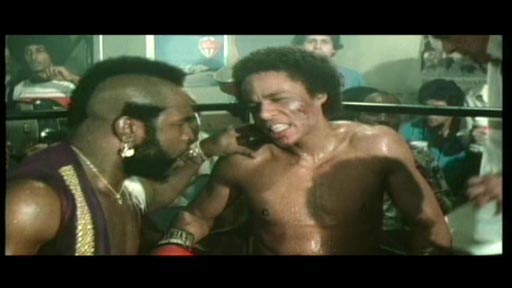


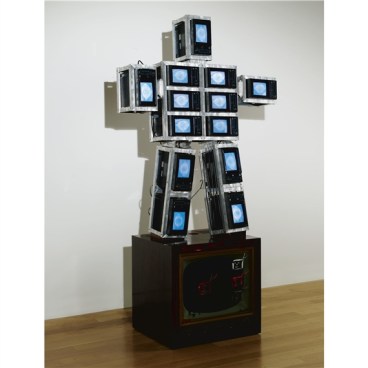





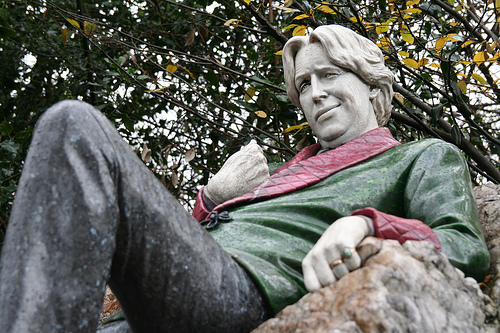






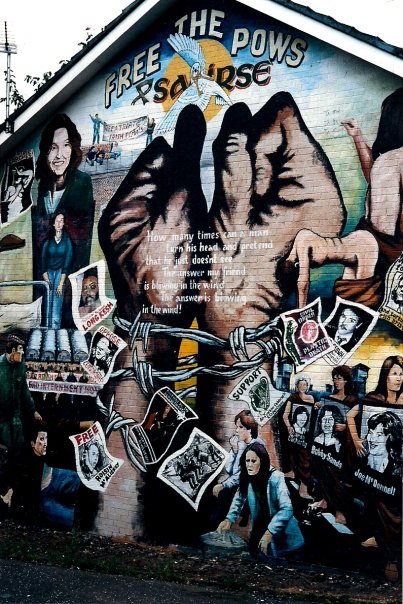



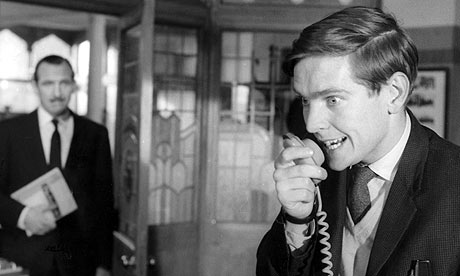

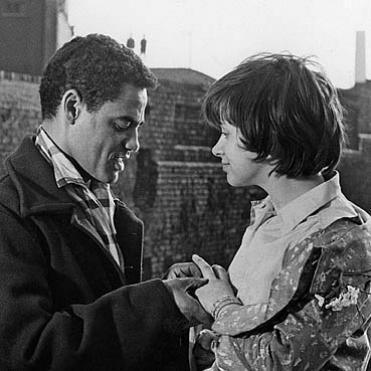












 with Kirk Douglas’ Midge Kelly, a boxer with a crippled brother and a unique ability to step on whomever he needs to.


 Was Tommy doing this in order to try to garner less attention (in which case he failed, as the choices he made only made the spotlight on him grow) or did he do this as part of a self-destructive plan, meaning he had more in common with his father than he thought? By negating his history, stubbornly denying the past and not participating in standard athlete’s ritual and behavior, his past caught up with his present much in the same way that Paddy’s did, and the conflict became unbearable.
 The next thing about this film is that it’s a musical. I’m a musical junkie. Rogers & Hammerstein. Tommy by The Who. They all work for me. I love the singing, the dancing, all of it. But there is nowhere better to be fully entertained than in the old movie musicals where people could REALLY sing and dance. Could you imagine if today’s stars had to have the same kind of training in order to become famous that
  Finally, there’s the Michael Curtiz thing. I never knew this until I was much older and an educated cinephile, but the director was Michael Curtiz. Hello! UH, Mildred Pierce (1945)! The Adventures of Robin Hood with Errol Flynn (1938), Angels with Dirty Faces (1938), and, of course, everyone’s favorite Casablanca (1942)! So…ya know, it’s not like they just had some hack doing the film.
 Movies Are My Boyfriend