Richard Matheson is Legend

I have rabidly consumed the works of Richard Matheson all my life and I am devastated to hear that he has passed away.

Matheson changed the landscape of my mind, introduced me to true horror and tension in moving images and really created my tastes and interests in the more unusual and dark.

In full disclosure, while I have always been a huge reader, I made a huge mistake as a kid. I didn’t read Matheson’s literary works until I was much older and I still haven’t read enough. A part of me feels like I was exposed to him by proxy. My childhood consisted of inhaling Ray Bradbury’s works, and they were in the same writing club. There’s a little bit of closeness there, right?

And really? To my mother’s disappointment after my tantrum over demanding the UNABRIDGED version of Les Miserables in the bookstore, I could NOT get enough of Stephen King. Although to be honest, there are certain similarities to be drawn between French revolutionary youth movements and Carrie…who’s with me?? At any rate, King readily admits to Matheson’s strong influence, and as an adult and more critical thinker, I do see his argument. The first time I was ever exposed to Richard Matheson’s literary work, I Am Legend, it had been adapted by Steve Niles in graphic novel form. The comments people kept leaving in the reviews were “really wordy for a graphic novel” and “I dunno, lots of reading for a comic” which made me think that much of the original text had been kept in. I was definitely in. One of my pet subjects is comic book adaptations and its connection to the archeological concept of the palimpsest (another post for another day), I found this work even more intriguing. The graphic novel was really good, I enjoyed Niles’ art and (no surprise to anyone familiar with Matheson or my tastes) the story is phenomenal. I’ve revisited it many times since.

i-am-legend-000fc

Before that, my main point of reference for Matheson has always been that I have been a life-long Twilight Zone-addict. In fact, I don’t remember a year when I didn’t run to my parents’ room and jump on that big bed that got gradually smaller as I got older to watch the marathon. It was Matheson’s episode “The Living Doll” that gave me my strange adoration for children’s dolls and Telly Savalas and it was most certainly the “Little Girl Lost” episode that scared and excited me every night before I went to bed. And, of course, who can forget perhaps the most parodied TZ-episode ever, “Nightmare at 20,000 Feet”?  Matheson’s skill at flipping domestic situations into ones that would frighten or, at the very least, unsettle the most steely-nerved soul is unreal. If you still don’t believe me, watch the episode “Mute.” I’m a huge Buffy fan, and I enjoy the hell out of the episodes on that show that play with standard forms of verbal communication but…”Mute” will knock you sideways. Why? Because it’s MATHESON.

My name is Talky Tina... (THE LIVING DOLL, S5, Ep6, Orig air date: Nov 1, 1963)

My name is Talky Tina… (THE LIVING DOLL, S5, Ep6, Orig air date: Nov 1, 1963)

Director Edgar Wright had a film festival back in 2011 at the New Beverly. He talked about all the films he’d never seen and how exciting it was to get to explore these titles, these classic and beloved films that people had a strange “OMG, you’ve never seeeeeeen thaaaat???” reaction when he said that he hadn’t had the pleasure. While I deeply, regretfully, heartbreakingly mourn the passing of this genius of a man, I am looking forward to getting gut-deep, ears-deep, pig-tails-deep into his literary works. It is a formidable library and one I know that I will enjoy like the most delicious creme brulee (and OHMAN, do I love creme brulee). To me, it will make this man stay visible, stay alive. In my experience as an archivist and preservation scholar, this seems to be one of the most vital and earnest methods that we can use as admirers of a given artistic work or individual to keep them alive. It’s why I do what I do. Which brings me to my next point: The Incredible Shrinking Man (Jack Arnold, 1957).

Many people do not live long enough to see one of their moving image works become recognized by the Library of Congress and the National Film Registry. In 2009, Richard Matheson’s film, The Incredible Shrinking Man, adapted by him, from his own novel The Incredible Shrinking Man, was chosen as one of the films marked for preservation due to to its “cultural, historical or aesthetic significance.” As the National Film Preservation Board has written about the films that they choose on a yearly basis, “These films are not selected as the ‘best’ American films of all time, but rather as works of enduring importance to American culture. They reflect who we are as a people and as a nation.” From my experience (and if I am wrong, please forgive me) I believe that this is what Matheson does best. His exposure of the darkness and the weirdness of normalcy is what makes him so fucking great. How do you make a cat frightening??

You’re Richard Matheson, that’s how. Not only does Shrinking Man reveal issues of masculinity and the domestic environment of 1957, but it does it way before its time. I generally get irritated when people continually harp on about figures being “so ahead of the game” and doing things so “before their time” and, as a point, I make a valid effort not to do it very much. But with Matheson, “pre-game” seems to have been his middle name.

I had the privilege during my tenure as the curator of the Something Old, Something New film series at the New Beverly Cinema to play Incredible Shrinking Man in tandem with Innerspace on a double-bill that I called “Size Matters.” Joe Dante came for a Q&A, discussed Matheson a bit, and our audience, many of whom were there primarily to revisit Innerspace, was absolutely floored by Shrinking Man. As someone who admittedly gets high off exhibiting films and seeing pleased faces, this was my heroin. Overhearing people talk about “the old movie” actually being “really damn good, dude” made my heart soar. Mr. Matheson, your works still work. And they always WILL.

It is so very rare that figures like this come through the world. Salvador Dali worked in film, animation, sculpture, painting, etc., dead-set on taking any straight-ahead visions of creativity and art and cooking ’em until they were twisted and flexible like spaghetti. Ray Bradbury worked in comic books, film, stage, television and literature (of course), introducing entirely new worlds and atmospheres to our media culture and yet…making them ultimately accessible. Who knew that we could speak the same emotional or intellectual languages as people from other planets? Mr. Matheson, you too worked on revelations and explorations. Fear of the known, fear of the familiar, fear of the self, fear of isolation. How to truly examine horror and what is horror anyway? Many have argued about what the antagonists are in I Am Legend. To me, it simply doesn’t matter. It’s about the story and what lies beneath. What is Matheson actually trying to TELL us?

This is just one woman’s opinion and semi-eulogy on a day I find rather heart-wrenching. I really wanted to meet him. I don’t have too many heroes. He was one.

Dear Richard Matheson, thank you for giving me the ability to appreciate horror, fear and tension in an intelligent and creative way. You taught me how to look at them from the alternative, multi-layered angle. For that, and much more, I will be forever grateful.

Ariel

The Happiness of Failure & Graduate School as Ghost Protocol

Yesterday I passed the exam that said that I am now 100% eligible to take a job in my chosen field of moving image archiving.

Not only is this thrilling and a feat of accomplishment, it is a dream come true. However, I also feel like Ethan Hunt in 2011’s Mission Impossible: Ghost Protocol. At one juncture in the film, injured and beaten to shit, he falls to the floor and growls, “mission accomplished.” Later he expresses surprise that he even said this. Oh, the metamess or metaness of it all.

In a way, there were times when I felt like this second shift in graduate school was my Ghost Protocol.

The independence that Ethan Hunt and his cohort had to work with, the disavowal of the IMF, the continual pursuit of a goal for the betterment of the world…these were all things that I deeply identified with. I don’t think that my cat knew that he was on a moving image archivist rock ‘n’ roll grad team, should he “choose to accept it” but…hey. As my friend Ray would say, I had the ability to make the metal meat mice happen for him. He accepted the mission willingly, if, for no other reason, than he was able to walk across my keyboard at key moments in my digital restoration examinations and planning for film series curations.

Fighting for what you believe in is hard work. Ask Ethan Hunt. Being disowned/disavowed by your organization for the betterment of the Mission is tough. But Hunt moved forward. Not taking no for an answer. Amazingly enough, I did the same thing. I will tell you that I was absolutely not feeling it when I did so. There must be something in my DNA that drives me to do so. But I believe, more than anything, that it is my love for the job and my love for film preservation and restoration itself that drove me to get back up when I got blasted out of the water a few weeks ago.

I failed my grad school exam/portfolio defense the first time.

Holy shit. I was CRUSHED. This was my everything. Watching others in my year be so enthusiastic about passing with distinction and then…I sat there, sobbing. Two years. Working so hard. The worst part was…I knew exactly what I had done wrong. But there was nothing I could do to fix it at that point. Not only that, but I had a show to put on that night! It was the final screenings of a film series that I had spent the entirety of my film archiving education curating. I had to be fresh-faced and enthusiastic, the way that I normally am, not gutted.

By the time we reached the theater, I was composed and the screenings were phenomenal. Perhaps the best events I’ve organized thus far in my career.

This has been an inordinately difficult year for me. As Townes writes in this song,

We all got holes to fill
Them holes are all that’s real.
Some fall on you like a storm,
Sometimes you dig your own.
The choice is yours to make,
Time is yours to take;
Some sail upon/dive into the sea,
Some toil upon the stone.

The one thing that got me through everything was the Moving Image Archiving Studies program at UCLA and what I was working on there as well as the different projects that I was planning for the AMIA Student Chapter. From my previous days as a teen HIV/AIDS educator, I knew that activism was my preferred method of working. But it is not everyone’s. My passion gets my work done and gets things changed and lets me know that I will see results. But it got in the way this time and did not allow me to look at my graduate experience critically. Equally important, it blinded me from being critical of my creative or academic work. This was a major problem.

Failing was one of the better things that has happened to me.

While the above paragraphs do not show as much, it has improved my writing, it has humbled me and it has given me new heroes to follow. One of the films I played that fateful weekend was The Times of Harvey Milk (Rob Epstein, 1984). He failed four separate times before being elected to office. I have recently been doing some research on playwright and author Samuel Beckett, and his work was considered “unpublishable” and rejected from innumerable places before he hit the jackpot. Upon my initial receipt of  the failing grade, one of my mentors, Dennis Doros of Milestone Films responded kindly, saying I should take it in stride. Academy-Award-winning archivist Kevin Brownlow failed many times before he got to the marvelous place he is at today as did he himself.

Depression is a nasty disease and tricky to work with in dark situational moments like this. And I am not one of those people who likes to hide things. Frankly, if I did, it would be unhealthy for me. I have had various health complaints since I was a kid, and they are odd and I have had to tell my employers and friends about them so that it wouldn’t be an issue. My epilepsy is something I have come to terms with now and I have started to try to get comfortable talking about my depression too since I have begun to suspect that, since they are both located in neurologic segments of the brain, they are having some kind of party and making decisions without my control. I am cool with talking about it. What I am not cool with is wanting desperately to deal with failing what I feel is the most important exam of my life and desiring to bounce back right away. It is very frustrating. I hate being frustrated.

Once again this was an area where I felt like it was Mission Impossible:Ghost Protocol. I wanted so badly to reach out to someone, anyone, but…I was on my own.

However, the things that I learned were so amazing that I wouldn’t have done this ANY OTHER WAY.

My writing will now be going through so many drafts if it is going anywhere. What you are reading now is an example of the exercise I discussed a few days ago, “Writing the Don Roos Way.” My speech and presentation work will be less vague and a great deal more professional. My thinking will be more critical and many things about my work will be more concise but equally as powerful. I plan to remove the wishy-washyness that has been present within my work and make real focused statements. After all, I have 2 degrees from a very heady institution that say I am allowed to do so. I believe that I may say these things and to hell with anyone who says the opposite.

It’s about using failure for success and restructuring pessimism for optimism. I believe in the power of words and writing. I also believe that we are the ultimate self-babysitters upon becoming adults, especially for women and the marginalized. If you want to have power or to feel that you have power, write it into your work. Change the pronouns, clarify your sentences, give yourself more credit, have conversations about a) what you really wish to say as a writer or speaker, b) who you want the reader/audience to see you as and c) what actually happened. Are you seeing/interpreting/writing the piece up in a certain manner due to gender/social inequities? I do that. I have been known to have less confidence in my work because as a woman I am socialized to take less credit and to be more “maybe/kinda” than “absolutely/yes.”

The  happiness of failure has led me to passing the exam yesterday, reconsidering how I use pronouns, and never wanting to open a sentence with “however” again.

I am a strong woman with many awkward cracks and hiccups in my interior. But I will be walking the graduation path on Friday in my cap and gown in the name of my mother, grandmother, father, godfather, myself, and the thing that has kept me going this whole time: FILM’S FUTURE.

And when I come off that stage, my first two words will be “Mission Accomplished.”

The Importance of Outfest and Writing the Don Roos Way

My godfather is a writer. Thus, like many of the writers I know, he is full of quotes about writing.

During one of our many conversations about how much I Iove it, how much peace it gives me, how triumphant it makes me feel, how engaging it is to me, as a woman and as an intelligent human being, I remember us debating over the Dorothy Parker quote:

“I hate writing. I love having written.”

I, myself, am not this way in the least. I love the process of putting a piece together. Much like the three witches in Macbeth, I take great pleasure in my cauldron and my word “soup,” I love the way that I am allowed to make things “flowery” if I wish or casual and quirky if that is my intended goal. I love putting my voice in there because writing is my chosen artistic expression.

My little brother is a DJ up in San Francisco (and a very good one, she adds, with devoted sisterly pride). The sweat that pours off the dancers and enthusiastic fans that flock to his booth and to him is inspirational. I can only hope that my writings can inspire that kind of excitement in a reader someday. I say a reader because as a teenage HIV/AIDS educator, I was taught one very important lesson that, 22 years later, I have kept with me and remember daily, if not hourly: if you reach at least ONE person, your work is done.

This is a very difficult thing to remember in a world such as ours where we are dead set on the monetization of artforms and we are in positions where instead of reveling in our positions as writers/creators/film critics, we must choose situations that are exhausting and do not leave us enough time or energy to realize the WHY of our work, only the how  and the when-does-this-need-to-be-in-by.

Last night I accompanied my godfather to the Writers Guild of America, West for an event presented by their Gay & Lesbian Writers Committee. There were many reasons that I wanted to go. For one thing, it was focused on participants from the OUTFEST Film Festival, a film engagement that I passionately believe in and have enjoyed works from consistently over the years.timthumbAdditionally, it was looking at several aspects of Outfest beyond the film festival itself: the writers, participation and development of the Outfest Screenwriting Lab, and indie filmmaking in the queer community. Furthermore, it was moderated by Alonso Duralde, someone who is not only someone I personally think is fantastic, but highly admire in a professional context.

AlonsoDuralde-2

Alonso Duralde, Senior Programmer of Outfest, Senior Film Critic at The Wrap, co-host for Linoleum Knife podcast and regular on What the Flick?! (Young Turks Network)

The program gave me more than what I bargained for and is partially why I am sitting here. But I will get to that later. First, a few issues came up that not only fascinated me but made perfect (if tragic) sense. To lay it out best and relate what I feel are the most critical points of my experience last night, as a writer, as an archivist, and as a woman, I am going to catalog it using sections.

Marginalization Within Marginalization

There was a fascinating discussion about the idea of “whiteness” in the queer moving image community and whether certain writers were working to change that and how. Doug Spearman (Hot Guys with Guns) spoke to this issue, while he mentioned his TV work on Noah’s Arc, what I found particularly important was the mention of breaking boundaries and representations of realities that were not single-ethnicity-ed. Spearman mentioned interracial relationships as part of work he had been involved with and that extending those ideas could only extend diverse concepts of the queer world thusly giving a far more realistic view of the world that we live in.  Listening to this, it was hard. It’s unfortunate to consider that many of our filmic materials, whether queer or straight narratives, seem to stay well within the lines of ethnic and cultural groups “sticking to their own.” It reinforces ideologies and tropes that we should breaking free from.

Adelina Anthony‘s perspective was wonderful in this perspective. She spoke of the usefulness of the theater community and the stage when the moving image world was, to be perfectly frank, trying to pack her wonderfully expansive ideas into their small cages. She spoke of being told to make things “less Latina” or being asked to “tone down the Lesbianism” and other situations requiring her to completely remove her identity from her creative work. Anthony said that the stage and her work with theater has never required her to do so. While she is preparing to move back into moving image/filmic realms, she also mentioned her significant pride in being able to maintain her own identity the whole way through. And the fact that Genevieve Turner (another panelist)’s movie Go Fish was an inspiration to her own coming out story (I have to say- that part was really adorable!).

Outfest as a Writerly Tool and Growing Force

The panel discussed the Outfest Screenwriting Lab, which various people had participated in as mentors (some, as Guinevere Turner quipped, referring to herself, for many years) and others had as “mentees.” The process was laid out clearly and while it was reminiscent to me of the Sundance Screenwriters Lab and it had crucial differences. One of the differences was laid out in the first few minutes of the panel when each filmmaker was talking about their early experiences of queer cinema. Issues such as first viewings of William Friedkin’s Boys in the Band (1970) and panelist Barry Sandler’s pioneering Making Love (1982). What was vital in this instance was not only the experience of seeing queer representation on a screen that had been either underrepresenting or poorly representing the LGBT community for its entire history being able to carry that experience over into future creative endeavors. While the Sundance Screenwriters Lab has a focus on independent cinema, and I have some certainty that the participants may have had life-changing experiences with independent films that also deal with marginalized groups, when I sat there last night…I felt the importance of Outfest itself and this lab.

There is a saying that someone told me when I was a kid and doing all my peer education work. I have no idea how to source the quote – all the information I can find on it seems iffy at best – but someone nice told me it. And it’s a good saying: “Each one reach on, each one teach one.” To me, this seems to be the ethos of Outfest, especially how it was displayed on that panel.

During the question and answer section part of the evening, a young man stood up and asked a question. He was from Outset, the youth filmmaking division of Outfest. It struck me at that point that not only was Outfest a festival where one could find entertainment and access to marginalized images on the big screen, it is, for many film professionals, a centralized agent of personal entry to the larger media world.  For a community that has never had that before, being able to start from the ground (teens), move upwards (young professionals) and possibly make to the silver screen is pretty exciting. Unlike Hollywood on the whole, what I noticed on this panel, when discussing people’s experiences with the Lab or the applause for the young man from Outset or sharing of information about what works/doesn’t work for crowdsourcing a film, was support and positive reinforcement.

It was inspirational to hear June Diane Raphael talk about not completely giving up on her project when it was delayed for two years or when folks in Hollywood told her that horrific thing that I have heard many times before: well, women will follow a male narrative, but men will very rarely follow a female narrative,  and there’s really no market for that so…you may want to rethink things. The men and women on this panel were not only experienced and informative but smart and clearly cared about the work. To me, there is nothing more beautiful. So many people seem to make things that they clearly don’t care about. In a perfect Ariel World, we would all be able to get paid to make these amazing works that are full of the passion and determination that has been with us since we were children. Damn the box office! The box office is not a gauge of film calibre! Then again, I also wish to live in the Shangri-La of Frank Capra’s Lost Horizon most days too, so…ya know…

The queer film community needs Outfest and Outfest is growing. This can only be good. The effect that they have on queer youth and creative people in the LGBT community through their various projects can only help and from what I was able to grasp last night and see in the way people engaged each other on the panel, this structure is one that can only flourish. I believe this will do the entire film festival community a hellovalotta good. Outfest puts out work for everyone and work everyone should be seeing, queer, straight, asexual, pink-polkadotted fetishes, who cares.

Writing the Don Roos Way

One of the many times I went to go see John Waters do his speaking engagements, he described his writing ritual. He gets up every morning, puts on a particular set of comfortable clothes, goes and sits at his computer (might’ve been a typewriter, but I think computer…I think I’m wishing it was a typewriter. More romantic!), and writes for a few hours. Then he shuts it down, and begins his day. EVERY DAY.

I said to myself: WOW. I should totally try to do that. Write at least a little bit every day. A journal entry. Something. Just ritualize it, make it happen, just do it. But make it part of my chores. Because then I’ll have at least accomplished something. Plus…going back to the Dorothy Parker quote, I love the hell outta writing. So, however many months later it is now, and…I have not made this part of my ritual.

SURE, I have had graduate school and I had a regular weekly column where I was writing a ton (which both counted in their own ways) but I was not writing every day. Nor was I reading every day. But that’s another entry. Tomorrow?

Skip forward to the last question of the evening last night, put forth by Kristen Pepe (KP), director of programming at Outfest. She inquired of the panel about their writing processes. The discussion had shifted from filmmaking and screenwriting and begun to focus quite a bit on monetary issues and KP brought up a very salient point: without the talents and writing skills of each of the individuals on the panel, they would not be in a position to go ask for monies for their films or attempt the projects in the first place. How did each of them write?

Everyone had different answers and different methods that worked for them, many of which were small edits on things I had heard before. However, when Don Roos discussed his writing process, something clicked and I liked it. A lot. He stated that as writers, one of the hardest things that we deal with is being able to feel good, feel accomplished, feel 100% on top of the world on a regular basis. He gave the example of a dry-cleaner. As a writer, it’s not like we have anything concrete that we can do/look at/see at the end of the day and say, “man! I finished dry-cleaning all those shirts! I’ve had a great day!” Our successes are far more infrequent, far-between, personal and amorphous.

OH MY GOD. Hello, 80,000 lightbulbs dinging above my head. Don, you are speaking my language!!

He went on to say that in order to combat this, you really DO  have to write every day. [Well, now that you put it that way…]

He said that he puts a timer on and for an hour he has two things up on his computer: whatever project he’s working on and a “journal/blank page.” And he writes. For an hour. No phone, no internet, no interruptions. That blank page could be filled with stuff like “I hate writing, screw today, ugh this is dumb, I don’t want to go grocery shopping, I’m pissed of at so-and-so” or whatever. But eventually, he says, he gets so tired of writing over there that he returns to the project page and gets work done.

The other panelists had some variations on this process, but the one thing that almost all of them agreed on was writing every day. While I don’t want to be a filmmaker or Hollywood successful, I would be happy to be a better writer. I think it would do my head good too. So this is my first day of Writing The Don Roos Way. I have been writing since 11:08am. It is now 2:00pm.

I’d say it works. It also works because I also was able to get my thoughts out about a great experience I had last night and document them properly. As many of you know, I am a soon-to-be-graduated moving image archivist, so documentation is of the utmost importance to me. Listening to Don’s words had significant value to me as far as the documentation of my life or historical events are concerned. In this virtual/weblog world, we now have the capacity to do multimedia documentation. Writing every day also means collecting images and doing research.

It may become a challenge for me to keep it down to an hour. But perhaps that is my challenge. And as anyone who knows me well knows, I’m always up for a challenge!

The Belfast Project: An Archival Study

A note from the author on March 17, 2013, St. Patrick’s Day:

This piece was written for a class in the Fall of 2012. Things have changed slightly since then. Dolours Price has tragically passed on and Boston College moved to vacate the issues pending due to her no longer being alive. The political folks have (bizarrely but not unexpected, I suppose) opposed their motion and the case is still pending. Things are still very difficult in this case and while some people understand the importance of this history, politicos and powerful locals seem to want to play librarian. It’s a very sad state of affairs. I highly suggest that you follow their twitter account ( @bcsubpoenanews) or their blog (http://bostoncollegesubpoena.wordpress.com/) to keep up to date.

–Ariel

400950_409627682427505_579970258_aOne of the most fascinating and significant things about the city of Belfast in Northern Ireland is that it advertises the concept of memory and looks at history as not simply a collection of culture and events, but a lifestyle. Belfast’s walled roads, blockaded pubs and mural-bathed buildings serve as a continual reminder of a past that has only just recently changed course and is only scarcely managing to hold on to their footing. To do Northern Ireland and history, herself, justice, it would be next to impossible to go into the entire story from the very beginning and cover all the important parts. To the inhabitants of Belfast, every story from the Great Hunger in the 1800s and the Easter Uprising in 1916 to Bobby Sands’ hunger strike in 1981 is an important part.

Bobby Sands died after 66 days of hunger striking, at age 27. He is commemorated here. He was a political activist, poet, and was the leader of the 1981 Hunger Strike, where 9 other Irish republican prisoners besides himself died, attempting to fight for Special Category Status (essentially POW-type privileges).

Bobby Sands died after 66 days of hunger striking, at age 27. He is commemorated here. He was a political activist, poet, and was the leader of the 1981 Hunger Strike, where 9 other Irish republican prisoners besides himself died, attempting to fight for Special Category Status (essentially POW-type privileges).

It’s a complex timeline full of conflict, sadness and revolution, beginning all the way back in the 12th century. For a situation of this magnitude with this duration, the idea that the peace agreements were only recently endorsed in the Good Friday Agreement of 1998, with the IRA Decommissioning weapons in 2005 is heartbreaking. In any case, this violence that has only just been halted was begun quite a long time ago, and once started, it never let up. As Landon Hancock writes,
“Like most cultural differences, the roots of the Protestant-Catholic enmity in Northern Ireland are buried in the distant past, with fresh incidents only serving to reopen old wounds and solidify negative stereotypes…The Catholics still feel as if they have an alien culture living amongst them. This feeling has been enhanced through the separation of the two communities and the continued enforcement of the Special Powers Act of 1922. This act, designed to combat IRA resistance to Partition, was left in force until well after the beginning of the Troubles, thus perpetuating a climate of mistrust that has yet to be dispelled.” (Hancock 1996)

It might be reasonable to simply say that the primary issues dealt with land issues and became associated with religious politics, and that the British governmental body, mostly of the Protestant persuasion, decided that their stance was the complete and total control of Ireland, both Northern and Southern. This is how it was legislated, colonized and designed, early on. It’s far more complex than this, involves many more disputes and a great deal more intimate details, but this is the main gist.

Additionally, the population was divided into two different sectors: Protestant and Catholic. While the entire country was made up of both religious groups, the most significant division had taken place when the Protestants colonized Ulster (a collection of counties we now know as Northern Ireland) in the 17th century, and caused endless amounts of fury and mayhem since it was the last location in the entirety of Ireland that had not had some mass settlement by the British Protestant population. Eventually, the residential make-up of the area was left as a bifurcated religious and cultural zone dominated by political unrest. This did not bode well for the future.
Helen-McKendry-has-fought-007

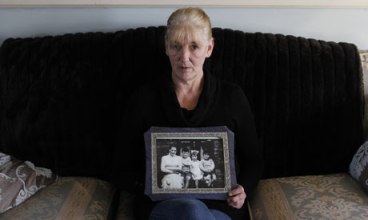
Helen McKendry watched her family get taken from her as a young woman

These past events have led to what most people refer to now as “the Troubles,” a term for the modern slate of events that has built Belfast and created Northern Ireland’s image and identity in the last 50 years. A campaign of bombings, murders, kidnappings and terror that involving the RUC (Royal Ulster Constabulary, the Northern Irish police force), the IRA (Irish Republican Army, the Catholic militant organization) and the UVF (Ulster Volunteer Force, the militant Protestant group) left innumerable people dead or injured, whether or not they had any organizational affiliation. Senior citizens, children, women and teenagers were all affected by the Troubles and hit just as hard by revenge-centered activities of a group like the UVF as they were by the revolution-minded IRA.

One such person who has suffered greatly as a result of the Troubles has been Helen McKendry, daughter of Jean McConville, a woman who was “disappeared” (a nicer term for taken away and killed) during the height of the Troubles, circa 1972. Only 15 at the time, Helen watched her mother get kidnapped by strangers and never returned. Helen has spent her whole life unsure of why it happened and most of it not even knowing where her parent’s body had ended up- Jean wasn’t found until August 2003, when her remains were located on a beach in County Louth. Then something occurred that has made Helen and her family feel that they might get a chance to see justice served. They discovered that the Belfast Project existed and that the participants quite possibly had direct information about Jean McConville’s death: many of those involved in the Project are former IRA members.

The Belfast Project

The Belfast Project was designed by Anthony McIntyre (a former member of the IRA), Professor (now Lord) Paul Bew (of Queen’s College) and Ed Maloney, (journalist and writer). It was never designed for exploitation, financial gain or anyone’s individual career benefit. At the heart of the Belfast Project was an oral history mission borne out of the truth recovery principles as stated in the Good Friday agreements and a very real desire to extend peace and conflict resolution experiences to locales outside of Northern Ireland. As McIntyre stated in a presentation to the Oral History Network of Ireland conference, the entire goal of the Project was
to ultimately enhance public understanding. This was to be achieved through collating and sealing for a time within academia the perspective of those who were combatants or people who had insights that would add to societal knowledge of the conflict… it was envisaged that the material would be of benefit not merely to historians but also to people involved in conflict resolution and policy making right across the board. If the causes of politically violent conflict can be better understood and anticipated in advance then it stands to reason that the potential for averting such conflict increases. (McIntyre 2012)
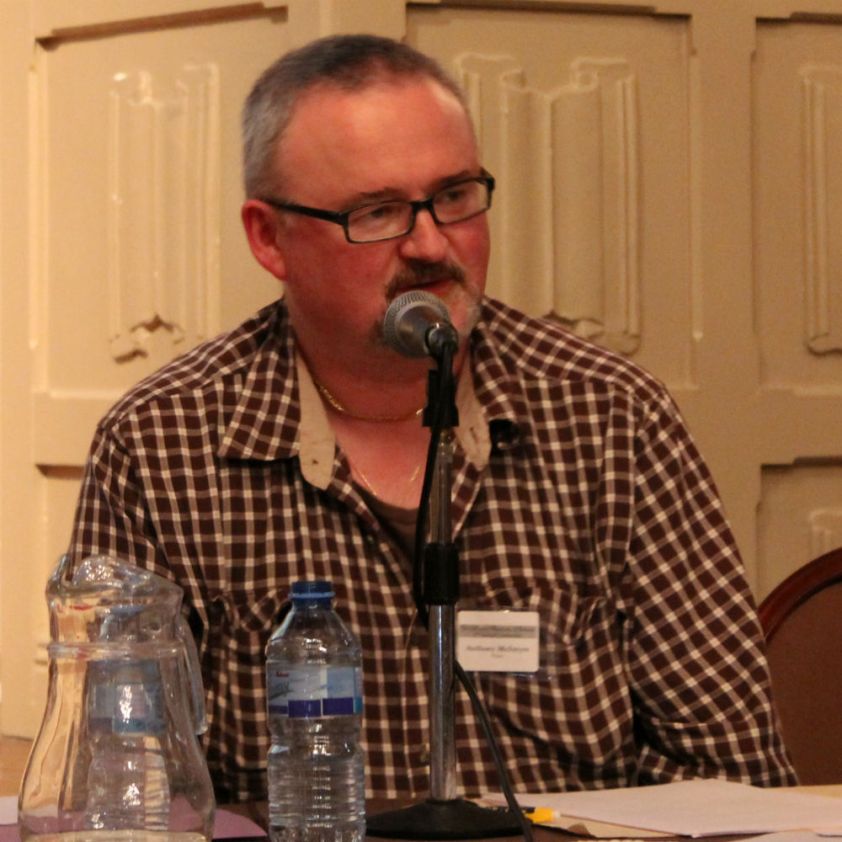
Anthony McIntyre of the Belfast Project

Anthony McIntyre of the Belfast Project

The Belfast Project, however, stood out in one very significant way: the participants in the oral histories were not whom you would expect. They were indeed deeply connected to the Troubles, but unlike the rest of the extensive work being done in regards to truth recovery shortly after the Good Friday Agreement went into effect, the Belfast Project is not centered on the victims. The focus of this archive is on those who were responsible and/or involved in the incidents that created this population of victims.

As part of the North Ireland Peace Process in the late 1990s, the Good Friday Agreement assisted in bringing about various acts and legal directives when it came to human rights issues and placed a certain level of attention on victims and political prisoners. According to the Ardoyne Commemoration Project, “in the political aftermath of the Good Friday Agreement, the ‘victims agenda’ came to the fore.” (Ardoyne Commemoration Project 2002) At this juncture, if the outside world thought things were complicated before, they were about to get even more intricate. In order to have a go at resolving a conflict that was hundreds of years old, decommissioning weapons was not going to be the only solution. There simply had to be a better method by which the governmental bodies on both the UK and Northern Irish sides could succeed. Their ultimate decision was to legislate primarily for future engagements and simply move forward from what had already occurred. While some steps were taken to immediately change certain situations of those effected by the Troubles, not all were widely palatable (the accelerated amnesty and early release of political prisoners became a matter of some contention).0,,1662953_4,00

The Good Friday Agreement seemed to be attempting to make use of the axiom, “forgive and forget” in a location that is extremely focused on cultural memory. The notion of forgiving is not easy when you have a tradition of not forgetting. While Ryan Gawn writes that this approach is “not abnormal in negotiations in transitional societies” he also shrewdly notices that this same approach that lacks in the study of past abuse “recognizes the distinct nature of the conflict in Northern Ireland where more deaths were committed by paramilitaries, who are unlikely to have information on the murders documented as well as other state-committed murders. This has meant that there has been a failure to engage systematically with the past in Northern Ireland…this lack of action in addressing the past has meant that the issue has become politicized, and now victims’ issues are often fraught with division.” (Gawn 2008)


Almost in response to this, it seems, a cluster of booklets and studies began to be produced on truth recovery and victims on both sides of the sectarian conflict. This literature centered not only on bringing people together, but also on ideas of memory and remembering that authoritarian figures had been just as active in causing the deaths and injuries of friends and family, as had paramilitary groups. Truth recovery became a key issue- in 1999, the Healing Through Remembering Project was created. Their goal was to undertake a consultation process on how Northern Ireland, and those affected both in and out of Northern Ireland could remember and deal with the past, and in doing so, move towards healing. The purpose of the consultation was to produce a document outlining a range of options for dealing with the past and truth recovery, to be submitted to the British and Irish Governments and Office of First and Deputy First Minister, and to the public. (Healing Through Remembering 2002)

Their outline included memorials, memory days, establishments of archives, the forming of groups around shared pasts, and oral history collecting. However, it was all intended for public use due to the nature of the materials. These truth recovery items, while intended to reach across the “Belfast Borders” and break barriers, maintained open access and relied upon a relationship with the average citizen: they advertised in newspapers and other public forums for participation.

From there, digital archives such as The CAIN (Conflict Archive on the INternet) were begun at the University of Ulster in order to house these materials online and it became a solid public source for people to access a variety of links, bibliographies and other academic work about “Conflict and Politics in Northern Ireland,” and it gets updated regularly. (University of Ulster 1996) But there was still something missing. While there was still a sense of moving forward with the peace process, and people could share and learn about the history and work with each other, the history of the Troubles was missing a very important component: the voices of the main actors. Enter the Belfast Project.

Anthony McIntyre spent 18 years in jail as a former Provisional IRA Member. Upon his release, he attended Queens University, Belfast and received his PhD, afterwards becoming a journalist and writer. Shortly after this, he was approached by a professor at Queens College about a project that they were working on that had to do with truth recovery as well- but via the other end of the telescope. This was a very dangerous and tricky road to tread. While anyone can put an advertisement in a newspaper or educational institutional about an oral history project centering on citizenry that has been effected by the Troubles, outreach to former IRA members or folks from the UDA/UFF (Ulster Defense Association/Ulster Freedom Fighters) is far more complex- much like the Mob, if you’re an IRA member, and you “rat,” your life (or your family’s) could be in danger, even now, during a ceasefire/peacetime. While the conflict has been “resolved” for the most part, the history and culture of Northern Ireland has some uncomfortable aspects. This is one of them.

Then there's the UFF murals. Scary, intimidating, also intense. It was a real distinct change to go from one type of mural to the other.

In 2001, just three years after the Good Friday Agreement, The Belfast Project was created with McIntyre as the head researcher and historian and journalist Ed Moloney as Director. The archive was carefully housed in the Burns Library at Boston College in Massachusetts, a University with a well-known and respected Irish Studies program. The fit seemed ideal. They focused solely on getting the oral histories of former IRA and UDA/UFF paramilitary figures; an everything was going to plan. Their goal was to collect the oral histories of this population because they had not had a voice yet and while this population might be quite a bit less popular in the public eye and far more controversial, their historical importance was incalculable. The men and women in these groups would be able to put words and explanations to something that had no explanation and possible assist in other cultures conflict resolution just through discussing their own lives.
However, in order to get these individuals to become part of the project, they had to secure their trust. According to Laura Millar, “Citizens will only offer their trust if they feel it will be respected and safeguarded. An effective society expects those who can exercise their authority to be accountable for their actions; an honorable society then protects those without authority, such as children or the mentally ill, against the danger of abuse.” (Millar 2006)

While these former IRA revolutionaries and UFF soldiers may not have been children, they were in a vulnerable position: if anyone were to know that their stories were being told, it would have been bad news for their families and themselves. Not only had they sworn oaths to their organizations, but it is quite likely that what was to be revealed on the tapes was not only naked and honest oral history, but vivid stories of car bombings, murder and stories that might implicate other people.

In order to gain that trust, the men and women of the Belfast Project signed a donor agreement (standard archival procedure). Within the agreement was a promise that the entirety of each interview would stay completely confidential until the death of the donor or until they gave personal approval for release of contents. This was the contract that the archivists and donors entered into upon starting this project. As Robert O’Neill, director of the Burns Library, stated in regards to the tapes, “Given the sensitive nature of the information revealed by the interviewers, it was important from the start to assure the participants in the oral history project that every effort would be made to keep their participation confidential, and that no transcripts or tapes would be released before the deaths of the interviewees unless they gave formal permission to do so.” (O’Neill 2011)

The Boston College Archive took good care of the Belfast Project for a decent amount of time, and the men worked with their subjects. The oral histories grew and things were going as planned. Until two things happened: two of their interviewees, Brendan Hughes and David Ervine, died, and one of the women they had interviewed, Dolours Price decided to speak out about the Belfast Project and her story outside of the context of the protected archival arrangement. Upon the deaths of his subjects (Hughes was a former IRA member and Ervine was in the UVF), Ed Moloney took the interview tapes, transcribed them, and published a book, entitled Voices From the Grave. This was in no way illegal, unwarranted or going against what the agreement had stated. Hughes had explicitly said in his interviews. But the things that he had revealed in the interviews and thus in the book began to stir up trouble. Dolours Price decision to go public didn’t help matters any.
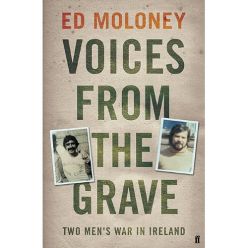
voicesfromtheGrave

Voices From the Grave was published in 2010. It was the first public “outing” of the Belfast Project and the first access that anyone other than those involved had to the stories being told. The biggest tragedy of this piece of literature was that, while it was the first in what was intended to be a series of volumes documenting a “greater understanding of the dynamics behind conflict from the point of view of those who participated in conflict” (McIntyre, Prime Time looks at the controversy over the Boston College interviews 2012), the publication of this led to what seems to be the demise of the Project. What were revealed in the pages of the book were terrifying stories of IRA and UVF-related murders and destruction. People were killed, ordered to be killed, bombings were planned, carried out, and Brendan Hughes and David Ervine discussed it all.

Beyond detailing organizational structures and the events themselves, the biggest “reveal” in the book was the involvement of current Sinn Fein President, Gerry Adams. While Adams had been a political figure his whole life through, involving himself in various organizations over the years, upon the release of these interviews, Adams has denied having any affiliation with the IRA at all or having ever been a member. While Adams has never refuted the idea that he had a relationship with Hughes, his complete repudiation of IRA ties and involvement seem remarkable to Hughes himself as he stated with absolute insistence that “I never carried out a major operation without the okay or order from Gerry. For him to sit in his plush office in Stormont or wherever and deny it, I mean it’s like Hitler denying there was ever a Holocaust.” (Moloney 2010) tr3_42403sThe implication of Adams in the abundance of violent acts that Hughes discusses, including the murder and “disappearance” of Jean McConville, alarmed Adams to the point of his direct rejection of the book and its contents, intimating that Hughes was likely unwell at the time of the interviews. But, as Lindy McDowell writes, this seems highly unlikely. She says, “[I]t is not a great defense… Not least because those who have heard tapes of Hughes’ testimony (which we’ll all hear in time, via an upcoming television documentary) say he spoke robustly and lucidly. Ed Moloney points out: “When he did these interviews, he (Hughes) was perfectly fit, mentally and physically, and put in quite an impressive performance.” (McDowall 2010)
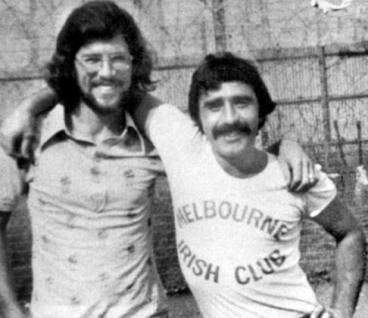
Aside from the Gerry Adams issue, the disclosure of the information about the McConville case caused Helen McKendry neé McConville to seek out more information about the murder of her mother. Now that the Belfast Project had come into the public eye and direct connections had been made to personal lives (the McConville family) and the political sphere (Gerry Adams), this archive and its contents were about to see their own “troubles” begin. Not only did Helen McKendry express her intentions to seek legal redress as a result of the new information, but shortly after this, a former IRA member, Dolours Price, gave an interview to Allison Morris of the Irish News, disclosing her own involvement in the McConville murder and other Disappeared cases, mentioning also that she had “made taped confessions of her role in the abductions to academics at Boston University.” (Barnes 2010) While Price’s decision to discuss her IRA activities in a public forum made her more at risk for personal attack by McConville or others, it in no way contradicted her agreemeDolours Pricent with the Boston College Archive. Price’s testimonials were still protected under the donor agreement that she had signed. Her choice to work with the Independent Commission for the Location of Victims’ Remains (ICLVR) and discuss her past was a personal one, and, while possibly catalyzed by the publication of Voices From the Grave, was also heavily tied into Price’s own post-traumatic stress disorder and other fragile health conditions that caused her (presumably) to start seeking some kind of personal closure on past events as well. Dolours Price, much like Brendan Hughes, also was not keen on the fact that Gerry Adams was seen as a squeaky clean politician, since he had been the man giving her direct orders as well, according to her statements. However, no matter what her impetus, her own words, as given to the Belfast Project, were under protection.

The Belfast Project Under Attack

Between Price’s actions and Moloney’s book, this issue and archive was no longer going to be let to go about its business. Not only was Helen McKendry passionately determined to get to the bottom of her mother’s disappearance, but other political bodies has started to have an acute interest in seeing what was in these tapes. The British government got in touch with the US District Court of Massachusetts and subpoenaed all materials having to do with Brendan Hughes and Dolours Price, to which the Boston College Archive said, “absolutely not” and quashed the subpoena. In the motion to quash the subpoena, many significant points are discussed, primarily in regards to confidentiality and trust. The subject of protecting the participants in the Project is raised, due to issues in and around the IRA code of silence, in addition to the belief that disturbing the archive and its contents may in fact disturb the very structure of the too-vulnerable peace accords. Boston College noted that the government of the United Kingdom has indicated by its actions a policy not to pursue events that occurred before the GFA peace accords, in order to put the past behind and achieve and maintain reconciliation in Northern Ireland…This effective amnesty, though controversial, was widely understood to mean that the British government was going to close this chapter of history, and not seek to pursue criminal investigations into events that occurred during the course of the Troubles…the belief that prosecutorial action had ended was a significant factor in the willingness of those interviewed as part of the Belfast Project to talk candidly about the conflict. (Swope 2011)

Although this stopped the subpoena temporarily, the ball had started rolling and it was just gaining momentum: in August, 2011 another subpoena was filed that requested any and all of the tapes that held information pertaining to the McConville murder.
It was after the second subpoena that Ed Moloney and Anthony McIntyre got personally involved alongside the Trustees of Boston College, who had been handling the legal affairs up until this point. They wished to be able to participate as plaintiffs and have a voice in the goings-on, so that they might be able to speak on behalf of their own work and argue on behalf of the archive and its much-needed confidentiality. Unfortunately, in December of 2011, a court ruled both against Moloney and McIntyre’s motion to intervene and the motions filed to quash the subpoenas. Then it got worse: the educational facility that had been providing the Belfast Project with safety and housing them in a secure space, Boston College, decided to acquiesce to any and all court requests.imgres Not only that, but they did so (at least partially) out of negligence. While Professor Thomas Hachey, executive director of the university’s Center for Irish Programs had flatly stated in the beginning that Boston College “is firmly and unconditionally committed to respecting the letter and intent of what is a contractual agreement never to release any of the material to anyone unless given permission in writing (notarized) beforehand by the participant, or until the demise of a participant” (Bray 2011), Boston College readily handed over all 176 transcripts of the 24 IRA participants in the Belfast Project. While McIntyre and Moloney were appealing decisions, Boston College moved forward with the legal requests, allowing the once-confidential confessions to be accessed by local American legal bodies. The next stage of this process would very likely be the patriation of these records to those individuals within the British government who are looking to use these records and the information that is contained within them.
As documented by Chris Bray, Boston College not only had a responsibility to the sanctity of the archive and its promises to the oral history participants, but it left the lead researcher and director of the Belfast Project in a terrible position as well, seeing as it did not support them or assist them in fighting this larger battle. Bray summarizes the situation,

“BC got a set of subpoenas, for material in its possession, on August 4. Ordered on December 16 to turn over the materials relevant to the subpoena, BC tried on December 20 to make a first effort to find out what materials in its collection were germane to the August 4 subpoena, with a hearing scheduled on the matter before a federal judge the very next day. August 4 to December 20: 139 days, including December 20…Not having figured out what material in its possession was germane to the second set of subpoenas, BC lost the ability to hand over only those portions of the IRA interviews.” (Bray 2011)

Moloney and McIntyre were able to win a motion for a stay pending the appeal to the first circuit and they also were able to gain the support of high profile individuals like John Kerry and the ACLU, but things are not looking bright. While Boston College did file an appeal on the more general request of the second subpoena, the First Circuit upheld the original judgment from the lower court, but Moloney and McIntyre immediately looked into trying to appeal this. McIntyre also filed for a judicial review in Belfast but was denied on that. But the case is not going to stay there. Both Belfast Project men have decided to take it all the way to the Supreme Court, and they have, seemingly, made some progress there.

According to the Boston Globe, “Supreme Court Justice Stephen Breyer ruled…that the order from the 1st US Circuit Court of Appeals in Boston should be stayed, the researchers said, while the researchers prepare a writ of certiorari, seeking a Supreme Court hearing of their case.” (Finucane 2012) That was just about 2 months ago. The most recent news on the case documents a petition for a writ of certiorari that was submitted to the Supreme Court as of November 16th, 2012. At the stage that the case is at now, Boston College has let a ground-breaking oral history project down and left its donor-participants adrift at sea, but the academic historians and archivists that created the project are going to try their best to make sure that the documents do not have their confidentiality broken any more than they already have been.

Transitioning these files to the UK would likely be the worst thing for the project, endangering not only the personal well-being of many of the people in the Project and the peace status of Northern Ireland, but it would severely compromise the area of oral history in general. If the Belfast Project is not able to protect their participants to whom they promised absolute confidentiality until death or personal release of the tapes, what does this mean for any other project that deals almost entirely with controversial people and subject matter? Not every oral history is rainbows and family trees. Many times it deals in the ugliness of human existence. But if we cannot record this with confidence and assure our subjects that their vital participation will be handled and archived according to the contract that they have signed, then we become useless. Our words are empty and our promises are futile.

Yes, But What Does This All Mean?

The Boston College Archive situation is not an easy one. No one wants Helen McKendry to go the rest of her life not knowing what happened to her mother; it is unfair and painful. But there is a larger picture and the Belfast Project and the decisions that are made within it set precedents- for oral history projects, for university-run and protected archives, and, most importantly, for the status and validity of confidentiality agreements within any kind of oral history or archival collection.

Anthony McIntyre is very firm on this issue. While some may feel that it is his past as an IRA member and his concern for his own personal well-being that has gotten entangled in the process of the Boston College Archive situation, he has said on repeated occasions that not only would he go to jail to protect the confidentiality of the participants, but that it’s not solely about the participants, but about larger questions and if we wish to see these matters attended to with any seriousness, we must treat them with dignity and not do as the university did, which was simply kowtow to legal requests because it’s easier and looks nicer on the front. Sometimes it’s more difficult to stand up for difficult issues and people, but if the people who have made commitments to protect them will not do so, whether or not they agree with their actions, then history itself will become one-sided and we will lose the ability to garner the kinds of oral histories that Moloney and McIntyre were collecting. Trust, once lost, can rarely be regained.

John Lowman and Ted Palys discuss the Boston College Archive case in terms of legal ethics and how the University failed the Belfast Project. As they put it, not only did Boston College exemplify the Law of the Land approach (academic institutions and researchers obeying all legal orders including court orders to break research confidentiality), they have also “provided an example that will be cited for years to come on how not to protect research participants to the extent American law allows. Instead, it has allowed its Law of the Land doctrine to devolve into a form of caveat emptor…As is so often the case with advocates of Law of the Land limitations to research confidentiality, Boston College’s perspective reflects the attitude that law is merely constraining, something to be reacted to rather than something that is enabling, dynamic, and that academics can influence.” (Palys 2012) If this is the case, how are we, as archivists, historians or cultural workers of any kind supposed to trust the institutions that wish to house the elements that they so dearly wish to have? If they cannot provide us with the guarantee that what we will be providing them with protection, then why should we be giving them anything? Boston College was certainly happy to have the Belfast Project associated with their academic institution when they knew that Moloney was going to be publishing Voices From the Grave. Professor Thomas Hachey, of Boston College, the same man who swore up and down that nothing would leave the archive or be given over to legal bodies due to the donor agreements that had been made, wrote the preface to Voices, and oversaw the editing of the volume as well. There is an inconsistency when it comes to academic institutions and what they are willing to do with and for controversial archives and projects such as the Belfast Project.

url-1

Image from a very recent September, 2012 uprising in Belfast, Northern Ireland. Clearly, things are not settled in that area of the world. Is killing this archive REALLY a good idea?

Spokesperson for Boston College, Jack Dunn, has blamed Ed Moloney himself for the entire case, saying that Moloney is at fault because he broke his obligation when he published Voices From the Grave (entirely inaccurate, seeing as the layout of the agreements allowed the histories to be released upon the expiration of said donors). But the men of the Belfast Project are simply concerned with the future of the project as it stands and what it says for the future of oral histories and Northern Ireland itself. Since the main party who has been pushing for the opening of these histories has been the McConville family, Moloney and McIntyre have been sensitive to their case but point out that if they win the day, Northern Ireland and the rest of the families like the McConvilles, on both sides of the sectarian violence fence- IRA or UVF- are the real losers.

As McIntyre says, “If the McConville family were to succeed in this, I think of the vast number of people who will never have truth about what happened to their loved ones. Because the only reason that this has come to the fore about Mrs. McConville is because people were prepared to talk in conditions which would not lead to prosecutions.” (McIntyre, CNN’s World’s Untold Stories: Secrets of the Belfast Project 2012) It is a case of the good of the one versus the good of the many. As Ed Moloney has pointed out in interviews, the Belfast Project is not the only location in which the information regarding the McConville case is located. Dolours Price gave full interviews and information to several publications that seemed to mirror the information that was given to the Boston College Archive. Additionally, the HET (Historical Enquiry Team), established in Northern Ireland in 2005 specifically to look into all of the murders committed during the Troubles, is there for that purpose.

Image from September, 2012 uprising in Belfast, Northern Ireland. Clearly, things are not settled in that area of the world.

Image from recent September, 2012 uprising in Belfast, Northern Ireland. Clearly, things are not settled in that area of the world. Is killing this archive REALLY a good idea?

So why pick on a collection of oral histories that were collected in good faith and not to be utilized for legal means? It stood out in the public eye, but there were other accessible sources that were never pursued- the newspaper interviews, while also under a certain amount of journalism protection, would be more available for the McConvilles to pursue their case and inquiry. There had to be something else. While the McConville family may be the seeming figurehead for tape retrieval, there is a significant possibility that there are political motivations for the British government to want these archival elements. Due to the aforementioned information regarding Gerry Adams already disclosed on the tapes there is the distinct possibility that other tapes contain more information and in larger and more extensive quantities. It seems there very well might be a political drive to this whole case, especially considering that the only individuals whose tapes were requested were those who were former IRA-members. None of the UVF participants’ oral histories were asked for.

At the end of the day, Anthony McIntyre’s stance on the kind of research that the Belfast Project entailed is very clear: if you do not feel that you are capable of entering into the kind of undertaking that involves an “Ethics First” approach (one that may require you to put your own self into the equation in order to protect the work you have done and the individuals you have been working with, i.e. imprisonment or something similar), perhaps you should not engage in that kind of research. However, that does not mean that this kind of research should not be done. In fact, he says, it is essential and when it becomes shut down as in the case of the Boston College Archives it has a big effect on other similar projects, causing others to disengage from possibly controversial or provocative subjects/subject matter due to the chance that they may have to undergo similar legal confrontation and/or not be able to finish their work. To quote McIntyre,

In my own view, no area should be out of bounds to a researcher. In a pluralist society information should be pursued by journalists, researchers and law enforcement alike. But there is no compelling reason for law enforcement to invade bona fide research and attempt to turn it into evidence for the purposes of prosecution…If researchers yield in this crucially important arena it can only lead to a situation whereby certain areas of knowledge will be foreclosed to the researcher and in the fields of criminology, conflict studies, history and political science, there will be tendency towards a law enforcement view of some matters. We know from experience just how skewed that would be. We can also envisage how it would be used to protect law enforcement from some forms of external scrutiny and investigation. (McIntyre, The Belfast Project and the Boston College Subpoena Case 2012)

Oral histories and historians do their best to be as sensitive to everyone’s needs as possible. But it boils down to one thing: when we catalog the stories of history from those who have lived it, we do not have the right to make judgments nor do we have the option to put our personal feelings or emotions in the work we do. What we do when we collect elements is serve as preservationists and organizers so that future researchers may access the “goods” and realized their value. Alongside this, we have a responsibility to the items that we have chosen to work with. They can be filmic elements, audio files, or people’s confidential histories. Whatever the items, the donor agreements and the contracts that have been made should be honored, especially if there are serious legal or cultural repercussions to breaking said agreements. Endangering heritage materials of any kind puts our future at risk and our ability to form new alliances with each other and learn from our past. The Belfast Project was initiated so that we could take the words of the people who were in the IRA and UVF and “pay it forward” in a sense, and use bad for good. If these works are still being used for personal or political gain, we are dogs chasing our own tails and we will never learn from history.

If we start to realize that the larger picture has a greater meaning and pain, as largely felt as it is, may never be resolved simply by knowing who is responsible for a single death, then we may have a way to advance, and the McConville family might see that each story is intertwined to one another and by breaking the seal on one, it breaks the seal on all of them, killing the Project in its totality.

Works Cited

Ardoyne Commemoration Project. “Introduction.” In ARDOYNE: THE UNTOLD TRUTH, by Ardoyne Commemoration Project, 543. Belfast: Beyond the Pale Publications, 2002.
Barnes, Ciaran. “Gerry Adams and the Disappeared.” Sunday Life, February 21, 2010.
Bray, Chris. “Boston College Subpoena News.” http://bostoncollegesubpoena.wordpress.com/. December 28, 2011. http://bostoncollegesubpoena.wordpress.com/2011/12/28/boston-college-time-for-resignations/ (accessed November 30, 2012).
Finucane, Martin. “Researchers win a reprieve from Supreme Court in Boston College Irish Troubles interview case.” Boston Globe, October 17, 2012.
Gawn, Ryan. “Still shackled by the Past: Truth and Recovery in Northern Ireland.” The Peace and Conflict Review (University of Peace) 1, no. 2 (2008): 9.
Hancock, Landon. Northern Ireland: Troubles Brewing. Master’s Thesis, San Francisco State University, San Francisco State University, 1996.
Healing Through Remembering. “The Report of the Healing Through Remembering Project.” Annual Report, Belfast, 2002.
McDowall, Lindy. “Will Voices From the Grave Extract Heavy Price From Adams?” Belfast Telegraph, March 31, 2010.
CNN’s World’s Untold Stories: Secrets of the Belfast Project. Directed by Nic Robertson. Performed by Anthony McIntyre. 2012.
McIntyre, Anthony, interview by Edel McAllister. “Prime Time looks at the controversy over the Boston College interviews.” Prime Time looks at the controversy over the Boston College interviews. RTE One. July 2012, 2012.
—. “The Belfast Project and the Boston College Subpoena Case.” Special Session: Oral History and Conflict Resolution Annual Conference. Ennis: Oral History Network of Ireland, 2012.
Millar, Laura. “An Obligation of Trust: Speculations on Accountability and Description.” American Archivist 69 (Spring/Summer 2006): 60-78.
Moloney, Ed. Voices From the Grave: Two Men’s War in Ireland. New York: Faber and Faber Limited, 2010.
MOTION OF TRUSTEES OF BOSTON COLLEGE TO QUASH SUBPOENAS. 1:11-mc-91078-RGS (UNITED STATES DISTRICT COURT DISTRICT OF MASSACHUSETTS, June 6, 2011).
O’Neill, Robert. “Affidavit of Robert K. O’Neill.” Affidavit of Robert K. O’Neill. Boston, MA, June 06, 2011.
Palys, Ted, Lowman, John. “Defending Research Confidentiality “To the Extent the Law Allows:” Lessons From the Boston College Subpoenas.” Journal of Academic Ethics 10, no. 4 (December 2012): 271-297.
University of Ulster. CAIN Web Service – Conflict and Politics in Northern Ireland. 1996. http://cain.ulst.ac.uk/index.html (accessed Nov 28, 2012).

If You Don’t Cry, it Isn’t Love: Art & Peter Gabriel

If you don’t cry, it isn’t love. That’s a quote from a song by the Magnetic Fields and it’s how I feel about most art. Film, music, theater, experimental dance.


It’s gotta have you in its CRAW, not letting go. It could be so funny that you don’t know if you’ll ever breathe again, it could have visuals that are so striking that you simply don’t understand how science could connect eyes and emotion that fucking hard.
Any way you slice it, from eyeball to eardrum, if you don’t cry, it isn’t love.
I’m going to see Peter Gabriel tonight & I’m listening to Mercy Street which makes me cry every time.I cannot even imagine what it might sound like at the Hollywood Bowl, a location I have been visiting since I was a small child (if not since I was in utero!).  Just the thought fills me with awe.

Some artists command their work like a preacher commands a church. It’s a terrible analogy, but Gabriel’s grip on music is so far-reaching it seems spiritual to me. So perhaps he is more of an old style mystic reborn into soundtracks and rock bands? John Cusack lifting that boombox up in SAY ANYTHING is iconographic, to be sure, but it is not entirely for Cameron Crowe-reasons, or Cusack-reasons. It is the spirituality of Gabriel.
His last name, Gabriel, is the name of an angel.
This has not gone unnoticed by me.
So in late 1999 or early 2000, I was in these really shitty seats in London, seeing The Magnetic Fields do their opus album, 69 LOVE SONGS over 2 nights at the Hammersmith Odeon. I was beside myself. This was my favorite band, a favorite album, the whole thing. So I’m in the balcony, and they bring out some guy to sing with them, but, as it was so far below me, he was completely unrecognizable visually. I got disgruntled for a minute. “Who’s that old guy?” I thought, in my early 20’s idiocy.

Then he opened his mouth and began to sing “Book of Love.” I will, for the rest of my life, be apologetic for ever having been initially disgruntled at the man I didn’t recognize as Peter f-g Gabriel being on stage with my favorite band. I nearly fell over the balcony and died that night. No joke.

Tonight I will cry.
A great deal.
Unapologetically and without any kind of sadness. In fact, I will do so with great joy.
I will cry because I am in love with the fact that music makes me feel. I will cry because music reminds me that I have opposables and that I’m not always attached to a computer or a phone or technology. That humans can connect to each other through sound, touch, feel and sight. Because art is as real as any relationship you might have with a friend because it CAN effect you that deeply and you can get that much out of it.
If you don’t cry, it isn’t love, if you don’t cry you just don’t feel it deep enough and that means the universe to this L.A. girl.

It always will.

Gone Fishin’

OK, so here’s the deal.

Um, I’m in grad school for film archiving/preservation/restoration, just got a great gig doing some fantastic journalism work over at CraveOnline, and am programming a film series at the New Beverly Cinema with the student group that I am the president of, the Association of Moving Image Archivists, Student Chapter, UCLA.

Suffice to say…I’m INSANE amounts of busy.

However, I have a weekly series that just went live today called the Myth of Macho that you should check out cuz it’s gonna be pretty awesome. I have great stuff in the works for that. I also have some interviews I’ve done over there that are pretty cool and am looking forward to more.


I’m sure I’ll get back here at some point. Just for now…That’ll be where I’m workin’ out that writin’ thang!

Hope to see you over there!

-Ariel

Cinema Summer Camp

There is something so refreshing about a town that still lets me enjoy Summer Camp as an adult.

OK, fine. So it’s not summer camp.
But it certainly has felt like it. Tonight I get to go see 2001: A Space Odyssey on the big screen in 70mm. I will freely admit that I’ve tried to watch the film before and never fully gotten into it.
I’ve had several “Kubrick” conversations and found that, while I actually really do enjoy his work (I thought that I only enjoyed the early bits, silly me) I have a rough time with this particular film. However, what I get to do tonight is experience it the way that it is supposed to be seen: up-close and personal, with the best projection and best sound in this goddamn city.
I am a Los Angeles native and a film archivist/preservationist in training, so I am very aware that the experience that I will have tonight will be like none other. Therefore, if I do not enjoy or at least appreciate the vision that Mr. Kubrick placed upon the screen, I think there might be something wrong with me. My stance: I don’t have to like the film at home. Most films were not made to be watched at home. Television was made to be watched at home, not film. I learned this when I watched All About Eve (Joseph L. Mankiewicz, 1950) at the New Beverly a few years ago. I sat there in awe as it unleashed magic before my eyes in a way that the small-screen version never had. I use that film as an example because a) it was the first one that ever “wowed” me on the big screen when I compared it to my experience on the small screen and b) I realized that it “wowed” me even though it did not possess even one “special” cinematographic shot. There was no Jimmy Wong Howe-ness, no Gregg Toland to give it visual credence (not that it wasn’t visually stimulating or gorgeous, it just was shot in a fairly standard manner). It was a simple film. But it looked better on a big screen.
It also played better with an audience.
This is what I mean by summer camp.
We’ve been having great weather and many people I know have been off to the beaches, BBQs, and vacations. Their Facebook photos tell me that they’ve been having a great time! But…I’ve been having a great time at Cinema Camp. In the dark. In my seat. Giggling, crying, jaw-dropping, sharply intaking my breath at key moments…
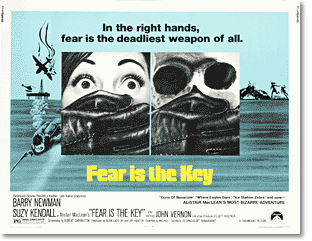
I have seen IB Tech prints. I saw a film called Fear is the Key (Michael Tuchner, 1972) that blew my skull apart. I’m pretty sure I left pieces of it in the back of the New Beverly theater. Apologies to anyone who finds those shards…
I saw Sleeping Beauty in 70mm and, while I think Disney is ok, I cried at how gorgeous it was. And yet I was struck with child-like wonder at the colors and the story-telling devices and the animation and art. In my mid-30’s, a fan of punk rock, experimental weirdness and all kinds of “alternate” things, I was, all at once, the little girl that I probably had never been. It was pretty phenomenal.
This is summer camp.
And now summer camp is heading around the bend. Now we’re heading into what we used to call (when I was a counselor) the third session. Third session was always the most melancholy and kind sweet. We all knew we had to go home soon, so we were holding fast to the friends that we had made all summer and man were we pretending that the end was never going to arrive.
I make my confession to you: I have 3rd session syndrome. And it was only made worse when I saw that the New Beverly was pairing up with Ain’t it Cool and Peyton Reed to put on a Summer of ’82 fest like the Alamo Drafthouse.
Sorry, but I’ve only seen Poltergeist (Tobe Hooper, 1982) once in my life and that was ages ago, so…color me excited.
Not only that, but this Wednesday night I will be sitting in that theater like a cinema champ, ready to watch Dead Men Don’t Wear Plaid (Carl Reiner, 1982) and Night Shift (Ron Howard, 1982). As a Film Noir junkie, Dead Men is, likely, one of my very favorite films. It’s my bacon, my ice cream, my “having a bad day? Steve Martin will solve your problems with black and white comedy” film. I had a friend in college who I used to go around quoting, “Your pa-yamas! Your pa-yamas!” at random moments. Don’t know what I’m talking about? Oh, please come on Wednesday. It’s showing Thursday as well, but Wednesday is the night when they’re doing the intro and who doesn’t like a good intro?
The other films showing? Oh, I dunno, The Thing (one of the few perfect films, in my estimation), Star Trek II (Khaaaaaan!!!). Oh yeah.
So, whaddya say? Come to camp with me? Y’know, the food isn’t bad, the guys and gals are pretty hot, and it’s always a good time.
When is the next time you’re going to get to see these films in 35mm? With an excited and enthusiastic film-loving audience like that of the New Beverly?
So, you may have seen some of these films already, but the question is, but what format was it on? If you have only ever viewed John Carpenter’s The Thing at home, you’ve never really experienced it. It’s like the difference between a microwave Chicken Piccata and one that was freshly made by a master chef. Sure, they have the same basic shape but…are they the same? I will leave that up to you. As for me, I’m heading back to the mess hall and the cabins.
Cinema Summer Camp is fun.

New work! Check it out!!

Hey all! Been crazy busy!! I’ll be getting something together soon, I promise.

For now…check out the latest thing I have up on the fantastic site, Crave Online!

I sat in on a pretty fantastic virtual roundtable with some great guests and it was a great opportunity for the film archivist in me and the cinephile as well.

Check it out:

http://www.craveonline.com/film/interviews/193251-presenting-the-way-it-was-warner-bros-and-blu-ray-restoration

Please…Think of the Children: The Role of Children in the Hitchcock-verse

Hey all!

So as some of you may know, I’m the president of the student chapter of the Association of Moving Image Archivists over at UCLA. I’ve been trying to get the members to participate in the annual Film Preservation Blogathon and so…instead of posting my piece on Hitchcock and children over here, I decided to post it on our student chapter blog for some team spirit!

Soooo….if you’re interested (you know you are) and you wanna read my thoughts on Hitch and kids (you know you do) and you may wanna give the NFPF a few bucks towards this year’s project (think you might?) click on the lovely little graphic below….

It’s Been 20 Years: The L.A. Riots…This Revolution WAS Televised.

Today is the 20th Anniversary of the L.A. Riots. 20 years ago I was sitting in a classroom, wearing a Catholic school uniform.

In my personal life, I was listening to Guns’n’Roses, Metallica, Queensryche and Nelson, about to be 14 years old (my birthday is in May), and things were…well, as good as they can be when you are an adolescent girl with a heavy metal-loving and high culture obsessed personality. That is to say, I was a normal kid with abnormal interests and thus…miserable.

But that day I was just like everyone else. I was an Angeleno, and I was terrified, angry, confused and hurting. At that age I had no ability to break apart the confusion of the news footage. And when I say “confusion” of the news footage, I mean CONFUSION. When the verdict was announced, and Los Angeles blew the hell up, these white, privileged reporters had no clue how to handle it. As a certified media scholar and media archivist in-training, I am beyond grateful that they went nuts on live-camera. We now know WHAT NOT TO DO and who not to hire in a city as diverse as the one that I have been born and raised in. Did I consider this at the time? Not a stitch. I was just scared. I had a baby brother. I had a family that I loved (still have both those things, although the “baby” brother is WAY taller than me now, so…maybe not so “baby” anymore). I had a city that I revered and…It had just erupted into pure, unadulterated chaos, and….THAT was NOT supposed to happen. Only was supposed to have that happen. I was the one with the adolescent whacked-out hormonal shit going on. My city was supposed to be my ROCK. What was going on?

The interesting thing is that as the 1992 “Civil Unrest” (and as an aside- I’ve never understood that term- who came up with it? It was not civil in any way, shape or form. Sure, it was unrest, but…these were RIOTS. Pure and simple. Is it more politically correct to candy-coat them? Is “civil unrest” an academic term for what occurred?) is one of the best examples of the term “this revolution will be televised.” Every breath taken, every person pulled out of a car, every store looted, every shop owner who fought back…was displayed in full color on our screens at home, at work, at university, where ever we might have been, 20 years ago today.

Even more fascinating, in looking back on this event, the footage I wanted to find for this, I was unable to find. I could not find any footage from news reporters from that first day and the initial announcement, when everything went crazy and they didn’t know what to do. When they were “off the script” as they say, and things were not exactly going according to plan. I’ve seen that footage twice- once live, when it was happening and then again when I took a class on television studies, and we discussed the racial make-up and transitions of newscasting in Los Angeles post-April 29, 1992.

If you weren’t watching or didn’t see it, it took on a beyond ridiculous architecture. Some people could argue that people in the middle of an emergency simply handle situation poorly and say things that they, perhaps, do not actually mean. However, it soon became ragingly clear that the sheer WHITENESS and economic disparity of the televisual news medium was ultra-present and to have that be the link to what was happening in South Central Los Angeles? Wow. The individuals and authority figures who had been chosen to give The People the information about an emergency situation were, quite obviously, so far removed from anything like this or, quite frankly, from Los Angeles herself, that it was a media disaster. No wonder I couldn’t find any of the footage when I was looking for it today.

It changed soon after, but that was the revolution of this situation on television. After this happened, we saw more reporters of color, we saw more documentation of different economic situations and we saw a different news-reporting engagement. While the ethnic situation still reflects this, news has gone back to fluff and fodder, but for a minute, we had some real “news” events. Now, not everyone reflected this. Certain reporters have always managed to be reasonable. But the vast majority of Los Angeles news reporting collapsed in upon itself and had a crisis, some of which can be reflected in this video here:

Or this one. This reporter’s discussion of her relationship to the Watts Riots really underscores the huge distance that these individuals have from the communities that they are reporting on. While the act of looting is, indeed, illegal, is it not of interest to her that quite a few of the folks they were just looking at were carrying out diapers?

Anyone who was in Los Angeles on April 29, 1992 remembers the smell, the sights, what they were doing, everything about it. Everyone from Los Angeles remembers what they were doing as well, even if they weren’t here. I can’t speak to the rest of y’all. I was in my science classroom with my teacher Ms. Michaels and the rest of the girls. Ms. Michaels had a crazy buzz-type haircut with a rat-tail and spikey-ness in the front. She was pretty cool. She wheeled out the TV, and we sat there, totally silent as things unfolded and we waited for our parents to come and get us.

I didn’t feel so tough then.

I remembered my mother telling me about the gas lines as a result of the 1973 Oil Crisis, so I forced her to get a full tank on the way home…just in case we had to leave town. There was a curfew enforced, and the looting and fires didn’t remain contained to South Central. They were a few steps from my front door, in Hollywood.

But that stuff didn’t disturb me. I watched my city burn, sitting atop a ladder in my backyard. I smelled the smoke, I listened to my girlfriends talk about “looting at the Beverly Center” and shook my head.

I was, quite literally, glued to the television. And I didn’t remember that until I sat down to write this. We were watching every little thing. I can’t count the number of store-owners I saw sobbing outside their property on live-television. I can’t fathom all the people I saw discussing how wrong they thought it was that people were burning their own damn neighborhoods. I think if I had a nickel for every time I had heard something about burning Beverly Hills or Simi Valley, I’d have a better chance of paying off my student loans faster!

Realistically, seeing Reginald Denny getting pulled out of a truck at age 13 made my skin crawl and I will never ever know what it’s like NOT to have that feeling and image and experience now. It wasn’t like a horror movie, it was something beyond a horror movie. It was the horrors of the real world. That is something that you will never come back from. The remainder of my time spent watching the television and watching the footage only exacerbated that situation. Like the Vietnam War footage (another salient example of how visual media has revolutionized our eyes, ears, selves and souls), the live Los Angeles Riot media work really created a new realm for many people like me.

My first experiences with action footage, really. I watched people with guns. Many many guns. And not the  police, either. I do like a good action movie. But when action is mixed with reality with injustice? I’ll take that in my fictional media, but not in my real life. Revisiting these instances has been not only difficult but enlightening. This video was a doozy.

The L.A. Riots was an incredible event that centered on the visual and what was being watched. It was catalyzed by a video (the Rodney King tape), followed up by the court case (I have distinct memories of a goodly sum of photographs from the trial decorating every news station and paper in town) and completed by the event itself with the voracious coverage, from every angle possible. Not only were the helicopters filming, people were filming, photographers were snapping pictures constantly and every news channel was rabidly running around every strata of the city to get it all covered.

The media archivist in me loves this. We have footage of a historical event, and tons of it (provided it has been archived and preserved properly).

The Angeleno in me doesn’t give a shit and thinks it’s all exploitation anyway. How many of the reporters even cared? This was our city; these were our people. They were hurting, angry, in pain. Justice was not done and everything went to hell and people were just trying to pass judgement and get a good story. People died, lost their homes, jobs, physical and mental well-being. People were scarred for the rest of their lives because of this and half of our news media was simply there to TMZ-it, pre-TMZ. No one gets on top of their roof with a gun, prepares to shoot people and comes out of the situation in a happy place, mentally. Well, not unless they’re in an action film. And how many of those guys are truly “stable” when you think about it?

The revolution has been televised. It was done so via the televised events of the 1968 Democratic National Convention in Chicago  , it was done by the broadcasting of hours upon hours of the bloody Vietnam War. This event was no different. What was different was that with certain figures who were involved, they were able to synthesize their situation, both event and media-wise, and reflect it back to those who would listen.

This example has a few pretty interesting pieces in it, and a great deal of discussion about the Riots from the social and internal perspective of people within the community.

However, the best example I found within my research was an interview that was conducted by Ted Koppel with two opposing gang members.

There’s a song by Iggy Pop and Kate Pierson. It’s a duet on Brick by Brick  called “Candy,” and it has a line in it that keeps running through my head, “The big city, geez, it’s been 20 years…” While that song is technically about a lost love, sometimes I feel like my innocent affection for Los Angeles was lost that spring day in April when I climbed to the top of the cafeteria steps at Immaculate Heart, high up on the corner of Franklin and Western; that cafeteria that meets the American Film Institute campus, and watched all the fires start with the rest of the girls I went to school with. It doesn’t mean I no longer love my city (that would be impossible), it simply means that this set of experiences forced my hand a bit. Instead of a gradual development, I had to open my eyes really quickly and see the “big city” (and its media) for what they really were.

As it stands today, I look at what everyone else is remembering, and it’s fascinating. I look at what I am remembering and I think that is interesting too.

How far we have come in 20 years and yet…we have not come very far at all. Many of the places that were destroyed during that time are still vacant lots. The dead are still dead and…Rodney King? Well, he is still unimportant. He was only the masthead to the boat. Let it fall, and the larger vessel remains. What will never disappear is the power of the media to change everything and as technology progresses so will the power of the media. A film like KICK ASS (Matthew Vaughn, 2010) used the same Rodney King-DIY-video-principle only constructed it via the internet, having a video made on a cellphone go viral within an extremely short span of time. This is the world we exist in now.

Not much different from the video camera of yesteryear. Just different formats and tools. As we move forward, perhaps we can remember this and try to keep that in our thoughts as we deconstruct both our media and the tools that we use to create it. The more it changes, the more it (and we) stay the same. If we did not take the time to fix ourselves and the problems that we had 20 years ago, how do we expect to move forward with proper and responsible media now? Do we? Can we realistically expect to have a diverse and representative media world if we were unable to rebuild the Los Angeles that broke itself apart almost a quarter of a century ago? Or do we continue to ignore the empty lots?

Los Angeles is a place where you can walk down the street and hear a multiplicity of languages, taste a variety of foods, see a gutload of moving images in different languages. This is a beautiful thing. But awareness is a key feature of any intelligent person and if you think that things have changed much in the last 20 years, you’re dead wrong. The interview that Koppel took with the gang members could’ve been done yesterday. The L.A. Riots changed the landscape of our fair city, but did they solve the problem? Not quite.

To me, the idea that the role of the responsible news media is slowly dying out scares me more than anything else. It means that not only are they no longer being demanded but they are no longer wanted.  When something like this occurs, we are that much closer to Los Angeles Civil Unrest 2: Electric Boogaloo, once more with feeling. Let’s try not to go that direction. I don’t have an answer for what to do, I only know that the first step is awareness and y’know, maybe that’s enough for now.