We Are Nobodies: 13 Assassins and the Elegance of Miike

Elegance of Miike?

The hell you say.

The man who gave us Ichi The Killer? The man who shocked people’s delicate sensibilities with Visitor Q? No, surely no. You must have the wrong guy. You mean to say that he made a film that gestured with grace and style towards the works of Kurosawa? Are you…saying that a Takashi Miike film was…restrained?

Yes. That is precisely what I am saying.

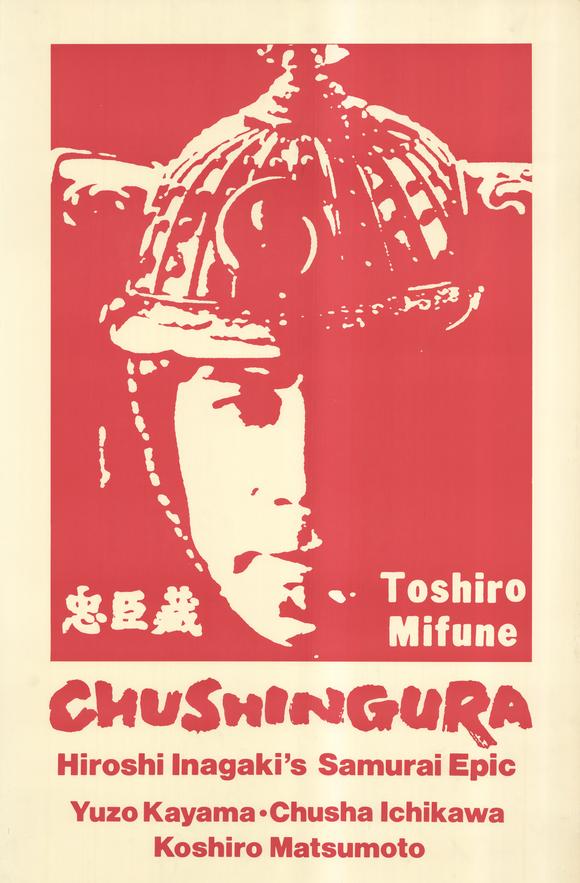
While other posters exist for this film, I actually prefer this one. It seems to express the duality of Miike perfectly.

Is that what I liked about it. YES. Is that what I loved about it YES. Did I miss all the usual “Miike-isms”? No, because they were absolutely there, you just had to look a little harder for some of them. They were studied, intentional, and entirely present. Yet, during the course of the film, I came to believe that  it was entirely possible that some of the things that we have come to take for granted as being part-and-parcel of a Miike film have been subsumed into this film under the guise of narrative and character development.

13 Assassins is not just a good film, it is a wise film that pays homage to Japanese cinema on the whole and yet also makes raging commentary on it and it is not in a soft voice. Miike can be accused

of many things but having a soft directorial presence on-screen is not one of them. People know who the man is and not only that…they know what he is capable of. In a sense, Miike is like one of the characters within his own film- but not the reserved, trained, samurai variety. No. Miike is the loose cannon-character.

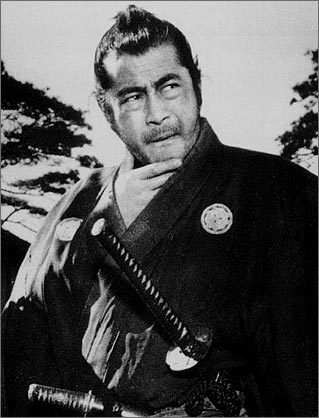
The character of Makino almost seems to serve as Miike's surrogate within the film, commenting on various situation in a beautifully challenging manner.

He is the one who, when you see him on-screen, your first thought (if you’ve seen a couple of samurai epics from the “good old days” of Japanese cinema) is: Ah hah! This would be the Toshiro Mifune role!

Now, due to my stubborn refusal to give away spoilers, I don’t want to go into too much heavy detail on the actual narrative. Details-wise, this film involves samurais, the shogunate of feudal Japan(in particular the Edo period), and a future leader of the shogunate who is relentless in his sadism.

Lord Naritsugu- historically based upon Matsudaira Narakoto, the 25th son of the 11th shogunate, Tokogawa Ienari. While I'm only assuming the same about Matsudaira, I can tell you this much for certain: Lord Naritsugu is *not* the guy you wanna bring home to dinner.

Here is the story’s bottom-line: Dear awesome samurai guys, please get rid of the raging prick who will be taking over the country in a few years. Regardless of the fact that we’re in a “time of peace” and your samurai-status has been rendered practically irrelevant, we know you can do a good job…or at least die trying? OKTHXBYE.

So you have your standard underdog samurai picture. However, this film is far from standard. While it may rely on the well-worn path of honor and the Samurai Way, it deals in issues that are much further reaching. Upon viewing 13 Assassins, I was honestly blown away due to the shattering number of things that it tackles without being preachy or hitting you over the head.

While Miike can place politics in his films, they are, many times, too balls-out crazy to grab them on the first (or fifth) go around. And, unlike many of my good friends, I’m not always in the mood to watch and/or study Miike. Thus I will openly admit: no, I have not looked for political insignias in Dead or Alive and I have not done a full psychoanalytic and historical perspective run-through of Visitor Q. I honestly have no doubt that the stuff is there. But it is much more…well…subtle. Due to the high-shock and/or hyperbolically violent nature of his films, any substantial messages seem to be the subtle aspects in a non-subtle text. But that’s Miike. He’s not a stupid man.

Not only does is this film displayed in a manner that is breath-takingly gorgeous and intensely well-constructed, it is a high-adrenaline ballet that will leave you gasping for air, and prying your hands from the seats. Tension, drama, EPIC (and I’m not using that word lightly) action, all condensed into a historically-based Japanese samurai film.

While ideas of war and peace are investigated, there are other concepts that are even more fascinating. Miike uses the rhetoric of the samurai film to investigate the state of Japanese cinema today. Wildgrounds.com quotes Miike as saying that “Maybe older japanese films have much more energy and are just much more interesting than films that are currently being made now (…) When it comes to making movies, we [Japanese people] sort of lost a lot of things over the years and we had a feeling that if we try to get back to, try to make movies the way they used to make them, we might learn, gain something.” In a sense, what Miike does through various character compositions and structures is rip apart modern Japanese cinema and let us know exactly what he thinks. In order to do this in the most effective manner, he chose to use the samurai film to do so.

Miike is not a fan of standard/traditional cinematic tropes, so one might find it curious for him to do a picture like 13 Assassins. But looked upon more closely, this seemingly traditional film plays more like Yojimbo with a machine gun. Not literally, of course, but in the content. Every choice that Miike makes in this film is careful and considered, meticulous and studied. However, he seems to be attacking more than just the fictional enemy in the narrative.

What I found the most attractive in this film is that while he celebrated the Old Guard, he ripped it apart. 13 Assassins felt to me like a type of Trojan Horse of Japanese cinema. While Miike certainly wanted to bring a reverential treatment to those that went before him, he also wished to inspire critical thought. But this is being done by working from inside the system.

The juxtaposition of older and younger samurai within the picture and their individual experiences underscores this intention quite nicely. In what I see as one of the most seminal sequences, some of the elders look on as the younger men deal with their first kills. The pregnant pause that follows this action is telling. Not only does it speak of the older men’s high level of experience and familiarity with the act of killing (they are clearly more seasoned professionals at the task) but it also illuminates the position and mentality of the younger men. While these young men may be good at what they do and brave as hell, they have not yet had to, as they say, “withstand the slings and arrows” of Real Action. Facing the reality of what they were about to engage in was a very important feature of this film. It is almost as though Miike was making a kind of commentary about older/younger filmmakers. Both are strong assets to the film community as a whole and bring essential components to the “film battle.” But if we follow Miike logic, the younger filmmakers take some influence and what they need from the elders but will still do it their own way and manage to kick the living crap out of the enemy, no matter how scared they are to do so.

For Miike, film is not a light, airy subject. It is not simple entertainment to be tossed off in the manner of an overblown comedy or a fluffy melodrama. His take on cinema is not unlike that of the Russians in the late 1920’s. What I’m about to say may seem far-fetched, but work with me a little. If you know your history, Russia in this period was a slightly crazy place to be. They were moving and shifting a whole lotta stuff around, and one of the things that they had to make some decisions on was the film industry,  a very popular part of Russian culture. The politicians were no dummies. They knew what they

Anatoly Lunacharsky, art critic, journalist, all-around pretty neat guy!

had. But how to figure this out? What was crucial for them was the technological aspect that was coming into play alongside their incessant politics. They realized that with sound pictures, they could get the message across with more fervor and, to be frank, easier. In addition, Anatoly Lunacharsky, who, as the People’s Commissar for Enlightment from 1917 until his forced resignment (yes, due to the very same lovely politics) in 1929, recognized one of the other major Catch-22 issues about film that we still deal with today. He stated, “Cinema is an industry, and, what is more, a popular industry.” (1)

Additionally, at this same time, in March of 1928, part of the Soviet desire to get things “together” with the cinematic world was to construct some kind of set of rules and regulations (they were into that kinda thing- then again, seeing the Hayes Code in the USA a few years later, seems like we were too…). So a bunch of folks, including industry professionals such as Sergei Eisenstein, Dziga Vertov and Vsevolod Pudovkin, went to the Party Conference on Cinema and tried to participate. They were able to do so…but only to an extent. Due to the Soviet way of thinking about the film industry, it became a full-on policed machine, commercialized and propagandized mercilessly.

One of the key sentiments put forth within the statements that evolved from this Conference was what cinema was really for and what it really did. While the Soviet mentality geared it towards political intent, the facts, as stated, were not entirely incorrect. As Richard Taylor writes, quoting some of the Soviet documentation, “Party leadership had been determined to develop a Soviet cinema that was ‘the most powerful weapon for the deepening of the class-consciousness of the workers, for the political re-education of all the non-proletarian strata of the population and above all the peasantry.'” Cinema for the Soviet Union was a weapon. But it wasn’t just the Soviets who then realized this. They were just some of the first to put two and two together. Say what you like about communism and the rest of it, but they were no fools when it came to media practice.

So I’m sure you’re wondering at this point what any of this has to do with Takashi Miike and/or 13 Assassins. I argue that it all does, in some funny way. Perhaps not down to political detail, but on a larger scale. See, Miike is down with Lunacharsky’s struggle. He gets it. To date, Miike has directed 83 films in 20 years. That’s off the charts. He knows he can make a bit of change making movies, so he does. But he also has the mentality that was sculpted from all of the different filmic and political practitioners of Soviet Russia: film is a weapon. And he can wield it any way he wants. And he does exactly that.

When asked about making the audience happy, Miike was quoted as saying that he doesn’t even think about it. He said, “there’s no way for me to know. To try to think of what makes for entertainment is a very Japanese thing. The people who think like this are old-fashioned. They think of the audience as a mass, but in fact every person in the audience is different. So entertainment for everyone doesn’t exist…” (2) He also added that even as hard as he works, it is that hard work that motivates him. It doesn’t necessarily wear him out. He sees it differently. He states,

We have to change the negative things into positive. In today’s Japanese film industry we always say we don’t have enough budget, that people don’t go to see the films. But we can think of it in a positive way, meaning that if audiences don’t go to the cinema we can make any movie we want. After all, no matter what kind of movie you make it’s never a hit, so we can make a really bold, daring movie. There are many talented actors and crew, but many Japanese movies aren’t interesting. Many films are made with the image of what a Japanese film should be like. Some films venture outside those expectations a little bit, but I feel we should break them. (3)

Miike’s philosophies on the audience and the Japanese film industry are the essence of 13 Assassins and why it is so beautiful and why it works. He went into the film to do a remake, an undergoing he had taken on before with Happiness of the Katakuris (and possibly more- I will openly admit I have not seen all 83 things the man has directed!), but did it his way. What was his way? Traditionally bound, with a heavy Miike visual lens and narrative cradle.

I refuse to use the word “mature” here (it’s condescending- that phrase “his most mature work to date” makes me want to throw things). But I’ve seen it used in other reviews and I wish that people could see what his actual point in creating this masterpiece was. There is no maturity here. He didn’t all of a sudden go from a kid to a grown-up due to a FILM. And frankly, Audition is a quite lovely film, Katakuris is incredibly skilled and Ichi‘s chaos requires a very defined sensibility. I don’t think we’ll be seeing a mess of costume dramas out of Miike anytime soon. THANK GOD.

See, 13 Assassins requires that you look a little closer. This film has teeth- and they’re sharp. Like the Soviet Party in the late 1920’s, Miike has a cinematic gun and he knows how to use it.  This film’s careful deliberation was like a slow-acting poison that was more of a commentary on the pretentiousness of modern “art” cinema or any overdone/overpriced cinematic exploits than anything else. I have a feeling he’s not a fan. While there was clearly money spent on this film, none of it was wasted. Which makes me even more glad that there’s a guy like Miike around to show us how to do things right and properly, while everyone else is failing so miserably.

If you can see this film on the big screen PLEASE DO. It is way more affective. Laugh, hoot, holler, JUMP UP AND DOWN IN YOUR SEAT!! I know I did. In fact, I will probably go see it again just to get that same adrenaline rush. 13 Assassins– the samurai movie that provides your body with the same endorphin-like energy as heavy exercise and sexual attraction. Yeah, I liked this movie.

(1) Anatoly Lunacharsky as quoted in Taylor, Richard. “A ‘Cinema for the Millions’: Soviet Social Realism and Film Comedy.” Journal of Contemporary History, Vol. 18, No. 3.  Historians and Movies: The State of the Art: Part 1 (Jul. 1983). p439-461.

(2) Interview with Takashi Miike, Midnight Eye.com. http://www.midnighteye.com/interviews/takashi_miike.shtml

(3) Interview with Takashi Miike, Midnight Eye.com. http://www.midnighteye.com/interviews/takashi_miike.shtml

More Than Two White Stripes: For Poly Styrene and Ari Up


       When I heard that Poly Styrene died yesterday, I thought it was another cruel internet joke. See, apparently the internet and celebrity deaths have become the best “joke” companions, as I have heard rumors of, quite literally, at least 4-5 other famous people dying within the last few months and they have been untrue.

But this was Poly fucking Styrene. I suppose the language use there should cause me to put a parental advisory on my blog now, eh? In any case, Poly Styrene. She was 53. And (plug your ears/cover your eyes again) she was fucking cool. I’m too young to have experienced her fully. I admit this. I was introduced to punk as a teen by a bunch of extremely nerdy and overly intelligent guys who (amazingly) are still my friends. They liked good literature, ska and punk rock. I met them at Rocky Horror. This was over 15 years ago. And when I heard the first few strains of “Oh Bondage, Up Yours!” it changed my life.

In fact, the first thing I did was put it on my answering machine. Yeah, ok, so I had my own phone line at home. But it was much easier. Just trust me. For years, my outgoing answering machine message was the opening of that song. It struck me because a) she was a girl like me and b) she was young like me. She was a little awkward looking, but she was OH MY GOD SO DAMN COOL.

Poly Styrene

There was something inspirational in the pure existence of that song. Alongside listening to my Descendents, Agent Orange and Bad Religion and whatever other bands we were rocking out to at the time, I knew she existed and that was pretty…cool. Because at the time I couldn’t admit to my friends that I liked other kinds of music because I thought they would disown me. Until I found some tapes on the floor of one of my friend’s apartments that were decidedly not punk. Then I knew that we were all on the same page, more or less. But that’s another story for another time.

There are so many problems that I see with Poly passing so young. First of all, it comes RIGHT on the heels of Ari Up’s death back in October, 2010. That was only A FEW MONTHS AGO. and the two women were only a few years apart. Not only that but…they both died of cancer. No offense again to those who can’t deal with a bit of swearing (you may want to skip to my film discussion a few paragraphs down) but…fuck that shit. This just plain sucks.

Ari Up, 1962-2010

I can’t help but try to think of the “punk rock women” we have in music now and notice the glaring space that is there. EmptyEmptyEmpty. The cancer that has taken these women has removed this very thing from our lives and it is of such importance. At least it is to me. And if you even attempt to give me Alanis Morrissette or something like that, I…can’t be held responsible for what I’ll quote at you through various academic sources.

We have Patti Smith. And the remaining Riot Grrls/Riot Grrl culture…who don’t seem to be up to that much these days and should be making more of an impact on things. We need women like Poly Styrene and Ari Up. And we need people to know who they are and to remember  them. These things are crucial. When our little girls are wearing pounds of make-up by 8 years old (and it’s not war paint) and the outfits are insanely small in order to betray themselves not in order to give themselves some steam, we have problems. And we’ve had problems for a while. Don’t get me wrong. I work out at the gym to Brittany Spears’ song “Toxic” and I love the video. But I’m an adult.

I was raised on X-ray Spex and The Selector and Bikini Kill and shit like that. Oooooh boy. And now I sound like the “when I was your age” person. But fuck it.

PUNK ROCK IS GOOD FOR YOU!! AND PUNK ROCK MUSIC BY WOMEN IS HEALTHY AS HELL!!

In conclusion, what I want to say about Poly and about Ari is that while cancer may have removed their bodies, it will NEVER EVER remove their indelible mark upon me or upon hundreds of thousands of others across the globe. I don’t care that Hot Topic sells X-Ray Spex shit (if it does), at this point. I just want her voice to be heard. I know that she went on to become a Hare Krishna and incredibly religious and that that is what she would like to be remembered for. And perhaps if folks are REALLY awesome, they will go and do the research, listen to those albums, and have that as part of the collection. Similarly, they will include Ari Up’s reggae stuff with her Slits records.

To Ari and to Poly- two women who rocked the stage harder than they know. As a female who never made it as a musician or as an artist, i have to work within the rhetoric of academia. I use you two as idols anyway, I hope you don’t mind. As you said so succinctly, Poly, “Some people think little girls should be seen and not heard. But I say Oh Bondage, Up Yours!”

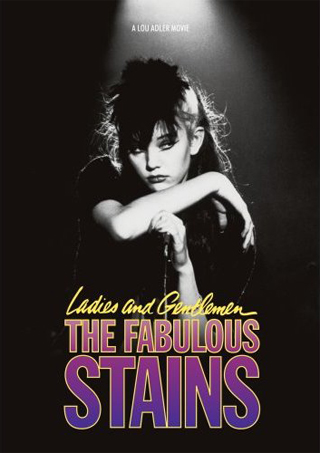
THE FOLLOWING IS A PIECE THAT I WROTE ABOUT A FILM CALLED “LADIES AND GENTLEMEN, THE FABULOUS STAINS.” IT’S A FILM THAT FOLLOWS GIRLS IN PUNK ROCK MUSIC, AND I WROTE IT A VERY VERY VERY LONG TIME AGO SO PLEASE BE KIND. BUT I FELT THAT NOW WOULD BE THE APPROPRIATE TIME TO PUBLISH IT SINCE IT HAD NEVER SEEN THE LIGHT OF DAY. I DEDICATE IT TO ARI UP AND POLY STYRENE: THANK YOU FOR  EVERYTHING.


Just Two White Stripes, Ain’t Ya?

The Bizarre True Story Of Ladies and Gentlemen, The Fabulous Stains

So I went to go see a friend’s band play. I got there a bit before they went on, took one look at the band before them, and, unimpressed, headed to the bar and got a beer. I chatted for a bit with my brother and a few other friends, and then went in, just in time for the band to start. My friend Alex turned to me and said, “Have you ever seen them before?” I shook my head, no. Her eyes got wide, and she said, “You’re going to love them.” I turned my eyes to the stage, and watched, as the music began. She was right. I did love them. But what truly hypnotized me was the way that my friend Cooper held the stage. Her presence was hypnotic. As she played her guitar, and sang into the microphone, I was engulfed in my thoughts about what it is to watch a female musician playing rock’n’roll, and why it is exactly that I get such a thrill from taking part in that process. I watched her play, and I watched her scream/sing, and realized the politicalness of her performance and the almost primal elements that are brought forth, when a woman gets up in front of people and participates in the rock’n’roll world. Her screams resonated of a silence that we have been forced to live with for too long, and her obvious pleasure in her instrument, and her glowing sweat and smiles spoke of the rejection of the standard methods of rock communication that have been codified within the music world. A woman, grabbing a guitar, getting up on stage, and pronouncing herself a part of rock’n’roll, is a woman who has had enough of her limitations as a female. The screams/utterances that she makes, the riffs she lets loose, the beats that she hits, are all a part of an anarchic statement against the rock’n’roll hegemony that has existed for so long. Yeah, watching Cooper was something else. She was transformed from my friend, to the kind of example of fighting patriarchal dominance that I feel lucky to be audience to. God, I had fun at that show.

In a piece that Bell Hooks wrote about the pop-star Madonna, she states that

Her image…evoked a sense of promise and possibility, a vision of freedom; feminist in that she was daring to transgress sexist boundaries; Bohemian in that she was an adventurer, a risk taker; daring in that she presented a complex, non-static ever-changing subjectivity…She was the embodiment of that radical risk-taking part of my/our female self that had to be repressed daily for us to make it in the institutionalized world of the mainstream.[1]

The excitement that Hooks releases in the descriptions of Madonna’s earlier image presentation is the same kind of excitement that I felt upon the viewing of a film from the early 80’s, Ladies and Gentlemen, The Fabulous Stains. Not unlike Madonna, the main characters of this film asks viewers to imagine a different world, a world in which a young rock’n’roll girl can takes risks, can be transgressive, and can fight against sexist boundaries. However, like Hooks’ later commentary in this essay, where she discusses how the evolution of Madonna’s image has “engender[ed] in diverse feminist admirers feelings of betrayal and loss,”[2] this film also recounts a tale of defeat, primarily by the hands of the patriarchal male-dominated system that seeks the removal of power and control from young women who have tried their best to steal it away. Now the question here is, does it make this film any less powerful because the women are defeated? Is Madonna’s early image any less seminal as a result of what Hooks sees as Madonna’s later reification of patriarchal sexual exploitation? In my opinion, these issues should not be ignored; they certainly problematize things, but they do not remove the incredible force and strength of the initial presentation. Within the Ladies and Gentlemen, the Fabulous Stains, I think it is fair to say that the sum of the film is far greater than its parts.

            All Washed Up

After Nancy Dowd had received such high praise for her work with the film Slap Shot (1977), she was commissioned by Paramount Pictures to write two more films. Initially titled All Washed Up, the film was made in 1981. As a result of Dowd’s legal battles with Paramount in regards to her sexual harassment on the set and her desire to have her name stricken from the credits, it was stalled for another year. At this point, they showed a test screening during which the audience reacted poorly to the “downer” ending, and feelings towards any future for the film were not very high. Paramount, however, did release the film in 1982, but only to an extremely limited amount of “art-house” cinemas, and just so that they could fulfill their contractual obligations. The film sat on the shelves of Paramount for three years before the USA channel sought it out for their popular late-night program, “Night Flight.”

USA's Night Flight

At this point, a studio executive thought it would be better if they went back and shot a happier ending. So, three years after the initial release, they re-shot a few “MTV Style” scenes, even though a few of the young stars had grown a great deal taller, and looked quite a bit different from they had in 1981, and let Night Flight have the film, where it was shown enough times to develop a small but dedicated cult following.

The film tells the story of Corinne “Third Degree” Burns, and her sister Tracy (aka Dee Pleated) and cousin Jessica (aka Dizzy Heights). Their lived existence within their steel-mill town is depressing at best. Corinne decides to start a band with the other girls called The Stains, and, as a result of the drug-related death of one of the members of a heavy-metal/hard rock band that comes through their town called the Metal Corpses, they get the chance to go on tour alongside a British punk act called the Looters. Although their musical knowledge is practically non-existent, The Stains develop a large following due to the combined efforts of Corinne’s revolutionary self-presentation and an interested newswoman who supports their efforts through her show. However, after being suckered into a deal with a “big time” promoter who co-opts their image into money-making schemes and exploits their popularity with young teenage girls, The Stains become victims to the Industry Machine, and are “outed” to their fans who promptly reject their former heroines, and leave the three teens to deal with the consequences.

Be A Professional

This film has a multiplicity of “real life” rock’n’roll connections, just within the cast and crew. The members of the Looters boasted such names as Paul Cook and Steve Jones (members of the Sex Pistols) and Paul Simonon (member of the Clash), while the director of the film, Lou Adler, well-known for directing the film Up In Smoke(1978), was even better known for his work in the music industry, producing such bands as Jan & Dean, the Mamas and the Papas, and Carole King, not to mention playing a significant role in the planning of the first Monterey Pop Festival, in 1967. One of the most significant “rock crossovers” as far as the film’s content was concerned, however, was creative consultant Caroline Coon.

Caroline Coon

Coon had not only lived through punk in the UK, but had managed the Clash, been a staff writer with the music magazine Melody Maker, and written the seminal work on punk, 1988: The Punk Rock Explosion. Her input on The Stains was immeasurable. Coon describes her work with writer Dowd and the preparation for the making of the script, and states,

I took her [Dowd] around the punk scene in London and up North. She had this

idea of young women in a steel town in America which was full of unemployment, empowering themselves through rock’n’roll to escape…I was showing her where it happened, but also where the Damned, the Sex Pistols and the Clash lived, the kind of environment where it first took place. So Nancy went back to Hollywood and wrote the script. Then I was hired by Paramount as creative consultant and dress designer.[3]

Coon’s lived punk experience, along with those of the various members of different musical outfits, all combined to form an authenticity within the presentation on the screen. As well, Coon’s own experience as a woman in a male-dominated subculture was particularly essential to the film’s development, as she was able, along with Dowd, to construct that experience both visually and textually throughout the film. In fact, in all probability, Coon’s experience might not have been that dissimilar to that which was portrayed on screen, as she has been quoted as saying, “Whatever I did was sabotaged by the fact that I had tits.”[4]

Dowd’s desire to represent a picture of the punk rock ethos and the female experience within it was underscored by the remarkable presence of so many very real rock’n’roll legends. However, during production of the film, that very same presence and the problems within the hyper-masculine world of rock became as explosive as the climax of the film itself, causing Dowd to demand that her name be taken off the film entirely.

They Have Such Big Plans for the World, But They Don’t Include You

Punk musician Lene Lovich noted that the advent of punk rock was great, because “the whole idea of it in the first place was to do your own thing, which was really exciting, and people who couldn’t play were getting up and and playing because they really wanted to play.”[5] But, as Gillian Garr recounts, Lovich realized that no matter how “subversive” the music was, or how “alternative” the punk world announced itself to be, it stayed fairly close to strict gender norms- “attitudes towards women frequently remained steadfastly the same.”[6] What is interesting in Garr’s discussion of Lovich, is Lovich’s own take on why it was that women were treated as mere “novelty acts,” or disregarded as serious musicians. Lovich opens the sealed space of the music world to encompass society in general, and deconstructs her experience as being more than reflective of the male-dominated music business, but as indicative of those societal norms.

I was aware that women can be noticed because they are a novelty. But to be taken seriously, to be given some sort of credibility, is much more difficult. I think it’s because music is part of society, and you have to wait for society to catch up for things to change. I think many women would have liked to have done music, but you had to be willing to be completely manipulated, you know,  “Wear this dress…you can move as long as you shake your titties”- it was very confining…I think the stereotypes are fairly strongly stamped in people’s brains, especially people who run record companies.[7]

Lene Lovich, new wave/punk rock musician of the late '70's/'80s and beyond

While Lovich’s ideas about “waiting for society to catch up” are problematic, they also highlight the importance of the women, like Lovich herself, who did not wait for the world to catch up, and the intense strength of women like Nancy Dowd and Caroline Coon who fought the Rock’n’Roll Boys’ Club at every turn of Ladies and Gentlemen, The Fabulous Stains. Lovich’s revelation of the manipulative and misogynist nature of many of the “big wigs” in the recording/music industry only evidences further the problems that ran rampant on the set of this film, not to mention the filmic text itself.

For Dowd, a patron of the same ideals of punk rock that Lene Lovich found so inviting, Fabulous Stains was an important film to make. However, the partnership with Lou Adler brought all kinds of unseen problems that dated as far back as Adler’s career in the music industry. David Clellon, who played the slimy booking agent/promoter in the film, said in an interview, “I think that the reason why Lou didn’t get Nancy Dowd’s story maybe is because he is more part of the problem than part of the solution. To me, the Mamas and The Papas was easy listening, pleasant music, catchy themes, cute lyrics. It was very easy to listen to but it wasn’t revolutionary music.”[8]

The music that the Stains played, however, WAS revolutionary music. It was punk-styled, yet it had a clear feminist edge. The first time the band performs, in the film, it is clear that they are not exactly musically competent. At the end of their set, however, as the audience is booing them mercilessly, Corinne removes the cap that she has been wearing, to reveal a shock of black hair with white skunk-like stripes going up the sides. Even her band mates are astonished at the change from her previously blond hair. Corinne stares defiantly at the unfriendly bar patrons, and states, unapologetically, with a tangible anger in her voice, “I’m perfect! But nobody in this shithole gets me- because I don’t put out!” Corinne “Third Degree” Burns then storms off stage defiantly, having created far more than just a mantra for the band.

"I'm perfect! But nobody in this shithole gets me because I don't put out!"

Her statement can be read a number of ways. Not only does it refer to the denial to “put out” sexually, the denial to physically lie down for someone else, it also plainly announces Corinne’s refusal to subscribe to the categorical subjugation of women. Corinne is not going to “put out” for anyone. She’s perfect. Even if no one does “get” her. She denies outside control, and she denies anyone else’s ownership of her. This kind of sentiment couldn’t have been farther from the sleepy strains of the Mamas & the Papas’ “California Dreamin’” or the aching sadness of Carole King’s “Will You Still Love Me Tomorrow?” Dowd’s script spoke of a rejection of the sweet, sugary “pleasant music” that David Clenon described, and of a reclaiming of power- a power that, no matter how “counter” any given counterculture was, had been denied women time and time again.

In her book, Scars of Sweet Paradise: the Life and Times of Janis Joplin, Alice Echols notes that although the “sexual revolution” of the 60’s brought about a certain level of sexual freedom for women, it also maintained conventional gender norms quite stringently. She remarks that, “the sexual revolution was a mixed blessing. Women were having more sex (and with less guilt), but they were also more sexually vulnerable. Instead of undoing the deeply rooted sexual double standard, free love only masked it in countercultural pieties.”[9] This era was the one from which Lou Adler had emerged, and prospered in, and this ideology was one that he clearly still upheld. As far as he could tell, women’s sexual liberation gave him license to uphold a “groovy” male rock’n’roll attitude (read: women were sexually free to do as they pleased, therefore so was he). Being involved in a production concerning that which he knew best (rock music and industry relations) he saw only that: a rock movie. This gave him authorization to continue the party that he’d been having for the last 20 years. It didn’t help that the rest of the musicians in the production were also male, and part of yet another hyper-masculine movement: punk. To Dowd’s dismay, the overt displays of testosterone off-camera made things more than a little bit uncomfortable.

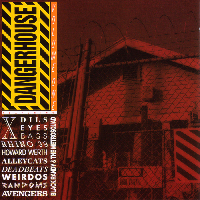
Fee Waybill of the Tubes who played Lou Corpse, the lead singer of the Metal Corpses, recalls the “ambiance” of the set. “We had the designated ‘drug trailer,’” Waybill notes, “so that we would all go smoke pot to get into character, y’know, because we were drug addicts.”[10] David Brown, another actor in the film and the founder and head of the seminal punk rock record label, Dangerhouse, concurred with the descriptions of the drug-fuelled “party” atmosphere that Adler had created. In regards to Ladies and Gentleman, the Fabulous Stains, Brown said, “We all thought it would be our ticket to success. Really what it turned out to be was a huge cocaine party for Lou Adler and his friends.”[11]  To truly back up this notion, it is not surprising that Paul Cook, one of the members of the Sex Pistols, remembered Lou and the experience fondly. He had lived rock’n’roll, as well, and this party was what he was used to. His comment on the whole situation was that Lou “was a really great guy. I have nothing but good words to say about him…Nancy and Caroline Coon thought we were bastardizing their idea. They took it too serious, you know?” [12] Excuse me, please? How could they not have taken it seriously? Had Cook not been a member of the in-group, he might’ve seen that Coon and Dowd had every right to be upset. As a male, and as one of the rock musicians, he had privileged status. He was part of the Boys’ Club. Being surrounded by the same environment that had prevailed over rock music for years, it is fairly easy to see how women like Caroline Coon and Nancy Dowd had a difficult time making a picture that was geared towards their own experiences, and not those of the majority of the population on the set.
But that wasn’t the least of it. In a film that was summarily about three young girls trying to throw off oppression, and actively pursue a future of their own choosing, it is reprehensible that the sexism that ran rampant on the set went to the extremes it did. Nancy Dowd relates the incident that finally pushed her over the edge.

   The Skunks [the look-alike fans of the Stains] were saying all sorts of outrageous things I had written. One of the old camera operators    refused to operate the camera. He said it was obscene and disgusting…He didn’t like [the content of the film] at all. During the scene in Burger King, I was supposed to read lines to somebody and I had to stand right next to this same operator so the eye line would be correct. He went to turn the knob on the camera and instead he grabbed my breast…Here I was with this ultra-rebellious girl story and that is the most humiliating experience I’ve ever had in a movie. I couldn’t talk about it for a long time.[13]

Because of the time period during which this film was shot in, Dowd had little way to seek legal action. Sexual harassment was just part of life. As Lauraine LeBlanc notes, public sexual harassment is “a form of ‘sexual terrorism’ that functions as one aspect of the social control of women…sexual harassment and assault restrict women’s right to full participation in the public domain…public sexual harassment relies upon and reifies…power distinctions between women and men. Clearly, then…this form of sexual harassment contributes to sex discrimination at a broad societal level.” [14] LeBlanc’s discussion of the incursion on a woman’s personal space in order to claim control and power should not be taken lightly. In Nancy Dowd’s experience, she was humiliated, on the set of her own film, in front of a cast and crew. The camera operator who was clearly threatened by Dowd’s work and its “outrageous” and “obscene” content, felt the need to reassert his male dominance by grabbing Dowd’s breast. She had won an Oscar at this point, for her script, Coming Home. And no one on the set (least of all Lou Adler) raised an eyebrow. “There was a kind of silence and nobody, including…Lou Adler, said anything. That kind of thing would never have happened in a million years on Slap Shot, never. And that was a male picture.”[15] Dowd’s commentary in regards to the action occurring specifically because of the high feminist and female-empowering content of the film is significant. Dowd’s previous film, Slap Shot, a film about a male hockey team, was in no way textually problematic. It maintained status quo. However, three women who take it upon themselves to rock the world, and change everyone’s perspective on the way a woman should be seen and treated, is chaotic and deviant, something that disturbs traditional patriarchal norms. Thus, violence was inflicted upon Dowd, because she dared to upset the “balance.” She became so enraged after this incident that she left the set, not to return, and struggled to get her name taken off the picture. She is credited, not as Nancy Dowd, but as “Rob Morton.”

These Girls Created Themselves…

To better comprehend this film’s radical status, it is important to recognize not only the production issues surrounding it which caused it to remain hidden from sight for many years, and the ironic reinscription of standard male rock’n’roll practices that infiltrated the set, but also to look at the actual film text as well. The film’s tagline, “These girls created themselves…” is a direct assault to the idea that in order for women to succeed in rock, they must first have gained permission and help from someone else, in this (and in many other) cases, from a man. It is the recognition of the historically patriarchal nature of the rock business, and it is in express defiance of that history. Recognizing that break from conventional standards was not all that this line represents, however. The “DIY” ethic that this sentence seems to reference has been a huge part of punk rock culture, as noted by many important scholars and participants in the punk movement. Thus, having real life historical punk figures in the film as well as a pronounced emphasis on The Stains being a punk-rock band led to a direct discourse about women’s agency and the expression of individualistic femininity within punk, a subculture that, like rock, was highly male-dominated. These girls sought their own formation in a climate that was highly adverse to their doing so.
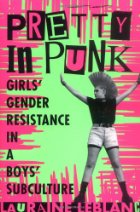
In her seminal work on punk and girls’ gender resistance, Lauraine LeBlanc states, “in the male-dominated world of punk, masculinity defines the subculture’s norms, values and styles. These norms, in many cases, directly contradict those of femininity, thereby requiring that punk girls reconcile these disparate discourses in constructing feminine punk identities.”[16] Within this film, Corinne Burns overtly engages in constructing her own female punk identity through a process that scholar Henry Jenkins has called “textual poaching.” While Jenkins’ work focuses primarily on fan cultures, I believe that his interpretations of Michel DeCerteau’s ideas about “poaching” from a text are particularly relevant to this film, especially in tandem with LeBlanc’s ideas about the creation of feminine punk identity in a hyper-masculine environment.

When Corinne first meets the punk band that The Stains go on tour with, it is at a concert, and she is an instant fan. Already a disenfranchised girl in a town that has given her nothing, she has become somewhat of a local celebrity by getting fired on live television and receiving a large media response, empathizing with her situation. One night she is at the local disco, and becomes entranced with the performance of Billy Frate, the lead singer of the Looters, a British punk band that has, due to an unfortunate sequence of events, been forced to play a bunch of dive bars, in small-town America, supporting a terrible, washed-up metal act called the Metal Corpses. Beyond the actual filmic representation, I feel it is important here to quote Dowd’s actual script at some length.

Corinne stares at the stage in disbelief. In Billy she has seen for the first time

someone who has made the synthesis between rebellion, sex, beauty, violence,

rock’n’roll and meaning it.

CORINNE

(impressed)

God.

BILLY

I’ve seen the place you live in. I’ve seen what you’ve been told to put up with. You know what you’ve got? You’ve got fuck all. What have you got?

CORINNE/OTHERS

Fuck all!

He rips into another teenage anthem.

Corinne walks towards the front of the disco. Suddenly all of the tired, despairing boredom of Charlestown has disappeared for her. Onstage there is energy and fury and anger at life – a refusal to grow fat and tired – and a sexuality so unabashed that all her denials of love seem provincial and inexperienced.[17]

Corinne’s experience at the show inspires her. She goes backstage afterwards, to

talk to the band, and finds herself lumped in with the groupies, not a situation that pleases her. She approaches Billy, telling him how much he liked his performance and tells him how the bands they normally get are “really just nothing, but you’re really unusual.” [18] His response is that of the traditional punk nihilism, but she persists. The exchange that occurs next is of the utmost importance.

CORINNE

You look like you made yourself up.

BILLY

Well, that’s better than looking like somebody else made me up, in’it?

CORINNE

I want to be like you.

BILLY

Be yourself.
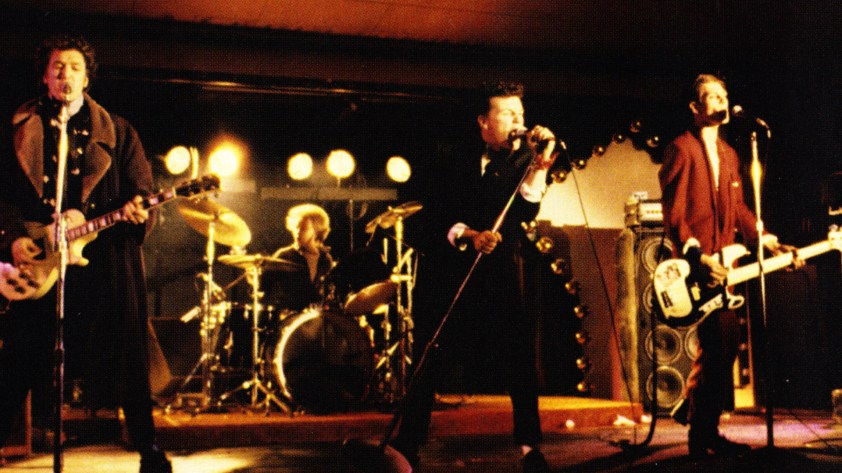
Henry Jenkins writes, “fans [choose certain] media products from the total range of available texts precisely because they seem to hold special potential as vehicles for expressing the fans’ pre-existing social commitments and cultural interests.”[19] As Dowd wrote in the script earlier, and as is pictured on-screen, Corinne’s experience of the punk band, mirrors the struggle that she has been facing internally. Her admission to Billy, “I want to be like you,” doesn’t mean that she wants to be Billy Frate, singer for the Looters, British punk band, it means she wants to be like what he has cast forth onstage. In effect, she has “poached” the image, not the man. Not unlike writers of fan fiction, or participants in on-line communities, what Corinne succeeds in doing is taking what she has seen in Billy’s performance and using it as a vehicle to express her own “cultural interests.” Part of this entails making the traditionally masculine “punk” image into one that melds Corinne’s own burgeoning sexuality and overt femininity with her demand for personal justice. Billy’s ideologies and calls to be heard correspond with Corinne’s own, just with a very different trajectory: Corinne is ultra aware of her existence as a marginalized figure, both within the rock’n’roll world and society at large, whereas Billy’s concerns lie with the class issues surrounding his British home, as well as his own personal sense of male anger.

Corinne’s ability to take what she needs from the performance and manipulate it, make it her own, is a highly revolutionary act. Yet not as revolutionary as when she actually does lift one of the Looters’ songs. Later on in the film, as the Stains are getting more and more publicity, and their fanbase is growing larger and larger, Corinne actually steals the Looters’ main song. Diegetically, it is supposed to read as retaliation for Billy’s supposed betrayal of Corinne in his attempts to find a different support act. Yet, when we see the Stains play the song, what we are really seeing is a literal representation of Henry Jenkins’ argument regarding textual poaching.

In his discussion about fans as active readers, Jenkins points out that, many times, fans “fragment and reassemble” the texts provided, in order to participate in a form of cultural production that is wholly their own, and tailored to suit their own pleasures. He addresses the fact that, primarily, this is because they are at a disadvantage, not able to fully participate in the hierarchy of cultural production, because they are the consumers, not the producers. He writes, “like the poachers of old, fans operate from a position of cultural marginality and social weakness. Like other popular readers, fans lack direct access to the means of commercial cultural production and have only the most limited resources with which to influence entertainment industry’s decisions.”[20] Truly, Jenkins’ descriptions of television fan groups could just as easily be descriptions of women in rock’n’roll.  Corinne’s reappropriation of Billy’s song, her “fragmentation and reassembling” of the Looters’ text to a Stains text, is quite simply an expression of her own experience as a marginalized person. By “poaching” their song, Corinne is able to create a whole new product, not unlike many other female musicians have by covering male artists’ songs. Sure, she stole their song, but it means something totally different now that it erupts from her mouth. Ideologically, she has basically said that she cares not for the way that she and her band have been positioned in this “Boys’ Club,” and thus she will take their work, and use it for her own ends. It is a way of fighting the forced second-class citizenship that she has been given due to her female status. Like the fan’s experience of not being able to participate fully in the production of their favorite text, Corinne’s experience has been that of a woman in the male-dominated social economy of rock’n’roll, having to take what she is given. Thus, like the fan who creates her own fan fiction to get what she wants out of a given text, Corinne reappropriates the Looters’ song, and takes what she wants, proving to the Looters’ and everyone else how instable their control over her just might be.

       Female Existence Should Not Be a Rush to the Grave…Or the Supermarket

In the book, Please Kill Me: The Uncensored Oral History of Punk, Legs McNeil and Gillian McCain quote punk icon Patti Smith as saying, “Most of my poems are written to women because women are more inspiring. Who are most artists? Men. Who do they get inspired by? Women. The masculinity in me gets inspired by the female. I fall in love with men and they take me over. I ain’t no women’s lib chick. So I can’t write about a man, because I’m under his thumb, but a woman I can be male with. I can use her as my muse. I use women.”[21]

Patti Smith, the Punk Rock Godmother

While it is important to recognize Smith’s own admission of her oppression, as well as her over-extension of heterosexist fantasies as to who is being inspired by whom (what happens to the gay/lesbian artist, in Smith’s world?) it is also significant to note Smith’s ideas regarding fluid gender identification. Smith, as a performer, has always been visually coded as more than slightly androgynous, and here, she recognizes her mental processes as being just as flexible. This refusal to stick to the strictly defined categories of masculinity and femininity is a living, breathing function of the punk rock existence for a female.

The Stains’ adoption of hyper-feminine aesthetics alongside an aggressively sexual and “tough” demeanor seems to reflect the desire to stay away from strict gender categorization, and yet maintain a female identity. This was not unusual for women in the punk world, and presumably, as a result of Caroline Coon’s role as creative consultant, it is the reason why the physical appearance, attitude and conduct of The Stains brings to mind such influential female bands from the punk-rock era, such as the X-Ray Spex, the Slits, the Au Pairs, and the Raincoats, amongst others. This band of young women seems to act almost as a kind of quoting gesture on the part of Coon and Dowd, of the bands that paved the way for these filmic “girls who created themselves.”

The Stains’ rebellion against gender stereotypes in the film reflects the same rebellion that had in a way created them.  The album cover of The Slits’ 1979 release, Cut, for example, showcased the women in the band, topless, wearing loincloths, their bodies mud-soaked. Contrasting their nudity with a clear affiliation to primal elements (loincloths) yet completely covered in mud, this album cover obscured any kind of “sexy” element that might have been drawn from the photo. This is the same band that Lucy O’Brien notes, “wore knickers [underwear] outside their trousers, wound reggae rhythms around a speed feminine sound and ridiculed ‘Typical Girls.’”[22]

The Slits, "Cut"

Lauraine LeBlanc’s work with punk women seems to corroborate these same ideas of gender transgressions that the Slits took part in. She states,

As I interviewed girls…I found that they navigated through conflicts between the gender norms of punk and femininity by constructing strategies of resistance to traditional gender norms…my research shows that punk girls, by positioning themselves outside of the mainstream culture, engage in active resistance to the prescriptions and proscriptions that overpower…adolescent girls. In negotiating between the norms of femininity and the masculinity of punk, these girls construct forms of resistance to gender norms in ways that permit them to retain a strong sense of self.[23]

The Stains seem to walk that fine line, and occupy that liminal space throughout the film. Their sartorial declarations seemed to parallel those of the Slits, in that their clothing, often sexually provocative, was worn in such a way as to announce their femininity while at the same time ridicule it. By strongly claiming femininity and yet actively denying conventional standards of beauty, attitude, and demeanor, the Stains, like the Slits, turned gender norms on their head. Locating themselves in the netherworld that LeBlanc discusses, between masculinity and femininity, the Stains had a kind of access to both worlds, and were able to present that and share that with their fans, like what the Slits and Patti Smith were able to do.

I’m Perfect, But Nobody Gets Me Because I Don’t Put Out

The space that Nancy Dowd opened up with her script, All Washed Up is one that has yet to close. Toby Vail, a member of the influential band Bikini Kill, and one of the original members of the Riot Grrl movement, is quoted as saying that Ladies and Gentlemen, The Fabulous Stains is “the most realistic and profound film I have ever seen.”[24] While Vail’s compliment is at least slightly hyperbolic, there is no reason to disbelieve her sentiment. The Riot Grrl movement followed very similar lines as the Stains and the Punk Godmothers, and is, to this day, recognized as one of the most powerful, pro-female rock movements of all time.

The re-ignition of interest in this film within the last few years is reflective both of the problematic location that women still occupy within rock’n’roll and of the still-burning fire to resist that oppression and not “put out.” The strength that was detailed in this film about young women resisting gender conventions and actively engaging in revolt against traditional social expectations by being rock musicians is a strength that few films of today carry. Although there have been a few notable exceptions, such as Prey For Rock’n’Roll, and even, to a certain extent, Josie and the Pussycats, there is still the eminent notion that women cannot be part of the rock world and stand on their own two feet. We have had plenty of films about men participating in rock’n’roll (Rock Star, Almost Famous, Sid & Nancy, Purple Rain, This is Spinal Tap, School of Rock, etc), but where are the Rebel Girls?

Before Kathleen Hanna of Bikini Kill ever sung “Rebel Girl,” a film was made about those “rebel girls” and the unfortunate misogynistic practices of a record industry set out to keep the Boys’ Club from ever breaking up.

Part of the "tacked on" final scene...

Dowd’s writing and message are just as strong today as they were years ago. Looking back on the whole thing, it’s really a small miracle that Ladies and Gentlemen, the Fabulous Stains could have made it as intactly feminist as it did, considering the production circumstances, and Dowd’s own disgust and abandoning of the project. Yet, it seems that this is the spirit of Punk Rock. Making it, even though no one thinks you will. Doing it, even though no one thinks you can. Reworking the situation, so that you can make it, and you can do it, no matter how unorthodox. Dowd and Coon’s battles against Adler and his Boys’ Club continue to pay off with each and every viewing of this film. Regardless of the issues that were had, or the somewhat ridiculous tacked-on ending (each Stain has “miraculously” aged a few years, and grown remarkably taller), the spirit of “not putting out” still shines through.

Now, whether that is just my subjective “textual poaching” or not might be debatable, but what holds through all, without debate, is that this film presents an extremely provocative and powerful example of punk rock women in all media, fiction and non-fiction, and the consequences that come alongside that, within the world of rock’n’roll. Whether it should be a film that is considered in parts, as bell hooks saw Madonna’s latter image betraying her former, or in the whole, by seeing that no matter what, the image of girls rockin’ out to the beat of their own drum matters most, Ladies and Gentlemen, the Fabulous Stains is a film that truly is required viewing. Corinne “Third Degree” Burns said that she believed that every citizen should be given an electric guitar for her sixteenth birthday. Well, the economy is a little tight right now. Maybe folks can’t quite work out a guitar. So…what about the DVD?


[1] Hooks, Bell. Outlaw Culture: Resisting Representations. New York: Routledge, 1994.

[2] Ibid.

[3] Jacobson, Sarah. “Why They Didn’t Put Out…Ladies and Gentlemen, The Fabulous Stains: The Expose of a Cult Phenomenon.” Grand Royal 6. 1997.

[4] Garr, Gillian. She’s a Rebel: The History of Women in Rock & Roll. Seattle: Seal Press, 1992.

[5] Garr, ibid.

[6] Garr, ibid.

[7] Lovich, quoted in Garr, ibid.

[8] Jacobson, ibid.

[9] Echols, Alice. Scars of Sweet Paradise: the Life and Times of Janis Joplin. New York: Henry Holt and Company, 1999.

[10] Jacobson, Sarah and Sam Green.  Ladies and Gentlemen, the Fabulous Stains: Behind the Movie. Documentary. First Aired on “Split Screen” episode #38. May 24th, 1999.

[11] Jacobson, Sarah. “Why They Didn’t Put Out…Ladies and Gentlemen, The Fabulous Stains: The Expose of a Cult Phenomenon.” Grand Royal 6. 1997.

[12] Jacobson, ibid.

[13] Jacobson, ibid.

[14] LeBlanc, Lauraine. Pretty in Punk: Girls’ Gender Resistance in a Boys’ Subculture. New Jersey: Rutgers University Press, 1999.

[15]Jacobson, ibid.

[16] LeBlanc, ibid

[17] Dowd, Nancy. All Washed Up. Original Script- Fourth Draft- revised. Paramount Pictures. January 30, 1980.

[18] Ibid.

[19] Jenkins, Henry. Textual Poachers: Television Fans and Participatory Culture. New York: Routledge, 1992.

[20] Jenkins, ibid.

[21] McNeill, Legs and Gillian McCain. Please Kill Me: The Uncensored Oral History of Punk. New York: Penguin Books, 1996.

[22] O’Brien, Lucy. She Bop: The Definitive History of Women in Rock, Pop & Soul. New York: Penguin Books, 1995.

[23] LeBlanc, Ibid.

[24] Jacobson, ibid.

[25] Jacobson, Ibid.

TCM Classic Film Fest, 2011-Initial Preparations and Looking to the Past

And so it goes. A year passes, things change, and…here we are. About to enter the insanity that is the TCM Classic Film Fest once again.

I experienced it last year, and submitted my review to a local magazine. It ended up going unpublished,  however, that doesn’t mean I can’t post the review here, one year later, right? In short, I would like to share with you my experiences from the TCM Classic Film Fest 2010.

First of all, let me preface this by letting you know that when I wrote this, I was still on my “festival high” and the magazine audience that I was writing it for not nearly as advanced as I feel that this one is. So I apologize if the tenor of the piece feels somewhat…less. In any case, you are a forgiving audience (I feel), so I will give you the writing and hope that you will at least be cheerleaders along with me.

I will tell you this: The TCM Film Festival of 2010 was remarkable in so many ways that I have to publish this piece before I let you know what my plans are going to be this upcoming weekend. So here goes….

Firstly, I must confess: I am not a morning person. It takes me a while to get out of bed. However, the Turner Classic Movies (TCM) Film Festival that took place at Grauman’s Chinese and the Egyptian Theater on Hollywood Blvd, from April 22-25, was a whole different story. In fact, all I needed to know to jump out of bed that first day was: my breakfast is going to be made out of Kirk Douglas, Lana Turner, Dick Powell, and Gloria Grahame and cooked up by Vincent Minnelli in 1952. While most people I know can barely make it to work by 9:00am, I had gotten on my bike, booked it up to the Walk of Fame, bought a ticket, and was in my seat ready to watch one of my favorite films: The Bad and The Beautiful.   

And it was worth every little bit of sleep lost, as there was so much gained! First off, there was a Q&A with Robert Osborne and Cheryl Crane, Lana Turner’s daughter. Most famous for her, um, “run in” at 14 years old with mommy’s gangster boyfriend Johnny Stompanato, (she showed her approval of the relationship by stabbing him to death), Crane was actually most charming and spoke lovingly of Turner. But it had nothing on the film itself. This motion picture can knock any modern day movie trying to “expose” Hollywood’s evils flat on its proverbial ass. Twice. The bad?  Waking up early after being out way too late the night before. The Beautiful? Seeing a gorgeous 35mm print of this, pristine and larger than life…the way it was meant to be seen!

After this, I blasted through hell incarnate (read: tourists and people dressed like SpongeBob Squarepants) to get much needed sustenance and garner a spot for one of THE best and THE most cynical and downright nasty films ever placed on celluloid: Sweet Smell of Success(Alexander Mackendrick, 1957). It was in the Grauman’s Chinese, large and in charge, with a Q&A with one of the stars, Tony Curtis.

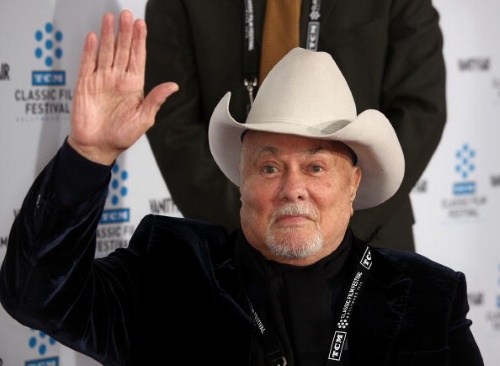
The man, the myth, the legend. See Sweet Smell of Success. Just do it.

I shouldn’t say much about this except that it was a disappointment and it was not Tony’s fault. The guy is 84 years old, and he’s more than welcome to ramble. But if you are the Q&A guy, your JOB is to keep him on track. Oh, and…try and make sure he keeps the microphone up to his mouth. It was tragic, as I would’ve liked to have had a good Q&A for this film. If you have never seen this film, you must. Mike Patton (Faith No More, Mr. Bungle, etc) really likes it. He’s used several lines from it in Tomahawk songs.

The remainder of the festival was amazing. Later that first day, I saw Mel Brooks present The Producers, and that was phenomenal. He’s sharp as a tack, funny as hell, and had great stories.

Mel Brooks outdoes everyone and probably will...forever. Flanked by Mitch Glazer on the right and Vanity Fair's Sam Kashner (who, thankfully, let Brooks have centerstage as well he should have!)

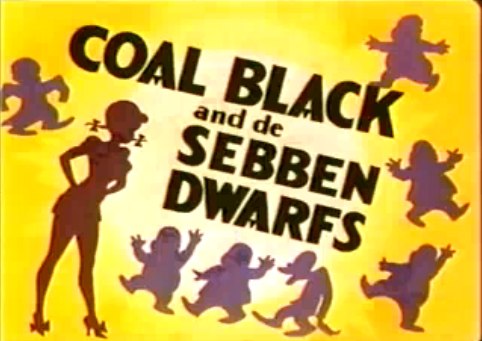
I did another 9:00am run on Saturday to see Billy Wilder’s Sunset Blvd (but I’d do almost anything for a Billy Wilder screening…you should too), and Nancy Olsen was there, looking barely any older than she did in the film! It was impressive. I visited the Egyptian Saturday night to see Donald Bogle (read his book “Toms, Coons, Mulattoes, Mammies and Bucks: A History of Blacks in Film”- educational and extremely well-written!) present some of the most exquisite 35mm transfers of out-of-circulation cartoons (such as “Coal Black and the Sebben Dwarves”)

The 35mm prints of these cartoons were magnificent and the historical discussion by Donald Bogle was beyond that.

done by folks like Bob Klampett and Tex Avery. That show blew my skull apart and made me simply ecstatic to live in a city where I could bear witness to this on a big screen!

Then there was Three Alarm Sunday. Heard of a three alarm fire? I have 3 alarms to wake me up. I used ‘em for Sunday. One was Good, one was Bad, and one was Ugly. Because that was the film I saw. It was life changing. Out of all the films I have seen in my life (and I have seen a ton), I had never seen this, and I had especially never seen it with 94-year-old Eli Wallach doing the Q&A. What do you want me to say? He was witty, funny, charming. He let loose an “I’ll stop acting when I die!”

"I'll stop acting when I die!"

and brought along a birthday card someone sent him that played the beginning theme from the film. The movie and the music were so beautiful that they made me cry. Not once, not twice, but several times. I felt lucky to have eyes and ears, and thanked Italy and Mr. and Mrs. Leone for having some sexy times to create Sergio. I walked out of Grauman’s a changed woman, and will never forget that morning.  While I saw several more films that day, including The Stunt Man (Richard Rush,1980), Murder, He Says (George Marshall, 1945) and one of my all-time-favorites, In a Lonely Place (Nicholas Ray, 1950), The Good, The Bad and The Ugly is a film that went beyond the pale, and really “tied the room together, man.” Thank you TCM, and thank you Los Angeles for providing me with a nice little film vacation! Can’t wait until next year!

And so we have come full-circle. It is now next year. I have been chatting excitedly with my good friends Karie Bible from Film Radar and Dennis Cozzalio of Sergio Leone and the Infield Fly Rule and we all agreed in our different conversations that this year’s schedule is *just* as difficult to prioritize as last year’s. Realistically, the fact that I even have a pass to go to the thing makes me feel like Charlie Bucket getting a Golden Ticket to Willy Wonka’s factory.  That said, when you put certain things against each other at the same time, it truly is like a filmic Sophie’s Choice. That said, I am going to now present you with what I feel will be my schedule for the TCM Classic Film Festival 2011. Feel free to comment on it at will!

THURSDAY, April 28th

7:15- A Night at the Opera with What’s Opera, Doc? on 35mm, guests: Andy Marx and Robert Bader

-I’m not sure if I have seen a Marx Brothers film on the big screen before. So…I’m gonna make sure that I have.

10:15-The Devil is a Woman on 35mm, guest: Katie Trainor

-totally problematic, TOTALLY Von Sternberg/Dietrich, and to quote the TCM site- “When Spain threatened to ban all Paramount pictures over the film’s depiction of their police guard, the studio pulled it from worldwide distribution and destroyed the master. They also released von Sternberg from his contract prematurely ending a level of artistic freedom that the director would never enjoy again.”  This is the world premiere of a new restoration from MOMA. Can we say excited, boys & girls?

FRIDAY, April 29th

-9:00am, Becket on 35mm, Q&A/Discussion w/Peter O’Toole

-I am getting up SUPER early in order to be able to see this. If I do not get a good seat for this I will be crushed. I am soooooooo looking forward to this it’s kinda silly. As I have commented to friends of mine, this is kinda one of the first “bro” movies. But, as far as I’m concerned, it’s the kind of “bro” I LIKE watching. Peter O’Toole in person. Need I say more???

-12:45pm Bigger Than Life on 35mm, guest: Barbara Rush

-It’s on scope. It’s by Nicholas Ray. It’s got Walter Matthau. 2008 restoration. I’ve never seen it. It’s about drug addiction and the ripping apart of the “picket fence” thing. I’m SO IN.

-3:45pm The 7th Voyage of Sinbad on 35mm, guest: Bruce Crawford

-DUDE. Harryhausen. 35mm. Are you out of your mind?? I may resemble a female in all the ways I am supposed to, but when it comes to things of this nature, I WANT ADVENTURE AND BIG MONSTERS ON THE BIG SCREEN. I will not hide the 14-year-old-boy that resides in my brain. And he gets treated to some rockin’ good times with this. Thanks. I could lie and tell you that it was just because I wanted to write about the Bernard Herrmann music, but why beat around the bush???

-8:00pm Spartacus, digital, guest/Q&A: Kirk Douglas

-So I have dreamed of seeing Kirk Douglas in person since…oh…forever. I love that he is a man that doesn’t let anything keep him down and I love his dedication and his passion. I just want to see him in person. I have also never seen Spartacus on the big screen. There is something somewhat romantic to me about seeing it at the Egyptian. So…I am going to do this. I am *hoping* that it will let me out early enough to make the midnight at the Egyptian, however….

-12:00am The Tingler, 35mm, guest: Bruce Goldstein

-I love William Castle. I love Vincent Price. I make it a point to never miss a chance to see a Castle movie when it is being projected, if i can help it. So…if I can help it, I’m gonna try to make it! If I can’t then, ah well.

SATURDAY, April 30th

-9:30am This is the Night, 35mm, guest: Jennifer Grant

-It’s the film that launched Cary Grant’s career, got Thelma Todd in it (aka “Hot Toddy” who died under very mysterious circumstances), it’s pre-code-era, and it’s a new restoration from the UCLA Film & TV Archive. Sounds good for breakfast!

-12:00pm The Outlaw Josie Wales, digital

-Clint Eastwood. Big Chinese. Need I say more?

-3:45 Went The Day Well?, 35mm, Guest: Kevin Brownlow

-OK, so this is where it gets super painful for *me*…I need to see Outlaw Josie Wales so therefore I cannot go to the “Conversation with Kevin Brownlow” that they are having. This part SUCKS. If you don’t know who Kevin Brownlow is, he’s the guy I wanna be when I grow up. He got an Academy Award for the work he’s done with film preservation, ok? So instead of the “Conversation with…” I’m going to see this film. Don’t get me wrong. This film looks incredible!!! It’s loosely based on a Graham Greene story, it’s a North American premiere of a new restoration, it has all the right stuff. And Brownlow is going to speak on its merits! But…it’s playing at the same time as Carousel, one of my favorite musicals in the entire world, a film I have NEVER gotten to see on a big screen, and a film that never PLAYS on a big screen. Yeah, Sophie? You and your choices can go to hell. I’m still loving my Golden Ticket, though. Oy vey.

***here’s my two options that I haven’t decided on yet:

-6:15 Niagara, 35mm, guest: Foster Hirsch

-Love me some Hathaway, great dark Marilyn film, and Foster Hirsch is a badass mofo when it comes to film noir-y writing and that kinda stuff. I would LOVE to see him talk about this film. To be honest, 50% of the draw of going to Niagara is Hirsch. But…I haven’t decided yet.

OR

-6:30 Pennies From Heaven, 35mm, guest: Ileana Douglas

-Don’t think I’ve seen it on a big screen, wonderful film, Steve Martin…pretty irresistible. This slot is a REALLY HARD CHOICE. I may not know what I’m going to until a little while before I go…

-9:30pm One, Two, Three, 35mm, guest: Michael Schlesinger

-It’s Wilder. We do not miss Wilder. It is a rule. Kinda like breathing. ‘Nuff said.

-12:00am The Mummy, 35mm, guest: Ron Perlman

-I think I would have to be mildly stupid to miss seeing the 1932 film The Mummy at the Egyptian theater. If I can make it there in enough time from the Wilder…I’m there. Plus…uh, RON PERLMAN?????? Yeah.

SUNDAY, May 1st

-9:15am The Sid Saga, 35mm, guest: Ross Lipman

-I’m not going to lie. I’m going to this purely because of the film preservationist/restorationist. Ross Lipman is fantastic and everything he has worked on is so fascinating and to me that I pretty much trust his name at this point. He’s also an incredibly nice guy. I am very much looking forward to watching this piece. Once again, it looks like another really exciting and super cool film preservation achievement.

-12:30pm Bright Boulevards & Broken Dreams: The Story of Black Hollywood, Speaker: Donald Bogle

-I’m a sucker for a film academic who can entertain while also educate. And Donald Bogle fits that bill to a T. Therefore, I think I may go ahead and check him out again. He was awesome last year with the cartoons, so…sure! Let’s go for it!

-3:15pm A Place in the Sun, Guest: Rose McGowan

-Why Rose McGowan is the guest for this film…I have no clue. I know she was on TCM, so I have to conclude she digs this film a whole lot. To be perfectly frank, I’d rather have Alec Baldwin tell me why he likes George Stevens, but hey- not up to me, right? In any case, I’ve never seen the film and I just finished a book that uses it as a fairly central plot point, so I think it might be a good idea to finally see it.

So…there are a lot of TBAs still on Sunday, and I might catch Westside Story  or Manhattan, but I’m not sure. This is where my schedule is at this point. All I know is I’m going to be EXHAUSTED on Monday. This is like Comic Con, just less smelly and crowded and more (dare I say it?) nerdy! In any case it is equally so. And I cannot wait. So there you have it. That is my plan. Perhaps I will see you there?

March Madness at the New Beverly Cinema: The Whole Bloody Affair

Standing in line tonight I had an infuriating conversation.

“Yeah, I only went to Grindhouse and Kill Bill. But I came to Kill Bill yesterday and today, and I’ll be coming some other days too. I’m a huge Quentin Tarantino fan,” the young man said, nodding at me wildly, trying to assure me of his fandom.

My eyes widened. They must’ve gone fiery. “No. You. Are. Not,” I calmly informed him, “if you were a ‘huge’ fan, you would’ve been to at least a few of the other shows that he programmed this month. You would not have just attended the films that he directed.”

The young man fumbled a bit and came up with a few reasons that he couldn’t be at the other shows during the month. Work, life, and so forth. Now, I will readily admit- not everyone is as big of a cinephile as I am. Very few people are. I know most of the ones in Los Angeles, and I treasure them like they are my Holy Grail. However, this specific argument upset me.

I’m not going to blame this particular gentleman. For all I know, he could have been insanely busy, and these occasions very well could have been the only times he was able to come to the New Beverly. However, what he is bringing up is an issue that I take issue with. This month we had a very special calendar. One that was very carefully and lovingly put together by Quentin Tarantino himself, as it was his birthday month.

Now, whether or not you are a fan of Tarantino, there is one thing that you cannot deny no matter how hard you try: the man LOVES film. When someone loves film as much as he does, there is a better than average chance that in a month of programming movies, there are going to be at least a couple of great choices. In addition to this possibility, even if you dislike every film on the roster, the chances of you getting to see some of them again, in actual print format, on a big screen…? Well, I don’t think I have to tell you the likelihood of that. So, if you’re into rarities, you got that going for you too. And, for those out there who are fans (and this is what really gets my goat), this month of movies is essentially serving as a microscope onto HIS films. Each film shown this month had something in it that was directly related to his own work (aside from the pieces of his own work that he showed). For me, that was the true gift. All the kids out there complaining about the fact that Quentin hasn’t done any commentaries or doesn’t take pictures with fans or assorted other excruciatingly shallow comments missed the point of the festival: this was his commentary track, guys.

I saw a plethora of great films this month. I saw a double feature of Blume in Love and Bob and Carol and Ted and Alice, with a Q&A with Quentin and Paul Mazursky himself. Not only did these films floor me, but they were perfectly programmed.

Paul Mazursky, 1969

While Bob and Carol will fill your heart with joy and hope for relationships and teach you that marriage CAN work and that human beings CAN properly communicate with one another if they wish to, Blume in Love will disturb the hell out of you, and teach you how one person’s ego can completely ruin a relationship to the point of disaster. Blume is fascinating in its dark horrific complexity where Bob and Carol is equally fascinating in its comedic intricacies.

Paul Mazursky, 1973

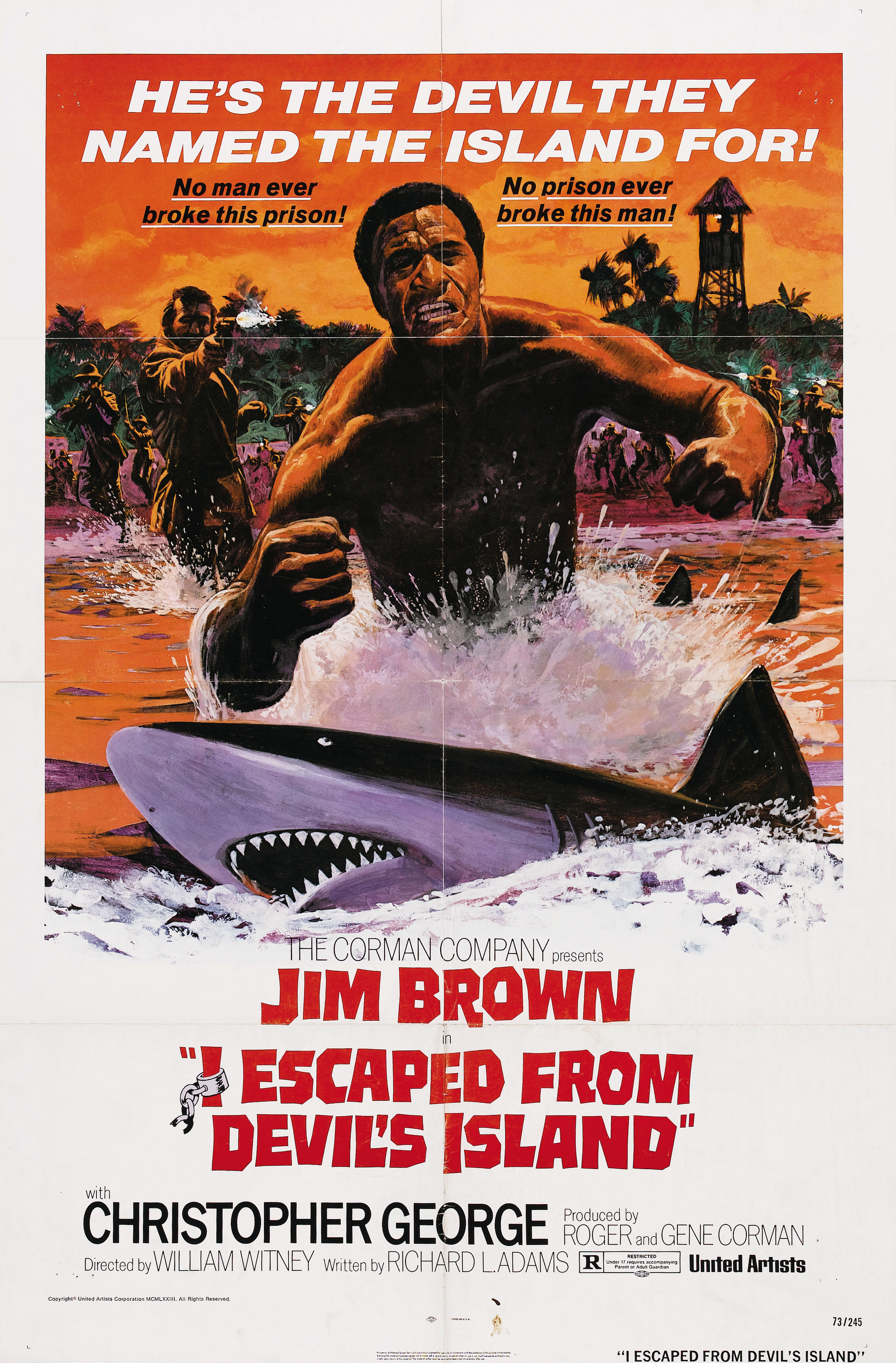
I got to put another notch on my Clint Eastwood belt and see Escape From Alcatraz (I have a goal which is to see every film either starring or directed by Clint Eastwood on a big screen- silly, I know, but whatever. It’s my dream, lemme have it!!) alongside this INSANE film called I Escaped From Devil’s Island. What can I really say about Devil’s Island except that any movie that has alternative male sexuality, native nymphomaniac women wielding coconuts as weapons (and no tops), a prison camp narrative, and random bits of stock footage shark sequences pretty much automatically has my heart. That movie don’t fool around, no way, no how.  And will I ever get to see such a beautiful print of that again? Nope, I seriously doubt it.

William Witney, 1973

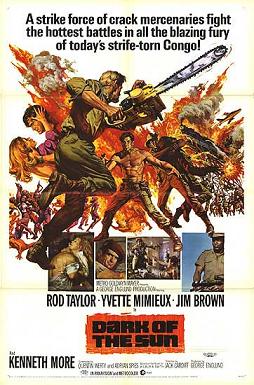
And then, of course, there was Rod Taylor night…the night that so many of my friends were looking forward to and I was so very interested in. To be frank, I had only a peripheral knowledge of Taylor. I knew him slightly, but so many people whose opinions I valued so very highly were so very very excited about this event that I knew I had to attend. Once again, my lovely cineaste-cohorts were not mistaken. While I felt a bit embarrassed about not knowing more about the actor and yet being excited about the night, I was more excited about learning what I had been missing. See, I’m not one of those people who will fake it if I don’t know something or haven’t seen something. I will come right out and tell you, here and now, I have never seen Jaws. Go ahead, make fun if you like, but my first time seeing it will be on a big screen dammit, and I. Will. Have. A. Blast. In any case, I figured that this could only be another case of me getting to know a new person in my life! So, I strapped on my Rod Taylor MAN-boots, and went to the double of Dark of the Sun and Hell River. While I greatly preferred Dark of the Sun, Quentin’s intro to the films and his enthusiasm for Taylor was catching. I was an instantaneous fan, and a few days later at stupid o’clock in the morning, I found a Rod Taylor film playing on TCM, and I totally watched it.

Jack Cardiff, 1968

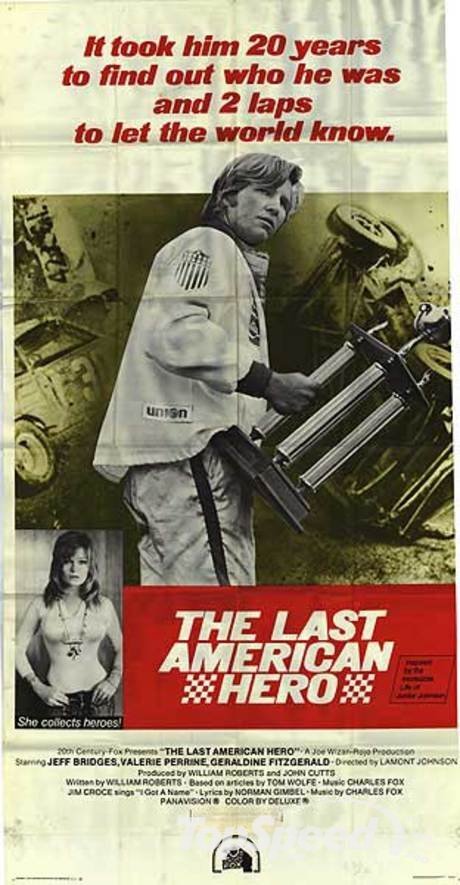
I saw so very many things this month from Tarantino’s programmed calender. I watched Richard Franklin’s Road Games (1981) along with Sydney Lumet’s The Anderson Tapes (1971). I finally got to see Stone (Sandy Harbutt, 1974) and enjoyed the living HELL out of the moonshine double-feature of White Lightning (Joseph Sargent, 1973) and Last American Hero (Lamont Johnson, 1973).

While I didn’t see everything, I saw quite a bit of what was offered. While I didn’t like everything I saw, what I liked, I loved. I think my favorite part of the whole deal was that for a month straight not only did I see my film-friends at the movies (who also seemed giddy at the chance to see rare films on the big screen) but we were all having fun. The main theme in all of these films was a kind of energy that is endemic to the Tarantino product. Each film projected held some kind of spice that Quentin has used to build his own works, and not in some “rip-off” way as I used to believe. I also do not believe it to be simply homage either, but that is due to tonight’s viewing of Kill Bill: The Whole Bloody Affair.

I will readily admit that I was never a huge Tarantino fan. I always adored him for Rolling Thunder Pictures and was forever grateful for his help in making Wong Kar-Wai a “film household” name. I always respected his film knowledge and I always admired his passion for cinema as it seemed as gargantuan and as intense as my own. While I have often gotten made fun of over the years for my obsessive devotion and outspokenness in regards to the Seventh Art, so, too, have I heard people knock him for the very same thing. But in my world there is absolutely nothing wrong with getting seriously excited about something that you love dearly and that gives you so much joy .

In any case, suffice to say that I certainly liked his films a lot but didn’t love them. Except maybe Jackie Brown. For some reason, I really loved that one. But that’s a whole other blog entry for another time. My fandom was basically predicated primarily on his self-achieved academic success and only partially on cinematic product. Things have since changed a bit. And this is where his March programming at the New Beverly fits in.

As I moved through the month with my friends and we cheered and clapped and laughed our way through the films, I noticed other things besides the fact that there were certain running themes of moonshine, racing cars/motorcycles, Dyan Cannon, and prison escape. There was cinematic tension to be sure, but I also started recognizing elements that Tarantino had taken from these particular types of films (and sometimes exact films) and used for his own- the “spice” I mentioned earlier. Many people have seen this as a kind of “lifting” or “borrowing,” which would ultimately mean that a Quentin Tarantino film is nothing but a collage. People accuse him of being nothing but a rip-off artist. Years previous to now, I might have agreed. But after having seen many of the films being paid homage to and worked with, I see that that is not at all what Tarantino ends up creating in his own pieces. Even by placing actual set-pieces that are almost identical mirror-replicas from the original source (ie the fight scene in Kill Bill between Lucy Liu and Uma Thurman in the snow is shockingly similar to one in a film called Lady Snowblood) it does not mean that the film itself is a “rip-off.” In fact, to me, it is the exact opposite. While that scene may end up becoming part of the history of that piece, certainly, it does not cause the initial piece of cinema any harm nor does it mean that the new cinematic creation is carrying all the little bits and pieces of meaning from the “first draft.” After all, no one got angry at George Lucas for “ripping off” Joseph Campbell’s Hero with a Thousand Faces with Star Wars, did they?

What Tarantino manages to do is something that I have written on many times- he creates a kind of cinematic palimpsest; something that only someone who truly loves the originating work can do with any modicum of success. Now whether you like/love/hate/feel indifferent towards his own films, his meticulous ability to create new and exciting media while reworking older visuals and themes is to be respected. There is indeed much within Tarantino’s film content that may indeed seem familiar. OK, fair enough. But to oversimplify the work and say that his films are mere pastiche is to underestimate the original content and downplay the effect of the newly created feature. I have many compatriots who are not fans. To each their own. My take is that, regardless of personal feelings on the content, one should be able to respect the construction. And as far as that is concerned, Tarantino just keeps getting better every film he makes.

What happened this month for his birthday celebration that was so very fabulous was that he revealed that construction- he told his New Beverly audience what goes into making a Tarantino film. This was quite a bit different to the last festival he did at the New Beverly, which was the Grindhouse Film Festival, back in 2007. That was another one that knocked my socks off. In fact, I went to so many shows, I couldn’t remember the exact number! My ex-boyfriend reminded me that I only missed 2 out of 25. It was another awesome engagement, but that one was focused on celebrating the release of the film Grindhouse (2007), thus they were all GRINDHOUSE features. This month? It was a slow build-up, and you HAD to be there. If you missed it, then you missed out.
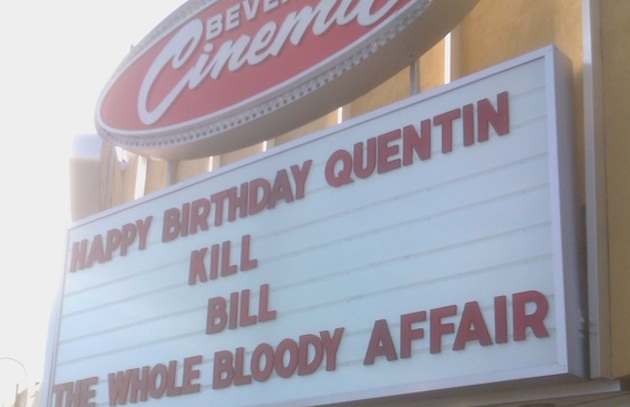
As a cinematic architect, Quentin Tarantino built up the entire program this month in accordance with showing the grande finale which was Kill Bill: the Whole Bloody Affair. The last films I saw before I saw Kill Bill were the films contained in the triple martial arts feature: Avenging Eagle (1978), Duel of the Iron Fist (1971), and Fighting Fists of Shanghai Joe (1973). I believe that the first two films were the very first Shaw Brothers films I had ever seen in my life, although I cannot say for certain. Going to college in Santa Cruz, I have to admit that there were several times I found myself hanging out with young men who would light up a joint and toss on a kung-fu movie, while I sat there amused on the couch, drinking a beer. In any case, I was totally consumed by the ones I watched at the New Beverly. Unlike those lazy college afternoons, I was sitting in my favorite movie theater watching an incredibly colorful print and engulfed in some pretty intense storylines regarding honor, friendship and respect. Avenging Eagle was undoubtedly my favorite (and not just because the stars were super hot). This film got me due to the fact that the narrative had a wild amount of humor intermixed with the drama and the physical dynamics that were truly on a different level than anything I had seen (at least recently). It was shot in such a way that the camera work itself seemed balletic alongside the intensely beautiful martial arts.

What I remember noticing as well was that each fight told its own story. Being a noir scholar, I felt that these fight sequences were not dissimilar to the way that noir cinematographer John Alton used to talk about physical darkness in film: he said that there was more contained within and more fullness/usefulness to shadow than there was in light. Thus he used more dark. If you see any of his films, they are some of the BLACKEST films ever committed to celluloid. Now, I’m definitely an action girl. I dig me some Die Hard, some Commando, some Lethal Weapon and many more. But what action films seem to do and martial arts films do not is weave the action directly into the narrative. Martial arts films create a very significant and almost sacred space for the action to take place in. Within the films we are used to, the action simply is part and parcel of the film, just as most films are shot using light as a method of focus. Alton’s theory of using darkness to flip things around was significant. It said: read this film differently- this is not your standard film, with your standard everyday narrative. And, indeed, Alton’s films were most definitely not standard fare. Watching these Shaw Brothers films and seeing these action sequences spoke to me on that same level.

I didn’t think I was going to get a chance to see Kill Bill: The Whole Bloody Affair, to be honest. It sold out in no time flat. I was gut deep in the middle of writing something for the Film Noir blogathon when they went on sale, and totally missed out. To be honest, I wasn’t that upset. I thought, “No big deal, so there’s gonna be s’more gore, in color, it’d be cool…but I missed my chance at a ticket. Oh well!” I got lucky. And I am so very very thankful that I did.

New Beverly Cinema, March 28, 2011

I would like to point you towards two lovely write-ups that have been done on Kill Bill, as they are smart, succinct and perfectly written. They also go into quite different arenas than I will. However, I think they deserve to be read, as they assist me in my argument on why this version of the film is so wonderful. The first, from Mr. Beaks at Ain’t it Cool News, is a beautifully composed piece that essentially posits: “Shorn of commerce-conceding baggage, turns out KILL BILL is a masterpiece after all.” The second, from Todd Gilchrist over at Cinematical, discusses all the things that were done correctly in this updated version and the things that he feels were not necessary. Both pieces say much of what I feel on the subject and are exceptionally written. In addition to those pieces, however, I have a few thoughts that I would like to share.

I like to refer to myself as a feminist film theorist. People bristle when I say that…I could care less. But I’m that chick that has a raging hard-on for horror films, action films, Giallo, pre-code and noir and finds very little that is “anti-women” in any of it. I don’t think violence inflicted upon a female in a film is, in and of itself, misogynistic. You have to really prove to me that there is misogynistic intent. Then again, there are so many films that are furiously angry towards women in such a way that it cannot be immediately understood. To me, those are the most dangerous pieces of media. Then again, it’s a very tricky area with lots of fine lines. That said, I would like to argue that Kill Bill:The Whole Bloody Affair is, by and large, one of the strongest pro-female films I have ever seen. Indeed, I feel that Tarantino himself is an incredibly pro-female director. Unlike many filmmakers who divest their female characters of all their agency (and yes, this does include some female filmmakers sometimes) Tarantino’s modus operandi is to instill as much power in his ladies as possible. Powerful examples of this (aside from basically every female character in Kill Bill) include the characters played by Pam Grier in Jackie Brown (1997),

Pam Grier as Jackie Brown...The New Beverly showed several trailers of her early films during March; films that clearly influenced the way Tarantino chose to portray women in film

Zoe Bell, Tracie Thoms and Mary Elizabeth Winstead in Death Proof (2007), and both Diane Kruger and Melanie Laurent in Inglourious Basterds (2009).

Melanie Laurent as Shosanna/Emanuelle in Inglourious Basterds, the brave and talented projectionist who, essentially, wins the war through her actions in the film

The empowerment that the women in his films receive is, by and large, more effective than the empowerment that I have seen any women receive in “chick flicks.” But then again- perhaps Kill Bill is just my kind of Chick Flick. Tarantino uses the Kung-Fu rhetoric within Kill Bill to establish and discuss the reclaiming of power within one woman, played by Uma Thurman.

Uma Thurman as The Bride/ Beatrix Kiddo

He leads us, through several different time shifts, through her multiple rebirths. He shows her powerful as a well-oiled machine and as helpless as a newborn baby and aligns us with her each time through her direct address. And just at the point in the film when she is the most powerless, when she has been stripped of all possibilities of escape and the world at large thinks she has been, literally, laid to rest…she is reborn yet again through her inner strength that she was trained to translate into outer strength. Now…seriously…how new-age-y does that sound, right? But that’s what happens. And it’s damn BLOODY. Holy CRAP.

The devastation of the Crazy 88 in The Whole Bloody Affair takes on a whole different meaning than it did before. The additional footage and the fact that it was entirely in color made the scene completely seamless. By repairing the color consistency and removing the black and white shots, the whole thing reads more like the gore-filled ballet of beauty it was intended to be.

Just as I noticed that the Duck hood ornament from Deathproof was the same one featured prominently in the trailer for Convoy showing right before Five Minutes to Live (Bill Karn, 1961), I realized that many of the elements that had been featured in the martial arts triple feature were the ones focused upon in Kill Bill. Honor, integrity, physical dexterity/ability, and (most importantly) revenge. However, placing it within western confines and the female spectrum lent it a uniquely new flavor. While Tarantino clearly used the original Kung-fu films as part of the original thematic parchment, the strong female iconography was the other main layer he put on top, in addition to the other, more aesthetic ones (the anime section, the graphic violence, etc). In total, his Kill Bill palimpsest reflected the Shaw Brothers title card that he slated at the very beginning of the picture, but also each of the additional filmic influences, from Lady Snowblood to The Searchers. Through this combinatory tactic, Quentin Tarantino created a new product that we know as Kill Bill and is best seen as Kill Bill: The Whole Bloody Affair.

If one were to look closely at Deathproof or Inglourious Basterds or his other works, you could see the same kind of architecture. They are all cinematic palimpsests: layered parchments that reflect the past but have new stories written upon them. Cinema itself is like that, a kind of self-reflexive medium, so it is no surprise that Tarantino’s work would constant reflect and refract its own history. But his twist is that it is not simply mirroring, it is creating as well. And to me, that is impressive.

I know that what I learned this month was that I really don’t need any damn commentary for a Quentin Tarantino film, because I needed to know about Tarantino films, I learned at the New Beverly Cinema. Thanks again guys for an amazing month. See ya in the front row soon!

Controlled Testimonies: Cinema, the State, and Nationalism

Hey there! Here is my final piece for the Japanese Cinema Blogathon. I hope that you have enjoyed these pieces and perhaps donated a little money along with the your time spent reading them. I appreciate and so do the people of Japan. Thanks again to Japancinema.net and Cinema-Fanatic.com for putting this blogathon together so quickly. Great work, guys!

Once again, if you would like to donate, just click on the Totoro below, and it’ll take you to the donation site. Enjoy!

The historical relationship between cinema, the state, and nationalism is as complicated as it is far reaching. In reality, these things have always been intertwined; although, for reasons that will be made clear, this fact has not always had the greatest outcome. As the state governs the finances of any given country, and many countries’ film industries are at least partially sponsored by those monies, many a country has seen economic state involvement in their filmmaking. Film is essentially a cultural product and, as Benedict Anderson states, the cultural products of a country have always shown immense dedication to a sense of national spirit or pride[1]. Following this logic, whatever involvement the state might have had with film has also been an involvement with a strong sense of nationalism. Amongst the many examples of this, the two most explicit examples of the historical involvement of politics and national identity in cinema can be seen in the cinemas of Italy and Japan.

According to Paolo Cherci Usai, Italian film production began fairly late compared with the rest of Europe. However, after 1905, the “rate of production increased dramatically in Italy, so that for the four years preceding the First World War it took its place as one of the major powers in world cinema.”[2] From this point up until Mussolini came into power and the talkies began, the Italian national cinema was fairly free and successful, barring the periods of hefty competition that it suffered from other nations such as the US and Germany. When Mussolini and fascism got involved, the entire industry and its product altered dramatically.

As sound was being introduced, the national cinema that had previously ranged from historically-based films (such as Alberini’s La Presa di Roma, 20 Settembre 1870/The Capture of Rome, September 20, 1870 or Pastrone’s Cabiria)

Cabiria (Giovanni Pastrone, 1914)

to socially concerned literary adaptations (like Ambrosio’s Cenere/Ash, based on a book by Grazia Deledda) shifted its content as a result of being under complete state control. Although the “official sanctioning” of censorship passed in 1923 and was “honed and perfected” throughout the next few years, the committed involvement of the Fascist regime was, as Morando Morandini notes, late in arrival.[3] However, once they got involved, they effected harsh and quick changes to the entire Italian cinema culture. While previous Italian films had definitely promoted a sense of nationalism, the fascist state sought to gear Italian cinema toward its own concept of national identity, through censorship and other means.

As far as the silver screen was concerned, Mussolini’s slogan, paraphrasing Lenin, and mirroring the sentiment of the German Minister of Propaganda, Joseph Goebbels, was “For us, cinema is the strongest weapon.” He advocated a strong censorship code as well as economically facilitating a complete restructuring of the Italian film industry. In 1935, the Direzione Generale per le Cinematografia was established to “co-ordinate film industry affairs.” As Ephraim Katz relates, by the onset of World War II,

The government had taken firm control of the film industry…an ingenious scheme made it illegal to show foreign films in their original language versions or subtitled: they had to be completely dubbed into Italian, a process that made it easy to substitute whole sections of dialogue, thus purging the films of any “harmful” ingredients.[4]

The vast quantity of Italian films during this era belonged to (primarily) one of two categories. The first category was the telefoni bianchi films or “white telephone” films, known as such because of the continual presence of shiny, white telephones.

"White Telephone" movies

These movies were primarily made up of  “glossy” escapist comedies or dramas, emphasizing upper class values and glamour. The second category was the propaganda film, which Morandini divides up into four types: patriotic and/or military films, films about Italy’s “African mission,” costume dramas that were a “parade of precursors of the ‘Duce,’” and anti-Bolshevik/anti-Soviet films.[5] All of the propaganda films concentrated heavily on a nationalistic spirit, proving the “superiority” of Italy and Italian culture through cinematic representation.

Whether a propaganda film or a telefoni bianchi film, it is clear that Mussolini’s influence altered cinematic product. Within these genres that either emphasized complete negation of contemporary realities or centered solely on the government’s definition of national identity, the incestuous relationship that had been forged between government, nationalism, and cultural product was obviously at the forefront. Mussolini’s censorship laws and dubbing laws made it impossible for any outside product to enter the country without being tampered with, not to mention the fact that any and all films with “questionable” content were considered illegal and therefore not allowed to be made. There was even a law that stated that for every three foreign films shown (which were “fixed”, censorship-wise), an Italian film (also “fixed” due to national cinema-creation laws) must be projected, reiterating the nationalism that Mussolini wanted to instill in his subjects. The state maintained complete control over what the Italian public was exposed to. It is not surprising then, that shortly after this period, the Neo-Realist movement came along to try to break free from governmentally imposed ideologies of national identity.

Italy, however, was not alone in being affected by the relations between cinema and state. The Japanese cinema culture had been dealing in national identity since it began, and, at approximately the same time that the Italian Neo-Realists moved in to try to shatter the hold that Fascism had on their cinematically developed national identity, a group of directors in Japan attempted to do the same thing.

Audie Bock identifies the Japanese cinema as having three significant periods: the “first golden age” in the 1930’s, the generation that “emerged from the moral chaos after the war,” and what she calls the “new mood” in the 1960’s, that spawned a “new wave.”[6] Within the first two periods, the three most common genres in the Japanese cinema were jidai-geki (period dramas),

Hibari Misora, famous Japanese Enka singer who starred in many jidai-geki.

gendai-geki (modern dramas), and, the lesser known, shomin-geki (films mainly portraying the daily life of the lower-middle class). After the war, the United States occupied Japan, outlawing any film that seemed to possess nationalistic rhetoric, thus the jidai-geki, seen as supporting the feudal system and celebrating Japanese historical events, were made illegal.

The imperialistic action taken by the US in banning the jidai-geki was not only one of the catalysts towards the creation of the Japanese New Wave, it also serves as an example of how governmental incursions (even from foreign governments) can have a serious effect on a given cultural product and its influence on national identity. The removal of the jidai-geki was a huge blow to Japan’s national image. Censoring or outlawing this genre was one of the ways that the US was able to humiliate Japan, and maintain power. Like Mussolini, by controlling the images, the US was attempting to control national identity, as well.

Not everyone took too kindly to being occupied by the US. In fact, a cadre of filmmakers objected to it and its impact on Japan with fervor, and displayed that in a set of films made in the 1960’s. In his incisive work on Japanese New Wave cinema, David Desser defines the New Wave as a movement “concerned with creating a film content and form capable of revealing the contradictions within Japanese society and with isolating the culture’s increasingly materialist values and its imperialist alliances.”[7]

Japanese poster for Ko Nakahira's film, Crazed Fruit (1956). This film is widely considered to be one of the first films in the Japanese New Wave movement.

Annette Michelson historicizes this movement for us in a very insightful manner. She addresses the political events and resultant student protests that sparked the hearts, minds, and cameras of these New Wave filmmakers into action, stating

It was in the struggle of 1959-60, against ratification and implementation of the U.S.-Japan Security Treaty, in both its original and revised versions, that the movement reached its culmination. Ending in defeat, the struggle, which left its mark on the Japanese polity- and upon its artistic practices-must be seen as linked to the more general movement of opposition to the United States’ Cold War policy. [8]

By identifying the movement as being located within the confines of this protest against imperialism and political policy, Michelson catalogues the location of this film movement. In doing so, we are shown the development of a new Japanese national identity, based not on past oppressions, but upon breaking free of those bonds.

Ironically, most of the Japanese New Wave filmmakers were not independent. Like the US, the Japanese film industry had a system that involved not only vertical integration, but contracted directors. Thus, most of the films that are considered “New Wave” were actually studio films! Directors like Shohei Imamura, Seijun Suzuki, and Nagisa Oshima all subverted the system from the inside out, although eventually leaving the big studios like Shochiku, to search of a more autonomous creative environment.

Shohei Imamura's Pigs and Battleships (1961) directly confronted issues having to do with the US military and the Japanese class system.

Out of all the New Wave directors, the one who exemplifies and reveals the most in regards to the movement is Nagisa Oshima. Not unlike Sergei Eisenstein, or many of the young men at Cahiers du Cinema, Oshima was not only a skilled director, but he was a frequent contributor to many film publications. Throughout his career he wrote extensively, not only about his own work and films he enjoyed, but also about the state of Japanese cinema and its relation to politics and history. His film, Night and Fog in Japan (1960), is an exquisite example, not just of a New Wave film, but also of the relationship that Japanese cinema and its “studio system” had to the political situation at the time.

Night and Fog in Japan (Nagisa Oshima, 1960)

David Desser describes Night and Fog in Japan as

One of the paradigmatic films of the Japanese New Wave Cinema…The film is explicitly about the political protests surrounding the renewal of the Security Pact and about the politics that characterized the immediate postwar era. As if to insist on the difference between the generation of the 1960s and its immediate predecessor in the postwar era, Oshima’s film juxtaposes two groups of student radicals- student Communists in 1952 and student protestors in 1960.[9]

Four days after the film was released, Shochiku, the studio Oshima was under contract to at the time, pulled Night and Fog, claiming “poor box office.” Oshima was livid. He knew that it was not the box office that was the problem. After four days? It wasn’t even given a fighting chance! In a highly passionate article in Film Criticism, Oshima addresses Shochiku, directing his protest to their “executive offices.” With “unrelenting anger,” Oshima writes,

This massacre is clearly political oppression. This is demonstrated by the film’s having been withdrawn in spite of the fact that its box-office figures were only slightly lower than usual, and by the sudden way it was withdrawn. If this isn’t political oppression, let even one theater, one independent screening group, give it one opportunity to be shown! Lend it out!…If this isn’t political oppression, what is it?[10]

Oshima continues, stating that Shochiku has “succumbed to political oppression” and that Night and Fog is a crucial film if for no other reason than the Japanese audiences have been given “foolish movies” for too long. Oshima ends the article on a determined note. He grimly states that he is not about to give up, because he believes “in the potential of the audience- that is to say, of the people. I believe they can change…I will continue to make work like this.”[11] The fortitude that Oshima shows, as well as his populist stance, exhibits a sense of strong national identity against the workings of the state. In addition, this article shows Oshima’s immense dedication to the cinema, even within a system of politics that was seeking to undo him, and disassemble the power of a movement designed specifically to stimulate a new kind of nationalism for the Japanese people.

Within the cinematic histories of Japan and Italy we can see two explicit examples of the relationships that are formed between cinema, nationalism and the state. Viewed in a larger perspective, there is a relationship between the two countries based on time period and global history. Italy was not alone in its experience. Many countries previous to and during World War II experienced periods of forced artistic submission, creating feelings of oppression that built up and exploded onto the creative world in the 1960s. Even the United States film industry was a victim of the state, dealing with the Production Code Administration and its censorship techniques. The Japanese New Wave demonstrates the next stage in this process, showing the ultimate effects of a country’s subjugation to an unwanted authoritative power.


[1] Anderson, Benedict. Imagined Communities. New York: Verso, 1983.

[2] Usai, Paolo Cherci. “Italy: Spectacle and Melodrama.” The Oxford History of World Cinema. Ed. Geoffrey Nowell-Smith. Oxford: Oxford University Press, 1996.

[3] Morandini, Morando. “Italy From Fascism to Neo-Realism.” The Oxford History of World Cinema. Ed. Geoffrey Nowell-Smith. Oxford: Oxford University Press, 1996.

[4] Katz, Ephraim. “Italy.” The Film Encyclopedia, 4th ed. New York: HarperCollins Publishers, 2001.

[5] Morandini, ibid.

[6] Bock, Audie. Japanese Film Directors. Tokyo: Kodansha, 1978.

[7] Desser, David. Eros Plus Massacre: An Introduction to the Japanese New Wave Cinema. Bloomington: Indiana University Press, 1988.

[8] Michelson, Annette. “Introduction.” Cinema, Censorship, and the State: The Writings of Nagisa Oshima, 1956-1978. Ed. Annette Michelson. Cambridge: Massachusetts Institute of Technology Press, 1992.

[9] Desser, ibid.

[10] Oshima, Nagisa. Cinema, Censorship, and the State: The Writings of Nagisa Oshima, 1956-1978. Ed. Annette Michelson. Cambridge: Massachusetts Institute of Technology Press, 1992.

[11] Oshima, ibid.

Zombies, Interdimensional Travel and Rock’n’Roll: Pulp Fiction and Japanese Cinema

This is my second piece for the Japanese Cinema Blogathon for Tsunami and Earthquake relief. If you can, I would ask that you donate a little bit of scratch for them. They’ve given us an incredible amount of culture to enjoy. Let’s help them recover from this, ey?

So, if you’re feeling generous…Here’s the link. Just click on Totoro! He will love you forever for it. PROMISE.

***warning: there are some small spoilers within this article, however, considering these films- there is really no such thing as a spoiler. However, I feel it important to say this…just in case.***

What do zombies, vampires, cannibalism, reincarnation, motorcycles and alternative sexuality have in common?

Modern Japanese cinema and pulp fiction.

It may seem strange that a literary tradition that has defined itself as being so very singularly American could have influenced a strain of Japanese cinema that is so singularly Japanese, but it has indeed done just that. While perhaps not as quantitatively traditional as Akira Kurosawa’s samurai pictures or Yasujiru Ozu’s look at Japanese familial and marital daily life, films like Wild Zero (Tetsuro Takeuchi, 2000) and Versus (Ryuhei Kitamura, 2000) reflect the history of Japan and Japanese culture in a manner that has now become part and parcel of Japanese cinematic tradition.

Released in the same year, Wild Zero and Versus not only represent a modern, industrialized Japan, but they are also multi-layered cinematic pieces. They are perfect examples of the axiom “without your past, you cannot know your future, because your future will be a child of your past.” Quite literally, these films display the future while making constant reference to the past. While not a new feat in the world of Japanese cinema, the methodology that these films have chosen to complete this task is quite original, not to mention more than a little strange. By utilizing the tenets of pulp fiction, these films manage to convey a Japanese”ness” that, while present, does not make itself known in shouting declarations. It lets the pulp do all the shouting for them. While most people would not consider either of these films subtle by any stretch of the imagination, I contend that the revelatory facet of these films is how well they manage to deftly slip a defined Japanese national pride within the context of genre pieces. It is an admirable achievement.

The term “pulp” is used to describe a very particular media during a very specific time period. They came up during the very last dying breaths of the 19th century, and faded out in the 1950s.

Named after the paper that they were printed on (these were the cheapie mags, and thus were all printed on wood pulp), the majority of the content was based upon things that later made their way to the American screen in the form of film noir/detective films, monster movies, and science fiction.  Opening up a pulp magazine guaranteed you entrance to an entirely different universe; one where many of the things that we now know as generic conventions were just being birthed.

Aside from the stories, these magazines were all about the covers. While they were generally only on the magazines that were a little pricier than the “pulps,” the visuals were what sold that journal, and the “pulpier” the better. While pulp started out referring to the paper, due to the exploitative components of the entire genre of magazine, inside and out, pulp came to mean something more akin to the fleshy part of an orange- juicy, colorful, and unfettered by a protective skin. One look at most of the cover artistry, and this would be obvious.

The topics covered ranged from romance/love stories, detective fiction and gangster drama to science fiction elements and horror stories. Whatever the most “hot ticket” item of the day was would be the cover of the latest pulp fiction magazine. More often than not, these magazine covers depicted a beautiful girl in some kind of trouble- gangster kidnapping, alien capture, or just your run-of-the-mill terrorizing monster attack. Since with pulp fiction they were actively attempting to shove the “tell a book by its cover” principle at you, the sheer sexiness of the scantily clad, terrified female was definitely supposed to sell the book- and it did. They sold like hotcakes. By combining sex, action, violence and fear on practically every cover, these low-quality magazines became a huge piece of modern day culture. The influence of these books can be seen everywhere from comic books to the exploitation films of the 1950s and all the way to Quentin Tarantino’s film entitled pulp fiction, which had a poster that looked as though it actually were a magazine from back in the day.

Pulp Fiction (1994, Quentin Tarantino)

Pulp magazines were highly representative of America and American politics. Whether they visually expressed the strength of the military, police and/or other authority figures through the covers or told gripping tales of suspense and terror that were lightly veiled allegories to WWII or the burgeoning Cold War, there was something within both the substance and the aesthetics that made it an All-American format. While there was certainly descension and governmental criticism in many of these tales (writers like Ray Bradbury and Philip K. Dick are not well-known for blind patriotic spirit), they are as American as apple pie. Aside from comic books (a very close sibling to the pulps), if you want to signify a kid as an “all-American youngster” in a film, just shove a copy of “The Shadow” or “Amazing Stories” in his grubby paw. That’ll be your signifier, without fail.

Versus: Prisoner KSC2-303 and the Journey Through the Forrest of Resurrection

If there were a pulp cover to Ryuhei Kitamara’s Versus, it would be too cluttered to even see the title. This film is so packed from start to finish with generic elements and caricatures that it almost seems like it is too much. However, that is part of the film’s inherent charm: its utter chaos.

The first time I saw this film, I think I actually understood it better than subsequent times. When I say that this is a piece of cinematic madness that makes Tom Waits’ Renfield look like a normal upstanding guy! The short list for this film would tell you that Versus contains the following: zombies, Yakuza, intergalactic travel, reincarnation, and a cyclic conflict between two warriors that repeats itself every time the individuals involved are back in human form. The longer list would give you cannibalism, vampirism, homosexuality, murder, revenge, and escaped convicts, all interacting within a Forest of Resurrection. According to Versus logic, this forest is in Japan, and is therefore the 444th out of 666 portals that connect this world with the next. And I haven’t even told you what the film is about!

Here’s the plot: prisoner KSC2-303 has escaped and has met up with some yakuza who are supposedly going to get him out of the forest area that he is in that even the gangsters note is “weird feeling.”

Prisoner KSC2-303

But they have to wait for The Man.

The Man- doing what he does best: bloody destruction.

During this, KSC2-303 frees the girl who these men have kidnapped (“here’s the thing- I’m a feminist,” he growls at them before engaging in a nasty battle), and then total chaos ensues. It doesn’t stop for the rest of the picture. Not even a little bit.

They all discover that the dead come back to life in this area, and the prisoner takes off with the girl. The yakuza chase after him only to realize the stakes are totally against them: they’ve been using this area to bury their kills for years. Not a great thing to do in what we find out is the Forest of Resurrection! Long story short, many battles and insane action sequences later, we are informed that KSC2-303 is part of a cycle that happens every time his soul is reincarnated into a different body- he must fight for the girl and prevent The Man (a character who is basically redefining how far evil can go) from his purpose- going through the portal.

KSC2-303 versus The Man

Ramie Tateishi writes of Japanese horror films that “the notion of horror implied in this buried/forgotten past is that the remnants of yesterday may turn vengeful as a consequence of being denied, ignored, or otherwise erased.” (1) Kitamura’s use of zombies and reincarnation only serves as an anchor for this statement. The fact that the yakuza cannot get away from the men that they have murdered and that The Girl and KSC2-303 keep coming back to repeat the same act every hundred or so years, just makes it more relevant. Part of what makes this film unarguably Japanese is its reliance on the past.

Tateishi discusses the state of  what he calls “cultural nostalgia” in Japan. He writes that while there is a certain sense of wanting to reclaim the past, remember it and re-experience it, there is also a certain desire to destroy it. He notes, “this response entails a type of active destruction, insofar as it involves a wiping away of the previous foundation in order to create a new one. What is most interesting about this process is the way in which the elements that characterized the past are (re-) defined as chaotic and/or monstrous, embodying the spirit of primal irrationality that is supposed to have threatened and worked against the new, modern way of thinking.”(2)  Kitamura’s involvement of monsters on every front in addition to the severely chaotic pace of the film tends to support this statement.

It must be noted, however, that Kitamura refuses to just let it stay with Tateishi’s destruction theory. With his involvement of reincarnation, Versus seems to be a film that not only pits two warriors of the ages against each other, but the past and the future. Even the introduction and the coda of the film seem to correlate to this theory, as it begins with images of a samurai warrior and is completed with the aesthetics of a futuristic setting. In a sense, Versus is a film about the conflict that exists within Japanese culture in regards to dealing with the past and moving towards the future. While the film seems to simply give heated and meth-fueled ruminations upon how this is playing out in this “alternate Japan,” the very fact that it is like a gore-addled music video that moves lightning-fast through everything says that perhaps this is part of what is so problematic. This conflict between the two warriors seems to continue, indefinitely, which seems to indicate that until the past is properly dealt with, then this fast-moving, forward-thinking culture will never fully be able to have solid unification.

Kitamura relies on the monstrous and generic iconography to help express his concepts. This tactic is not unfamiliar to the world of pulp fiction. Most science fiction stories and monster stories weren’t really about actual aliens coming from another planet, nor were they about the monster-of-the-week. These characters served as stand-ins for other, more controversial matters. In order to express political distress or in order to profer ideas that criticized the culture at large, the writers of pulp used the “monstrous” as a narrative tool. Subsequently, these stories may be seen as purely horror/sci-fi/adventure, and yet they are active political discourse.

Kitamura’s methodology is largely the same: serious action, lots of blood, guts and monsters, science-fictional environment, all leading to a subtle deconstruction of Japan’s conflicted feelings about how to navigate through the past/present/future.

Remember the Past: Wild Zero and Interpolated Nostalgia

While Versus concentrates on the Fantastic and ideas of conflict and battle, Wild Zero is more of a reflection on pop culture and nostalgia intermingled with zombies, yakuza, flying saucers and alternative sexuality. Using the band Guitar Wolf as a jumping off point, this film takes ideas of the past and modern fears and creates a sort of cartoon out of the entire thing. In a way, where Versus (silly as it gets sometimes) is serious, Wild Zero is almost parodic. Yet, just like every joke has a bit of truth, every “goofy” thing in this film also has a side that compliments it by being romantic or victorious. To be sure, where Versus runs dark, Wild Zero runs exuberantly light.

The pulp magazine business had a heady variety of romance magazines-Rangeland Romance, Romance Round-up, Romantic Detective and many, many more. Romance was a huge component of their business.

Within these romance pulps, the theme of being "faithful" was not unusual. It was a practical concept to try to "strongly suggest," due to the fact that many of the reader's boyfriends/husbands were away at war.

Considering that they ran throughout WWII, when all the ladies were at home working for the “good of the country,” there needed to be something for teenage girls and women to read while their men were away! (3) These magazines served a function within the US. Not only did they indulge a kind of romantic world that had been going strong in Hollywood films for a long time, but they also created a kind of Cult of Feminine Desire. The sighing-at-the-drop-of-a-hat kind. However, these books gave lonely women hope for a future in a wartime society that was pretty low in the hope department and also depicted women in some fairly active roles at times (cowgirls or ranchhands, primarily). While I’m not sure if the somewhat powerful roles on the covers of the Westerns were a good trade-off for the consistent depictions of helpless women needing to be saved on the covers of the rest of the pulps, there you have it.  In any case, the romance pulps served a very effective function in keeping hope and positive thinking alive.

Wild Zero has taken the pulp aesthetic, and put an entirely new spin on it. While pulp magazines (and indeed, most cultural objects at the time) were heavily heterosexist, Wild Zero takes romance and love to an entirely different place.

Japanese theater and film history has a very unusual gender history. Kabuki, one of the most famous and highly-regarded forms of theater, has used men to play female parts since practically the beginning. While it started out with both men and women in the plays, women were banned from Kabuki in 1629, due to the suggestiveness of many of the plays being performed in tandem with the fact that most of the actresses were also available for “special services.” On the other hand, when they started to put young men in the roles originally designated for women, that didn’t seem to change the situation much. those young men (Wakashu, as they were known at the time) were also available for prostitution. And their customers? Well, let’s just say that the wakashu were equal-opportunity providers!  While the wakashu were eventually banned as well, both the ban on women and the one on young adolescent men playing women were later rescinded.Women, however,  did not re-enter the theater in an acting context until much, much later.

Men continued to play both the male and female roles in all the major types of theater in Japan: Kabuki, Kyogen, and Noh. This was such a basic part of Japanese culture, that it continued into the cinema for a good amount of  time. Movies began being made in Japan in 1897. The first time that they put a female actress before the camera was in 1911. Considering that the Japanese film industry worked fast and hard, this was a fairly long time to wait to have a female play a female role.

Wild Zero plays on this theme with brutal honesty. Our hero, Ace, finds a young girl at the gas station that he is at. He is on his way to see his favorite band, Guitar Wolf (who he has, incidentally, just become blood brothers with after helping them out of a jam back at the previous show) again, when he stops to fill up on gas. As he steps off his name-emblazoned motorcycle, his eyes meet hers. Her eyes meet his.

It is indeed love at first sight. Tetsuro Takeuchi uses this particular moment to not only emphasize the film’s ultra-sensational pop-culture aesthetic, but also to accentuate the pulpiness of the film’s general narrative. While the nostalgia that Wild Zero seeks to re-create is most definitely a strange amalgamation of 1950s Rebel Without a Cause-ness meets hyperbolic punk-rock superhero of the Repo Man variety, this particular scene is, in effect, created to inspire all the romance and “girly-gushiness” of a romance pulp.

Ace and Tobio’s relationship is a complicated one, however. The main issue? Well, as Ace finds out after saving Tobio from an onslaught of zombie attackers, she is really a highly attractive he. The idea of being in love with a transexual freaks Ace out. He runs and hides from Tobio, just as she has opened herself up to him and told him of her secret. It is at this point that the Spirit of Guitar Wolf appears to Ace, and tells him in a quite disciplinary and reprimanding way, “Love has no borders, nationalities, or genders!”

In a sense, Takeuchi’s film is referencing Japanese theater/film history and making an attempt to recall and rewrite a new one. Tobio’s transexuality not only plays on the existence of the wakashu, but decidedly challenges modern homophobia. This film has a fun and playful front, but it does recognize some extremely powerful and significant topics. In this particular instance, Ace’s adoration for Guitar Wolf makes him realize that his fear was misguided, and he spends the remainder of the film looking for Tobio in order to be reunited with the person that he loves, regardless of their gender.

Wild Zero has many things in common with Versus and I’m not referring simply to the fact that they both deal with yakuza, zombies and space travel. Takeuchi obviously utilizes the same tactics that Kitamura does by creating a hyperbolic, cartoonish and explosive narrative in order to relay issues of Japanese culture. While Versus works mostly with ideas of traditional Japanese-“ness,” Wild Zero confronts modernity and Western influence.

Wild Zero is about rock’n’roll and it is about being attacked by zombies. The band, Guitar Wolf (made up of Guitar Wolf, Bass Wolf and Drum Wolf), serves as a reminder of the past but how one might utilize the past in order to create the future. Their greaser-aesthetic and the pounding soundtrack only serve to support this idea. While songs like Bikini Kill’s “Rebel Girl” are not exactly rockabilly anthems, the rest of the soundtrack is filled with retro-sounding songs that have been renegotiated in order to fit a more punk-rock beat. But, as stated in the beginning of the film by Ace in response to the Captain (the corrupt, drug-dealing club manager), “Rock’n’roll is not over! Rock’n’roll never dies!” And it doesn’t. But as nostalgically rock’n’roll as Guitar Wolf look, they also drive a more modern car, Guitar Wolf’s motorcycle shoots fire out of the back, and they have (essentially) superhero powers. They are past and future, all intermingled within the rockabilly rhetoric of rock’n’roll living forever.

Wild Zero‘s penultimate concentration on science fiction, horror and heroism brings back ideas of pulp magazines. The concentration in many pulp magazines was victory over the invading force, whether that force was a robot, an alien, the opposing military side or an evil monster. Within this film, Ace must conquer his personal demons in addition to the zombies who are trying to kill him and keep him from saving Tobio. While he is engaged in this journey, the film makes continual references to the past in order to show how Ace’s eventual victory is also, in a way, a victory over what is outdated. Even the Captain, when he makes the statement “Remember the past!” to Guitar Wolf receives a very clear message of what the past means at this juncture.

In a sense, Guitar Wolf serves the same role in this movie as The Ramones did in Rock’n’Roll High School . The Ramones were there to be a band but also be a symbol. While Guitar Wolf is a much more active figure within the diegesis than The Ramones were, they serve similar functions. Not only does Guitar Wolf’s look bring up the highly Japanese addiction to the Western rock’n’roll aesthetic, but they are tour guides through the film. One thinks from the several songs that they do, that they would serve a very minor function; that they would simply be there to be the rock stars that Ace sees them as and have a simple performative role. But Takeuchi approaches it differently. Because fan culture is such a large part of Japanese culture, Wild Zero is used to celebrate that aspect of being Japanese but also deconstruct it. While Ace follows the band blindly at first, he learns that there is much to be gotten from their existence that is not received from simple hero-worship. As Ace says in his final voiceover, “From that day on, I never saw a Guitar Wolf show again…Courage and rock’n’roll: that’s what he taught me that night. Love has no boundaries, nationalities, or genders. And he was right.”

Confronting zombies, is a way of negotiating pop-cultural influences. And Wild Zero does so, no holds barred. The zombies are displayed like traditional iconic American zombie archetypes, a la George Romero. I would argue that the destruction of the zombies is analogous to the Western hold on Japanese culture. More importantly however, the existence of zombies that are so very Western in aesthetic only goes to show that there is a certain discursive element to their appearance. The characters’ conversation in regards to Night of the Living Dead seems to sustain this theory since none of them have actually seen the movie and yet they argue about it. This particular scene lays bare many features of Japanese fan culture. Add that to the character of Guitar Wolf (the entire band), and you have Takeuchi’s loud and proud declaration of Japanese pop-culture.

Look at Guitar Wolf themselves: they look like a rock’n’roll band, but they play music on their own terms. While I’m at a loss to describe exactly the kind of music that they play, it is certainly an amalgamation of noise, punk, rock and other genres alongside surrealistic lyrics. Takeuchi essentially makes the statement that, while Western pop-culture certainly informs Japanese pop-culture, it does not create it. While it may seem like a superficial thing to just take the aesthetic of one country’s media and apply it to your own, it is, in fact, more nationalistic and entirely Japanese.

As films, both Versus and Wild Zero may initially seem like wild, action-packed, fluff with acid-hallucination-like versions of plotlines (mostly in the case of Versus, but Wild Zero‘s wacky and comic-book-like story definitely counts). But, much like the science-fiction and horror pulps with their attacks on government and culture, these films have managed to sublimate ideas of Japanese culture within otherwise generic conventions. Part of this is not sublimated- I have yet to see a Western-culture film that is so densely packed with horror/scifi/romance iconography as these, and especially one that flips many of these conventions on their heads. On the whole, however, these films seem to introduce new methods of Japanese film-making that I, for one, enjoy a great deal.

(1) Tateishi, Ramie. “The Japanese Horror Film Series: Ring and Eko Eko Azarak.” Fear Without Frontiers: Horror Cinema Across the Globe. Ed. Steven Jay Schneider. Godalming, UK: FAB Press, 2003.

(2) ibid.

(3) Incidentally, WWII was also when romance comic books became extremely popular, for largely the same reasons. I would contend that one likely spawned the other, since romance pulps (and their famous covers) have a much longer history and go further back than romance comics. Of course, the irony of this is that romance comics continued and pulp magazines fell out of favor.

Eastern Ways in Western Dress: Cultural Hybridity and Subversion in Yojimbo

This post is for the Japanese Cinema Blogathon.  It was started to help assist in the earthquake & tsunami relief. If you like my post/hate my post/are bored to tears by my post, or just enjoy the damn pictures, PLEASE help. Living, as I do, in an earthquake-prone locale (Southern California), earthquakes are quite frightening, and I would like to do my part. Since I am broke as hell, all I can realistically do is what I do best: write. And so I will write for Japan, and hope that someone makes a donation off of what I’ve written or just makes a donation, period. Japan has given us some of the most incredible cinema in the entire world and will continue to do so. Let’s help out a little in appreciation, shall we?

The standard assumption about modern Japanese culture is that because it contains elements familiar in the west, perhaps even born in the west, it has become, in effect, entirely Westernized. Looking closer at Japanese culture, however, we can see that this assumption is about as ridiculous as saying that the United States has become more Chinese because a good many people prefer that cuisine. It is only an example of the kind of binary thinking that revisionist histories and neo-colonial thinking have created within the world that would necessitate this kind of compartmentalization.

Within this essay, I will be looking at an example of Japanese cinema that expresses not only the Japanese-ness noted previously, but also certain aspects of cultural hybridity and significance within Japanese culture. In order to explicate my argument, I will be using a variety of texts varying from discussions of cultural hybridity and Japanese history to Hamid Naficy’s work on accented cinema. What I hope to show in this work is the remarkable ability of one culture (Japan) to reappropriate and “poach” different themes and iconographies from another culture (United States) and feed them through their own, culturally specific machinations in order to create something wholly new and different.

The film I have chosen, Yojimbo (Akira Kurosawa, 1961) illustrates the ways in which cultural identity is asserted through the conscious blurring of boundaries and intentionally fluid interpretations of genre. By re-placing the American Western within historically important samurai contexts, Japanese cinema can be seen to be making its own cinematic space.

Yojimbo (1961), Akira Kurosawa

This claiming of cinematic environment and demand for a location of cultural expression places modern Japanese cinema squarely within the definitions of Third Cinema. As defined, Third Cinema is “an alternative cinema…a cinema of decolonization and for liberation.”[1] By retaining individual signifiers and insisting upon their own generic interpretations, these films reject cultural depreciation and celebrate ethnic identity, and expound the tenets of the Third Cinema in a very localized fashion.

In order to truly understand Japanese cinema, it is crucial to know the history of the country itself. As Teshome Gabriel writes,

Lacking this historical perspective, the film critic or theorist can only reflect on the ways in which this cinema undermines and innovates traditional practices of representation, but he/she will lose sight of the context in which the cinema operates. An equally significant component of the critical perspective that must be adopted is the recognition of the TEXT that pre-exists each new text and that binds the filmmaker to a set of values, mores, traditions and behaviors- in a word, “culture”—which is at all moments the obligatory point of departure.[2]

Thus, in order to not fall into the “trap of auteurist fallacies and ‘aesthetic’ evaluative stances,”[3] I shall give a brief historical and cultural outline of Japan. Although by no means exhaustive, I will cover the primary events that many historians feel to be the most essential and transformative, as well as those occurrences that have singular importance to my argument.

Although there was clearly a great deal that went before, the Heian period, which lasted from 794 a.d. to about 1185 a.d., is where we will begin. During this era, there was a “flowering of classical Japanese culture in new capital of Heian-kyo (Kyoto). Court aristocracy, especially women, produced a great body of literature–poetry, diaries, the novel The Tale of Genji–and made refined aesthetic sensibility their society’s hallmark.”[4]

image from the illustrated scroll, "The Tale of Genji (Genji monogatari)" - a narrative novel authored by Lady Murasaki; painted by Takayoshi in the 12th century

The cultural product that resulted from this period was significant and vital, being reproduced continually even today, within Japanese painting, cinema and television. However, although the creative vitality still existed, the relative peace was not to remain, as the Kamakura Period (1185-1333) ushered in the beginning of military rule. The significance of this was vast, as it replaced noble rulers with the samurai (warrior). Although there is recognition of artistic development during this time, the primary feature for over a century is civil war, and until approximately 1600, Japan is immersed in Sengoku Jidai (Era of the Country at War). There is no unified Japan, only a series of warlords fighting with each other. Intriguingly, this is also the period during which the Portuguese enter the Japanese islands and introduce firearms and attempt missionary work to convert the Japanese to Christianity. The Portuguese fail in their religious mission, however, and are punished severely for attempting to dilute the national culture.

In 1568, a man named Oda Nobunaga starts the process of reunifying Japan. Followed by Toyotomi Hideyoshi, the foundation of modern Japan is laid. However, although these men laid down the base, it was up to another man to change the course of Japanese history forever. After he brutally beat Hideyoshi (and a few years later forced Hideyoshi’s legitimate heir to commit seppuku, ritual suicide), a man named Tokugawa Ieyasu became the Shogun, and ruled with a strict, isolationist sensibility. He cut off exchange with all countries except China and the Netherlands, expelled Portuguese missionaries and essentially shut the doors of the country for 200 years. Michael Cooper, the former editor of Monumenta Nipponica, an interdisciplinary journal on Japanese culture and society, states quite simply that, “Tokugawa wanted to clear the board of all these foreign influences which were just muddying the waters, making life more complicated.”[5] And clear the board he did. Not only was trade extremely limited, but also foreign books were outlawed, travel abroad was forbidden. For 200 years Japan was kept away from the rest of the world, and the rest of the world was kept out of Japan.

Tokugawa Ieyasu

During this period, however, the Japanese had ample time to refine and hone its multitude of cultural assets, without any infiltration or any disturbance from anyone. Literature, ritual customs, art, and theater all prospered in this period. However, this could only last for so long. Finally, around 1867, the Tokogawa shogunate was ended and this started the Meiji Period.

The Meiji Restoration (called this because power was restored to the Emperor Meiji) began the colonization of Japan by the west. It is noted that during this period, the Japanese, “like other subjugated Asian nations…were forced to sign unequal treaties with Western powers. These treaties granted the Westerners one-sided economical and legal advantages in Japan.”[6] Beyond this, significant modernization and Westernization occurred. Compulsory education, now reformed to resemble French and later German systems was implemented, as well as a European-style constitution in 1889.

1686- the Meiji emperor of Japan moves from the old capital, Kyoto, to the new capital, Tokyo

After being closed off from the rest of the world for so long, its seemed to the Japanese that they needed to hurry and “catch up,” so they sent scholars away to different countries to attempt to get what they needed in a more condensed fashion. However, after a certain period of time, and successfully winning two wars, all of this Westernization became repugnant to the Japanese, and there was a significant rise in nationalism again.

Western forms of modernity proved to be like a virus- once they entered the Japanese system they stayed. The symptoms were treatable, but the virus would always be there. On the other hand, the more this virus showed itself, the more nationalistic the country got. The West continued to colonize Japan until the end of World War II, when Japan was physically occupied by the US, and forced to alter everything from cultural specifics (such as what they could and could not put in cinematic or literary texts) to political structures (religion and state were now entirely separated). After two hundred years of relative peace and cultural unity, it took less than half that time for the West to rope Japan in, and force it into what they saw as submission.

While the historical evidence does show the “conquer” of Japan, and its subsequent punishment and demonization within much of Western culture (especially the US), what occurred within the cultural borders of Japan was something very different. With the sudden influx (initially desired, consequently abhorred) of so many different cultures after the Tokugawa period, it is difficult to conceive of Japanese culture not having been influenced in some way. However, the consolidation of nationalistic identity was so strong before the ports opened that even the influences that had become present were now filtered through a Japanese lens.

The three phases that Frantz Fanon discusses in the progression towards cultural decolonization are defined by Teshome Gabriel as

(a) The unqualified assimilation phase where the inspiration comes from without and hence results in an uncritical imitation of the colonialist culture; (b) the return to the source or the remembrance phase, a stage which marks the nostalgic lapse to childhood, to the heroic past, where legends and folklore abound; and (c) the fighting or combative phase, a stage that signifies maturation and where emancipatory self-determinism becomes an act of violence.[7]

If you follow Japanese history from the end of the Tokugawa Period forward, it seems that Fanon’s text is accurate and appropriate. Certainly the Japanese were fascinated by the outside culture that they had not experienced for over 200 years, but when that outside force sought to dominate their carefully nurtured autochthonous culture, the Japanese bristled. In fact, according to Donald Ritchie and Joseph I. Anderson, the Japanese reaction to new innovations in early cinema followed Fanon’s structure as well. In the beginning, the Japanese audiences “embraced the novelty of the moving picture with at least as much enthusiasm as other nations” but they did not, however, embrace the new cinematic methods, and neither did the directors. Now whether this was due to culturally bound aesthetic preference or not is still up for debate, but Ritchie and Anderson do note that in this aesthetic decision, the audience was “following what has become recognized as a peculiarly Japanese pattern of behavior: first the enthusiastic acceptance of a new idea, then a period of reaction against it, and finally the complete assimilation and transformation of the idea to Japanese patterns.”[8] If this is indeed the case, the Japanese have been in the process of decolonialization in the cinema for almost as long as the cinema has been around.

The cinema in Japan, though initially full of foreign product, soon began to create its own, complete with genres that celebrated nationalism and cultural history. Fernando Solanas and Octavio Getino write that “real alternatives differing from those offered by the System are only possible if one of two requirements is fulfilled: making films that the System cannot assimilate and which are foreign to its needs, or making films that are directly and explicitly set out to fight the system.”[9] What if, in the presentation of these highly ethnocentric and history-centric pieces, Japan was able to do both? I maintain that Japan’s early genre cinema was not only a way of recuperating feelings of nationalism and pride in cultural identity, but also a way to fight the virus of colonialism that had already swept through the country.

Two of the most popular genres in Japanese cinema (up until they were occupied and forced to change cinematic content) were jidai-geki (historical dramas) and gendai-geki (modern dramas). Stories such as Chushingura (the tale of the forty-seven Ako ronin), which was set in the Tokugawa period and based on historical incidents, were incredibly popular. In fact, that particular story was made into a film over eighty times between the years 1907-1962![10]

Chushingura (1962)

But stories like Chushingura would not have been assimilable to an outside culture, let alone the System that Solanas and Gitano mention. And the jidai-geki made up close to half of the feature films in Japan from 1910 onwards![11] The very structure of Japanese Cinema, from its origination, prohibited its cooptation and cultural dilution. By utilizing their history and cultural signifiers within the cinematic texts, they not only denied the System but also outright thumbed their nose at it.

Donald Ritchie discusses the theory that it was Japanese theater conventions that helped teleologically maintain the cultural identity of the Japanese cinema. It is a distinct possibility that theatrical features like the benshi (a live interpreter for the silent films), or the use of men acting in women’s roles did help in the cultural preservation. However, I feel that Ritchie’s own analysis is far more perceptive. He states that though these theatrical attributes might have “somehow served to preserve the ‘Japaneseness’ of this cinema, protecting it from rapacious Hollywood, [this theory] fails to take into account the fact that…any Hollywood ‘takeover’ was a highly selective and invitational affair. If anything, it was Japanese companies that took over the ways of the California studios. It is probably safe to say that Japan has never assimilated anything that it did not want to.”(italics mine)[12] While it is of utmost consequence to recognize the agency that Ritchie mentions, it is also appropriate here to mention the concept of cultural hybridity. The nature of Japanese cinema is not one of assimilation but of translation. While Japan was a colonized nation, considerably flooded with Western ideology, they managed to hybridize the west with the east, and filter it through their own cinematic language. In their own way, they did what Francisco X. Camplis was suggesting when he connected Raza cinema to Third Cinema, stating that, for decolonization, Chicano cinema needed to “explore and discover our own sense of aesthetics. Our own language.”[13]

Japan, while maintaining sovereignty over their cultural product, also enunciates their voice through the hybridization of colonial product. This technique of cultural hybridity is a highly subversive act of decolonialization, according to Robert Stam. He writes, “these aesthetics share the jujitsu trait of turning strategic weakness into tactical strength. By appropriating an existing discourse for their own ends, they deploy the force of the dominated against the dominant.”[14]Thus, when films such as Akira Kurosawa’s Yojimbo (1961) re-place the Western within a samurai context, it is actually creating a site of resistance.

Although Kurosawa has been called the “most Western” of all Japanese filmmakers,[15] he himself stated that he made Western films for “today’s young Japanese.”[16] While these statements might appear to have similar meaning, it is crucially significant that Kurosawa designates who his audience is. While Western critics may be able to see familiar narrative patterns or generic properties, Kurosawa’s work is a multi-layered text that, although seeming familiar to them, is still a foreign film. A.O. Scott writes that “filmed images do not require translation; we know what we see. Narratives, of course, are another story; even when they seem to be transparent, they come encrusted with local meanings, idioms and references, some of which will inevitably be lost as they move from one audience to another.”[17] Although immediately recognizable as an example of the Western genre, Yojimbo is a perfect example one of those films that, as Scott notes, is “encrusted” with its own set of culturally-bound signifiers.Toshiro Mifune as Sanjuro Kuwabatake/ The Samurai

The story of Yojimbo takes place just after the end of the Tokugawa period. A ronin (masterless samurai) who was “once a dedicated warrior in the employ of Royalty, now finds himself with no master to serve other than his own will to survive…and no devices other than his wit and his sword”[18] Traveling in solitude, he comes upon a village and is fascinated to learn that it is in the middle of a turf war between two extremely morally corrupt clans. The ronin, Sanjuro, takes it upon himself to rid the town of these evil clans and their warlike ways by pitting them against each other, and letting them do the damage. In the end, the two clans do destroy each other, but the irony is that when they do, the town is left empty- a literal ghost town.

The two clans do battle

In his book, An Accented Cinema: Exilic and Diasporic Filmmaking, Hamid Naficy writes,

Accented films embody the constructedness of identity by inscribing characters who are partial, double, or split, or who perform their identities by means of the strategies already mentioned. By so engaging in the politics and poetics of identity, they cover up or manipulate their essential incompletion, fragmentation, and instability.[19]

In Yojimbo, Sanjuro’s constant changes in affiliation between the two fighting clans underscore his fractured character. Sanjuro is a wanderer. He is a man with no allegiances and no home. He has arrived in a town that is already split in two, and now, in order to unite the town (and perhaps his own identity), he must fracture himself even further by playing both sides. To go even further, whatever side he is playing is also instable because it’s a lie. David Desser describes Kurosawa as a “dialectical” filmmaker. He describes Kurosawa’s films as cinematically split, noting that Kurosawa “offers enjoyment to the audience seeking escapism and the audience seeking substance; he speaks to the Japanese and to the West. More importantly, through a dialectical combination of the two, he speaks to both about each other.”[20] If this is indeed the case, then Sanjuro’s split identification is standing in for Kurosawa’s, a self-reflexive position that, Naficy notes, is also not unusual for accented film.

Sanjuro (Toshiro Mifune) and director Akira Kurasawa

In accented cinema “neither the home-seeking journey nor the homecoming journey is fully meliorating. The wandering quests, too, are often tempered by their failure to produce self-discovery or salvation.”[21] Kurosawa’s deliberately open-ended yet dark and ironic close to Yojimbo attests to that theory. After all the effort that Sanjuro put into saving the town, the only people who are left alive at the end are the coffin-maker and the tavern keeper. Sanjuro looks at them, says, “Now it’ll be quiet in this town,” turns his back and walks away, clearly continuing on with his journey. It is clear that, although he has saved the town, there was really nothing there to save. Although nihilistic, this scenario further explores Kurosawa’s identity as an accented and hybridic filmmaker and reaffirms Sanjuro’s identity as his cinematic double. With this ending, Kurosawa clearly demonstrates his own border consciousness, which “like exilic liminality, is theoretically against binarism and duality and for a third optique, which is multiperspectival and tolerant of ambiguity, ambivalence, and chaos.”[22]

Yojimbo possessed many of the standard features of the Western genre, yet also ended up revolutionizing it. I contend that Desser’s theory of Kurosawa as a dialectical filmmaker should be widened to include his position as a dialogical filmmaker as well. Yojimbo did not remain contained within Japanese borders. In 1966, director Sergio Leone remade it in Almeria, Spain. The film starred Clint Eastwood, and was released under the title Fistful of Dollars. Jim Miller writes,

Although the storyline remained much the same in Fistful as it did in Yojimbo, a man alone playing both sides against each other, the end result of Clint Eastwood’s role brought about a whole new look at the Western hero as a lone wolf, anti-hero that was totally different from characters John Wayne had played. The anti-hero had been done before and been well received…but…[this] was a Western anti-hero who had not been viewed by American moviegoers, and that made the character and the actor who played him a different kind of Western hero.[23]

While Fistful of Dollars became the first in what would be a series of films starring Clint Eastwood as Sanjuro’s American surrogate, the Man With No Name, it is integral to recognize that the American translation of Kurosawa’s work introduced a new archetype. My position is that Japanese films (even Yojimbo, which David Desser admits is “dependent on Western [genre] structures”[24]) subvert Western colonial narrative structures through their cultural filtration system. This is further proven by Miller’s discussion of the reception of Clint Eastwood’s character.

The three central roles in the Western genre are “the townspeople or agents of civilization, the savages or outlaws who threaten this first group, and the heroes who are above all ‘men in the middle,’ that is, they possess many qualities and skills of the savages, but are fundamentally committed to the townspeople.”[25] Kurosawa’s conflation of archetypes is vital and entirely intentional. By creating a climate in which the townspeople are the savages and the hero is committed to the destruction of the townspeople, he is forcing the spectator to reflect on “a world of uncertainty.”[26] In many ways, this film can be seen as analogous to the confusion brought on by Westernization. The main villain, Unosuke (the son of one of the clans), is in possession of a gun, and waves it around like a cowboy. The rest of the men are armed only with swords. The presence of this weapon, and Unosuke’s ultimate defeat, signifies that even though the Western world might have invaded Japan historically, forcing change and cultural infiltration, the basic structures of Japanese identity are strong enough to withstand that change. Essentially, Sanjuro’s abrupt but confident departure from the town signifies the triumph of the samurai, symbol of loyalty and honor, and Japanese history, over the attempt by the West to conquer the East.

In the introduction to Donald Ritchie’s book on Japanese cinema, he traces the hypothetical life of a 50-year-old man in each period of early Japanese cinematic history. From the man in 1896, who “would have been born into a feudal world where the shogun, daimyo, and samurai ruled” to the man who “would have witnessed the forced adoption of the Gregorian calendar, the emergence of a nationwide public school system, the inauguration of telephone services…and the construction of railways,” Ritchie briefly looks at what a Japanese man might have experienced. But, Ritchie says, “through it all, he…would have been told to somehow hold on to his Japaneseness. [A] slogan indicated the way: ‘Japanese Spirit and Western Culture’ (Wakon Yosai)- in that order…[and] In this manner, it was hoped, Japan might avail itself of the ways of the modern West and, at the same time, retain its ‘national entity.’”[27] Teshome Gabriel says that Third Cinema “must above all be recognized as a cinema of subversion.”[28] By working through the ideas of Wakon Yosai, the Japanese cinema is a proud and active part of Third Cinema. Through the jujitsu model of hybridity and a refusal to dilute their national identity, Japanese cinema has, and is continuing to have, the best of worlds. They truly have subverted the dominant paradigm and are only richer as a result.


[1] Gabriel, Teshome. Third Cinema in the Third World: The Aesthetics of Liberation. Ann Arbor: University of Michigan Research Press, 1982.

[2] Gabriel, ibid.

[3] Gabriel, ibid.

[4]Heinrich, Amy Vladeck.  Ask Asia, a K-12 Resource of the Asia Society, History of Japan, 1994. available at http://www.askasia.org/image/maps/timejape.html, Internet; accessed 16 March 2011.

[5] Michael Cooper, interviewed in “Japan: Memoirs of a Secret Empire.” Empires, narr. Richard Chamberlain, PBS, 26 May. 2004.

[6] Meiji Period (1868-1912), Periods of Japanese History, Japan Guide, 2 June 1996. available at http://www.japan-guide.com/e/e2130.html, Internet; accessed 20 November, 2004.

[7] Gabriel, ibid.

[8] Anderson, Joseph I. and Donald Ritchie. The Japanese Film: Art and Industry. Princeton: Princeton University Press, 1982.

[9] Solanas, Fernando and Octavio Getino. “Towards a Third Cinema: Notes and Experiences for the Development of a Cinema of Liberation in the Third World.”

[10] Barrett, Gregory. Archetypes in Japanese Film: The Sociopolitical and Religious Significance of the Principal Heroes and Heroines. Cranbury: Associated University Presses, Inc, 1989.

[11] Ibid.

[12] Ritchie, Donald. A Hundred Years of Japanese Film. Tokyo: Kodansha International, 2001.

[13] Camplis, Francisco X. “Towards the Development of a Raza Cinema (1975)”. Chicanos and Film: Representation and Resistance. Ed. Chon Noriega. Minneapolis: University of Minnesota Press, 1992.

[14] Stam, Robert. “Beyond Third Cinema: the Aesthetics of Hybridity.” Rethinking Third Cinema. Ed. Anthony Guneratne and Wimal Dissanayake. New York: Routledge, 2003.

[15] Desser, David. The Samurai Films of Akira Kurosawa. Ann Arbor: UMI Research Press, 1981.

[16] Ritchie, Donald. The Films of Kurosawa. Los Angeles: University of California Press, 1965.

[17] Scott, A.O. “Us & Them: What is a Foreign Movie Now?” NewYork Times Magazine, 14 November 2004, 79.

[18] Yojimbo, dir. Akira Kurosawa, perf. Toshiro Mifune, Tatsuya Nakadai, DVD, Criterion Collection, 1999.

[19] Naficy, Hamid. An Accented Cinema: Exilic and Diasporic Filmmaking. Princeton: Princeton University Press, 2001.

[20] Desser, Ibid.

[21] Naficy, Ibid.

[22] Naficy, ibid.

[23] Miller, Jim. “Clint Eastwood: A Different Kind of Hero.” Shooting Stars: Heroes and Heroines of Western Film. Ed. Archie P. McDonald. Bloomington: Indiana University Press, 1987.

[24] Desser, ibid.

[25] Kitses, Jim. “The Western: Ideology and Archetype.” Focus on the Western.Ed. Jack Nachbar. Eaglewood Cliffs: Prentice-Hall, Inc, 1974.

[26] Desser, ibid.

[27]Ritchie, Donald. A Hundred Years of Japanese Film. Tokyo: Kodansha International, 2001.

[28] Gabriel, ibid.

Blogging for Japan!

So for a few posts, I shall be participating in this Blogathon and there will be a link to donate money to Japan and the folks there who are going through all the tsunami/earthquake horrors. PLEASE PLEASE PLEASE either donate a few bucks or repost to someone who will. They give us great fucking movies and have for many years. Let’s give Japan some relief, eh?

Let Your Seoul Glow: My Journey to Korean Cinema

This will be my last and final piece for the Korean Blogathon. It has been a pleasure to participate in it, and I can’t wait to watch a slew of the films that have been written about by everyone else! Thanks to everyone that put this together and to Martin for designing such a lovely page to showcase our writing! It’s been fantastic. So, in conclusion…..

I live in a city where everyone is obsessed with the motion picture industry. If you aren’t pitching a script or don’t have one on the backburner, then you’re on your way to a meeting or to meet with your agent. If not that, then you are location-scouting or bitching about budgets or other production issues. Yes, that’s right folks, I live in the Devil’s Playground- Hollywood, CA. I was born and raised here, and it’s what I know. Is it always what I enjoy? Not by a longshot. But it’s where I’m from, for better or for worse.

In any case, try as I might, I was unable to get away from the cinema. It was like the siren’s call to me, although not in the same way as everyone else. While I fought anything and everything cinematic up until college (I was going to be a social worker, dammit!), I was unable to distance myself from the silver screen any longer, and got several degrees in it- but all in theoretical writing. Not as useful as building construction per se, but I loved it, and still do.

Within my film education, I encountered several kinds of Asian cinemas from my professors- but never Korean cinema. So I became very fond of Japanese cinema, and Hong Kong cinema and different Chinese filmmakers. From there, it was all up to me. So, being a rather exploratory person, I dove in head-first and didn’t come up for air for a very, very, very long time.

The first filmmaker I fell for was Wong Kar-Wai. His films came highly recommended by a friend, and that friend could not have been more correct. They were beautiful, sensual, graceful and smart. Some were action-type films and still contained the afore-mentioned descriptions. Wong Kar-Wai sold me, and got me involved.

About the same time, I developed a keen fascination with the Japanese New Wave and wondered intensely why no one knew more about it or was writing more about it. From there, I found Kenji Mizoguchi and became deeply obsessed with his work as well. To compliment the highly sexualized New Wave and the historical-yet-feminist-tinged-Mizoguchi, I was then introduced to my first slightly Korean figure- Takashi Miike. While born in Japan, he was from an area that was dominated by Korean immigrants. In addition, his father was actually born in Seoul. Miike had multiple Korean connections, a fact I was not aware of until a little while ago. He was still, however, a Japanese filmmaker, more or less, and so I added him to my bundle. However, his style added to the New Wave and Mizoguchi really made the kettle start to boil.

Miike has been described as “controversial and prolific” (both of which he is) and his films have been described as being “perverse and extremely violent” and also “dramatic and family-friendly.” Watching Miike’s work made me interested in seeing what else the Asian world had to offer.

Takashi Miike's film "The Happiness of the Katakuris" (2001) was a remake of the Korean film "The Quiet Family" (1998) by Kim Ji-woon

It was not until much later that I became aware of Korean cinema and what it had to offer, but I have to say that the previous films mentioned were the items that whetted my appetite. J-horror and all of its various offerings was starting to get a little repetitous, tragically, and I was not always a fan of how perverse Miike could get. Or at least not his methodologies. It wasn’t my bag, baby.To quote Huey Lewis and the News, I was in the cinematic mindset of: “I want a new drug.”

And lucky for me, I found one: Korean cinema. While doing my research and writing for this blogathon, I remembered that the first Korean film I ever saw was Tell Me Something (1999). To be honest, I have to congratulate Chang Yoon-hyun. While I may forget things about movies I saw last week or last month, I saw this movie over 10 years ago and it still stuck with me. I have thought about the film over the last few years, not remembering the title, but vaguely sure of the storyline and definitely remembering the imagery, and always thinking: “Damn. I need to find that movie and see it again.” So thanks, Chang Yoon-hyun. I’ll be making that purchase soon.

"Tell Me Something" really told me something about Korean cinema...

Continuing onwards, what I have discovered about this country’s cinema is that it has the unique ability to pull the rug out from under me in every single movie I have seen. Just when I think I know what’s going on, I don’t. I can’t think of another country that does that as well as Korea. Really, sometimes the content itself pulls the rug out from under the viewers feet. Look at Oldboy!

But that is what I like the most about Korean cinema and why I cannot stop watching it. My good friend (and fabulous writer) Dennis Cozzalio just recently pointed me in the way of a Korean cinema in my city. The CGV. It looks great. Some American films with Korean subtitles and recent Korean films with English subtitles. It’s got a little cafe, apparently, and I happen to know that it is surrounded by really great (and inexpensive) local food establishments. I’m sold, hook, line and sinker.

When I saw Mother (2009) and Memories of Murder (2003) on a double bill at the New Beverly Cinema, all I could think was that Good Suspense Films had returned to the silver screen. Alfred Hitchcock would be proud. I could just imagine him, sitting in the back, smirking away. I was astounded at how good they were.

July 6, 2010- New Beverly Cinema, Los Angeles, CA

Every time I see a new piece of Korean filmmaking I am blown away. I’ve seen Kim Ji-woon’s I Saw The Devil twice now, and I finally feel like I may be ready to write something coherent on it. It’s a pretty fascinating piece to me. I think what I am seeing come out of Korea is what Japan has not been able to do for me. There is something unexpected, every time. And living in a land where I have come to call almost everything in every film I see, it is a more than welcome facet to a film.

In addition, the humor makes me happy as a bird in springtime. It is so damn dark. This is a characteristic that I find endearing. Here in the US we find cynicism and sadism enjoyable, especially in our “dark” humor. I find that pathetic and super unfunny. I’m not a fan of Todd Solondz. I think he intentionally tortures his audience. But the Korean sense of humor comes from a pretty nasty history anyway, so why not laugh? If one looks at the random aside comments that are made in certain films, or the things that we are asked to find funny…not everyone I’ve been in the theater with has laughed, but I think that they are being played for fun. Almost all of the films that are serious films have a great deal of humor in them.

I know I’m new. I know I haven’t seen everything. But you know what? I’m really damn lucky.Now I get to go and watch all these other films that all the other folks in the blogathon have written about (and ones I’ve found while I’ve been researching for my writing) for the first time. And to me, watching a film you’re really excited about for the first time is like kissing someone you are really attracted to for the first time: you can only do it once, and it is destined to be amazing, even if it might seem a little sloppy at first.

I’m glad that I started out with my background in the Japanese New Wave and ghost stories, John Woo, Wong Kar-Wai, Miike, and all that. It was great stuff. There are aspects within those cinemas (especially horror-wise) that are shared. However, I am mostly glad to have seen those films/those cinemas so that I can appreciate  the Korean cinema on its own terms.

Mama Loves Her Baby and Daddy Loves You Too: Maternal Instincts and The Host

Welcome to edition #3 of the 2011 Korean Blogathon! Hope you enjoy reading this one as much as I enjoy writing it and possibly as much as I enjoyed watching it. I have a feeling this one is gonna be extra fun to do!

It is probably no accident that Bong Joon-ho’s latest entry into the Korean cinema canon is entitled Mother and centers around a maternal figure. His films seem to contain a great deal of discussion about the female body if not direct reference to the birthing figure, as in the 2009 film. While that may seem like an odd thing to say about a filmmaker who has made crime films, comedies and a monster movie, his oeuvre can actually back him up.This director is able to use subtext as skillfully as a trained circus performer, making it look just as natural and easy, and thumbs his nose at convention when he feels it is unnecessary. Like many of his peers, he involves Korean politics and culture, but unlike them he features them within a context of entertainment, humor and realism. To a certain extent, he is the Marvel Comics to everyone else’s DC. (1)

While we can see Memories of Murder(2003) as a dissection of the feminine form (it was a film about a serial killer, after all), and Mother(2009) as a study of true maternal dedication, what could we say of a monster movie?  How could the The Host(2006) possibly tie in to the themes presented in those other two films?

When I sat down to watch this film, I was in a very strange space. I had just gotten home from seeing a midnight showing of Battle: LA (2011) and I had just gone through Every. Single. Facebook post/Twitter and news item about the Japanese earthquake and tsunami. I was wondering what was coming next. Really, in the last few months we’ve had random groups of birds falling from the sky, school of fish washing up on the shore…maybe this was it. Is it time? Is this our last hoorah? I mean, really folks. I saw the footage of those cars and that ocean. Unfathomable. So I figured the hell with it. Perhaps it was time for me to watch my copy of The Host (2006). We seem to be going down anyways. Let’s see how the Koreans think we’re gonna get it. I couldn’t have been more wrong. Bong Joon-ho ended up doing something with this that no other Big Ass Monster Movie That Engages In Serious Politics (although- don’t they all?) has ever done for me before: it soothed me. Now I wasn’t entirely calm, mind you, there were bits and pieces that upset me (in a good way), but my reaction to The Host felt very similar, at times, to my reaction to Frankenstein (1931), one of my all-time favorite films. In a sense, The Host is not only a monster movie, but it is also a tragedy- of maternal proportions.

US Foreign Policy hasn’t always been the nicest kid in the world. In fact, I would venture to say that if every country’s Foreign Policy were represented by the kids in Willy Wonka and the Chocolate Factory , the US would probably be Veruca Salt. With this in mind, it is important to look at the relationship that the US and Korea have had for a little over 60 years. This relationship had a great deal of bearing on The Host, and indeed is what helped make it what one Korean critic called “Korea’s first legitimate anti-American film.”(2) While Bong Joon-ho shrugs off the harshness of that title, he in no way denies it. Frankly, looking at history, I might have considered putting that description on the back of the DVD…if it wouldn’t’ve hurt sales. But that’s why I don’t make movies or try to sell them, right?

So let’s talk Korea, 1945. It was a good year, a grand year, a…not really. In fact, realistically, Korea hadn’t been in charge of their own country since before the Japanese took them over a couple decades earlier. Was there hope? Sure. World War II was done. There was hope for many things. But not for Korea. It is said that General John R. Hodge stated, just before arriving with his troops to peaceably “help” Korea post-Japanese annexation, “Korea is an enemy of the United States and any Korean who harms either Japanese or American personnel will be punished by death.” This attitude was not a singular one, nor was it one that dissipated. In fact, it was this general sentiment that led to the development of the 38th Parallel/Division of Korea, the United States Army Military Government in Korea, and the Korean War itself.

One can argue a plethora of motivations as to why the US, in 1945, went into a trusteeship with the Soviet Union for Korea in at the Potsdam Conference; a conference that not a single Korean figure of import was at. However, I would argue that one of the most salient reasons is what I call the Mommy Knows Best Syndrome. Those present- the US, the UK, and the Soviets- decided that since Korea hadn’t been making their own decisions since their diplomatic sovereignty had been removed by the Japanese in 1905, why let them start now? In any case, they didn’t. They moved right in, established themselves against the wishes of every Korean citizen, and divided up the country into North and South. If you hadn’t noticed, the lines ain’t changed much in the last few years.

But that wasn’t enough for the US. Every mommy needs to take care of her baby, right? And in a trusteeship (according to the United Nations, the biggest parent of ’em all), we had to make certain that the decompression from the Japanese annexation went smoothly. While the Soviets had their way with the North, General Hodges came in with the 24th Corps of the US 10th Army and proceeded to set up a military government in South Korea. Just what they needed, right? After all the time of living under Japanese subjugation, it must have been of great assistance to have the United States Army Military Government in Korea (USAMGIK, for short!) come in to a country that they knew little to nothing about (language, culture, people…you name it!) and try to run things. I’m sure that they were sensitive and caring and probably listened to the citizens’ needs, right? Yeah.

It was no secret that the US was interested in staying in South Korea indefinitely. While South Korea had more independence than it had previously had under Japan, that wasn’t saying much. Politically, they still had to get all of their friends approved by Mom. And if she didn’t like them, well…they didn’t get to come over and play. This was a big problem. 1948 came around, and finally a governmental candidate came around who the USAMGIK found acceptable. This one would, essentially, make nice with the US and not cause too much of a fuss. Of course, it didn’t hurt that Syngman Rhee, the first President of  South Korea had lived in the US long enough to have gotten a BA from George Washington University, Harvard University and a PhD from Princeton. He had a gold star from Mama!

The US left the Korean peninsula in 1948, as did the Soviets. However, they just. Couldn’t. Stay. Away. In 1950, the Korean War began, a lovely addition to the Cold War and a proxy war due to the fact that everybody’s parents had come home early to “protect” them- North Korea was being supported by the Soviets and South Korea had US backing…again. Ultimately, after the Korean War, the US never came home. In fact, there is still a military presence there, as part of the Armistice that was agreed upon.

There were other conflicts as well, such as the Korean DMZ Conflict, which was essentially another set of conflicts between North and South Korea…and the US. Additionally, in order to make themselves even more indispensable, the US supplied a hefty amount of economic support needed to rebuild Southern Korea. You might say that Mom paid the bail for the items that she had shoplifted and put in your purse. You’re still left with a record. And South Korea, although it is far better today than it has been in times previous, has scars that simply will not go away thanks to a foreign power that simply will not go away, either.

So what does all of this have to do with The Host? Well, everything really. While it may seem like just another monster movie, at first, this film is based on a true event that Bong Joon-ho states occurred in 2000 when a Korean mortician who was working for the US military poured formaldehyde down the drain. According to Green Korea United,

On February 9th, in the US Eighth Army Mortuary Building 5498, 20 boxes of toxic fluids used for embalming, formaldehyde and methanol, were dumped without any detoxification in a drain.  Mr. Albert L. McFarland GS-11, DAC, after issuing an order to pour these fluids down the drain, was refused by his subordinate on the basis that the drain led to the Han River, and that the chemicals are known to cause cancer and birth defects.  Mr. McFarland swore at the soldier, and ordered him to execute the order. Although Mr. McFarland, the subdirector of the mortuary, was required to send the boxes to the American base in Okinawa, the boxes were covered in dust, and he ordered the chemicals to be poured down the drain. (3)

While American military websites have insisted that this is all environmentalist hogwash, the case was actually brought to the attention of the military by the soldier who got quite sick after dumping the contaminants. While the military still insisted that the formaldehyde-dumping was nothing to be alarmed by, it was reported to Green Korea United, the environmental website, who simply wish formal apologies to the Korean people and for the US Military to be more responsible and prevent things like this from happening in the future.

Bong Joon-ho’s film opens with two men, a Korean and an American- arguing about discarding some chemicals down a drain- in English. When I first put the film on, I thought that my DVD player had misfunctioned, and the subtitles were not showing up. Then I realized the linguistic choice was intentional. The young Korean man protests greatly against pouring the chemicals down the drain, as they would go straight into the Han River, one of the largest rivers in South Korea. The older American man says, condescendingly, “The Han River is very broad. Let’s try to be broad-minded about this, shall we?” The young man’s face falls, and the chemicals get poured down the drain.

"Broadminded foreign policy"

Cut to the Han River. We see a few things happen around the river that seem, well…a little “fishy” (please don’t kill me! It was there!). We meet two friendly fisherman, fishing in the river. One of them finds something in his cup! It escapes! And that is the last we hear of this oddity from them. They continue to fish. We witness a man about to commit suicide from jumping off a bridge. Before he does, he notices something…odd in the water below him. Not that this keeps him from sending himself plummeting to his death, but it’s still there.

These are what I call her little “peek-a-boo”s. Every monster movie has ’em. They are the “Oh, oh, oh, ALMOST saw it!!!” parts of the film before the Big Reveal. In standard Monster Movie Logic, this takes up most of the film. But she’s a different kind of Monster. This is a different kind of Monster Movie.

Next, we meet the Park family. Initially, we meet the seemingly lazy and slovenly Gang-du.

Gang-du, as played by a Bong Joon-ho favorite, Song Kang-ho

As a friend of mine said, “The Host is great because it is the only monster movie that he knows of with a mentally challenged father in the main role.” While I wouldn’t go so far as to say that he’s mentally challenged, Gang-du is definitely different. He works at his father’s food stand right beside the Han River. His Dad, Hee-bong, spends most of his time watching out for his son and the shop as well as for his granddaughter (Gang-du’s child), Hyun-seo. We also find out at this juncture that Gung-du has a sister who is a highly-ranked professional archer (Nam-joo), and a brother who went to college and used to be a student protester but is now on the drunker end of the spectrum (Nam-il).

The folks that we physically meet at this point are Gang-du, Hee-bong, and Hyun-seo, and we see how their life is interacting with customers by the riverfront.  At this point we are about 12 or so minutes into the film. Within the next 2 1/2 minutes, the entire riverfront goes to hell, and we SEE THE MONSTER. Now, if that didn’t get you the first time, Bong Joon-ho’s The Host hasn’t even been running for 15 minutes and we already know what our monster looks like. And not just a “peek-a-boo” anymore, either. She’s out there, running around, in the bright and gorgeous sunlight, gobbling up people like they were Milk-Duds.Run, Gang-du, run!

As this is happening, not only does Bong Joon-ho insert an American who (vacationing or living within Korea- it is unclear) tries his best to “take charge” and “save the day” in a way that only an American Superhero Type would do (he gets brutally devoured- it’s pretty awesome), but Gang-du, while running away from the gigantic monster, finds Hyun-seo, grabs her hand, and then loses her…to the monster. Instead of maintaining his grasp on her hand, he falls while running due to his clumsiness, and his panicked state leads him to grab the next small hand about- another little girl. He looks back as he is running only to see Hyun-seo be snatched up by the monster and carried off across the Han River.

This is now the crux of the film and where everything changes. At this point the Korean authorities move in, and are seeming to quarantines and investigate the area, while Gang-du and his father move off to the site of mourning with everyone else, where they are joined by Nam-joo and Nam-il. However, once there, everyone is then also moved off-site and quarantined for having been within range of the monster and the river. Gang-du volunteers the information that the monster’s blood hit him in the face, making him an extra special candidate for study.

Once the government representatives who are dressed quite smartly in their bio-hazard suits have moved the Park family to the hospital and informed them that Gang-du will be tested on in the morning, the real story begins. Everyone goes to sleep, and Gang-du, against doctor’s order’s, fishes out a can of squid from the pocket of one of his belongings (they informed him not to eat before his tests the next day). As he is eating, his phone rings. It is Hyun-seo. She is alive, and stuck in a dark place but she is not certain where. And then the phone dies.

About this film, Bong Joon-ho says,

It’s easy to lose your sense of humanity making any film, not just monster films… With The Host, what kept this film human was the quality of the characters and the acting. In monster films you typically have a scientific reason for why the monster came to be and what their weaknesses are. Most of the story focuses on the monster. But in this film the monster comes out right at the beginning and then it’s mainly about the family, what each character is about, the details of their stories. I think that’s why the film retains a human aspect. If you want to be really picky about it, I don’t think you can say The Host is a monster movie. It’s more of a kidnapping movie. The kidnapper just happens to be a creature. It’s all about the family coming together and what they overcome. (4)

While I wholeheartedly agree with all those points, it is essential to look at this “kidnapping” feature of the film  as well as the monster-on-immediate-display feature in order to reveal one of the more prominent aspects of the film: the maternal features of the monster, which serve as her “humanity.”  This asset underscores the kind of pathos that many monsters throughout horror history have had (Frankenstein, King Kong, Dr. Jekyll, etc) and also serves as an integral cultural symbol. Multiple times within the film there are references to older Korean customs that are dying out and are being used by/taught to younger generations. There are discussions about the “generations” and the “generation gap.” What the monster and the kidnapping serve to do, in a way, is show that Korean youth is still relevant and important; they are not forgotten about, the way that Hee-bong admits that he forgot about Gang-du, when he was a child.

After the phone call is when we get a chance to see where Hyun-seo has ended up. She is in some kind of chasm, filled with dead bodies. But Hyun-seo does not remain stuck down there. The remainder of the film is spent trying desperately to locate her, by her family. Meanwhile, other (dead) adult bodies are dropped periodically, as the creature comes back. During the “drops,” Hyun-seo lays on the floor, still, pretending to be dead. Each time the bodies drop, Hyun-seo checks for signs of life, to no avail. Until there is another child. It seems that the monster, who drops these bodies, has the capacity for tenderness, whatever her version of that is. Upon dropping off the latest child and his older brother (who doesn’t make it), she was shown to possibly be giving Hyun-seo a gentle lick upon arrival. It is an ambiguous lick, but there, nonetheless. Paired with later actions of the creature, I read it as maternal interest in Hyun-seo.

While Hyun-seo deals with culture on the inside, the Park family deals with politics on the outside (although, really, they are inherently mingled). Gang-du and company have to beg, borrow and steal to get out of the hospital. Not only do they have to bribe Korean officials to look the other way but Hee-bong has to spend his life savings (he is insanely overcharged) to get a car, guns and other items just to escape properly. When asked about this kind of cynical portrayal of Korean society, Bong Joon-ho said simply, “The funny thing is that Korean audiences don’t receive it cynically or seriously but as comedy. Bribery and corruption are both very familiar but also very funny. Audiences don’t feel anger or grief. They accept this as a realistic picture of life. Koreans don’t react defensively, witnessing corruption for them is as natural as breathing.” (5) In addition to this, when the escape does not pan out, and Gang-du is recaptured, it is indeed the American military scientist (in tandem with a young Korean to translate) who pretends to be kind to Gang-du simply in order to capitalize on his misfortune. He reveals to his colleague that there really was no virus, and therefore all of the work that they are doing on Gang-du is for naught. Of course, the American military scientist underestimates Gang-du and his comprehension of English (naw, no throwbacks to history there at all, eh?). Even though Gang-du is unable to stop the totally unnecessary major brain surgery from taking place, he is able to escape and go after his daughter.

Meanwhile, back in the lair, Hyun-seo and the little boy are attempting to plan their getaway. But the creature has returned before they can fully enact it. This is where the creature truly reveals her function as a mothering character. Hyun-seo has strung up a line of clothing as a “rope” but cannot reach it. She must run up on the sleeping creature’s back in order to get to it. She tells the little boy to wait, and she runs up the creatures back, when all of a sudden…she is stopped, caught, and very gently returned to the ground.

Within the commentary for The Host, Bong Joon-ho says that he hates the conventions of the monster movie. Thusly, there was no “big reveal” and the monster never hid in shade of night. The monster’s gentle treatment of Hyun-seo, and even the small licks and cleaning procedures seem to go against everything we “know” of a monster. These things all not only depart from generic models but lead us to a more alternate way of looking at what or who this being is.

Our creature was created out of the US military’s thoughtless tainting of Korean soil. This is not the first time that US foreign intervention has created massive disturbance within this country. However, this is the first time that the country has gotten ample opportunity to fight back. And yet the offensive seems to be to protect its young. The adult figures that the creature meets generally meet a dark fate, and yet the children, the new generation, seem to get saved. While the monster will eventually meet the same end that all monsters in monster movies meet, the maternal instinct that she has must get recognized.

Children have traditionally played an important role in progressing culture. To spend an entire film searching for a child is clearly sending a message. The Host is an incredibly message-laden film that tells us that the future is important, not just within the narrative but perhaps for historic and cultural purposes. Bong Joon-ho’s film is not heavy-handed, even if it is seen as “anti-American” and blatantly political. Every which way you look there is a reference to the way that US foreign policy deconstructed a country that never wanted to be split up in the first place and was always looking to have a voice and never allowed one. Gang-du’s angry cries of “Fuck you, no one ever listens to me,” could simply be Korea’s cries for the last 60 years. However, all of this is deftly contained within the context of a good ol’ monster movie, and really- what else are monster movies for?

(1) DC comics located their heroes/villains in made up locations that were analogous to large cities (ie Metropolis or Gotham City), while Marvel located their heroes/villains in the actual locations.

(2) unidentified Korean critic quoted in Lee, Kevin B. “The Han River Horror Show: An Interview with Bong Joon-ho.” Translated by Ina Park and Mina Park, Cineaste, Vol. 32 No.2 (Spring 2007). Accessed 3/11/2011. http://www.cineaste.com/articles/an-interview-with-bong-joon-ho.htm

(3)  “The Eighth US Army Division Discharged Toxic Fluid (Formaldehyde) into the Han-River.” Green Korea United. Accessed 3/11/2011. http://green-korea.tistory.com/74

(4) “The Han River Horror Show: An Interview with Bong Joon-ho.” Interview with Kevin B. Lee. Trans. Ina Park and Mina Park. Cineaste 32:2 (Spring 2007). http://www.cineaste.com/articles/an-interview-with-bong-joon-ho.htm./. Accessed on 3/12/2011.

(5) ibid.