Measuring Up: Sarah Silverman: 1, Variety Critic: 0

**DISCLAIMER: DUE TO SUBJECT MATTER, THIS ENTRY CONTAINS A FAIR AMOUNT OF UNLADYLIKE LANGUAGE. PLEASE BE AWARE OF THIS IN ADVANCE. THANK YOU AND HAVE A LOVELY DAY!**

Okay.

To be perfectly honest, I don’t have the time to write this piece. I’m in the middle of doing a lot of different things for work right now, but I am taking about 20 minutes out to rant and talk (somewhat intelligently, I hope) about something that I feel strongly about.

Last night a male friend of mine asked me to write about this issue because he felt that he couldn’t. He felt that if he took it on, someone would think he was “mansplaining.” Personally, I think that’s bullshit because he’s a very smart guy and could do an incredible job with this material, but I looked at the article that he was telling me about this morning and….hackles raised.

Apparently some dude at Variety thinks it’s just not ladylike or funny for a female comic to have a dirty mouth. He feels that she is “limiting” herself. And her career.

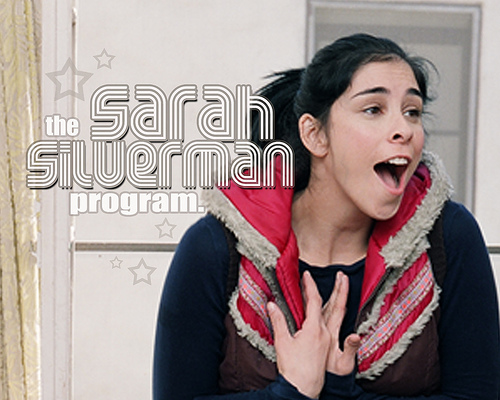
In fact, his TITLE says it all. The article’s title is, “Sarah Silverman’s Bad Career Move: Being as Dirty as the Guys.” Excuse me?? Bad career move? Where have you been for the last few years, Brian Lowry, TV Columnist? Sarah Silverman HAS A CAREER. And a very good one at that! While I am not the biggest fan of all of her work, I really like her a great deal and I know she is excruciatingly and painfully talented, even if some of her comedy sketches don’t fit my tastes. And…she’s been around forever.  That whole “She had her own show” thing. Yeah.sarahsilvermanprog“Being as dirty as the guys.” Are we, as women, still being measured up to male standards of things, Mr. Lowry, instead of simply being appreciated and valued as funny and valuable parts of the comedy community? And, for the record, not all male comics go dirty. I’ve seen amazing sets by Patton Oswalt and Eddie Izzard that were clean as a whistle and I laughed so much I thought I was going to die. So…dirty like those guys? My question to you, Brian Lowry, TV Columnist, is…HOW DID YOU DEVELOP YOUR COMEDY VALUE SYSTEM AND WHY IS IT BASED ON MEN? Bette Midler, Lily Tomlin, Gilda Radner, some funny ladies…certainly not 100% clean. Phyllis Diller and Joan Rivers? Seriously!
Hey Brian Lowry- three words: DO. YOUR. HOMEWORK. Have you EVER heard of Mae West? C’mon, buddy. Up your game.

You state, “This isn’t meant to suggest that female comics can’t work blue. The lament here is that in the wrong hands it can feel gratuitous or become a crutch, whereas unlike many of her contemporaries, Silverman has enough tools that she can and should do more.” This just seems like outright condescension and patriarchal nonsense. Would you have said the same thing about a male HBO special? Substitute “female” with “male” please, insert another present-day young male comedian (Brian Posehn for example) and see how that sounds. Is this something that makes any sense at all? Listen to how this sounds.

Men who criticize strong, powerful, funny women are scared to death of what they bring to the table. Sarah Silverman is one of those strong, powerful and funny women. Whether you like her content or not.

Louis C.K. is one of my favorite comics. And that fear is completely foreign to him. He knows better. This is why he has had Sarah Silverman, Amy Poehler, Parker Posey, Chelsea Peretti, and Maria Bamford on his television show, Louie.louiemaria

Lowry, I think you would do well to take some lessons from Louis. Well, really, most people could.

So after reading your puerile garbage about how Sarah has “limited herself by appearing determined to prove she can be as dirty and distasteful as the boys,” I have to get this straight. Your point is that if she wanted a “real” career, she would start performing in accordance to more “broad values,” of the comedic world? I guess if she did, she would have a better chance to transition past the “39-seat room, the most intimate of standup settings” where this special was shot and towards that “main stage” that you reference. And- that 39-seater- that was surely not the artist’s choice, right? Did you ever once stop to think that maybe, just maybe, Sarah is in charge of her own career? The one that you keep pointing out as needing to have commercial appeal?

Well, as you say, once all this “unladylike” stuff is ironed out, her “overuse” of the word c**t stops, her career will blossom and she will finally get main stage and become a “success” as you see it, right?

Well, sir, you know what I have to say to that, in all of my lady-like approach? Fuck that. Fuck your patriarchal expectations, fuck your inability to just say, “the content isn’t my thing but I appreciate a strong woman working in a male-dominated field that has MADE a career for herself and LOVES what she does on a daily basis.” Fuck your inability to be a good critic, sir. FUCK THAT. Fuck your condescending attitude and your unwillingness to examine a woman’s work according to a media and vocational structure that may run parallel but not identical to that of Standard Commercial Work.

Most especially, FUCK you for connecting her aesthetics to her talent or career or ability in any way, shape or form. This is one of the more insidious ways that sexism creeps through and whether you are aware of it or not, your comment about “Despite all manner of career-friendly gifts – from her looks to solid acting chops –” may seem nice, but has no place in this review. If you were reviewing Ricky Gervais’ latest HBO Special, would you make a comment on his “smashing good looks” or his “manly appearance” before reviewing the work? If I am wrong on this one, and it is, in fact, part of your writing style, to comment on everyone’s physical appearance when you review their work, male or female, I apologize. If it is not, and you were just (again) trying to give Sarah another pat on the head, saying “See how great you could be? If only you didn’t say that “c” word so many times and washed that purty little mouth out a few times….we can take you so far! You’re a real looker!” then…FUCK THAT.

Mr. Lowry. In the end, I would direct you to a fantastic article by comic Rob Delaney. Please read. Women are funny. And, much like any other comic crossing the stage or film hitting the screen or TV show you watch, no one is expecting you to like everything they chat about or do. But I would say this: Go back and look up the rift between Joan Rivers and Johnny Carson and get back to me on how hard it is for women in the comic world. Go back and look up Mae West and pre-code and get back to me. See how many women don’t get spots on stage at open mic nights just because they are women or see how many of them get made fun of/get people who want to sleep with them/are taken advantage of. Then, Mr. Lowry of the Variety TV Columnist world., THEN you can talk to me about how you are going to be Sarah Silverman’s motherfucking career coach.

Until then? BE QUIET AND LET SARAH DO HER THING.

Progress Not Perfection

Spoiler warning: if you have never seen Billy Wilder’s Some Like it Hot, do not play this initial video. It’s a huge spoiler & I wouldn’t want to kill that film for anyone. This clip is only meant to enhance my piece and is not essential  to the comprehension of the rest of the entry.   

I was told recently by someone who I highly respect that we are all works in progress.

While there hasn’t been much to make me feel positive about my situation as of late, to an extent, this statement (and the person it was coming from) did. It came on the heels of having spent an incredible summer day with the women that I went to Catholic-all-girls-school with. Most of them are married, with babies, good jobs, productive lives. Hell, even my punk rock math teacher was there, reminding me that I had been in honors’ math (me?? honors math?? I can’t even figure out a proper tip at dinner with friends anymore! I was good with numbers at one point in my existence???) and quoting the Descendents. Man, she was a great teacher.  I sat there, we laughed, caught up, talked about the things that we got out of our schooling that few others did- why do women these days seem to hate each other so much? And why do they think it’s “cool” to smack each other down and say “Well, I like having guys as friends better”? You need your ladyfriends, yo. Just like guys need their guys! It was a great afternoon talking about how we were inadvertently trained to develop a very strong idea of sisterhood that has lasted us throughout our lives.

We are in our mid-30s. We have known each other since we were 12/13. That’s a fucking long time. Every one of us has made inordinate amounts of mistakes. Pissed our friends and lovers off, learned to fix it. Then learned that each “fixing” method changes for each person. We’ve changed careers, regretted treating our parents or family members in certain ways, learned that maybe certain friends or family members were incredibly toxic and it was our responsibility to play Personal Doctor (we know our own bodies best- mental and physical) and cut out that tumor before it became a larger cancer and destroyed larger portions of our Lifebody.

This is what we call Progress. None of us will EVER EVER be perfect.

I keep thinking of this film by Christine Lahti that I love, called My First Mister. It stars Albert Brooks and Leelee Sobieski.  I cannot count how many times I’ve watched that film. If you haven’t seen it, it will simultaneous make you fall in love with life, laugh and cry. It is one of my all time favorite pieces of film work, and I don’t say that very often. Friends, you can judge me for my excitement and frequent hyperbole when it comes to cinema, but certain films? This is on my list of Films I Would Marry. Come to think of it, I should write up a list like that sometime. But back to My First Mister.  I probably like it because I see bits and pieces of myself in Leelee Sobieski’s character (especially the scene that was shot in Retail Slut on Melrose, RIP). But Albert Brooks character serves as just as much of a mirror. It’s a heartbreaking and heart-fixing story about two broken off-kilter people who walk around limping and frowning through life until they find that other person who makes them laugh and dance. But it is not a love story. The film is a perfect story about how people are simply not and that is a beautiful thing.

My First Mister explores the ways in which we make progress with each other and relationships in ways we never counted on. Did I ever think that 20 years after meeting these women I would be sitting in the sunshine with their babies and realizing that we all basically look the same and are just as sharp-witted, strong, loving and quirky as we were in 7th grade? No way. I would’ve laughed if you had told me that a few years ago. But that’s progress. Progress is also the realization that I need these women in my life. They are so good for me. I hesitate to say it, but I feel like the insecurity that I have now was all received because I was put in an environment that was not as progressive and diverse as that which I spent my early teen years. Not to say that we weren’t all normal jerky teen girls (we totally were, in our own ways), but we also related to each other in a different way. I’m romanticizing it a little, but I think of the way that I entered that school and I remember the way I left and the people I have now. I look up to them. Those relationships were hibernating building blocks. I’m glad that they were awakened.

Internet radio has decided to play “Under Pressure” by Queen right now. It couldn’t be more appropriate.

I graduated from my moving image archive studies program in June. It’s about to be September. In my albeit small graduating class, every single person I have spoken to or heard about already has a full-time job but I do not. The minute that my classes were completed, I applied for unemployment and I was denied. I have appealed the decision, gone to court, and been dealing with this for months now. I have had EDD employees tell me that leaving a full-time job  to complete grad school and do freelance online journalism was a “bad decision” and if I hadn’t done that I wouldn’t be in this situation now. I have had them tell me that freelance work and online journalism/writing wasn’t “real work” so that’s why they didn’t count it. They basically yelled at me and told me that my current state was of my own making, and had I done the smart thing and kept the “real job” and not gone back to school, everything would be fine.

Of course, this woman’s rant just seemed to realize all of the fears and terror-dripped paranoias that I have been pouring out to my boyfriend for the last few weeks, as my job applications kept getting sent into these black holes and no interviews or interest has been shown. He’s a great guy, but it’s frustrating for him. He wants to fix this situation and make me feel better. He just wants to fix everything, just wants me to feel better and see the woman that he sees. But this isn’t a “fixable” situation. And what a terrible thing to lay in the lap of a basically new relationship, right? Poor guy has to listen to me cry about how I wish that I hadn’t gone to grad school and how I feel like I’m no good at what I do. Logically, of course, I know that both of these statements are patently untrue but I feel completely helpless when I cannot do anything for myself economically and when I am not working. The me that I like the least is the unemployed, unassignment-ed, undeadlined me. I am at my most shining when I am powered up and whirlwinding through tons of stuff, 100mph. I glow. Right now, I feel dejected, rejected and like I’m doing nothing.

Another one of my favorite films that I have basically memorized comes to mind at this juncture. Noah Baumbach’s Kicking and Screaming. A brilliant film about the foibles and follies that befall a group of (yup, indeed) college graduates, right after graduation, and coming to term with adult life. If you have not seen this film, SEE IT. But, basically, right now I feel a hellovalot like Max.

Thing is, I’m not Max. I do many things. It’s just all volunteer work. I’m the chair of a committee and have been diligently working on that as things have been moving forward. I volunteered for Outfest, the LGBT film festival, and worked like crazy for that. I recently began involvement in another project for cataloging standardization as well. Pure and simple, applying to jobs is work and, to be frank, new relationships are work. I seem to push all these things to the back of my mind because the only thing that counts in my eyes is getting that “real” job out of school, getting the “real” work that everyone else is getting. This, of course, backfires completely on me because what is “real”? What is that qualifier? Who is to decide? It seems that the qualifier is The Paycheck and that discounts the very real work that I have been doing elsewhere.

I’m working on this, though. Slowly but surely. Because while I am not perfect, the one thing that I have the utmost faith in is my ability to make progress and be productive.

I’m not going to lie. I’m scared.

But I’m scared because I actually care about this. It would say quite a bit if I wasn’t scared. This is my dream and my greatest love. It irritates my guy when I say that, but it’s a different kind of love than I got for humans in my life; I can’t explain it. Film will always be That Thing for me. I am the most fulfilled, the most ME I can be when I am within that realm. I would be disturbed if my unemployed status wasn’t causing a pre-ulcerous condition. I’ve never found any career path that I gelled with like I do this one.

So I have one basic option: keep making progress. And this involves a variety of things.

1) Be realistic: the things that are being done are not nothing. They exist and they contribute to larger bodies of work. My place in the field is important, whether I am actually employed or not. Dropping out is not an option. The healthiest addiction I have ever had is being addicted to film archiving & preservation work and not being able to keep my mouth shut about needing to be active in these pursuits. This isn’t a bad thing.

2) Be grateful: the new people who have entered and re-entered my life are some of the most charming and supportive people I have ever met. And they are adults. Change is good, change is progress. Many times, positive progress comes from the most unlikely of places (see: My First Mister).

3) Listen to Wilder: Billy didn’t write bad dialogue. Always listen to him for advice. Every time my brain is arguing with me on the things that I can recognize are untrue, I will simply revisit Some Like it Hot and get smacked in the face by the reality of me being, as my boy is wont to call me every so often, a silly goose.

I realize that this is a bit more personal than some of my other entries, but sometimes a girl’s gotta do what a girl’s gotta do. Thanks for listening.

Hugo Schwyzer: The Rohypnol Feminist?

feminist

I was going to call this something stronger. Something about my own feminism. But then I realized that today, like many other readers of this piece in The Atlantic, I had been conned. Willingly conned, but conned nonetheless.

Perhaps it seems a little strong to call Schwyzer a Rohypnol Feminist, but from what I have learned this afternoon about his behavior, I think that would be the nicest term for him.

A girlfriend pointed out on a second Facebook post I made today about Ellen Page that she wished that Hugo Schwyzer would shut his mouth. I was incredibly confused. I will readily admit that, as much of a feminist as I am, I am not on the forums or boards of every group on the internet and I am not entirely up-to-date as to what is going on at all times. But…I just graduated a month ago and I’ve been busy job hunting and trying to keep in the film archiving career game. At any rate, I chatted with her a bit and it seems that Señor Schwyzer is not all that he is cracked up to be. In her words he’s an “all around creeper.” Being the research nerd and archivist that I have been trained to be, I went 1,2,3,4 levels deep on this subject and found this to be absolutely the case. Somewhere between Ted Bundy and that dude who took women’s studies classes and went to gay bars just to get laid is this guy. No joke.

First thing’s first, let’s start with his actual article. I liked it. I thought it was pretty good. I’ve been very uncomfortable with the idea of the manic pixie dream girl thing and I enjoyed his resolute command to writers to create better and stronger lead female characters. But here is the primary difficulty with the article: even though he linked to Laurie Penny’s brilliant piece in the New Statesman about the MPDG image and he attempted an exploration based upon some of her points, what he ACTUALLY DID was hijack her work. Basically, move over Penny, hello Schwyzer. Instead of writing a piece in praise of Penny and parsing out the ways in which she had really lain out the basic bits and pieces (as well as subjective experiences) of the manic pixie dream girl image and theorizing how that was salient to the world of women and the feminist movement as it exists in its current state, Schwyzer flipped it. What did he do? He did a “Hey! Lookit me! I know about MPDGs too! I’ve totally experienced it! I know what’s up! Listen to my experience! Read about my subjective exploration of this area and the suffering that I have gone through as a result!”35rt9u

OH REALLY? Hrm. Gosh. Not sure I’m buying this article anymore, Hugo. Think I may still be on Laurie’s side. Sorry about your sucky childhood, but…not really. It kinda seems like a stretch in comparison to Laurie’s rhetoric in and around her growth away from being this patriarchally-created sexual object that has successfully made its way to every cinema and television screen near you.

And that was where the real nastiness started. I could just leave it there and recognize Schwyzer’s authorial egotism and authorial narcissism, things that most writers have at least a small modicum of but, as my girlfriend said, Hugo is not a good guy. And it’s not simply because he wants you to think that he is because he cares about women’s place in the moving image world.

A small preface. As someone who has dated an addict and has many recovering addicts in my friend-family, I am 100% in favor of forgiveness and I support the concept that people change. I know that I have made hundreds and hundreds of mistakes in my life and I am dead certain that I will make hundreds more. Additionally, people grown and changed, developing into better and better people throughout their lives and learn from mistakes. I get it. But they have to learn from them and, most importantly, they must own up to them in the most honest manner possible. This is not an easy task. The first person that you have to be honest with is yourself. Most people can’t do it. It’s easy enough to apology to a friend or colleague, even internet acquaintances that you have aggravated. The intention and the honest value is what is of consequence.

Hugo Schwyzer was an alcoholic and a drug-addict. He slept with the college students he taught. Most notably, he tried to kill his ex-girlfriend and himself. He details his addictions, his apologies and all of these awful actions in a blog post that is still available (as of the moment) here. However, they were also, at one point, available in a far more unexpurgated and complete form on his own blog according to Angus Johnston of StudentActivism.net. In fact, due to the timeliness of Johnston’s post, he was able to capture the original data from Schwyzer’s site and document it before Hugo decided to go into his public archive and change the data himself.  Is this dangerous? You betcha!  As a woman this horrifies me, as a feminist this nauseates me and as an archivist, this terrifies me.

I like to consider myself a competent researcher which is why I am a bit frustrated that I didn’t question today’s article (I don’t trust The Atlantic since they published that article about film restoration that had more holes in it than swiss cheese and some absolutely ludicrous adverts in celebration of Scientology) or its writer, Mr. Schwyzer. But I didn’t. As I have written previously, this is what we get in the viral age: read the headline, agree with the subject, skim the first few lines, get a case of OCD after agreeing with said first lines, repost/retweet article after not having finished. We are all guilty of this but it is not an impossible habit to break.

At any rate, back to Hugo. Johnston makes a point in his blog post that appears to me to return to his having usurped the MPDG discourse in order to make it his own and focus on his own message: he has an undeserved and altogether revolting sense of paternalism which he readily admits to on his own blog!  While I may agree with some of what he says in that post, the context that he puts it into is terrifically condescending. THIS is how he is a rohypnol feminist. He’s that guy who seems so great until you realize he has been emotionally damaging you to the point of needing a good bout of therapy. Emotional abuse and manipulation comes in a great many forms. Schwyzer uses his skills to convince his audience that his activities are genuinely in the scope of feminist activity and yet, upon being asked about his impetus and actions, they all seem to reflect something false. He seems to be using feminism as the drug to corral a following, however controversial the process may be.

In her piece on Schwyzer in xojane.co.uk, Olivia Singer states,

What it comes down to is that I have come to realize, over the past few weeks, that yes men can advocate the equality of women and of course they can call themselves feminists, in the same way I can call out racial discrimination and protest against it, but they cannot teach me what I experience or the way I ought to process that. And I think that’s why it makes my stomach turn. I have grown up accustomed to internalizing male experience, to listening to a patriarchal voice, and I want something a little different with my feminism.

There seems to be a number of different dilemmas that are present here.

How do we deal with a person with a past? His discussion of the almost murder of his ex, no matter how drugged out he was, is disturbing. Indeed, his brutal honesty about his mental illnesses and conditions extend that sense of unease further. It seems that if these events had happened and were part of his general story and they had not gone through what I see as evidence tampering and exploitation from all sides, Hugo would not be this “provocative figure.” On the other hand, would he have the career he does?

As a general rule, I enjoy being a feminist and being part of feminist culture. But I cannot stomach the Andrea Dworkin-types nor the rabid-anti-men types. The first is irrational and the second is misandry. But radicalism in any form drives humans to ridiculous and horrific behavior. I can’t stomach the idea of extremism because it brings out the worst in all of us. I think that many of these women’s publications have been concentrating on the wrong things when they have been poking their sticks at Schwyzer. There is no excuse for domestic violence, rape, abuse or the like. But the continued exploitation of his past behavior is very poor. Even I am participating in this ritual by its discussion. But it cannot go unmentioned in the discussion of today’s article.

I posted that article without knowing anything about him; without knowing that he has a tendency to insert himself into these women’s issues and manipulate them in such a way that he ends up looking great and like Sensitive Ponytail Boy while he’s more on the problematic side.

What is dangerous in someone like Hugo Schwyzer is his belief and insistence that his involvement in the feminist movement gives him the right to behave in a manner that extends and exudes patriarchal structures. This is not immediately obvious in his work, but the continued insertion of his own sexuality and subjective experience imbalances the work and removes its legitimacy. Whether or not he is aware of this posturing (which sometimes comes in the form of a strange kind of anti-male discourse), that is what I find as a woman and feminist.

As I was researching this piece, what I found most sinister about the man was that I had to go to three to four different sources, including the Internet Archive’s Wayback Machine (Thank you Brewster Kahle! You are a rockstar and then some!!) in order to find out what he had originally written about an event that he repeatedly insists that he admits to and has dealt with through his sobriety. Yet all of the data I have found makes me believe differently. When someone goes in and changes evidence on a document, analogue or digital, this sets off a big alarm. The truth seems to be that he wanted to look better. The 2011 version of these blogs added something to the story: a phone call that had never happened on the other two blogs. According to Angus Johnston (who, once again, got much of the actual wording from the Google cache before it disappeared into the digital ether, Schwyzer’s paternal issues towards a “fragile girl” were no longer present, his fetishization of the ex-girfriend’s body was gone (as was his desire to “put her out of her misery”), and he had inserted a bit about placing a call to a neighbor before drifting off to (what he thought would be) death.

Since we have very little actual physical data to prove one way or the other, there is no way we will ever really know what happened. That’s the truth. Schwyzer is quite proficient at keeping those involved in his tales quite anonymous. However, as a trained archivist, in assessing this situation and the other evidence in and around the subject, I cannot find this man to be trustworthy nor reputable in his work for a cause that he says he gives 100% to. He says that he is honest and that the honesty is part of his sobriety. Ok, Hugo, that part is true. Honesty is part of sobriety. But until you stop taking other people’s work and reappropriating it for your own purposes and until you figure out what your relationship to your own digital archive is, I can’t trust you and I cannot accept you as someone who really wants to be an ally. You seem like you are here for your own purposes and you know what? It’s your career. If you want to do that, fine. But don’t call yourself a feminist. In order to do that, you have to want to be part of the community.

Richard Matheson is Legend

I have rabidly consumed the works of Richard Matheson all my life and I am devastated to hear that he has passed away.

Matheson changed the landscape of my mind, introduced me to true horror and tension in moving images and really created my tastes and interests in the more unusual and dark.

In full disclosure, while I have always been a huge reader, I made a huge mistake as a kid. I didn’t read Matheson’s literary works until I was much older and I still haven’t read enough. A part of me feels like I was exposed to him by proxy. My childhood consisted of inhaling Ray Bradbury’s works, and they were in the same writing club. There’s a little bit of closeness there, right?

And really? To my mother’s disappointment after my tantrum over demanding the UNABRIDGED version of Les Miserables in the bookstore, I could NOT get enough of Stephen King. Although to be honest, there are certain similarities to be drawn between French revolutionary youth movements and Carrie…who’s with me?? At any rate, King readily admits to Matheson’s strong influence, and as an adult and more critical thinker, I do see his argument. The first time I was ever exposed to Richard Matheson’s literary work, I Am Legend, it had been adapted by Steve Niles in graphic novel form. The comments people kept leaving in the reviews were “really wordy for a graphic novel” and “I dunno, lots of reading for a comic” which made me think that much of the original text had been kept in. I was definitely in. One of my pet subjects is comic book adaptations and its connection to the archeological concept of the palimpsest (another post for another day), I found this work even more intriguing. The graphic novel was really good, I enjoyed Niles’ art and (no surprise to anyone familiar with Matheson or my tastes) the story is phenomenal. I’ve revisited it many times since.

i-am-legend-000fc

Before that, my main point of reference for Matheson has always been that I have been a life-long Twilight Zone-addict. In fact, I don’t remember a year when I didn’t run to my parents’ room and jump on that big bed that got gradually smaller as I got older to watch the marathon. It was Matheson’s episode “The Living Doll” that gave me my strange adoration for children’s dolls and Telly Savalas and it was most certainly the “Little Girl Lost” episode that scared and excited me every night before I went to bed. And, of course, who can forget perhaps the most parodied TZ-episode ever, “Nightmare at 20,000 Feet”?  Matheson’s skill at flipping domestic situations into ones that would frighten or, at the very least, unsettle the most steely-nerved soul is unreal. If you still don’t believe me, watch the episode “Mute.” I’m a huge Buffy fan, and I enjoy the hell out of the episodes on that show that play with standard forms of verbal communication but…”Mute” will knock you sideways. Why? Because it’s MATHESON.

My name is Talky Tina... (THE LIVING DOLL, S5, Ep6, Orig air date: Nov 1, 1963)

My name is Talky Tina… (THE LIVING DOLL, S5, Ep6, Orig air date: Nov 1, 1963)

Director Edgar Wright had a film festival back in 2011 at the New Beverly. He talked about all the films he’d never seen and how exciting it was to get to explore these titles, these classic and beloved films that people had a strange “OMG, you’ve never seeeeeeen thaaaat???” reaction when he said that he hadn’t had the pleasure. While I deeply, regretfully, heartbreakingly mourn the passing of this genius of a man, I am looking forward to getting gut-deep, ears-deep, pig-tails-deep into his literary works. It is a formidable library and one I know that I will enjoy like the most delicious creme brulee (and OHMAN, do I love creme brulee). To me, it will make this man stay visible, stay alive. In my experience as an archivist and preservation scholar, this seems to be one of the most vital and earnest methods that we can use as admirers of a given artistic work or individual to keep them alive. It’s why I do what I do. Which brings me to my next point: The Incredible Shrinking Man (Jack Arnold, 1957).

Many people do not live long enough to see one of their moving image works become recognized by the Library of Congress and the National Film Registry. In 2009, Richard Matheson’s film, The Incredible Shrinking Man, adapted by him, from his own novel The Incredible Shrinking Man, was chosen as one of the films marked for preservation due to to its “cultural, historical or aesthetic significance.” As the National Film Preservation Board has written about the films that they choose on a yearly basis, “These films are not selected as the ‘best’ American films of all time, but rather as works of enduring importance to American culture. They reflect who we are as a people and as a nation.” From my experience (and if I am wrong, please forgive me) I believe that this is what Matheson does best. His exposure of the darkness and the weirdness of normalcy is what makes him so fucking great. How do you make a cat frightening??

You’re Richard Matheson, that’s how. Not only does Shrinking Man reveal issues of masculinity and the domestic environment of 1957, but it does it way before its time. I generally get irritated when people continually harp on about figures being “so ahead of the game” and doing things so “before their time” and, as a point, I make a valid effort not to do it very much. But with Matheson, “pre-game” seems to have been his middle name.

I had the privilege during my tenure as the curator of the Something Old, Something New film series at the New Beverly Cinema to play Incredible Shrinking Man in tandem with Innerspace on a double-bill that I called “Size Matters.” Joe Dante came for a Q&A, discussed Matheson a bit, and our audience, many of whom were there primarily to revisit Innerspace, was absolutely floored by Shrinking Man. As someone who admittedly gets high off exhibiting films and seeing pleased faces, this was my heroin. Overhearing people talk about “the old movie” actually being “really damn good, dude” made my heart soar. Mr. Matheson, your works still work. And they always WILL.

It is so very rare that figures like this come through the world. Salvador Dali worked in film, animation, sculpture, painting, etc., dead-set on taking any straight-ahead visions of creativity and art and cooking ’em until they were twisted and flexible like spaghetti. Ray Bradbury worked in comic books, film, stage, television and literature (of course), introducing entirely new worlds and atmospheres to our media culture and yet…making them ultimately accessible. Who knew that we could speak the same emotional or intellectual languages as people from other planets? Mr. Matheson, you too worked on revelations and explorations. Fear of the known, fear of the familiar, fear of the self, fear of isolation. How to truly examine horror and what is horror anyway? Many have argued about what the antagonists are in I Am Legend. To me, it simply doesn’t matter. It’s about the story and what lies beneath. What is Matheson actually trying to TELL us?

This is just one woman’s opinion and semi-eulogy on a day I find rather heart-wrenching. I really wanted to meet him. I don’t have too many heroes. He was one.

Dear Richard Matheson, thank you for giving me the ability to appreciate horror, fear and tension in an intelligent and creative way. You taught me how to look at them from the alternative, multi-layered angle. For that, and much more, I will be forever grateful.

Ariel

The Happiness of Failure & Graduate School as Ghost Protocol

Yesterday I passed the exam that said that I am now 100% eligible to take a job in my chosen field of moving image archiving.

Not only is this thrilling and a feat of accomplishment, it is a dream come true. However, I also feel like Ethan Hunt in 2011’s Mission Impossible: Ghost Protocol. At one juncture in the film, injured and beaten to shit, he falls to the floor and growls, “mission accomplished.” Later he expresses surprise that he even said this. Oh, the metamess or metaness of it all.

In a way, there were times when I felt like this second shift in graduate school was my Ghost Protocol.

The independence that Ethan Hunt and his cohort had to work with, the disavowal of the IMF, the continual pursuit of a goal for the betterment of the world…these were all things that I deeply identified with. I don’t think that my cat knew that he was on a moving image archivist rock ‘n’ roll grad team, should he “choose to accept it” but…hey. As my friend Ray would say, I had the ability to make the metal meat mice happen for him. He accepted the mission willingly, if, for no other reason, than he was able to walk across my keyboard at key moments in my digital restoration examinations and planning for film series curations.

Fighting for what you believe in is hard work. Ask Ethan Hunt. Being disowned/disavowed by your organization for the betterment of the Mission is tough. But Hunt moved forward. Not taking no for an answer. Amazingly enough, I did the same thing. I will tell you that I was absolutely not feeling it when I did so. There must be something in my DNA that drives me to do so. But I believe, more than anything, that it is my love for the job and my love for film preservation and restoration itself that drove me to get back up when I got blasted out of the water a few weeks ago.

I failed my grad school exam/portfolio defense the first time.

Holy shit. I was CRUSHED. This was my everything. Watching others in my year be so enthusiastic about passing with distinction and then…I sat there, sobbing. Two years. Working so hard. The worst part was…I knew exactly what I had done wrong. But there was nothing I could do to fix it at that point. Not only that, but I had a show to put on that night! It was the final screenings of a film series that I had spent the entirety of my film archiving education curating. I had to be fresh-faced and enthusiastic, the way that I normally am, not gutted.

By the time we reached the theater, I was composed and the screenings were phenomenal. Perhaps the best events I’ve organized thus far in my career.

This has been an inordinately difficult year for me. As Townes writes in this song,

We all got holes to fill
Them holes are all that’s real.
Some fall on you like a storm,
Sometimes you dig your own.
The choice is yours to make,
Time is yours to take;
Some sail upon/dive into the sea,
Some toil upon the stone.

The one thing that got me through everything was the Moving Image Archiving Studies program at UCLA and what I was working on there as well as the different projects that I was planning for the AMIA Student Chapter. From my previous days as a teen HIV/AIDS educator, I knew that activism was my preferred method of working. But it is not everyone’s. My passion gets my work done and gets things changed and lets me know that I will see results. But it got in the way this time and did not allow me to look at my graduate experience critically. Equally important, it blinded me from being critical of my creative or academic work. This was a major problem.

Failing was one of the better things that has happened to me.

While the above paragraphs do not show as much, it has improved my writing, it has humbled me and it has given me new heroes to follow. One of the films I played that fateful weekend was The Times of Harvey Milk (Rob Epstein, 1984). He failed four separate times before being elected to office. I have recently been doing some research on playwright and author Samuel Beckett, and his work was considered “unpublishable” and rejected from innumerable places before he hit the jackpot. Upon my initial receipt of  the failing grade, one of my mentors, Dennis Doros of Milestone Films responded kindly, saying I should take it in stride. Academy-Award-winning archivist Kevin Brownlow failed many times before he got to the marvelous place he is at today as did he himself.

Depression is a nasty disease and tricky to work with in dark situational moments like this. And I am not one of those people who likes to hide things. Frankly, if I did, it would be unhealthy for me. I have had various health complaints since I was a kid, and they are odd and I have had to tell my employers and friends about them so that it wouldn’t be an issue. My epilepsy is something I have come to terms with now and I have started to try to get comfortable talking about my depression too since I have begun to suspect that, since they are both located in neurologic segments of the brain, they are having some kind of party and making decisions without my control. I am cool with talking about it. What I am not cool with is wanting desperately to deal with failing what I feel is the most important exam of my life and desiring to bounce back right away. It is very frustrating. I hate being frustrated.

Once again this was an area where I felt like it was Mission Impossible:Ghost Protocol. I wanted so badly to reach out to someone, anyone, but…I was on my own.

However, the things that I learned were so amazing that I wouldn’t have done this ANY OTHER WAY.

My writing will now be going through so many drafts if it is going anywhere. What you are reading now is an example of the exercise I discussed a few days ago, “Writing the Don Roos Way.” My speech and presentation work will be less vague and a great deal more professional. My thinking will be more critical and many things about my work will be more concise but equally as powerful. I plan to remove the wishy-washyness that has been present within my work and make real focused statements. After all, I have 2 degrees from a very heady institution that say I am allowed to do so. I believe that I may say these things and to hell with anyone who says the opposite.

It’s about using failure for success and restructuring pessimism for optimism. I believe in the power of words and writing. I also believe that we are the ultimate self-babysitters upon becoming adults, especially for women and the marginalized. If you want to have power or to feel that you have power, write it into your work. Change the pronouns, clarify your sentences, give yourself more credit, have conversations about a) what you really wish to say as a writer or speaker, b) who you want the reader/audience to see you as and c) what actually happened. Are you seeing/interpreting/writing the piece up in a certain manner due to gender/social inequities? I do that. I have been known to have less confidence in my work because as a woman I am socialized to take less credit and to be more “maybe/kinda” than “absolutely/yes.”

The  happiness of failure has led me to passing the exam yesterday, reconsidering how I use pronouns, and never wanting to open a sentence with “however” again.

I am a strong woman with many awkward cracks and hiccups in my interior. But I will be walking the graduation path on Friday in my cap and gown in the name of my mother, grandmother, father, godfather, myself, and the thing that has kept me going this whole time: FILM’S FUTURE.

And when I come off that stage, my first two words will be “Mission Accomplished.”

The Importance of Outfest and Writing the Don Roos Way

My godfather is a writer. Thus, like many of the writers I know, he is full of quotes about writing.

During one of our many conversations about how much I Iove it, how much peace it gives me, how triumphant it makes me feel, how engaging it is to me, as a woman and as an intelligent human being, I remember us debating over the Dorothy Parker quote:

“I hate writing. I love having written.”

I, myself, am not this way in the least. I love the process of putting a piece together. Much like the three witches in Macbeth, I take great pleasure in my cauldron and my word “soup,” I love the way that I am allowed to make things “flowery” if I wish or casual and quirky if that is my intended goal. I love putting my voice in there because writing is my chosen artistic expression.

My little brother is a DJ up in San Francisco (and a very good one, she adds, with devoted sisterly pride). The sweat that pours off the dancers and enthusiastic fans that flock to his booth and to him is inspirational. I can only hope that my writings can inspire that kind of excitement in a reader someday. I say a reader because as a teenage HIV/AIDS educator, I was taught one very important lesson that, 22 years later, I have kept with me and remember daily, if not hourly: if you reach at least ONE person, your work is done.

This is a very difficult thing to remember in a world such as ours where we are dead set on the monetization of artforms and we are in positions where instead of reveling in our positions as writers/creators/film critics, we must choose situations that are exhausting and do not leave us enough time or energy to realize the WHY of our work, only the how  and the when-does-this-need-to-be-in-by.

Last night I accompanied my godfather to the Writers Guild of America, West for an event presented by their Gay & Lesbian Writers Committee. There were many reasons that I wanted to go. For one thing, it was focused on participants from the OUTFEST Film Festival, a film engagement that I passionately believe in and have enjoyed works from consistently over the years.timthumbAdditionally, it was looking at several aspects of Outfest beyond the film festival itself: the writers, participation and development of the Outfest Screenwriting Lab, and indie filmmaking in the queer community. Furthermore, it was moderated by Alonso Duralde, someone who is not only someone I personally think is fantastic, but highly admire in a professional context.

AlonsoDuralde-2

Alonso Duralde, Senior Programmer of Outfest, Senior Film Critic at The Wrap, co-host for Linoleum Knife podcast and regular on What the Flick?! (Young Turks Network)

The program gave me more than what I bargained for and is partially why I am sitting here. But I will get to that later. First, a few issues came up that not only fascinated me but made perfect (if tragic) sense. To lay it out best and relate what I feel are the most critical points of my experience last night, as a writer, as an archivist, and as a woman, I am going to catalog it using sections.

Marginalization Within Marginalization

There was a fascinating discussion about the idea of “whiteness” in the queer moving image community and whether certain writers were working to change that and how. Doug Spearman (Hot Guys with Guns) spoke to this issue, while he mentioned his TV work on Noah’s Arc, what I found particularly important was the mention of breaking boundaries and representations of realities that were not single-ethnicity-ed. Spearman mentioned interracial relationships as part of work he had been involved with and that extending those ideas could only extend diverse concepts of the queer world thusly giving a far more realistic view of the world that we live in.  Listening to this, it was hard. It’s unfortunate to consider that many of our filmic materials, whether queer or straight narratives, seem to stay well within the lines of ethnic and cultural groups “sticking to their own.” It reinforces ideologies and tropes that we should breaking free from.

Adelina Anthony‘s perspective was wonderful in this perspective. She spoke of the usefulness of the theater community and the stage when the moving image world was, to be perfectly frank, trying to pack her wonderfully expansive ideas into their small cages. She spoke of being told to make things “less Latina” or being asked to “tone down the Lesbianism” and other situations requiring her to completely remove her identity from her creative work. Anthony said that the stage and her work with theater has never required her to do so. While she is preparing to move back into moving image/filmic realms, she also mentioned her significant pride in being able to maintain her own identity the whole way through. And the fact that Genevieve Turner (another panelist)’s movie Go Fish was an inspiration to her own coming out story (I have to say- that part was really adorable!).

Outfest as a Writerly Tool and Growing Force

The panel discussed the Outfest Screenwriting Lab, which various people had participated in as mentors (some, as Guinevere Turner quipped, referring to herself, for many years) and others had as “mentees.” The process was laid out clearly and while it was reminiscent to me of the Sundance Screenwriters Lab and it had crucial differences. One of the differences was laid out in the first few minutes of the panel when each filmmaker was talking about their early experiences of queer cinema. Issues such as first viewings of William Friedkin’s Boys in the Band (1970) and panelist Barry Sandler’s pioneering Making Love (1982). What was vital in this instance was not only the experience of seeing queer representation on a screen that had been either underrepresenting or poorly representing the LGBT community for its entire history being able to carry that experience over into future creative endeavors. While the Sundance Screenwriters Lab has a focus on independent cinema, and I have some certainty that the participants may have had life-changing experiences with independent films that also deal with marginalized groups, when I sat there last night…I felt the importance of Outfest itself and this lab.

There is a saying that someone told me when I was a kid and doing all my peer education work. I have no idea how to source the quote – all the information I can find on it seems iffy at best – but someone nice told me it. And it’s a good saying: “Each one reach on, each one teach one.” To me, this seems to be the ethos of Outfest, especially how it was displayed on that panel.

During the question and answer section part of the evening, a young man stood up and asked a question. He was from Outset, the youth filmmaking division of Outfest. It struck me at that point that not only was Outfest a festival where one could find entertainment and access to marginalized images on the big screen, it is, for many film professionals, a centralized agent of personal entry to the larger media world.  For a community that has never had that before, being able to start from the ground (teens), move upwards (young professionals) and possibly make to the silver screen is pretty exciting. Unlike Hollywood on the whole, what I noticed on this panel, when discussing people’s experiences with the Lab or the applause for the young man from Outset or sharing of information about what works/doesn’t work for crowdsourcing a film, was support and positive reinforcement.

It was inspirational to hear June Diane Raphael talk about not completely giving up on her project when it was delayed for two years or when folks in Hollywood told her that horrific thing that I have heard many times before: well, women will follow a male narrative, but men will very rarely follow a female narrative,  and there’s really no market for that so…you may want to rethink things. The men and women on this panel were not only experienced and informative but smart and clearly cared about the work. To me, there is nothing more beautiful. So many people seem to make things that they clearly don’t care about. In a perfect Ariel World, we would all be able to get paid to make these amazing works that are full of the passion and determination that has been with us since we were children. Damn the box office! The box office is not a gauge of film calibre! Then again, I also wish to live in the Shangri-La of Frank Capra’s Lost Horizon most days too, so…ya know…

The queer film community needs Outfest and Outfest is growing. This can only be good. The effect that they have on queer youth and creative people in the LGBT community through their various projects can only help and from what I was able to grasp last night and see in the way people engaged each other on the panel, this structure is one that can only flourish. I believe this will do the entire film festival community a hellovalotta good. Outfest puts out work for everyone and work everyone should be seeing, queer, straight, asexual, pink-polkadotted fetishes, who cares.

Writing the Don Roos Way

One of the many times I went to go see John Waters do his speaking engagements, he described his writing ritual. He gets up every morning, puts on a particular set of comfortable clothes, goes and sits at his computer (might’ve been a typewriter, but I think computer…I think I’m wishing it was a typewriter. More romantic!), and writes for a few hours. Then he shuts it down, and begins his day. EVERY DAY.

I said to myself: WOW. I should totally try to do that. Write at least a little bit every day. A journal entry. Something. Just ritualize it, make it happen, just do it. But make it part of my chores. Because then I’ll have at least accomplished something. Plus…going back to the Dorothy Parker quote, I love the hell outta writing. So, however many months later it is now, and…I have not made this part of my ritual.

SURE, I have had graduate school and I had a regular weekly column where I was writing a ton (which both counted in their own ways) but I was not writing every day. Nor was I reading every day. But that’s another entry. Tomorrow?

Skip forward to the last question of the evening last night, put forth by Kristen Pepe (KP), director of programming at Outfest. She inquired of the panel about their writing processes. The discussion had shifted from filmmaking and screenwriting and begun to focus quite a bit on monetary issues and KP brought up a very salient point: without the talents and writing skills of each of the individuals on the panel, they would not be in a position to go ask for monies for their films or attempt the projects in the first place. How did each of them write?

Everyone had different answers and different methods that worked for them, many of which were small edits on things I had heard before. However, when Don Roos discussed his writing process, something clicked and I liked it. A lot. He stated that as writers, one of the hardest things that we deal with is being able to feel good, feel accomplished, feel 100% on top of the world on a regular basis. He gave the example of a dry-cleaner. As a writer, it’s not like we have anything concrete that we can do/look at/see at the end of the day and say, “man! I finished dry-cleaning all those shirts! I’ve had a great day!” Our successes are far more infrequent, far-between, personal and amorphous.

OH MY GOD. Hello, 80,000 lightbulbs dinging above my head. Don, you are speaking my language!!

He went on to say that in order to combat this, you really DO  have to write every day. [Well, now that you put it that way…]

He said that he puts a timer on and for an hour he has two things up on his computer: whatever project he’s working on and a “journal/blank page.” And he writes. For an hour. No phone, no internet, no interruptions. That blank page could be filled with stuff like “I hate writing, screw today, ugh this is dumb, I don’t want to go grocery shopping, I’m pissed of at so-and-so” or whatever. But eventually, he says, he gets so tired of writing over there that he returns to the project page and gets work done.

The other panelists had some variations on this process, but the one thing that almost all of them agreed on was writing every day. While I don’t want to be a filmmaker or Hollywood successful, I would be happy to be a better writer. I think it would do my head good too. So this is my first day of Writing The Don Roos Way. I have been writing since 11:08am. It is now 2:00pm.

I’d say it works. It also works because I also was able to get my thoughts out about a great experience I had last night and document them properly. As many of you know, I am a soon-to-be-graduated moving image archivist, so documentation is of the utmost importance to me. Listening to Don’s words had significant value to me as far as the documentation of my life or historical events are concerned. In this virtual/weblog world, we now have the capacity to do multimedia documentation. Writing every day also means collecting images and doing research.

It may become a challenge for me to keep it down to an hour. But perhaps that is my challenge. And as anyone who knows me well knows, I’m always up for a challenge!

Gone Fishin’

OK, so here’s the deal.

Um, I’m in grad school for film archiving/preservation/restoration, just got a great gig doing some fantastic journalism work over at CraveOnline, and am programming a film series at the New Beverly Cinema with the student group that I am the president of, the Association of Moving Image Archivists, Student Chapter, UCLA.

Suffice to say…I’m INSANE amounts of busy.

However, I have a weekly series that just went live today called the Myth of Macho that you should check out cuz it’s gonna be pretty awesome. I have great stuff in the works for that. I also have some interviews I’ve done over there that are pretty cool and am looking forward to more.


I’m sure I’ll get back here at some point. Just for now…That’ll be where I’m workin’ out that writin’ thang!

Hope to see you over there!

-Ariel

Cinema Summer Camp

There is something so refreshing about a town that still lets me enjoy Summer Camp as an adult.

OK, fine. So it’s not summer camp.
But it certainly has felt like it. Tonight I get to go see 2001: A Space Odyssey on the big screen in 70mm. I will freely admit that I’ve tried to watch the film before and never fully gotten into it.
I’ve had several “Kubrick” conversations and found that, while I actually really do enjoy his work (I thought that I only enjoyed the early bits, silly me) I have a rough time with this particular film. However, what I get to do tonight is experience it the way that it is supposed to be seen: up-close and personal, with the best projection and best sound in this goddamn city.
I am a Los Angeles native and a film archivist/preservationist in training, so I am very aware that the experience that I will have tonight will be like none other. Therefore, if I do not enjoy or at least appreciate the vision that Mr. Kubrick placed upon the screen, I think there might be something wrong with me. My stance: I don’t have to like the film at home. Most films were not made to be watched at home. Television was made to be watched at home, not film. I learned this when I watched All About Eve (Joseph L. Mankiewicz, 1950) at the New Beverly a few years ago. I sat there in awe as it unleashed magic before my eyes in a way that the small-screen version never had. I use that film as an example because a) it was the first one that ever “wowed” me on the big screen when I compared it to my experience on the small screen and b) I realized that it “wowed” me even though it did not possess even one “special” cinematographic shot. There was no Jimmy Wong Howe-ness, no Gregg Toland to give it visual credence (not that it wasn’t visually stimulating or gorgeous, it just was shot in a fairly standard manner). It was a simple film. But it looked better on a big screen.
It also played better with an audience.
This is what I mean by summer camp.
We’ve been having great weather and many people I know have been off to the beaches, BBQs, and vacations. Their Facebook photos tell me that they’ve been having a great time! But…I’ve been having a great time at Cinema Camp. In the dark. In my seat. Giggling, crying, jaw-dropping, sharply intaking my breath at key moments…
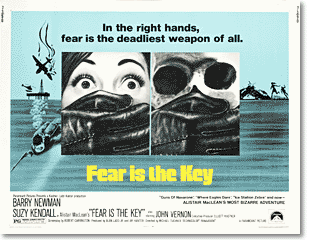
I have seen IB Tech prints. I saw a film called Fear is the Key (Michael Tuchner, 1972) that blew my skull apart. I’m pretty sure I left pieces of it in the back of the New Beverly theater. Apologies to anyone who finds those shards…
I saw Sleeping Beauty in 70mm and, while I think Disney is ok, I cried at how gorgeous it was. And yet I was struck with child-like wonder at the colors and the story-telling devices and the animation and art. In my mid-30’s, a fan of punk rock, experimental weirdness and all kinds of “alternate” things, I was, all at once, the little girl that I probably had never been. It was pretty phenomenal.
This is summer camp.
And now summer camp is heading around the bend. Now we’re heading into what we used to call (when I was a counselor) the third session. Third session was always the most melancholy and kind sweet. We all knew we had to go home soon, so we were holding fast to the friends that we had made all summer and man were we pretending that the end was never going to arrive.
I make my confession to you: I have 3rd session syndrome. And it was only made worse when I saw that the New Beverly was pairing up with Ain’t it Cool and Peyton Reed to put on a Summer of ’82 fest like the Alamo Drafthouse.
Sorry, but I’ve only seen Poltergeist (Tobe Hooper, 1982) once in my life and that was ages ago, so…color me excited.
Not only that, but this Wednesday night I will be sitting in that theater like a cinema champ, ready to watch Dead Men Don’t Wear Plaid (Carl Reiner, 1982) and Night Shift (Ron Howard, 1982). As a Film Noir junkie, Dead Men is, likely, one of my very favorite films. It’s my bacon, my ice cream, my “having a bad day? Steve Martin will solve your problems with black and white comedy” film. I had a friend in college who I used to go around quoting, “Your pa-yamas! Your pa-yamas!” at random moments. Don’t know what I’m talking about? Oh, please come on Wednesday. It’s showing Thursday as well, but Wednesday is the night when they’re doing the intro and who doesn’t like a good intro?
The other films showing? Oh, I dunno, The Thing (one of the few perfect films, in my estimation), Star Trek II (Khaaaaaan!!!). Oh yeah.
So, whaddya say? Come to camp with me? Y’know, the food isn’t bad, the guys and gals are pretty hot, and it’s always a good time.
When is the next time you’re going to get to see these films in 35mm? With an excited and enthusiastic film-loving audience like that of the New Beverly?
So, you may have seen some of these films already, but the question is, but what format was it on? If you have only ever viewed John Carpenter’s The Thing at home, you’ve never really experienced it. It’s like the difference between a microwave Chicken Piccata and one that was freshly made by a master chef. Sure, they have the same basic shape but…are they the same? I will leave that up to you. As for me, I’m heading back to the mess hall and the cabins.
Cinema Summer Camp is fun.

New work! Check it out!!

Hey all! Been crazy busy!! I’ll be getting something together soon, I promise.

For now…check out the latest thing I have up on the fantastic site, Crave Online!

I sat in on a pretty fantastic virtual roundtable with some great guests and it was a great opportunity for the film archivist in me and the cinephile as well.

Check it out:

http://www.craveonline.com/film/interviews/193251-presenting-the-way-it-was-warner-bros-and-blu-ray-restoration

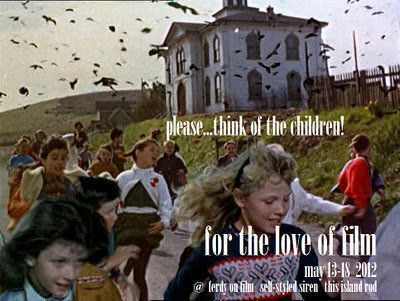
Please…Think of the Children: The Role of Children in the Hitchcock-verse

Hey all!

So as some of you may know, I’m the president of the student chapter of the Association of Moving Image Archivists over at UCLA. I’ve been trying to get the members to participate in the annual Film Preservation Blogathon and so…instead of posting my piece on Hitchcock and children over here, I decided to post it on our student chapter blog for some team spirit!

Soooo….if you’re interested (you know you are) and you wanna read my thoughts on Hitch and kids (you know you do) and you may wanna give the NFPF a few bucks towards this year’s project (think you might?) click on the lovely little graphic below….