No Words, and Plenty of Them

I have no words for the land of my birth right now. At least…no good ones. And I’m afraid to say the ones I want to say. This has never happened to me in my life.

A short time ago, a very evil man with the initials “CK” was killed and I said something on social media about him and my account was suspended for 24 hours. This is, of course, nothing in comparison to the multitudes of people who have, in turn, lost their jobs (or worse) simply for doing the same: speaking their mind.

I’m a writer. I have been a writer since I was a young child. I figured out pretty early on that I was not a fiction author. Couldn’t finish a story to save my ass. But I’m damn good at criticism, theory and media analysis. So that has been what I have run with. Lucky for me, I have found some success at that after landing here in Korea. I only had a fair run in the US. But the last almost 6 years here have shown me that my examination of oppression, gender studies and representation has some kind of place here. What that is is still anyone’s guess (Korea is still developing in certain regards) but my work is being appreciated in various sectors.

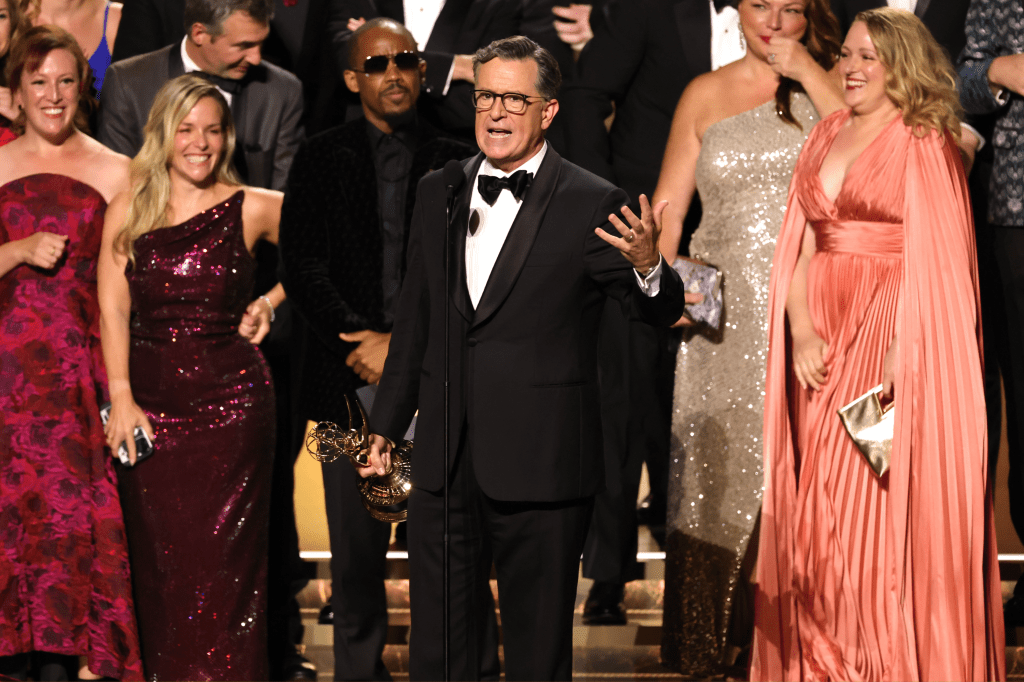
I talked with my mom today and I just couldn’t imagine what my extremely socially-conscious grandparents would say if they read the news and saw that these fairly innocuous late-night hosts were being censored. And when I say “fairly innocuous” I don’t mean that they are not powerful. They are. But let’s think about it for a moment- did people who hated Colbert really watch Colbert? Not bloody likely. Thankfully the man won an Emmy and quoted Prince (❤️) as the bookend to his on-air tenure, but really?

Men like Colbert and Kimmel…they’re a salve for the wounded (us). To paraphrase Kris Kristofferson, they are there to help us get through the night. They’re not going to physically make anyone get out of their chairs and go on a march. That is up to the individual her/him/themself. Mind you, there is a gigantic difference between the two hosts- Colbert was highly critical of the world around him so he did “punch a higher floor” while Kimmel? He was there to entertain. But we need entertainment. Silly laughter during some pretty apocalyptic times is just necessary.

Honestly, the importance of late-night hosts cannot be overstated. And when they come under attack, that is a bigger deal than we think. Why? Because what else is there late at night, after a hard day, when the world is not what you want and maybe you just want to zone out and catch up on a few jokes? Late Night is a tradition. And it’s slowly being murdered by the censorship machine. This scares me. Like many things.

In Korea, Late Night is not a tradition. The thing here is variety shows- quiz shows, game shows and all kinds of really fun cooking and reality shows that put the US ones to shame. I don’t always understand what is going on during all of them (my Korean is improving but certainly not *quite* at that “understand what the hell is going on during a game show” level) but they are always a relief to watch. They are full of fun graphics, unique contestants and highly interesting situations. So the viewer response is…similar to that of Late Night.

Korea would flip the fuck out if these shows started to get taken away. If anyone was paying attention to recent politics here, you saw what we did with our last president so I think you can guess that we would never allow these TV shows to get chucked.

But Korea is not the US. And I guess I’m glad for that, as I live here now and no longer in the US. But all the people I love still live in the US and…what if I ever have to come back? Will there be anything for me to come back to?

Late Night has always had a revolutionary side. So…sure. I can see why the Right would be scared. Ed Sullivan was adamant about having black performers on his show and treating them not as equals but like the stars they were during a time when they were unable to sit at the same lunch counter as white folks. The Smothers Brothers…well, you can google them. That’s a whole entry in and of itself. And maybe those were different kinds of shows.

But Late Night Television has a long and varied history that is centered on being able to BE THERE FOR YOU at the end of the day. No matter who you are. Sometimes the episodes are just stupid promos for a celeb’s new movie. Sometimes they are more. Are they dangerous? Only if you think the public should be remotely happy or feel some kind of peace for a brief shining moment in their currently chaotic existence.

I have a lot of shame as an American ex-pat right now, and, from the looks of things, I better get a bigger Shame Bucket cuz it seems like the one I currently got? Ready to overflow.

Being a Writer: Working With Trauma

The thing about being a writer is that you need to write.

The problem with having AuADHD is that you need routines and things that require deadlines.

Put the two together and…pretty damn fine writer.

Until you run out of deadlines. Or pieces to write. Or you get picky and niche. 

Or people are too flexible with you.

Or…you find some reason not to be writing.

And you end up depriving yourself of the greatest joy you’ve ever felt in your life: better than sex, better than romance, better than a perfectly cooked meal. And you don’t know why you’re so cruel to yourself, so abusive. You weren’t raised this way.

You were taught to celebrate your gifts. And you usually do. You’re so proud of the work you’ve done; the things you’ve accomplished. 

Then Big Trauma busts its way into your life like Lee Marvin in Who Shot Liberty Valance? and, like, what the fuck else are you expected to do? You’ve tried all the “normie shit”- drinking, fucking, eating…even that new-fangled thing all the kids are talking about called “bed-rotting” but it still doesn’t get you the same high. You know no one is gonna read what you write (or precious few) but what the hell are you supposed to do when you find yourself this alone in a foreign country and nothing makes sense anymore?

Oh.

Yeah.

You do what you’re best at.

You write anyway. So I am. And I’m going to.

I cannot describe the pain of losing two of the most influential people of my last 35 years within the same 5 months. I think that as a writer, that may be the worst part. I have so many words for so many things. I can describe decaying flesh, wild parties, drug-induced orgies…but I have no vocabulary for what it feels like to experience what I am now realizing is the loss of my youth. I am old now. My young times existed in the most glitteringly golden safe space where I was treasured and loved and held and protected from all the worst elements. It was punk rock at its finest. Bowling alleys and strip poker; mushrooms and trust. I have never been in love the way I loved everyone in my FriendFamily.
I am still madly in love with each of them in a way that no one but them will ever understand.
Dumb jokes about being in someone’s pants and the sounds of ska, Agent Orange and Oingo Boingo quilted into the Santa Ana Winds.

I danced and drank and celebrated life and us for a solid weekend back in the US and it was like one of those Big Chill experiences and that was both nightmarish and heavenly. FTR, our soundtrack was WAY fucking better, end of story. And The Big Chill rules.

But…..I’m obvs biased.
Also, I’m right.
But those of you who knew the person involved Get What I’m Sayin’.

I don’t even know.

I want my mommy and I HAVE my mommy but my mommy is also all of my friends that I’ve known since I was a nerdy teenager who told me how proud of me they are and gave me more love than I’ve felt in a long time.

See, I don’t regret moving to Korea.

Especially now that my former home is a fascist state

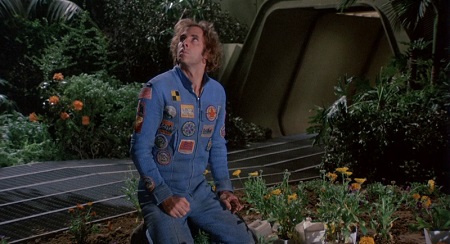
But I also feel like Bruce Dern in Silent Running sometimes…like I’m doing something really important but it’s super lonely and like…plants can’t talk back. And robots? They’re just robots.

If you don’t get that reference just, see Silent Running. It’s genius. 

I miss talking to people who get my references. 

Is being brave worth it if you have to put your heart and soul in your back pocket sometimes because people are just not gonna get that George Romero joke?

Anyway, back to trauma and writing.

What writer wasn’t chock full o’trauma.

Can you really call yourself a writer or an artist if you don’t have trauma? 

I guess I just didn’t need all this all at once. It’s a little much. But maybe I did. I’m writing.

And, more importantly, I want to be writing. 

I want to be writing more than I want to be doing almost anything else right now so I’m trying to focus on that. I want to talk about the things that I love. Why I’m here. So I realize it’s been a long while. 

But I am going to make an effort to come back. 

It’s only fair to me.

You may not give a shit about me or my writing but hell- it’s the best thing I do.

The Happiness of Failure & Graduate School as Ghost Protocol

Yesterday I passed the exam that said that I am now 100% eligible to take a job in my chosen field of moving image archiving.

Not only is this thrilling and a feat of accomplishment, it is a dream come true. However, I also feel like Ethan Hunt in 2011’s Mission Impossible: Ghost Protocol. At one juncture in the film, injured and beaten to shit, he falls to the floor and growls, “mission accomplished.” Later he expresses surprise that he even said this. Oh, the metamess or metaness of it all.

In a way, there were times when I felt like this second shift in graduate school was my Ghost Protocol.

The independence that Ethan Hunt and his cohort had to work with, the disavowal of the IMF, the continual pursuit of a goal for the betterment of the world…these were all things that I deeply identified with. I don’t think that my cat knew that he was on a moving image archivist rock ‘n’ roll grad team, should he “choose to accept it” but…hey. As my friend Ray would say, I had the ability to make the metal meat mice happen for him. He accepted the mission willingly, if, for no other reason, than he was able to walk across my keyboard at key moments in my digital restoration examinations and planning for film series curations.

Fighting for what you believe in is hard work. Ask Ethan Hunt. Being disowned/disavowed by your organization for the betterment of the Mission is tough. But Hunt moved forward. Not taking no for an answer. Amazingly enough, I did the same thing. I will tell you that I was absolutely not feeling it when I did so. There must be something in my DNA that drives me to do so. But I believe, more than anything, that it is my love for the job and my love for film preservation and restoration itself that drove me to get back up when I got blasted out of the water a few weeks ago.

I failed my grad school exam/portfolio defense the first time.

Holy shit. I was CRUSHED. This was my everything. Watching others in my year be so enthusiastic about passing with distinction and then…I sat there, sobbing. Two years. Working so hard. The worst part was…I knew exactly what I had done wrong. But there was nothing I could do to fix it at that point. Not only that, but I had a show to put on that night! It was the final screenings of a film series that I had spent the entirety of my film archiving education curating. I had to be fresh-faced and enthusiastic, the way that I normally am, not gutted.

By the time we reached the theater, I was composed and the screenings were phenomenal. Perhaps the best events I’ve organized thus far in my career.

This has been an inordinately difficult year for me. As Townes writes in this song,

We all got holes to fill
Them holes are all that’s real.
Some fall on you like a storm,
Sometimes you dig your own.
The choice is yours to make,
Time is yours to take;
Some sail upon/dive into the sea,
Some toil upon the stone.

The one thing that got me through everything was the Moving Image Archiving Studies program at UCLA and what I was working on there as well as the different projects that I was planning for the AMIA Student Chapter. From my previous days as a teen HIV/AIDS educator, I knew that activism was my preferred method of working. But it is not everyone’s. My passion gets my work done and gets things changed and lets me know that I will see results. But it got in the way this time and did not allow me to look at my graduate experience critically. Equally important, it blinded me from being critical of my creative or academic work. This was a major problem.

Failing was one of the better things that has happened to me.

While the above paragraphs do not show as much, it has improved my writing, it has humbled me and it has given me new heroes to follow. One of the films I played that fateful weekend was The Times of Harvey Milk (Rob Epstein, 1984). He failed four separate times before being elected to office. I have recently been doing some research on playwright and author Samuel Beckett, and his work was considered “unpublishable” and rejected from innumerable places before he hit the jackpot. Upon my initial receipt of  the failing grade, one of my mentors, Dennis Doros of Milestone Films responded kindly, saying I should take it in stride. Academy-Award-winning archivist Kevin Brownlow failed many times before he got to the marvelous place he is at today as did he himself.

Depression is a nasty disease and tricky to work with in dark situational moments like this. And I am not one of those people who likes to hide things. Frankly, if I did, it would be unhealthy for me. I have had various health complaints since I was a kid, and they are odd and I have had to tell my employers and friends about them so that it wouldn’t be an issue. My epilepsy is something I have come to terms with now and I have started to try to get comfortable talking about my depression too since I have begun to suspect that, since they are both located in neurologic segments of the brain, they are having some kind of party and making decisions without my control. I am cool with talking about it. What I am not cool with is wanting desperately to deal with failing what I feel is the most important exam of my life and desiring to bounce back right away. It is very frustrating. I hate being frustrated.

Once again this was an area where I felt like it was Mission Impossible:Ghost Protocol. I wanted so badly to reach out to someone, anyone, but…I was on my own.

However, the things that I learned were so amazing that I wouldn’t have done this ANY OTHER WAY.

My writing will now be going through so many drafts if it is going anywhere. What you are reading now is an example of the exercise I discussed a few days ago, “Writing the Don Roos Way.” My speech and presentation work will be less vague and a great deal more professional. My thinking will be more critical and many things about my work will be more concise but equally as powerful. I plan to remove the wishy-washyness that has been present within my work and make real focused statements. After all, I have 2 degrees from a very heady institution that say I am allowed to do so. I believe that I may say these things and to hell with anyone who says the opposite.

It’s about using failure for success and restructuring pessimism for optimism. I believe in the power of words and writing. I also believe that we are the ultimate self-babysitters upon becoming adults, especially for women and the marginalized. If you want to have power or to feel that you have power, write it into your work. Change the pronouns, clarify your sentences, give yourself more credit, have conversations about a) what you really wish to say as a writer or speaker, b) who you want the reader/audience to see you as and c) what actually happened. Are you seeing/interpreting/writing the piece up in a certain manner due to gender/social inequities? I do that. I have been known to have less confidence in my work because as a woman I am socialized to take less credit and to be more “maybe/kinda” than “absolutely/yes.”

The  happiness of failure has led me to passing the exam yesterday, reconsidering how I use pronouns, and never wanting to open a sentence with “however” again.

I am a strong woman with many awkward cracks and hiccups in my interior. But I will be walking the graduation path on Friday in my cap and gown in the name of my mother, grandmother, father, godfather, myself, and the thing that has kept me going this whole time: FILM’S FUTURE.

And when I come off that stage, my first two words will be “Mission Accomplished.”

The Importance of Outfest and Writing the Don Roos Way

My godfather is a writer. Thus, like many of the writers I know, he is full of quotes about writing.

During one of our many conversations about how much I Iove it, how much peace it gives me, how triumphant it makes me feel, how engaging it is to me, as a woman and as an intelligent human being, I remember us debating over the Dorothy Parker quote:

“I hate writing. I love having written.”

I, myself, am not this way in the least. I love the process of putting a piece together. Much like the three witches in Macbeth, I take great pleasure in my cauldron and my word “soup,” I love the way that I am allowed to make things “flowery” if I wish or casual and quirky if that is my intended goal. I love putting my voice in there because writing is my chosen artistic expression.

My little brother is a DJ up in San Francisco (and a very good one, she adds, with devoted sisterly pride). The sweat that pours off the dancers and enthusiastic fans that flock to his booth and to him is inspirational. I can only hope that my writings can inspire that kind of excitement in a reader someday. I say a reader because as a teenage HIV/AIDS educator, I was taught one very important lesson that, 22 years later, I have kept with me and remember daily, if not hourly: if you reach at least ONE person, your work is done.

This is a very difficult thing to remember in a world such as ours where we are dead set on the monetization of artforms and we are in positions where instead of reveling in our positions as writers/creators/film critics, we must choose situations that are exhausting and do not leave us enough time or energy to realize the WHY of our work, only the how  and the when-does-this-need-to-be-in-by.

Last night I accompanied my godfather to the Writers Guild of America, West for an event presented by their Gay & Lesbian Writers Committee. There were many reasons that I wanted to go. For one thing, it was focused on participants from the OUTFEST Film Festival, a film engagement that I passionately believe in and have enjoyed works from consistently over the years.timthumbAdditionally, it was looking at several aspects of Outfest beyond the film festival itself: the writers, participation and development of the Outfest Screenwriting Lab, and indie filmmaking in the queer community. Furthermore, it was moderated by Alonso Duralde, someone who is not only someone I personally think is fantastic, but highly admire in a professional context.
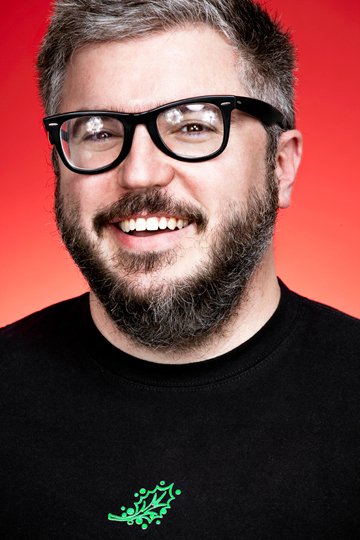
AlonsoDuralde-2

Alonso Duralde, Senior Programmer of Outfest, Senior Film Critic at The Wrap, co-host for Linoleum Knife podcast and regular on What the Flick?! (Young Turks Network)

The program gave me more than what I bargained for and is partially why I am sitting here. But I will get to that later. First, a few issues came up that not only fascinated me but made perfect (if tragic) sense. To lay it out best and relate what I feel are the most critical points of my experience last night, as a writer, as an archivist, and as a woman, I am going to catalog it using sections.

Marginalization Within Marginalization

There was a fascinating discussion about the idea of “whiteness” in the queer moving image community and whether certain writers were working to change that and how. Doug Spearman (Hot Guys with Guns) spoke to this issue, while he mentioned his TV work on Noah’s Arc, what I found particularly important was the mention of breaking boundaries and representations of realities that were not single-ethnicity-ed. Spearman mentioned interracial relationships as part of work he had been involved with and that extending those ideas could only extend diverse concepts of the queer world thusly giving a far more realistic view of the world that we live in.  Listening to this, it was hard. It’s unfortunate to consider that many of our filmic materials, whether queer or straight narratives, seem to stay well within the lines of ethnic and cultural groups “sticking to their own.” It reinforces ideologies and tropes that we should breaking free from.

Adelina Anthony‘s perspective was wonderful in this perspective. She spoke of the usefulness of the theater community and the stage when the moving image world was, to be perfectly frank, trying to pack her wonderfully expansive ideas into their small cages. She spoke of being told to make things “less Latina” or being asked to “tone down the Lesbianism” and other situations requiring her to completely remove her identity from her creative work. Anthony said that the stage and her work with theater has never required her to do so. While she is preparing to move back into moving image/filmic realms, she also mentioned her significant pride in being able to maintain her own identity the whole way through. And the fact that Genevieve Turner (another panelist)’s movie Go Fish was an inspiration to her own coming out story (I have to say- that part was really adorable!).

Outfest as a Writerly Tool and Growing Force

The panel discussed the Outfest Screenwriting Lab, which various people had participated in as mentors (some, as Guinevere Turner quipped, referring to herself, for many years) and others had as “mentees.” The process was laid out clearly and while it was reminiscent to me of the Sundance Screenwriters Lab and it had crucial differences. One of the differences was laid out in the first few minutes of the panel when each filmmaker was talking about their early experiences of queer cinema. Issues such as first viewings of William Friedkin’s Boys in the Band (1970) and panelist Barry Sandler’s pioneering Making Love (1982). What was vital in this instance was not only the experience of seeing queer representation on a screen that had been either underrepresenting or poorly representing the LGBT community for its entire history being able to carry that experience over into future creative endeavors. While the Sundance Screenwriters Lab has a focus on independent cinema, and I have some certainty that the participants may have had life-changing experiences with independent films that also deal with marginalized groups, when I sat there last night…I felt the importance of Outfest itself and this lab.

There is a saying that someone told me when I was a kid and doing all my peer education work. I have no idea how to source the quote – all the information I can find on it seems iffy at best – but someone nice told me it. And it’s a good saying: “Each one reach on, each one teach one.” To me, this seems to be the ethos of Outfest, especially how it was displayed on that panel.

During the question and answer section part of the evening, a young man stood up and asked a question. He was from Outset, the youth filmmaking division of Outfest. It struck me at that point that not only was Outfest a festival where one could find entertainment and access to marginalized images on the big screen, it is, for many film professionals, a centralized agent of personal entry to the larger media world.  For a community that has never had that before, being able to start from the ground (teens), move upwards (young professionals) and possibly make to the silver screen is pretty exciting. Unlike Hollywood on the whole, what I noticed on this panel, when discussing people’s experiences with the Lab or the applause for the young man from Outset or sharing of information about what works/doesn’t work for crowdsourcing a film, was support and positive reinforcement.

It was inspirational to hear June Diane Raphael talk about not completely giving up on her project when it was delayed for two years or when folks in Hollywood told her that horrific thing that I have heard many times before: well, women will follow a male narrative, but men will very rarely follow a female narrative,  and there’s really no market for that so…you may want to rethink things. The men and women on this panel were not only experienced and informative but smart and clearly cared about the work. To me, there is nothing more beautiful. So many people seem to make things that they clearly don’t care about. In a perfect Ariel World, we would all be able to get paid to make these amazing works that are full of the passion and determination that has been with us since we were children. Damn the box office! The box office is not a gauge of film calibre! Then again, I also wish to live in the Shangri-La of Frank Capra’s Lost Horizon most days too, so…ya know…

The queer film community needs Outfest and Outfest is growing. This can only be good. The effect that they have on queer youth and creative people in the LGBT community through their various projects can only help and from what I was able to grasp last night and see in the way people engaged each other on the panel, this structure is one that can only flourish. I believe this will do the entire film festival community a hellovalotta good. Outfest puts out work for everyone and work everyone should be seeing, queer, straight, asexual, pink-polkadotted fetishes, who cares.

Writing the Don Roos Way

One of the many times I went to go see John Waters do his speaking engagements, he described his writing ritual. He gets up every morning, puts on a particular set of comfortable clothes, goes and sits at his computer (might’ve been a typewriter, but I think computer…I think I’m wishing it was a typewriter. More romantic!), and writes for a few hours. Then he shuts it down, and begins his day. EVERY DAY.

I said to myself: WOW. I should totally try to do that. Write at least a little bit every day. A journal entry. Something. Just ritualize it, make it happen, just do it. But make it part of my chores. Because then I’ll have at least accomplished something. Plus…going back to the Dorothy Parker quote, I love the hell outta writing. So, however many months later it is now, and…I have not made this part of my ritual.

SURE, I have had graduate school and I had a regular weekly column where I was writing a ton (which both counted in their own ways) but I was not writing every day. Nor was I reading every day. But that’s another entry. Tomorrow?

Skip forward to the last question of the evening last night, put forth by Kristen Pepe (KP), director of programming at Outfest. She inquired of the panel about their writing processes. The discussion had shifted from filmmaking and screenwriting and begun to focus quite a bit on monetary issues and KP brought up a very salient point: without the talents and writing skills of each of the individuals on the panel, they would not be in a position to go ask for monies for their films or attempt the projects in the first place. How did each of them write?

Everyone had different answers and different methods that worked for them, many of which were small edits on things I had heard before. However, when Don Roos discussed his writing process, something clicked and I liked it. A lot. He stated that as writers, one of the hardest things that we deal with is being able to feel good, feel accomplished, feel 100% on top of the world on a regular basis. He gave the example of a dry-cleaner. As a writer, it’s not like we have anything concrete that we can do/look at/see at the end of the day and say, “man! I finished dry-cleaning all those shirts! I’ve had a great day!” Our successes are far more infrequent, far-between, personal and amorphous.

OH MY GOD. Hello, 80,000 lightbulbs dinging above my head. Don, you are speaking my language!!

He went on to say that in order to combat this, you really DO  have to write every day. [Well, now that you put it that way…]

He said that he puts a timer on and for an hour he has two things up on his computer: whatever project he’s working on and a “journal/blank page.” And he writes. For an hour. No phone, no internet, no interruptions. That blank page could be filled with stuff like “I hate writing, screw today, ugh this is dumb, I don’t want to go grocery shopping, I’m pissed of at so-and-so” or whatever. But eventually, he says, he gets so tired of writing over there that he returns to the project page and gets work done.

The other panelists had some variations on this process, but the one thing that almost all of them agreed on was writing every day. While I don’t want to be a filmmaker or Hollywood successful, I would be happy to be a better writer. I think it would do my head good too. So this is my first day of Writing The Don Roos Way. I have been writing since 11:08am. It is now 2:00pm.

I’d say it works. It also works because I also was able to get my thoughts out about a great experience I had last night and document them properly. As many of you know, I am a soon-to-be-graduated moving image archivist, so documentation is of the utmost importance to me. Listening to Don’s words had significant value to me as far as the documentation of my life or historical events are concerned. In this virtual/weblog world, we now have the capacity to do multimedia documentation. Writing every day also means collecting images and doing research.

It may become a challenge for me to keep it down to an hour. But perhaps that is my challenge. And as anyone who knows me well knows, I’m always up for a challenge!