
My new piece on the continued relevance of George Stevens’ GIANT, its fortuitous casting & adaptation. Only on the New Beverly Blog. Check it out!
Film
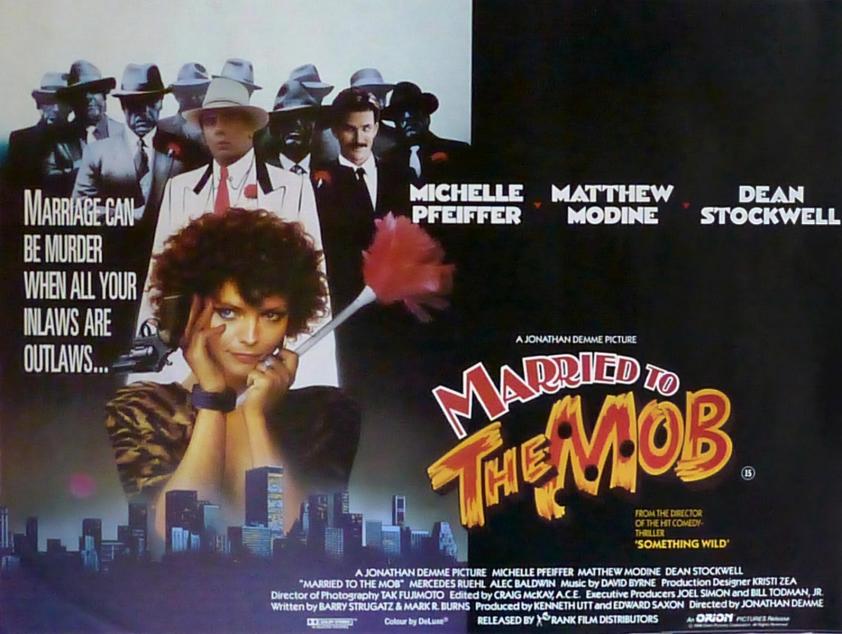
Married to the Mob
This post was originally published on the New Beverly Cinema blog on April 14, 2017. It is being republished here with full permission of the New Beverly. For the original post (with different artwork) please see the original post here.
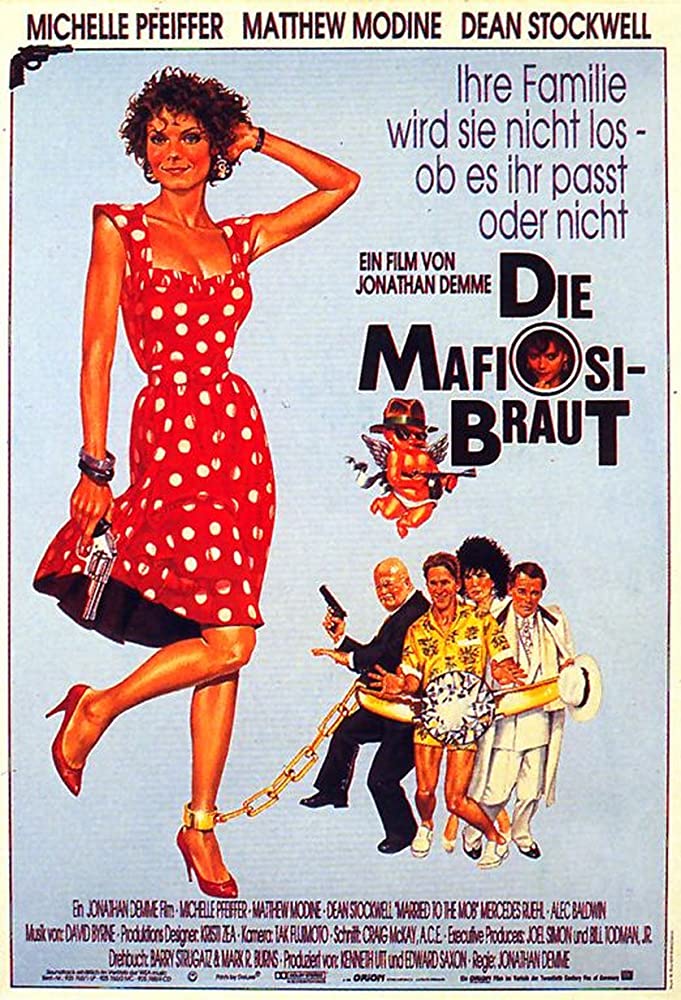
Married to the Mob (Jonathan Demme, 1988) is the S’mores of mafia comedies: created from everything delicious and best when consumed with people who enjoy wild adventures. This film is like a drug: it will make you high as a kite, flush with the kind of endorphins that only a Jonathan Demme film can produce. Upon the opening credits, it is clear that this landscape is entirely different than most films. It is aurally dynamic, visually bold and entirely inviting. This is what you will get with Married to the Mob – I hope you’re ready.
The only bad thing about this film? Married to the Mob ended up being Jonathan Demme’s final voyage into the fantastic land of bright visuals, Daliesque narratives and ’80s vitality that he had made his cinematic calling card. The Demme universe, a cosmos expanding with kitsch, cool and pop culture, explored previously in works like Something Wild (1986) and Stop Making Sense (1984), was singular in its ability to balance noir /criminal themes, gut-busting comedy and a through-line of surrealism. These films displayed Demme’s unique and wacky creativity, and pointed directly to his beginnings as a Roger Corman-initiate. The films’ anarchism and utter disregard for normalcy reflected Demme’s early experiences in the Corman contingent and easily allow us to see the connections between films like those already mentioned and earlier works like Crazy Mama (1975).

Married to the Mob was Demme’s grand finale of fun before he began developing a fascination with themes like psychological darkness or deep humanity as shown in films like Silence of the Lambs (1991) and Philadelphia (1993). Demme’s oeuvre is wonderful and embraceable at any given point but there is something innately glorious about the work he made in the ‘80s. These films glow, like a nitrate print, when watched. You can’t help but be taken by them.
From DePalma to Demme, actress Michelle Pfeiffer has rocked the role of the mobster wife. But the role of Elvira Hancock in Scarface (Brian DePalma, 1983) differs quite a bit from that of Mrs. Angela DeMarco in Married to the Mob (1988). While DePalma designed his female character to fit the mold of the stereotypical mob companion (corrupt, unpleasant, deferring everything to her Mafioso man), the woman in Demme’s mob parody flips that stereotype in order to create a figure that is everything that the standard Mob Ladywife is not. Angela DeMarco, from the get go, is bored with money, doesn’t want to play cards with the other mobsters’ wives, and is livid when she finds her son is gambling with the other kids in the backyard. She believes (correctly) that living within mafia confines is setting a horrible example for her child, especially when her no-good philanderer husband can’t find his gun and their son easily locates it in a kitchen drawer. “It wasn’t loaded,” he shrugs. Angela’s eyes get even wider and her mouth drops. How can she live like this?
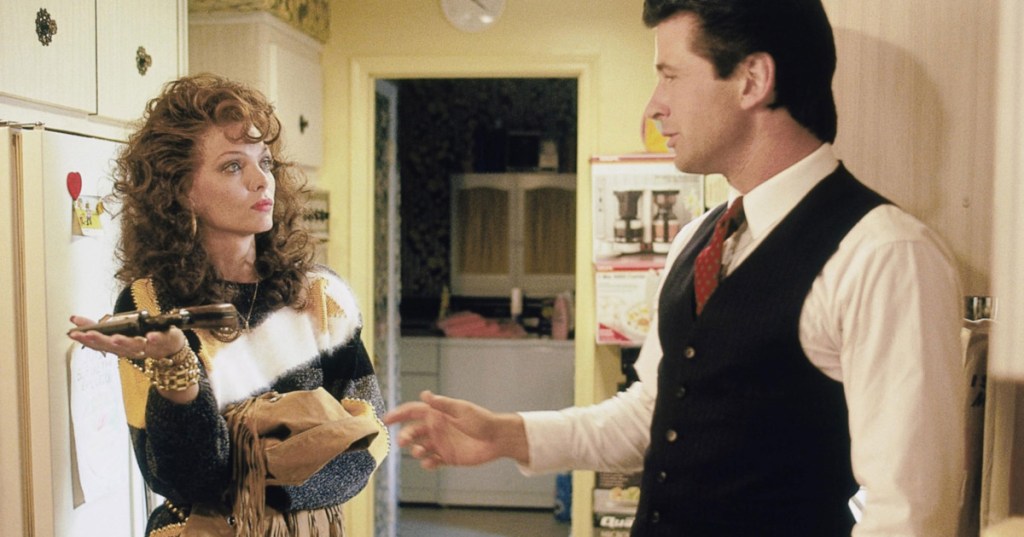
One of the more wonderful components of Married to the Mob is that while it may be a comedy predicated upon stereotypes and boilerplate mafia representations, its depiction of the female protagonist is set firmly in a feminist narrative. This narrative wreaks havoc with Demme’s perfectly sculptured mafia archetypes and leads to one of the most delightful and charming films produced in the 80s. While it ended up as a cable staple later on and many have tossed the film off as a “lesser Demme,” Married to the Mob is smart, stocked to the brim with “OMG! THAT GUY? WOAH!” moments, and is a great example of genre parody done by a master filmmaker.
Married to the Mob mirrors films like Desperately Seeking Susan (Susan Seidelman, 1985) in tone, tapping into the theme of women looking to achieve more in their lives than white picket fences and TV dinners. Films throughout the 1980s operated on this thesis, depicting unhappily married women determined to break free from the unsatisfying lives in the suburbs that were sucking their souls dry. Married to the Mob takes this a step further.
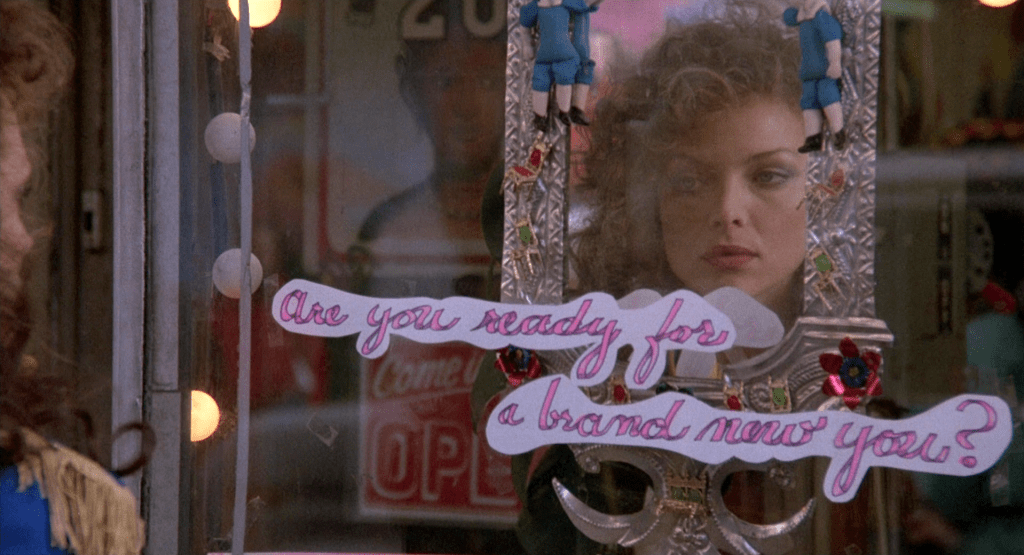
Angela DeMarco (Michelle Pfeiffer), married to (cool as a) “Cucumber” Frank DeMarco (Alec Baldwin), is not like other mob wives. She cares and wants the best for her kid. She abhors the way their family lives and what it lives on (embezzled money, stolen furniture, dishonesty). Angela has no real friends as she rejects anything having to do with her husband’s life, especially the mob wives, played impeccably by Mercedes Ruehl, Joan Cusack (and a few others). When Frank gets iced, Angela takes the opportunity to get the hell out of Dodge. Unfortunately, her loathsome past catches up with her in the form of mob boss, Tony ‘The Tiger’ Russo (Dean Stockwell) as well as handsome (but awkward) FBI agent Mike Downey (Matthew Modine), both of whom have the wrong idea about her in slightly differing ways. As the film continues, we watch as the rest of the New York City male population treats Angela poorly and denies her the respect she deserves. From sexual harassment to flat-out blackmail, Angela suffers non-stop misogyny at the hands of almost every man she meets. Mind you, those men happen to be the hilarious Tracey Walter and noted character actor Trey Wilson (both Demme “regulars”). But Angela refuses to give up: she does not suffer fools. She makes it past these obstacles and is able to continue her journey. And we are able to enjoy watching these men fall by the wayside.
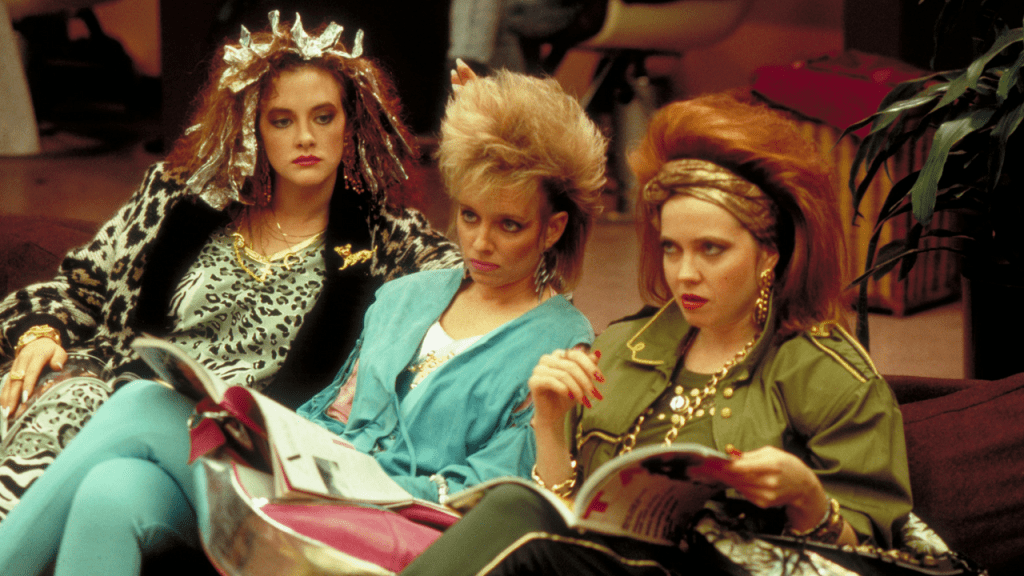
Married to the Mob is a mixed genre film. It is part of the Women’s Film genre as it follows the trials and tribulations of Angela DeMarco, victimized by the mob culture that she has fallen into and now struggles to escape from. Like Women’s Films of the past, Angela works her ass off to support herself and her son, and is continually put in precarious situations due to her “shady” past. But, like most Women’s Films, Demme demonstrates in this work the courage and fortitude that it takes to brave a landscape like this. It ain’t easy. As strong as the reference to that genre is, the film maintains its core as a hardcore spoof of the mafia and gangster culture. We shake with laughter at the various mobster-related cameos by people like Chris Isaak or Buster Poindexter. Even though names like Vinnie “The Slug” (Frank Ferrara), Nick “The Snake” (Frank Gio) and Al “The Worm” (Gary Klar) may seem like basic monikers, in Married to the Mob sometimes the most obvious joke is the funniest. These are just slimy, dirty guys!
This film is insanely enjoyable from beginning credits to the very end where, under the final credit sequence, we are given a special vision of footage that was not included in the main narrative. In a world that is not predicated on DVD/Blu-rays, director’s cuts and extended scenes, this final credits sequence is highly unique. Demme shot an entire scene with Joe Spinell for Married that never made it to the final cut but he desperately wanted the audience to see it so….BOOM. Just put it in at the end. Make sure people see that Spinell was, indeed, part of the picture. There’s a lovely extended scene with Modine and Pfeiffer on the steps of a building. Never happens in the actual narrative. But you will see it as the credits are rolling! The character Chris Isaak plays? Apparently you get a feel for his creepy back-story…but you have to watch those credits! Pay attention or you’ll miss it.
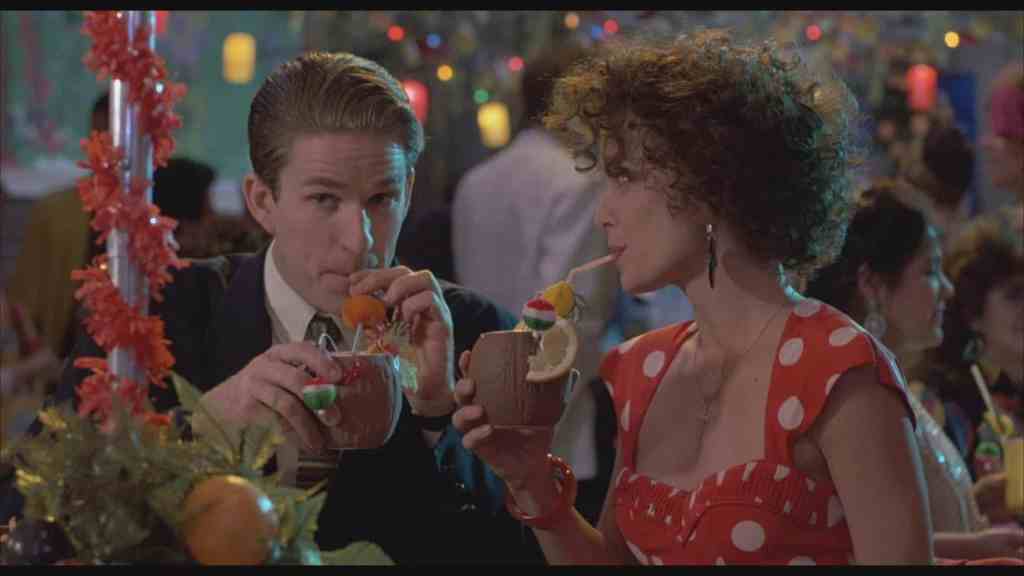
The format of 35mm film and its shooting economy are platformed in this credit sequence. These added moments underscore how Demme developed a sense of the film narrative, physical film limitations and editing techniques. As much as he may have wanted to use those scenes, they did not belong within the beginning to end of the Married story. But as a post-script? OH HELL YEAH! He could take that beloved “excess” footage and use it to cap off the film, no problem! Audiences could and would remember these extra scenes and it would end up being a highly memorable part of their Married to the Mob experience, if not an aspect of the actual plotline.
Near Dark – New Beverly Blog
New post on the New Beverly blog!
An article on the film Near Dark (Kathryn Bigelow, 1987) and interview with lead actress Jenette Goldstein.
Check it:

Ariel’s Print Resource Guide for TCMFF 2017: Moving Pictures

It’s that time again! Time for TCMFF (TCM Classic Film Festival)!!!
Last year I decided to make an official film guides to assist in examining the program and schedule and use that data to do a format breakdown. Using my skills as a film archivist and preservationist, I thought that these things would be useful for fans and attendees to have.
This year I think this is an ESPECIALLY useful tool since we have an all new item to add for our viewing pleasure: 35MM NITRATE!!!
So first of all, let’s get a few rumors settled: nitrate is not OMGZFIRECAUSING and it will not blow up if you simply touch it. The chemicals that are released when the film begins to deteriorate (called “off-gassing”) can lead to some nasty toxicity though and the more you pack nitrate in…the more likely you are to cause a fire. Nitrate doesn’t like close quarters and it doesn’t like to to be under pressure. Think of Nitrate as the hippie film base- it just wants to chill, man. But if it gets a bad dose (ie, starts to deteriorate) or is put under bad pressure/circumstances, it could really blow.
BUT HAVE YOU SEEN A 35MM NITRATE PRINT??????????
Don’t miss the chance to do it this year.
Seriously, guys.
PART I: PREPARATION & PLANNING
Listed below, in the alphabetized spreadsheet, is all the films that are playing as of Friday, March 31, 2017. The spreadsheet moves down and also moves to the right and includes notes, theaters, times, formats and all kinds of details!!
If you want to download the spreadsheet and organize it according to your own wants (format, notes, theater, day/time, etc.) that link is here:
https://docs.google.com/spreadsheets/d/1BZuaCal1g9zZu0GYSdGScDKBWjB8uDpIuffrWImC6Q0/edit?usp=sharing
PART II: DATA BREAKDOWN
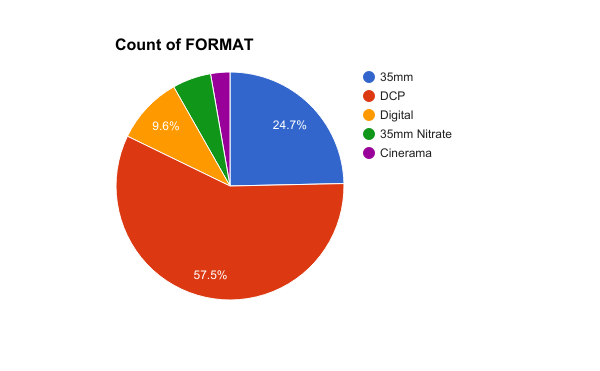
This (obviously) is the way that the formats broke down this year. The wonderful thing to notice is that we still have a thick chunk of rare kinds of films to see, including different kinds of formats. While there is no 16mm or 8mm (except digitized in the Hollywood Home Movies program which usually occurs on Saturday afternoon in Club TCM), the Cinerama and 35mm nitrate is pretty nifty stuff. We’re pretty spoiled on basic technicals.
TCMFF 2017
Last year’s stats looked like this:

TCMFF 2016
So I think we’re doing pretty well for 2017!!! Analogue has gotten a more diverse face this year, which is definitely a plus. That is, of course, thanks to the Egyptian Theater/American Cinematheque for taking that risk and refitting their projection booth with all the necessary items for the projection of nitrate. Not every theater is able to project nitrate. We’re exceptionally blessed that they were able to do that in time to work with wonderful people like the UCLA Film and Television Archive and access prints from their MASSIVE nitrate collection.
I can personally assure all of you that UCLA FTVA’s nitrate collection is brilliant. I helped move their archive from where it used to be in Westwood and Hollywood to where it resides now, in a glorious archival palace in Santa Clarita. Their collection is beyond compare.
PART III: WHATCHA SEEIN’?
So I have some definite “MUST SEES” this year:
One of my favorite films of all time and a film that I wrote about for the National Film Registry/Library of Congress, Born Yesterday.
A film I’ve seen a gazillion times but it’s also one of my FAVORITE FILM IN THE UNIVERSE EVERZ, The Court Jester.
Last year I saw Larry Peerce’s One Potato, Two Potato at TCMFF and it was a revelation. This year I plan on seeing The Incident, come hell or high water.
I missed the screenings & talks for the restoration of The Front Page this year. But I won’t miss it at TCMFF!!! Especially with one of my favorite professors and awesome people from archiving school giving the intro!
There are plennnnnttttyyyyyy more that I’m thinking about & considering but that’s all I’m committing to on blog right now.
See ya at the movies!

Anarchy in the TV: 2016 Discoveries in UK TV
I’ve given up on a great deal of media work in the US. It just doesn’t do it for me anymore. The representation of women is awful, discussions on culture, ethnicity and class are disappointing, and my crime shows are just not satisfactory.
So, I’ve turned to the English. They have an insane amount of content that not only centers women & POC as dynamic and powerful players but also examines class and subcultural topics.
For a punk rock intersectional feminist like myself, it’s good media food.
Also, they just hit it so much better with crime/detective things (or at least they have in the past) and I’m getting to discover a bunch of stuff that I didn’t know about before. So, although I am picky, if it’s British, I’ll usually give it a shot over any US TV program.
I can’t say that all of these are easy to find. Sometimes you have to work at it. But they are ALL worth it.
Here are my pix for this year.
1) HAPPY VALLEY (2014-

Available on Netflix.
While I LOVE Olivia Benson & Law & Order, Happy Valley is all that and then some. If the first 10 minutes don’t grab you, I don’t know what will.
2) SCOTT & BAILEY (2011-

Available on Amazon.
Another show by Sally Wainwright. Best cop team ever. Suranne Jones and Lesley Sharp are insanely great actresses.
3) OUR FRIENDS IN THE NORTH (1996)
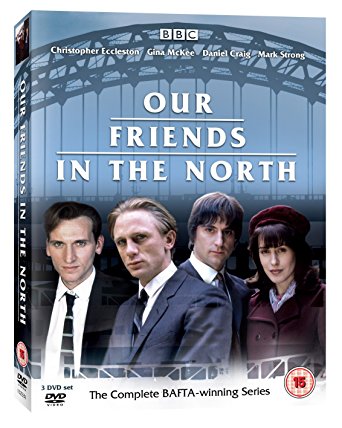
Mark Strong. Christopher Eccleston. Daniel Craig. Malcolm McDowell. Gina McKee.
After I watched this, I was stunned. I wished there was more than 6 eps. But…no. There’s a cadre of reasons that it won a bunch of BAFTAs. Tells the story of a bunch of friends in the north of England from the 1960s to the 1990s. Brutally good.
4) THIS IS ENGLAND (2010, 2011, 2015)
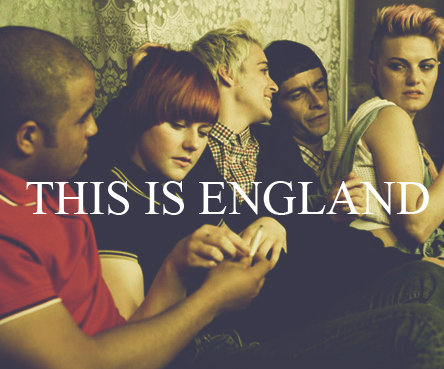
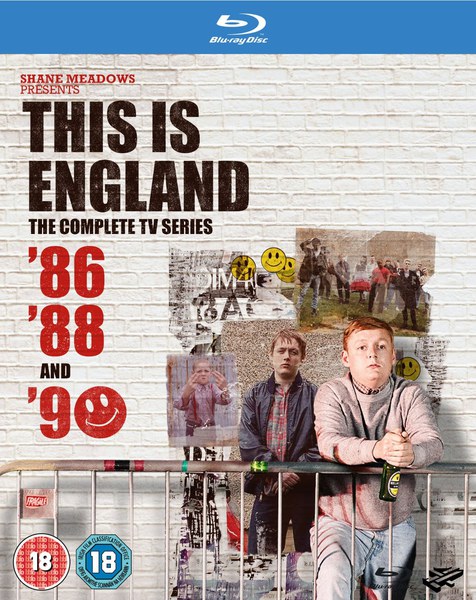
If you haven’t seen the movie This is England (Shane Meadows, 2006) you should. This show is a continuation of those characters and it’s ABSOLUTELY GREAT. If you have (or have had) any history in the punk rock or ska scene, it’s a must. But even if you haven’t, the writing is great, the characters are unusual and well-formed, and, like Our Friends in the North, it does an amazing job of covering long periods of time in people’s relationships.
5) PRIME SUSPECT (1991-2006)
Available on Hulu
Helen Mirren is the best DCI that I have come across. Sarah Lancashire, Lesley Sharp & Suranne Jones are amazing in their own ways, but Helen was first. This show is so great at discussing feminist issues in the workplace AND being a top notch crime show that it’s bonkers.
Black Christmas
This post was originally published on the New Beverly Cinema blog on December 12, 2016. It is being republished here with full permission of the New Beverly. For the original post (with different artwork) please see the original post here.
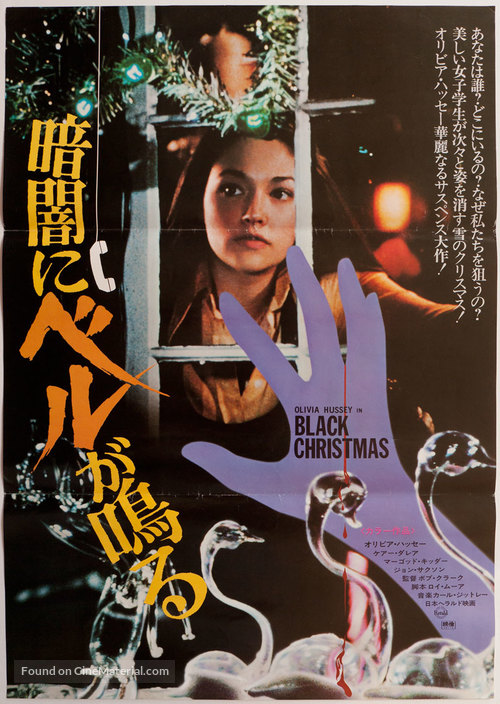
Bob Clark made movies that stand the test of time and was phenomenally gifted at the art of good storytelling. Not many filmmakers can do this. But the director of the holiday classic A Christmas Story (playing Saturdays at Midnight this month at the New Beverly) has made as many people laugh as his slasher classic Black Christmas has made people feel total fear. Black Christmas is as frightening and nightmare inducing as A Christmas Story is hilarious and gut-busting.
Some may wonder: why Christmas? Was Christmas a “thing” with Clark? Perhaps. To an extent, we may examine the idea of Christmas as a holiday that is joyful and anxiety-ridden, thus Clark made two of the most iconic films in the holiday film oeuvre to study the holiday from two very different ends of the spectrum. Of course, A Christmas Story is jam-packed with neurotic holiday discourse so while the movie is certainly a loving paean to family memories, it cannot help but be a bit dark at the edges. On the other hand, nothing within the A Christmas Story narrative could compare to the relentless terror presented within the landscape of the small town of Bedford and residing within the Pi Kappa Sigma sorority house of Black Christmas.
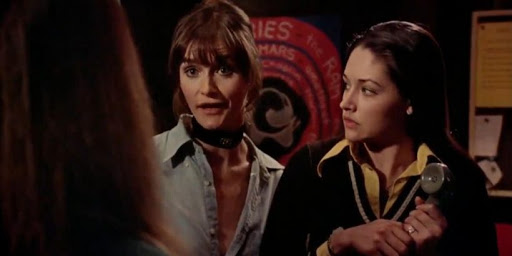
Clark was no dummy. Naming the town Bedford was as willful a move as anything else in Black Christmas. If this location sounds familiar, it should: Bedford Falls was the name of the town from Frank Capra’s quintessential Christmas classic, It’s A Wonderful Life (1946). But that’s where the similarities between Capra and Clark’s works end. This 1974 horror film centers on a group of young women living together at a sorority house preparing for the holidays as the school term ends.
With a cast that features Olivia Hussey, Margot Kidder, Andrea Martin, Keir Dullea and John Saxon, this motion picture is stacked with talent. Even the little known Marian Waldman is brilliant as the booze-hiding den mother, Mrs. Mac.
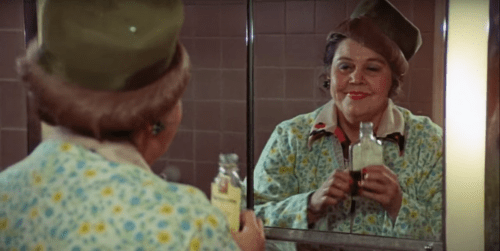
The triumph and tragedy of Black Christmas is that it does not age and it is just as effective now as it was over 40 years ago. Clothes, haircuts and styles may have changed but the filmmaking is so fresh and the anxiety is so real that this work does not feel dated. The major topics raised within the narrative of Black Christmas – abortion (fun fact: Black Christmas was released the year after Roe vs. Wade was passed), stalkers, domestic violence and abuse, sexual independence, a woman’s right to choose her own way to live her life/career – are still hotly debated in 2016. This horror film is made more horrifying because those topics are knitted into the very fabric of the feature and they are still, sadly, hot-button issues.
Black Christmas is a critically important film as well as decidedly scary. Clark’s work never underestimates any of the female characters. He spends time showing their relationships, vibrant personalities and strong individual identities. He contrasts them to the men in the film who are complete liabilities: entirely useless or dangerously toxic and angry to the point of becoming monstrous themselves. While Black Christmas is certainly a slasher film (predating John Carpenter’s Halloween) and lives up to the byline on the poster: “If this movie doesn’t make your skin crawl, it’s on too tight!” it’s also a look at male/female relations and the ways in which they are presented on-screen.
Black Christmas is startlingly unique, both in the way that it handles its protagonists and in the way that it seeks to turn the terror up to 11. If this film doesn’t scare you, you can’t be scared. And let’s be clear about this – Clark’s film isn’t about body counts, gory details (you see little to no gore at all) or surprises. Black Christmas is pure unadulterated terror from the very first phone call.

The sorority house is having a Christmas party and Jess (Olivia Hussey) answers the phone. The young women all stand around to listen to this caller who (we have learned) has called before. The more sexually graphic the call gets, the more interested the camera becomes in each young woman’s face and reaction to the words, screams and almost unintelligible gurgling sounds pouring out of the receiver. This perverse aural symphony is contrasted to the softly lit living room and background sound of “Hark! The Herald Angels Sing.” Barb (Margot Kidder) grabs the phone from Jess and gives the caller a bit of her tough girl “don’t fuck with me” attitude. The caller’s response? The only crystal clear words that come from that phone during the whole film – a calm, direct sentence: “I’m going to kill you.” That scene might be one of the scariest things that this author has experienced in a movie theater.
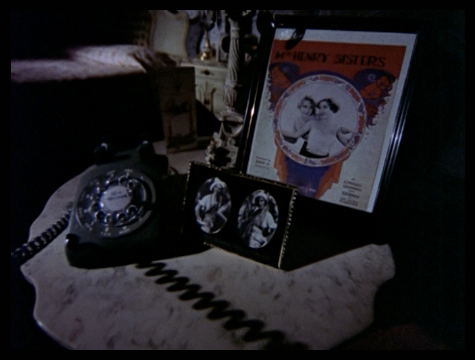
It is usually what you cannot see or do not fully grasp that makes a film so ultimately disturbing. And so it is with Black Christmas. The film is a complex quilt of aural and visual stimuli, running the gamut from killer’s POV to female protagonists’ perspective. While we can hear these phone calls as much as the women in the sorority house do, we cannot understand them any better than they do. We are equally as scared by the deeply frantic and distressed energy that increases with each call. These sounds are not just heavy breathing or the standard prank dirty talk. Clark’s audio in Black Christmas is meant to hit us on a whole other level: the caller could be a tortured child, someone with multiple personality disorder, a perverted sex offender, or…? The calls are an unknown quantity that we cannot put our finger on, in any recognizable manner. This is perfectly stated in Clare (Lynne Griffin)’s comment on the first call: “Could that be one person?”
We get the opportunity to see through the eyes of the killer but it feels unstable, voyeuristic and wholly uncomfortable. Reginald H. Morris did most of the camera work for the film (and went on to do both Porky’s films, A Christmas Story and Turk 182! with Clark) but Albert J. Dunk strapped a camera to his back to shoot the POV material. The audio for the phone calls was also highly specialized and not created by one voice – the calls came from Bob Clark himself, Nick Mancuso (of Under Siege, 1992 fame) and an uncredited female performer.
Black Christmas will unnerve you because it doesn’t bother to answer your questions. It categorically refuses to help you out as a viewer and yet it satisfies you completely on the level of character development. It is perfectly damning for everyone involved, audience and fictional personae alike. On an even more bone-chilling level, a work like Black Christmas has high critical value and relevance because violent stalkers still exist, unstable men continue to threaten/intimidate women in all kinds of weird ways (phone, mail, etc) and legal authorities don’t believe them until it’s too late. This movie should scare the shit out of you because the story could just as easily happen today as in 1974. It may be a horror movie and one of the first slasher films, but the happenings at the Pi Kappa Sigma house delve into seriously dangerous territory that still need attention.

Nancy Kwan
This post was originally published on the New Beverly Cinema blog on November 1, 2016. It is being republished here with full permission of the New Beverly. For the original post (with different artwork) please see the original post here.
“Life is too short to not have dreams! I have been in the film industry for a long time. Show business is not for sissies, but it’s been a great ride!’
–Nancy Kwan

Nancy Kwan was born Kwan Ka Shen in 1939 in Hong Kong. Her mother, Marquita Scott, was a British fashion model who worked for the Harry Conover Modeling Agency. Her father, Kwan Wing Hong, was from Hong Kong and had a Cambridge degree in architecture. Ka Shen’s parents divorced at an early age, leaving her to be raised by her father. Her early years showed a keen interest in and talent for performance. She was a ballet dancer with the Royal College of London and involved with various theater groups before becoming a Hollywood actress. Ka Shen/Nancy Kwan has established a strong body of work within a multitude of film genres ranging from action to comedy. The discussions on race and representation that she has catalyzed (and begun herself) are important to the Asian community and women in film. Nancy Kwan is a figure of power.
Her career has been quite varied. After her debut in the highly popular The World of Suzie Wong (Richard Quine, 1960), Nancy moved into films like The Main Attraction (Daniel Petrie, 1962) and the remarkable Fate is the Hunter (Ralph Nelson, 1964) with Glenn Ford and Rod Taylor. Her performances in films like Arrivederci, Baby! (Ken Hughes, 1966) and The Wrecking Crew (Phil Karlson, 1968) platform her fun demeanor as well as her ability to combine a uniquely choreographed physicality with hip and swingin’ characters.
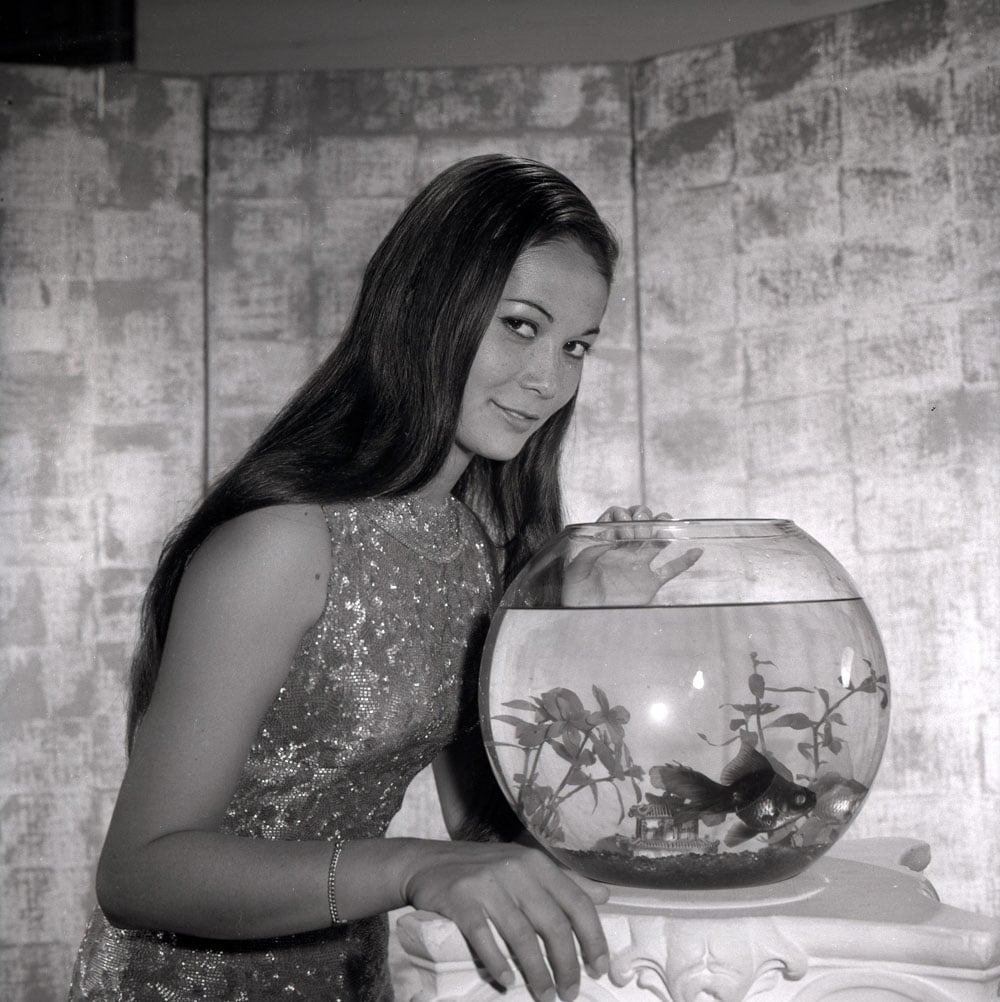
The roles Nancy played in Suzie Wong and Flower Drum Song (Henry Koster, 1961) are of critical consequence to the Asian American community both then and now. At the time of release, these films were recognized as being revolutionary in breaking racist barriers in Hollywood and increasing Asian representation in film. In the modern era, Asian American communities have reconsidered this response and found it wanting. There is validity in looking at these films and saying: the archetypes and Hollywoodization of Asian culture and characters is hurtful and harmful.
There is certainly value in modern readings of these films as not being the most positive portrayals of Asian culture or even interracial romance (in the case of Suzie Wong). However, many of these same cultural critics that dislike the roles Kwan was cast in still maintain an affection for, and attachment to, Nancy Kwan. I posit that it is her existence as a leading Asian woman in film that is at least part of that. The lack of women of color in strong or interesting leading roles has been one of Hollywood’s biggest faults and Nancy Kwan has been able to play some of the most dynamic and fun characters, regardless of the film’s social content. The reason? Quite simply, she’s Nancy Kwan. Once you’ve seen her, you’re never the same.
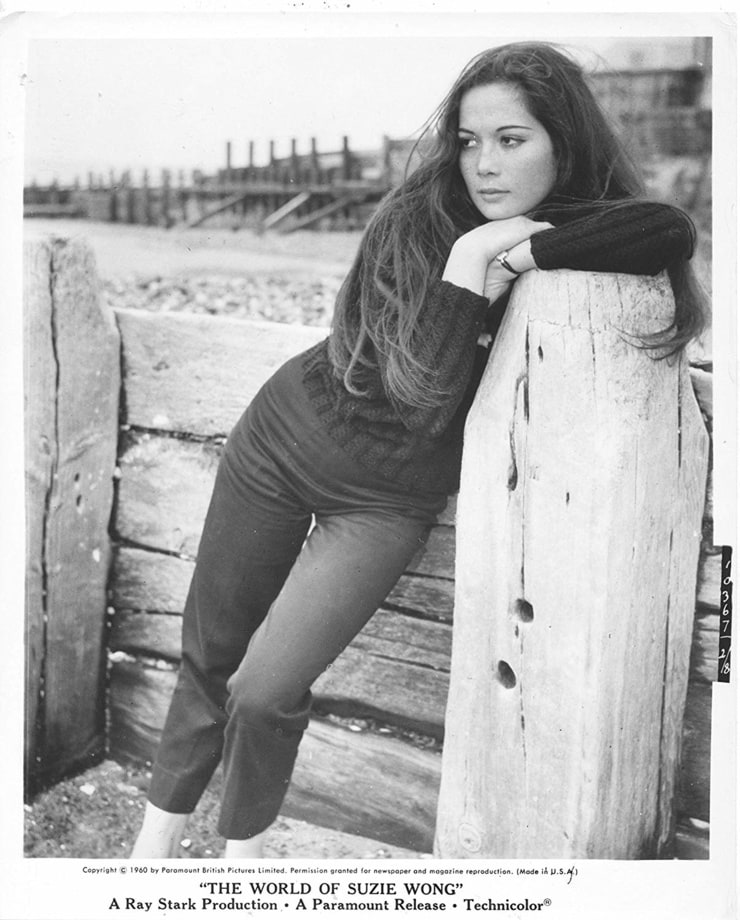
While most refuse to give up Nancy Kwan as a strong symbol of Asian representation, one of the first women they ever saw on the big screen, the Asian American community now makes a delineation between the roles she played and the importance she has as an Asian woman in cinema. This is a critical part of her story.
Many roles that Kwan played over the years- non-Asian, non-Chinese, stereotypical Asian “insert archetype here” – are quite problematic. Kwan’s talents as a comedienne were of high caliber. While the content of Lt Robin Crusoe, U.S.N (Byron Paul, 1966) is certainly questionable (island girl, “exoticism” etc), the cast is heroically great (Akim Tamiroff! Dick Van Dyke! WOW!!), Nancy Kwan’s comic timing is epic. As any great actor will tell you, a great comic performance is worth thousands of dramatic ones. It’s hard to get people to genuinely laugh, but she has that skill.

Nancy Kwan’s bravery is also nothing to sniff at. She left Hollywood against the better advice of her agent to take care of her sick father in the 1970s. In an environment where even white women did as their agents were told this was an incredibly risky move. It could’ve been a career killer!
While away, Kwan set up a film company and continued to be productive. According to her,
“I was looking to the other side of the camera and I felt it would be nice to have an overall knowledge of the film business. So when I was in Hong Kong I did a lot of films in Southeast Asia. I worked in the Philippines, I worked in Thailand, I worked in Hong Kong, I did well, I only did one Chinese speaking film but the rest was shot on location and I would come back here [USA] once in a while and do a TV show or a movie of the week… at this point I consider myself a filmmaker and I’m glad that I started out acting… as a producer I learned more. I think the more knowledge you have, the better you become.”
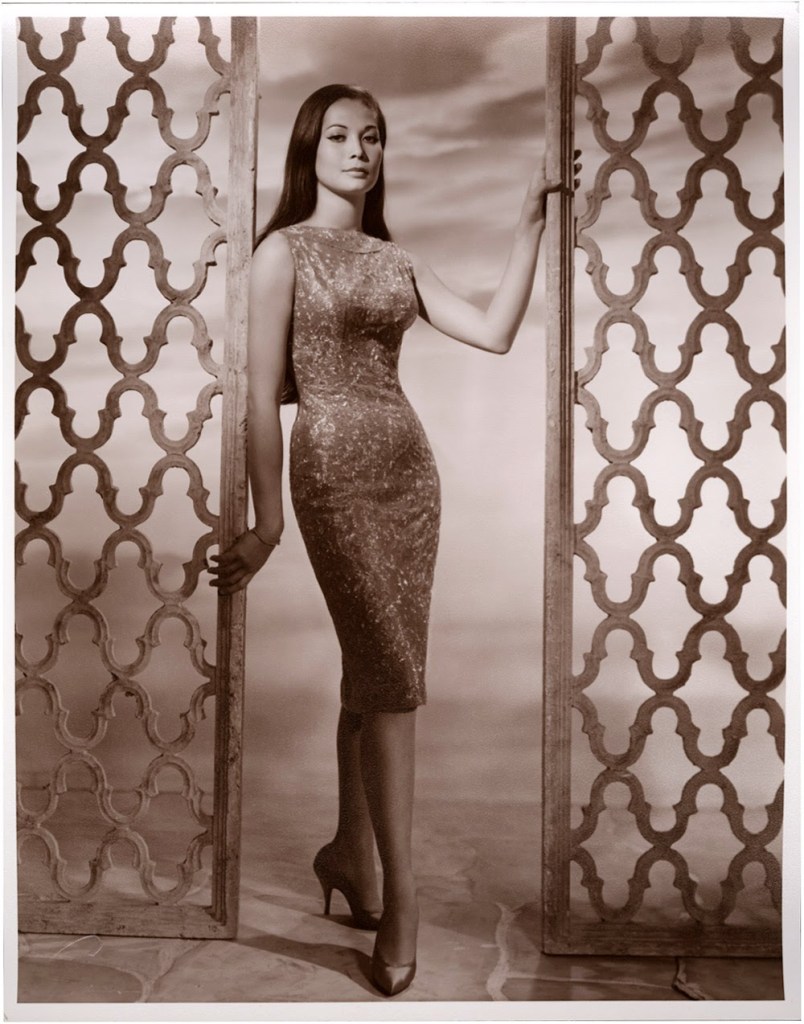
The woman who was nicknamed the “Chinese Bardot” and had a haircut specially designed for her by the one and only Vidal Sassoon is not simply a sum of the films that she was cast in. Unless, of course, you count some of the lesser known delights like Wonder Women (Robert O’Neil, 1973) or Walking The Edge (Norbert Meisel, 1985) where she kicks as much ass on the screen as she does in real life.
Nancy Kwan’s work over the last 50 years is nothing short of groundbreaking. She has formed her own production company (Nancy Kwan Films), made a documentary about her life, won a slew of awards based on her political activism and film/TV work, and been adjunct faculty for MFA film students at CAL State Los Angeles. She’s also still a working actress. Her most recent credits are this year- 2016 – in Amber Tamblyn’s recent film, Paint it Black.

There are very few women in the film world who can say that they have been good friends with Bruce Lee, played opposite William Holden, Rod Taylor and Dean Martin as well as made it a point to retain a personal sense of self within her career, both as a woman and as a person of Asian/biracial heritage. In an industry that doesn’t look fondly on that, Nancy Kwan is a heroine of high class. Plus, the fact that she can play a kick-ass action gal, melodramatic role, and comedienne beautifully really doesn’t hurt. When asked about the kinds of characters she would/wouldn’t play (since she does have a fairly diverse catalog of roles), her response was eloquent:
“Are there characters I wouldn’t play at all or would consider demeaning to an Asian? Yes. If it was demeaning, I certainly wouldn’t do it, or I would say, hey, this is demeaning. I mean, I have a big mouth too… I think it’s very important that I set standards because I have to live with them.”

The Knack…and How to Get It
This post was originally published on the New Beverly Cinema blog on August 23, 2016. It is being republished here with full permission of the New Beverly. For the original post (with different artwork) please see the original post here.

In March of 2015, The Knack…and How To Get It screened in Nimes, France for their British Screen Festival. During the introduction, director Richard Lester spoke on the experience of making the film, saying his previous movie (A Hard Day’s Night) was essentially “about four people who communicated without speaking and [The Knack was] about four people who speak without communicating. The original stage play was very much more, as we say, fascist versus liberal, it was a more political piece. In my usual fashion of ruining a good play or a good book, I quickly tried to turn the fascist into a figure of pity and scorn. So the strongest character quickly became the weakest.”
The Knack…and How To Get It is a difficult piece for many to engage in, even if it is a comedy. But that is one of the reasons it remains such a fascinating work. This swingin’ London-drenched film is funny and whimsical in the manner of Help! or A Hard Day’s Night, while also quilting the intellectual and emotional power struggles of the youth and working class, a familiar tool of British New Wave cinema. If that weren’t enough, woven into the verbiage, visuals and characters of the film are discussions of sexual freedom, women’s liberation and male domination, all highly topical in 1964.

The vast majority of the British New Wave was nicknamed “angry young men” films or “Kitchen Sink films” (mostly due to the kind of social realism that it utilized). One might’ve assumed that this adaptation of Ann Jellicoe’s play would have followed those New Wave rules a little more closely but that was entirely not Lester’s style. Instead, his film won the Palme d’Or at the Cannes Film Festival in 1965 with its conflux of surrealism, intergenerational commentary and sexual/linguistic anarchism.
The Knack… was one of two films adapted from women-written plays at the time, the other being Sheleigh Delaney’s Taste of Honey. Both played strong parts in the British New Wave and were considered to be groundbreaking in their own ways. Fun Fact: Rita Tushingham stars in both Taste of Honey and The Knack… and was the only performer from the stage production of The Knack to make it to the film! Secondary Fun Fact: The Knack…and How to Get It features the first glimpses of three of the most gorgeous women to ever delight the silver screen: Charlotte Rampling (water skiing), Jane Birkin(a girl on a motorbike, because of course), and Jacqueline Bisset (one of the ladies in the white sweaters)

The Knack…and How to Get It is an awkward film. It’s challenging at its best and uncomfortable at certain edges. There won’t be any major film “reveals” in this article but it would be unfair to the reading (and hopefully viewing) audience if I was not to tell you that there was an extraordinary examination of the word “rape” within the film text. There are a variety of ways that this can be viewed, none of which I propose are in any way excuses for rape/rape jokes/anything of that kind, so bear with me. Within this exchange, language becomes practically meaningless. So we wonder…what has meaning become with these characters? Do any of them know what they mean? Of the characters given, we have been led to see that emotional meaning is only critical to a few of them. If this is the case, where does the word “rape” work and with who? Lester had stated that these are characters that speak without communicating. Is it only through threats and fear that one may effectively deal with the other? But then does she herself understand her own power? The dynamics of the film, especially when the majority of the work has maintained a highly critical and negative spin on men’s treatment of women ends up being highly complex and must be taken into consideration when this moment comes to pass. This multilayered film is a damn onion and there is no getting around that.

In the modern context of gender dynamics, female agency and sexuality, the obvious questions arise when discussing a piece like The Knack: has the film aged well? Is it still relevant? As we delve into a work that is keenly problematic in a number of different ways- both for young women and for young men and our relationships to each other, be it 1964 or 2016 – I say that yes, this film is still relevant and worthy perhaps because of those problematic spaces.
This may sound like a quite serious film and in many ways, the subjects being tackled are quite serious: rape, harassment, “being cool,” toxic masculinity, nerd shaming, you name it. But let us not forget that this is, above all, a Richard Lester film. While we may continue to dissect the intricate verbiage and myriad of narrative interactions between characters for years to come, the film itself is utterly entertaining. And that cannot be discounted. The levity within tenseness is welcome.

Having been trained in Peter Sellers’ Goon Show school of absurdity, Richard Lester knew exactly how to throw together a tableau of WTF-ness, even for 1964. Aside from the fact that furniture is being dragged around a large urban area (London) and surreal incidents are part and parcel of the narrative from scene one, Lester added a Chorus of everyday folks as part of the film. This was, of course, no part of the original play, but the moment this Chorus appears and a running commentary on the younger generation starts, there is just no question. Richard Lester is written all over this film. This unconventional and completely anarchic spirit that breaks the fourth wall on a regular basis is the same spirit that Lester brought to his films with The Beatles and would later bring to the Superman films and everything in between. It is Lester-ism, just in varying degrees and incarnations.
As The Knack…was being shot, Lester details the camera set up that they used for the outdoors work. A number of different tents were set up to hide second or third cameras and used to film normal people on the streets of London who were watching the crew film. “As you can imagine,” Lester grimaces, “[most of the time] they were disgusted. So we took those bits of film, natural people responding to us, and added comment and voices over for post-production, and it became the style of the film.”

This spontaneity, youth critique and class-consciousness emphasizes the role that The Knack…and How To Get it played in British New Wave cinema. Ann Jellicoe may not have liked the adaptation of her play but the film certainly transmogrified the original material into something else entirely; a critical piece of British Film history and a work that, in modern context, allows us to investigate the meaning of language, actions, image concepts and the relationship of masculinity to sexuality. As a woman, it may be an uncomfortable film at times, especially since it is a comedy. But it is a smart film, which is integral to its interpretation. There is a lot going on in the film. It is absurd, sometimes shocking, always worth watching.
Of note: Richard Lester’s connections to the British New Wave do not end with The Knack. 1968’s Petulia (the incredible film that the New Beverly Cinema is pairing up with The Knack…and How To Get It) is populated by British New Wave figures. The star, the lovely Julie Christie, was in a pioneering BNW classic called Darling (John Schlesinger, 1965) and Nic Roeg, cinematographer for Petulia, shot quite a few films in the early 60s for different BNW filmmakers. In addition, the hip John Barry score that runs throughout The Knack… finds its match in the compositions that Barry has written for what Lester often said was the favorite of his films, Petulia.

A-“GOG” at #TCMFF 2016: Talking 3D & Restoration With Bob Furmanek
We’re heading into the final stretch, guys and gals. So many plans and schedules have already been posted (mine is forthcoming, I swear)! The slow trickle of #TCMFF pals into my Hollywood hometown and everyone’s excitement is (as usual) giving me such joy. I’m just giddy with Classic Film Craziness!
So aside from the Print Resource Guide that I posted a few days back, I have something else very special to add to my “preservation and restoration stream.” As one of the TCMFF Social Producers, my focus is to increase knowledge about preservation, restoration & film archiving through social media platforms. As a working archivist, I wish to showcase why I truly believe that TCMFF is one of the strongest film festival venues dedicated to these critical procedures.
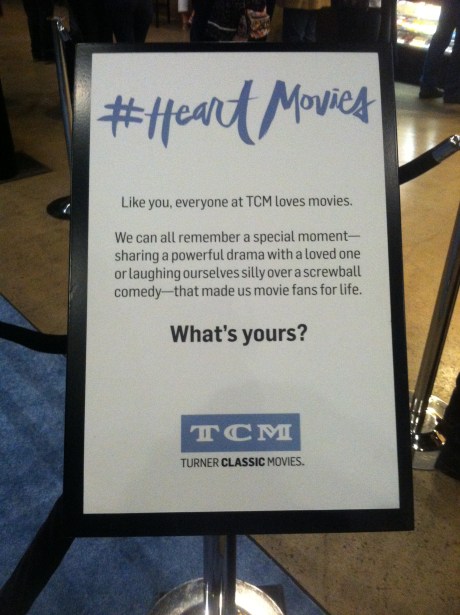
One of my favorite parts from TCMFF 2015 – an entire booth dedicated to cinephilia and why we, as film lovers, “heart movies”! So great!
For this blog, I got a wonderful and in-depth pre-TCMFF interview from the knowledgeable Bob Furmanek of the 3D Film Archive about the restoration of GOG (Herbert L. Strock, 1954), which will be playing as the midnight show on Saturday night, April 30th at the festival! Bob will be there in person with his restoration colleague Greg Kintz, so that will be extra cool!!
Hope all of you enjoy this interview and perhaps learn a bit more about 3D preservation!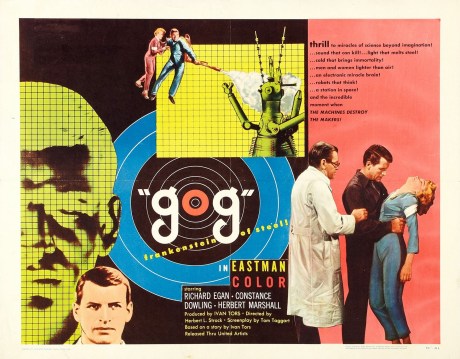
1) Can you give a short history on your relationship to this film and why it’s such a unique opportunity for TCMFF fans to be seeing it this year?
When I was living in Los Angeles and working for Jerry Lewis in the mid-1980’s, I spent a lot of time doing work in the old Technicolor building in Hollywood. Director Herbert L. Strock was still active at the time and maintained an office on the first floor. I used to visit with him quite often and naturally, we discussed GOG. At that time, it was lost in 3-D (the studio only had material on the right side) and he lamented the fact that nobody would ever see it again. For that reason, I made it a top priority to try to find the missing left side.
I eventually discovered the lost 35mm left side print in 2001 and carefully matched it to a new 35mm right side print from MGM. We screened the dual-35mm polarized 3-D prints in 2003 at the World 3-D Film Expo at the Egyptian Theatre in Hollywood. Mr. Strock got to see it again with a sold-out audience of 700 fans and it was a wonderful moment. Sadly, he passed away in 2005.
We spent five tedious months restoring the film last year for 3-D Blu-ray release through Kino-Lorber. Our new digital master has extensive color restoration and shot by shot 3-D alignment and left/right panel-matching. As a result, the audience at TCMFF will be seeing GOG in a better presentation than was technically possible in 1954. Mr. Strock would have loved it!
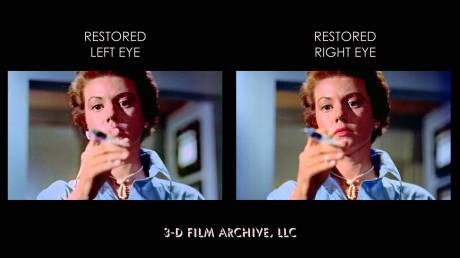
TRULY exquisite examples of the restored L/R eye work can be found by clicking on this picture. It will take you to the AMAZING “before & afters”!
2) You head up the 3D Archive. Why is it important to have a 3D Archive? Isn’t 3D still coming out?
Nearly every 3-D feature from the first forty years of stereoscopic cinema (1922 – 1962) was photographed and printed on dual-strips of 35mm film with one print representing the left side and the other representing the right. They were projected theatrically on two 35mm machines in precise synchronization. Polaroid filters in each projection port – and the corresponding polarized glasses worn by the audience – insured that each eye only saw the intended side in order to create a 3-D image. If either the left or right elements are missing, you have lost the film in 3-D. Since the early 1980’s, the Archive has worked very hard to ensure that most of them survive.
There were fifty Golden Age (1952-1955) domestic 3-D features and thankfully, forty-eight survive in their complete stereoscopic versions. The only lost 3-D features from that period are TOP BANANA with Phil Silvers and one half of SOUTHWEST PASSAGE with Rod Cameron.
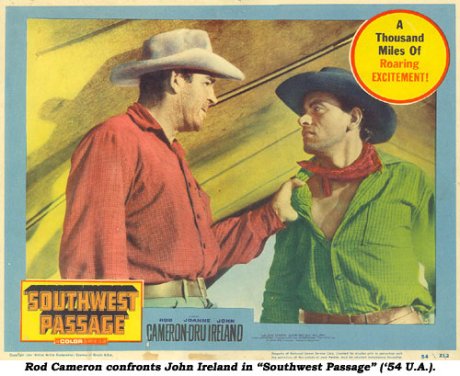
A lobby card for Southwest Passage (Ray Nazarro, 1954) a partially lost 3-D film…
We are doing our very best to get as many released onto 3-D Blu-ray as possible so that people can see these films as they were originally intended. It’s been quite an obstacle and uphill battle securing licenses from the copyright holders but we don’t give up easily.
3) What is the most difficult thing about restoring a 3D film? What was the most difficult part of restoring GOG?
Right out of the gate, the workload is doubled and that presents many challenges with respect to time and financial resources. You basically have to restore the film twice. The most challenging aspect is ensuring that both left/right sides are perfectly aligned and panel-matched in order to present the best possible viewing experience. That means going through the film and making adjustments on every single shot. It’s very time-consuming and labor intensive but it’s absolutely crucial that both the left and right sides are matched.
On the average, we can restore a 3-D feature in three months: GOG took five. It was an enormous challenge because the left side was completely faded with no yellow or cyan information whatsoever. In addition, every single shot in the film required up to seven levels of correction including color restoration, left/right panel matching, flicker reduction, image stabilization, detail extraction from the superior right side element, stereoscopic vertical alignment and dirt/damage clean-up. Greg Kintz has literally worked a restoration miracle in bringing this 3-D gem back to life.
4) GOG is a Eastman color film, a stock that is known to fade if not cared for correctly. Can you talk a little bit about the process of the color restoration and why color restoration and 3D film preservation might be especially challenging (if it is)?
GOG had a rather complicated history so far as lab work and processing. It was filmed on Eastman color negative 5248 (25 ASA tungsten) and processed by the Color Corporation of America laboratory – formerly SuperCinecolor/Cinecolor – in Burbank. By time it was edited and ready for theatrical release in May 1954, the lab was in financial trouble and had been sold to Benjamin Smith and Associates, owners of the Houston Fearless Corp. As a result, the 35mm release prints of GOG were made by Pathé Laboratories in Hollywood. While some early Eastman color negative stock holds up pretty well if it has been stored properly, the 1954 Pathé color release prints were already faded within a few years after it was released.
Thankfully, the right side element used in the restoration (a 35mm inter-positive struck from the original camera negative) still had quite a bit of color. With a little finesse, we were able to tweak it digitally to bring back its original palette. The biggest challenge was then matching the faded left side with the right.
5) Without any spoilers, can you give us a scene to look for that was *especially* challenging in the process but your team thinks came out particularly well?
To be honest, there wasn’t one particular scene that was more difficult than others. The entire film was an incredible challenge! When Greg Kintz was doing his work and sending me 3-D Blu-ray test discs, I was constantly amazed at the restoration and how the image kept improving with each new level of correction. Additional dirt and damage clean-up was then done by Thad Komorowski and that helped immensely.
To give you an idea of what we achieved on a shoestring budget, Warner Bros. spent close to $300K restoring HOUSE OF WAX. We brought in the 3-D and color restoration of GOG for $10K.
After suffering through flat, black and white 16mm open-matte full-frame transfers on TV for decades, I never expected GOG to look as good as it does today. We’re very proud of the final result in bringing this lost 3-D classic back to life.
6) What are you particularly looking forward to seeing at the TCMFF?
Boy, that’s a tough question. The entire schedule is wonderful and there are many cinematic treasures to be enjoyed.
For me personally, the new restoration from the 35mm nitrate camera negative of FRANKENSTEIN MEETS THE WOLFMAN (Roy William Neill, 1943) is going to be quite a treat. That’s been a favorite of mine since I was a young Monster Kid in the 1960’s and watched New York TV’s Chiller Theater on Saturday nights. I even had the three-minute Castle Films 8mm fifty-foot home movie edition. It’s going to be great fun seeing it fully restored on the big screen!
Thanks again so much, Bob!!! Can’t wait for this screening!
It’s been a pleasure Ariel, thank you!

Ariel’s Print Resource Guide for TCMFF 2016: Moving Pictures

I’m ready. BOY AM I READY.
I have been since last year when TCMFF2015 ended. I live for this film festival. My experience has shown me that TCMFF is one of the most organized and best staffed film festivals that I have ever attended and the content is truly the most dynamic and rare. For a film archivist and preservationist to say this is no small feat.
The films are sometimes familiar, many times obscure, always challenging and enjoyable. The festival welcomes audience members from all over the world and gives them access to films that they would not normally be able to see, especially not in the environment that they were designed to be seen in: a theatrical setting. This annually growing community of passionate film-goers and classic film fans that TCM has created is what I have termed “Classic Film Summer Camp.” I don’t think I’ve ever had such a great time waiting in line for a film as I have at TCMFF. I’ve met people from everywhere and learned about so many different lives, experiences and classic film star fandoms. Y’all can have Christmas- this is MY most wonderful time of the year!
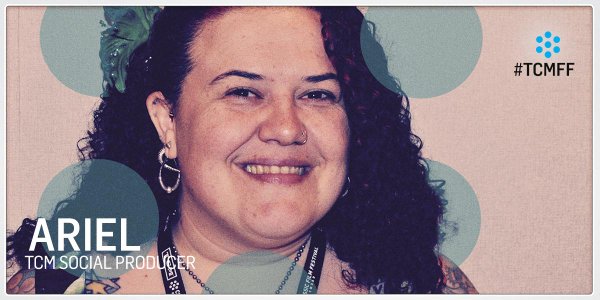
For the second year in a row I have been asked to be a member of the wonderful TCMFF Social Producers’ Team. As Social Producers, we are a group of fabulous and intelligent classic film advocates and cineastes working with the TCMFF social media team to advance the goals of the festival and make it more enjoyable for everyone involved! Each of us has our own “theme” or line of “promotion” and we can be found under the hashtags #TCMFF and #TCMFFSP. Whether or not you are in attendance, you want to follow these hashtags! These folks are some heavy hitters!
![TCM_CFF_Horz_NoYear[2]](https://moviesaremyboyfriend.com/wp-content/uploads/2015/03/tcm_cff_horz_noyear2.jpg)
So my theme this year? Well, nothing’s changed. Leopard and spots and all. I’ll be Tweeting, Tumblring, Instagramming on my most beloved subjects: film archiving, preservation and restoration.
So, for my first intro post, I have created a resource for everyone who may be currently planning their TCMFF schedules. I designed a spreadsheet that has cataloged the 35mm prints, DCPs, noted the restoration and preservations, and did my best to signify notes on World Premiere or North American Premiere, etc.
OF NOTE: the TCMFF schedule, while extremely reliable, is always subject to change. As a preservationist, projectionist and film series programmer myself, I can tell you that there are innumerable variables that can cause variations in guests, film format or program itself. This is just your garden variety disclaimer, folks, but it has to be said. You know it does. And since you’re reading this blog, I’m likely preaching to the choir, but it’s a necessary statement. Additionally, if I have not written it here, that does not mean it is NOT a premiere/restoration/etc. I have based this upon as much information as I could get. If there is something in need of correction, please contact me immediately! I would be pleased as punch to change it!
So let’s get down to business, shall we?
PART I: RESOURCES & PLANNING
So. Now that the disclaimers have been said, here is your 2016 TCMFF Format & Preservation Resource guide. Get to scheduling!
It’s alphabetical, and if anyone has any questions or problems reading it (or understanding the manner in which it has been broken down) please let me know. I will actively pay attention to any and all comments as they come in, and will be ABSOLUTELY ready to alter something if needs be.
If you would rather have it in a link form rather than embedded, go here.
It is critical for attendees to have this kind of format map. It may have taken some time to put together, but I know how important this resource is. Being able to access a full report of what has been restored, what has been preserved, what has been digitally reconstructed and how to identify each of these pieces in order to put together the fabulous puzzle that will eventually be your TCMFF experience is just invaluable.
Before moving into Part II, I briefly mention a remark about formats and preservation. Please consider the curatorial dedication and labor that has gone into the maintenance of all the films that you will watch this festival season, no matter what format they are in. Whatever your sensibilities or thoughts about format (analogue/digital, etc), every person with whom I have personally come into contact in my archival career who is involved in classic film preservation takes their job very seriously. Whether moving towards the creation of a Digital Cinema Package or striking a new 35mm print, my classic film archival colleagues work really hard to make sure that these materials see another generation and that another generation sees them. So let us be certain that if we downplay a digital format in favor of analogue, we do not forget that the digitization and digital work had to have an incredible amount of analogue preparation work done to it first. There are no classic films that were “born digitally” and thus you cannot have digital without analogue attention. Let us not forget that aspect of the workflow.
PART II: DATA BREAKDOWN
I compiled some data based upon what we have this year, print-wise. So if you want to get nerdy with me, here’s what we have…
From a preservation standpoint, I noted that the vast amount of 35mm was made up of rare works and, quite simply, the films that rarely make it out of the vaults. These films are the very reason that I continually attend TCMFF, religiously watch the channel until stupid o’clock in the morning (just…one…more…movie….), and truly appreciate educated colleagues like Will McKinley‘s continued updates on TCM as we move forward into various streaming and cable variations.
These are the films that caused me to become a preservationist. But we can get back to that.
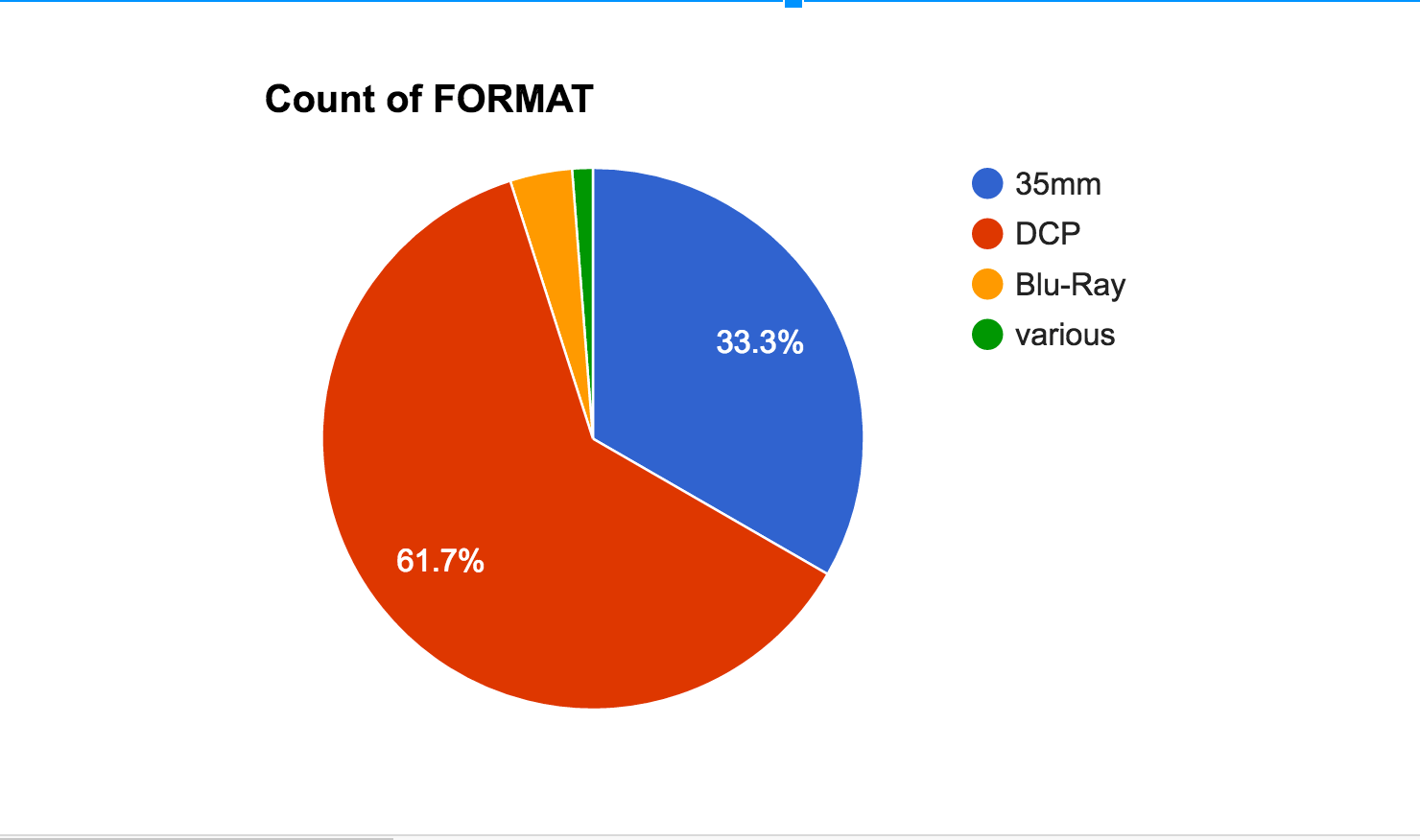
The analytics – 33% of the films appearing at TCMFF this year will be shown in 35mm. These are films like One Potato, Two Potato (Larry Peerce, 1964) a film about interracial marriage that came out BEFORE the more socially palatable Guess Who’s Coming to Dinner? (Stanley Kramer, 1967). Or a bewilderingly unheard-of feature like Double Harness (John Cromwell, 1933), a pre-code film that has been, quite literally, sitting in a vault until TCM bought the rights to it in 2006. These films catalyzed my film archival career and have subsequently reignited my film passion every year at the TCMFF. They are the “lost” or “forgotten” children of classic cinema.
While it’s beyond incredible to watch an old favorite on the big screen with a crowd, I would highly recommend that folks try to make it to at least ONE “rare pick” at TCMFF. Try the Film Noir Foundation/UCLA Film & Television Archive Restoration of Repeat Performance (Alfred L. Werker, 1947) or the rarely screened Bulldog Drummond Strikes Back (Roy Del Ruth, 1934). This is your opportunity!
So here are my “5 Points to Consider When Making Your TCMFF Schedule and Beyond.”
-
Restoration costs a GREAT deal of money. A LOT. Many grants, volunteer labor and insane hard work is involved just to get to the point of being able to approach the physical restoration. This relates to 35mm *and* DCP. Love your restoration folks and the restorations!
-
Lesser known films are riskier and have less potential for “return investment” in many people’s eyes. When you get the opportunity to investigate rare works at TCMFF or at a home repertory theater, you can be part of a new kind of “return investment.”
-
Supporting restorations & preservations (in 35mm *and* DCP) and making your voice heard through social media & online makes a difference. Boutique labels do exist for DVD/Blu distribution and we do have wonderful companies like Warner Archives, Flicker Alley and others who make it a mission to serve our community.
-
TCM (and TCMFF) serves the classic film community in a positive way by their continual & consistent showcasing of “forgotten films” or unusual materials — there is the possibility that, with more exposure, viewing more rarities on 35mm may lead to more preservation and restoration!
-
TCM also showcases incredible panels like the Academy Home Movies presentation (something that I will be livetweeting for the second year in a row) with the wonderful Lynne Kirste and Randy Haberkamp. What was previously a closed circuit of “35mm features” is now open to different formats and narratives (Super8, 8mm, 16mm – all transferred of course, but that IS what we get to see). If you have not attended this panel, DO IT. It is one of my favorite parts of TCMFF every year.
PART III: SAY HELLO!!! I’D LOVE TO MEET YOU! 🙂
When you see me walking around during #TCMFF, I will have my badge on and it will look like this:
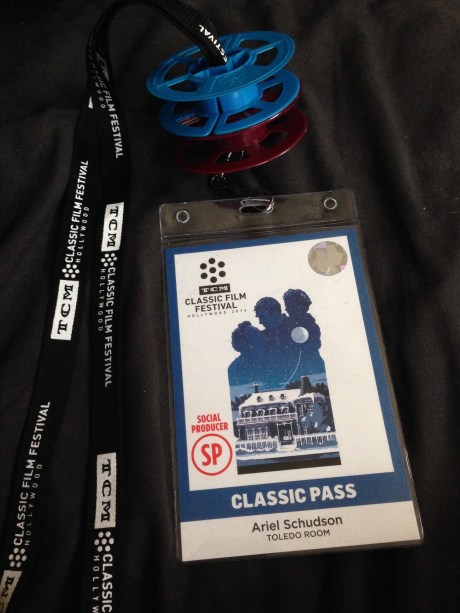
Look for the blue and burgundy 16mm reels and the red circled SP on the badge.
My social media platforms that you can follow are…
INSTAGRAM: www.instagram.com/archivistariel
TWITTER: https://twitter.com/ArchivistAriel
TUMBLR: http://archivistariel.tumblr.com
And once again, check out the hashtags this year – #TCMFF, #TCMFFSP and follow @tcm on Twitter!
I will be returning with another post soon letting you know what my schedule will possibly be so that you can stalk…er…find me during TCMFF if you wish. But for now, enjoy!
See you at the festival! ❤
 Movies Are My Boyfriend